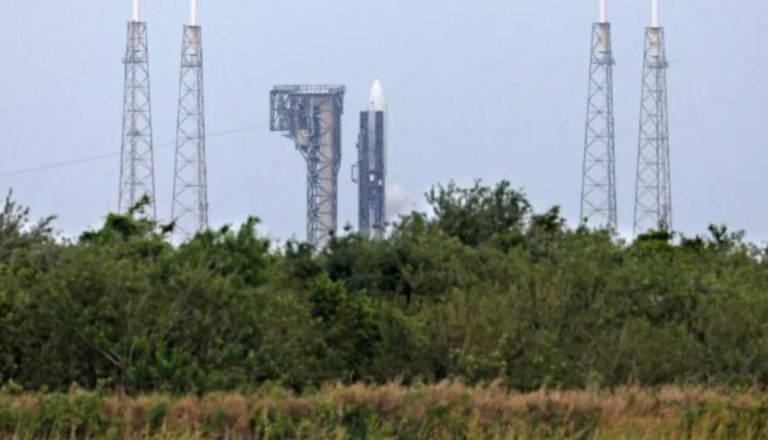
Amazon has officially entered the satellite internet arena with the launch of its Kuiper Atlas 1 mission, sending 27 Kuiper satellites into orbit aboard a United Launch Alliance (ULA) Atlas V rocket. The rocket lifted off from Cape Canaveral Space Force Station in Florida at 7:00 PM local time (2300 GMT) on Monday, following a previous delay caused by inclement weather.
The mission marks a significant milestone for Project Kuiper, Amazon’s $10 billion initiative to build a constellation of 3,200 satellites in low Earth orbit (LEO)—a region up to 1,200 miles (1,900 km) above Earth. The goal is to begin providing low-cost, high-speed internet service globally, potentially later this year.
Caleb Weiss of ULA described the launch as the beginning of “a new era in internet connectivity,” as Amazon joins a crowded and competitive market dominated by SpaceX’s Starlink, which currently operates more than 6,750 satellites and serves over five million users worldwide.
Amazon, playing catch-up to Starlink’s head start since 2019, has already booked more than 80 launches through various providers including ULA, Arianespace, Blue Origin, and SpaceX itself. While Kuiper’s pricing remains undisclosed, Amazon has promised to align with its low-cost brand ethos.
Despite the technological promise, experts have raised concerns about space congestion, increased risk of satellite collisions, and interference with astronomical observations, as thousands of satellites continue to populate low Earth orbit. The growing dominance of private tech giants in space also raises complex political and geopolitical questions — especially as figures like Elon Musk influence global conflicts, such as his mixed signals about Starlink’s use in Ukraine’s defense against Russia.
As Kuiper scales up, it will compete not only with Starlink, but also with OneWeb (Europe) and Guowang (China), in what is quickly becoming a high-stakes race for global internet dominance from orbit.
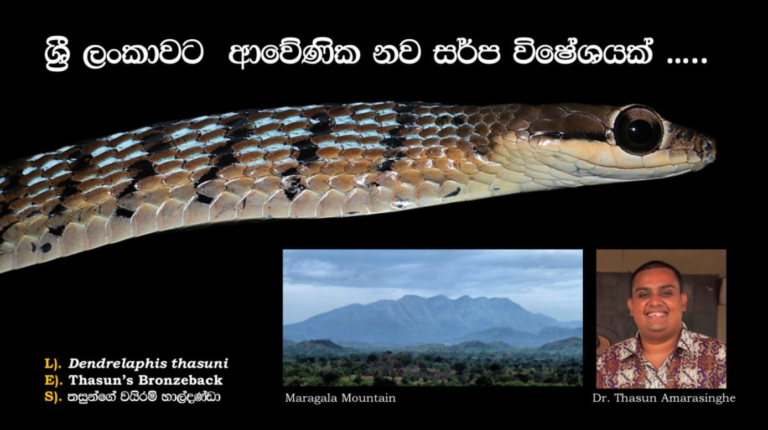
A new species of snake, Dendrelaphis thasuni, has been discovered in the biologically rich Maragala mountain range near Monaragala, adding to Sri Lanka’s growing list of endemic reptiles. This new species, which belongs to the genus Dendrelaphis in the colubridae family, brings the total number of Dendrelaphis species in Sri Lanka to eight—six of which are endemic.
Named in honor of Dr. Thasun Amarasinghe, a prominent herpetologist known for his two decades of work in reptile and amphibian research, the species is locally referred to as Thasunge Haldanda. Despite being diurnal by classification, this snake has uniquely adapted to a nocturnal lifestyle. Its camouflage matches the surrounding foliage, and it is noted for its speed and agility.
The discovery was made by a collaborative team of Sri Lankan and international researchers, including Anusha Attanagoda, Dr. Anselm de Silva, Dr. Gernot Vogel (Germany), Sitar Udayanga, Champika Bandara, Majintha Madawala, Dr. L. Lee Grismer (USA), and Suranjan Karunaratne.
The Maragala mountain range, a recognized biodiversity hotspot, is home to 67 identified reptile species—30 of which are endemic—as well as 18 amphibian species, five of which are also endemic. Eighteen species from this region are listed as threatened on the IUCN Red List.
Researchers believe many more undiscovered species likely exist in the area, highlighting its ecological significance and the urgent need for continued conservation efforts.
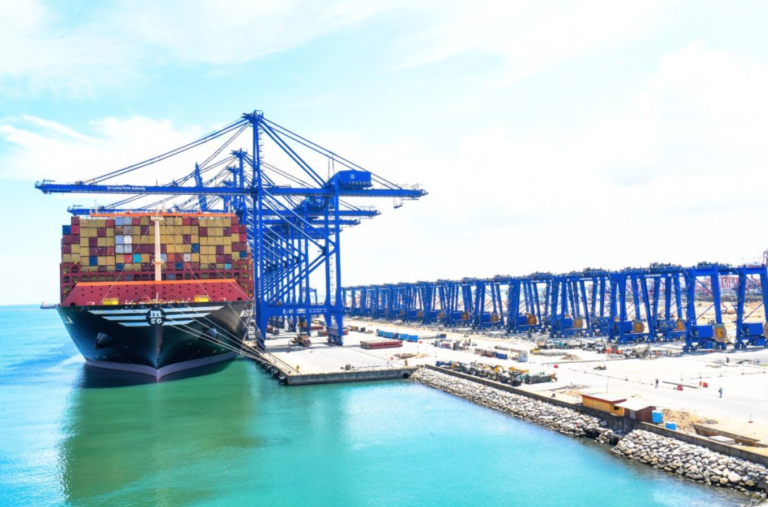
The MSC MARIELLA, one of the world’s largest container vessels, made a landmark port call at Colombo Port, marking a significant milestone in Sri Lanka’s maritime history.
The massive vessel berthed at the Colombo East Container Terminal, highlighting the port’s enhanced capacity to handle ultra-large container ships and reinforcing its strategic role in global shipping routes.
Built in 2023, the MSC MARIELLA (IMO 9934747, MMSI 636022920) sails under the Liberian flag. It measures 399.90 metres in length and 61.30 metres in width, with a formidable carrying capacity of 240,739 tonnes.
The arrival of the MSC MARIELLA is a testament to Colombo Port’s growing reputation as a vital regional shipping hub and a key player in the international maritime industry.
The Intertropical Convergence Zone (where winds from the Northern Hemisphere and Southern Hemisphere converge) affects the island’s weather.
Showers or thundershowers will occur at most places of the island during the afternoon or night.
Showers may occur in Southern and Western provinces and Puttalam district in the morning too.
Heavy falls about 100 mm are likely at some places in Central, Sabaragamuwa, Uva, Eastern and North-central provinces.
The general public is kindly requested to take adequate precautions to minimize damages caused by temporary localized strong winds and lightning during thundershowers.
Misty conditions can be expected at some places in Centraland Uva provinces during the morning.
April 27, Colombo (LNW): Japan’s objection to World Rugby’s decision to remove Japan Rugby Football Union President Kensuke Iwabuchi from the Asian Rugby Executive Committee, from 21st December 2024 to 9th January 2025, has been reviewed. The objection was based on concerns regarding the content of the documents that Asia Rugby EXCO members were required to sign, including (a) the Non-Disclosure Agreement, (b) the Executive Committee Employment Declaration, and (c) the Declaration of Income from Rugby-related Activities. It has been concluded that questioning Iwabuchi in this manner was reasonable. Additionally, it has been noted that this reflects an act of good governance.
The implication of questioning something suggests that it is reasonable to identify an unjust reason for doing so. Therefore, the most crucial aspect here is for the country to stand up against the injustice done to this reasonable individual. Japan is offering a valuable lesson to the humble conduct of certain government officials in Sri Lanka, who are misleading the government by asserting that the existing laws in the country cannot be applied to the Asian chairman, and to the lack of discernment shown by the politician who follows their misguided lead.
The official involved in the alleged £50,000 incident with the Sri Lankan Sports Minister now finds himself in a position where he frequently hosts happy gatherings and parties with the Minister, even offering advice. The reason Sri Lanka Rugby must begin addressing issues with Asia is not, as commonly believed, due to the conflict with Rizly Illyas. It all stems from the fact that Sri Lanka did not vote for Asia Rugby President Qais Abdullah Al Dalai when he first assumed office. At that time, the President of Sri Lanka Rugby was Lasitha Gunaratne. Qais’ friend, Asanga Seneviratne, along with Rizly Illyas, argued that Lasitha should not have taken that stance.
However, when Illyas arrived in Lasitha’s circle, Asanga had already been granted a position of friendship by Qais. Asanga was the President of the administration linked to the £50,000 incident and faced significant rejection within the Sri Lanka Rugby union. At that time, Asanga and his group made several controversial decisions, attempting to elevate the reputation of the Rajapaksa family, a reputation that Namal Rajapaksa sought to improve after becoming the Sports Minister.
An advisory committee was set up under the residentship of Asanga, with the participation of the Asia President, over the administration that existed at one point. The administration did not agree to this, constitutionally and in accordance with the law of the country. Moreover, the local sponsor, Namal Rajapaksa, was also brought in to help Asia, giving Namal the false opportunity to be the chief guest.
In this manner, the then Sri Lanka President, along with Namal as Minister, condemned the political influence exerted by the Asian President, who was operating outside the Sri Lanka Rugby Administration and disregarding the administrative independence of the country’s rugby governance, in a private WhatsApp conversation.
Although this accusation was made on a very personal matter, the Sri Lankan President continued to obstruct the Sri Lankan President and the Sri Lanka Rugby Administration, suspecting that the Asia President, Kensuke Iwabuchi, the President of the Japan Rugby Football Union, would bring undue influence to the Asian Executive Council.
The best thing to do is to create reasons for those obstacles, Namal and after Namal left due to the struggle, the ministers agreed with the Asia President, banned the administration of rugby in Sri Lanka, and danced to the tune of the Asia President and acted absurdly. The current government, which came to power mainly on the basis of the struggle, is doing its best and speaking out against the mistakes in Parliament while also appearing naked outside. Japan’s intervention is taking place against this backdrop.
The reason why Japan is developed and Sri Lanka is not developed is the way it thinks about its own country’s independence, the courage to stand up for justice and fairness, and the value it gives to nationality.
Instead of informing the international federations to request information regarding the removal of the person who represented their country’s sport without a proper investigation report or charge sheet, the Sri Lankan authorities preferred to unilaterally cuddle in the lap of the Asia President. Anura Kumara Dissanayake came to this country, instilling in society the belief that a path would be prepared for the common people of this country, not limited to the needs of the princely class, but to make a way for them to live like princely lives. However, the action of that government has been to formulate the constitution of Sri Lanka Rugby in a way that consolidates power for the intentions of a princely class in rugby and limits its administration.
The Sri Lankan sports authority, obediently aligning with the Asian level, and the need to cater to the interests of Namal and his group, as well as Malik Samarawickrama who represents those interests, have been compelled to endorse the praise generated for the rugby coronation. This praise is being used to justify the irrational manner in which the expansion of rugby in the country is being restricted.
Japan’s strength, confidence, and unwavering determination to defend its national identity deserve to be appreciated once again. From this perspective, one might question whether the Sri Lankan authorities possess a tongue as flexible as their words.
April 29, Colombo (LNW): Former Additional Secretary to the State Ministry of Agriculture, Mahesh Gammanpila, has been arrested over his alleged involvement in a major financial fraud linked to the 2021 import of organic fertilizer from China’s Qingdao Seawin Biotech.
Gammanpila was taken into custody by officials from the Commission to Investigate Allegations of Bribery or Corruption. He stands accused of causing a massive USD 6.9 million loss to the state by authorizing the reopening of suspended Letters of Credit (LCs) to purchase a shipment of contaminated organic fertilizer. This move triggered the release of 75% of the payment for the first fertilizer consignment, despite serious quality concerns.
Following his arrest, Gammanpila was produced before the Colombo Magistrate’s Court, where the Magistrate ordered him to be remanded until May 5, according to Ada Derana reports.
The controversy dates back to 2021, when Sri Lanka abruptly shifted toward organic agriculture under the directive of then-President Gotabaya Rajapaksa. As part of this strategy, the government banned chemical fertilizer imports and contracted Qingdao Seawin Biotech to supply 99,000 metric tonnes of organic fertilizer valued at around USD 63 million.
However, trouble began when Sri Lanka’s National Plant Quarantine Service (NPQS) tested the imported fertilizer and found it contaminated with harmful bacteria, notably ‘Erwinia,’ a pathogen that poses a significant threat to crops. In response, the government suspended the import and refused entry to the fertilizer shipment, citing biosecurity concerns.
Qingdao Seawin Biotech strongly contested the NPQS findings, claiming the tests were rushed and unscientific. The Chinese firm insisted its products met international safety standards through high-temperature sterilization and certifications. Nevertheless, Sri Lankan authorities refused to reconsider the decision or allow a second round of testing.
Tensions escalated when the Chinese Embassy blacklisted Sri Lanka’s People’s Bank after it failed to honor a related letter of credit. Qingdao Seawin Biotech demanded USD 8 million in damages for the shipment’s rejection. To defuse the diplomatic and financial crisis, Sri Lanka eventually agreed to a settlement, paying USD 6.9 million to Qingdao Seawin Biotech in December 2021.
This fertilizer debacle exposed the significant risks tied to Sri Lanka’s rushed transition to organic farming without sufficient groundwork. The resulting fertilizer shortages contributed to lower crop yields, deepening the country’s agricultural and economic woes. Furthermore, the incident underlined the need for thorough scientific testing and transparent communication in international trade dealings to avoid costly disputes and diplomatic fallout.
Gammanpila’s arrest marks a significant development as Sri Lanka continues to grapple with the fallout from the controversial fertilizer saga.
April 29, Colombo (LNW): Indian media reports that Bollywood actor Jacqueline Fernandez awaits a crucial decision in the ₹200 crore money laundering case linked to conman Sukesh Chandrashekhar.
The Delhi High Court has reserved its order on Sri Lankan actress Jacqueline Fernandez’s petition challenging the Enforcement Directorate’s (ED) action under the Prevention of Money Laundering Act (PMLA), Indian media reported.
The case stems from allegations that Fernandez received expensive gifts from jailed conman Sukesh Chandrashekhar. Justice Anish Dayal reserved the verdict after detailed arguments from both sides. Senior Advocate Sidharth Aggarwal appeared for Fernandez, while Special Counsel Zoheb Hossain represented the ED.
During hearings, Aggarwal argued that labeling financial interactions as money laundering simply because money originated from an alleged criminal would have absurd consequences. “If the ED’s logic is applied, even grocery vendors, court officials, or lawyers who unknowingly transacted could be guilty,” Aggarwal contended, according to Indian media coverage.
He further claimed that Fernandez was unaware of Sukesh’s criminal background, having been introduced to him as a reputable businessman. Aggarwal noted, “Today, I am paying the price of being a celebrity,” emphasizing that celebrities often interact with individuals without complete knowledge of their backgrounds.
On the other hand, the ED maintained that the money laundering investigation is distinct from police probes into the original (predicate) crimes. The agency stressed that Fernandez continued accepting lavish gifts even after learning about Sukesh’s criminal history through media reports in 2021.
Earlier, the ED had firmly opposed Fernandez’s plea, suggesting it was an attempt to delay proceedings. Indian media quoted the agency stating that evidence pointed to her conscious involvement after becoming aware of Sukesh’s activities.
Defending Fernandez, Senior Advocate Aggarwal and Advocate Prashant Patil asserted that being branded a money launderer damages reputations severely, particularly for public figures. “Our request is not to quash the entire case, but only the proceedings against Jacqueline Fernandez,” Aggarwal clarified.
He also pointed out procedural delays, noting that although the ED has filed four complaints, investigations are still incomplete, stalling the trial’s commencement.
In her petition, Fernandez sought to quash the Enforcement Case Information Report (ECIR) — the equivalent of an FIR — and the supplementary chargesheet. She argued that the ED’s own evidence showed she was an innocent victim targeted by Sukesh’s manipulation, not a willing participant in money laundering activities.
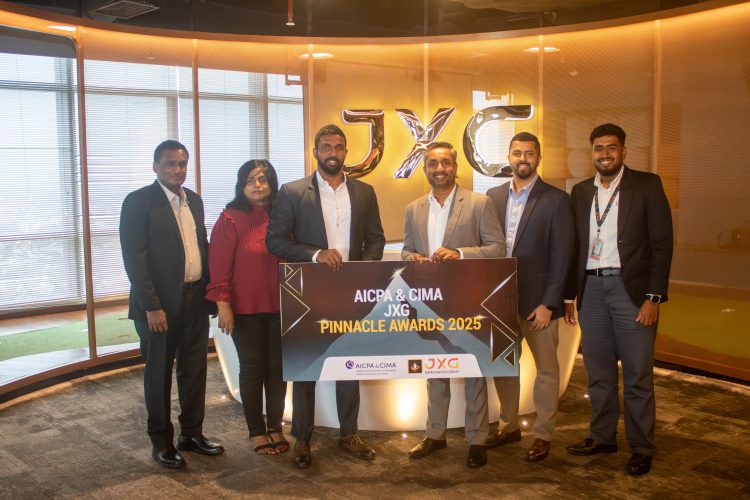
April 29, Colombo (LNW): Originally initiated by Janashakthi Insurance, the prestigious awards event makes a grand return, now under the leadership of JXG (Janashakthi Group) — Sri Lanka’s emerging financial conglomerate.
Reflecting the broader role of the Group, the awards re-emerge as the ‘CIMA – JXG Pinnacle Awards’, in collaboration with AICPA and CIMA Sri Lanka. Scheduled for 11 June 2025 at Cinnamon Life, the awards mark a revival after nearly two decades, once again celebrating leadership, innovation, and outstanding corporate excellence across Sri Lanka.
The revitalised Pinnacle Awards will feature eight distinct categories, including Business Leader of the Year, Chief Financial Officer of the Year, and Young CGMA Star of the Year. Each category will offer Gold, Silver, and Bronze awards, recognising excellence at different levels. An independent panel of judges will oversee the selection process, ensuring fairness, transparency, and credibility.
As a leading financial conglomerate, JXG views the awards as a platform to encourage and spotlight emerging industry leaders and innovative organisations. The event aims not only to celebrate achievements but also to highlight meaningful contributions that continue to shape Sri Lanka’s corporate landscape.
Speaking on the event’s revival, Ramesh Schaffter, JXG Managing Director/Group CEO and a former CIMA Sri Lanka Council Member, stated:
“Our revival of the ‘CIMA – JXG Pinnacle Awards 2025’ reflects our philosophy of celebrating leadership, innovation, and excellence in the ever-evolving business landscape. By joining hands with AICPA and CIMA Sri Lanka, we aim to reinforce the credibility and prestige of these awards, while also offering recipients an opportunity to elevate their future ventures.”
Echoing this sentiment, Tharindu Wijewardana, Acting Country Manager of AICPA and CIMA Sri Lanka, added:
“Through the renewal of our partnership with JXG, we anticipate a promising step forward for Sri Lanka’s professional community. These awards are designed not only to recognise excellence but also to reinforce the values of professionalism, ethical leadership, and performance in practical contexts.”
Previously, the Pinnacle Awards held a significant place on Sri Lanka’s corporate calendar, honouring individuals who later rose to key leadership roles across industries. Past awardees include distinguished professionals such as Hasitha Premaratne (Group Managing Director, Brandix), Suren Fernando (Group CEO, MAS Holdings Ltd), and Mahesha Amarasuriya (Director, Mastercard Sri Lanka).
Applications are now open. Professionals and organisations interested in participating are encouraged to submit their entries via the AICPA and CIMA Sri Lanka website at: AICPA and CIMA JXG PINNACLE AWARDS 2025 | Advocacy | AICPA and CIMA.
The event is also expected to serve as a vital platform for networking and knowledge-sharing among corporate leaders and professionals across diverse industries.
April 29, Colombo (LNW): In a case that revisited a brutal killing from over a decade ago, the Colombo High Court has delivered its final judgment against five individuals found guilty of a murder that occurred in 2012.
The court’s decision brings closure to a long-running legal battle surrounding the violent death of a young man in his early twenties.
High Court Judge Navaratne Marasinghe, presiding over the matter, handed down death sentences to three of the accused after they were found guilty of multiple charges, including the unlawful killing of a 21-year-old male victim, who was reportedly assaulted with a blunt object.
The attack, described in court as deliberate and premeditated, left the victim fatally wounded at the scene.
The remaining two accused, who were aged just 17 and 15 at the time of the offence, were spared capital punishment in light of their status as minors. The judge, taking into account their age at the time of the crime and in line with existing legal provisions on juvenile offenders, instead sentenced them to life imprisonment.
Their conviction, nonetheless, reaffirms the court’s stance on accountability, even for those who were underage when involved in such heinous acts.
The trial had been ongoing for several years, involving detailed testimony, forensic analysis, and a series of legal arguments regarding the nature of the crime and the roles played by each of the accused.
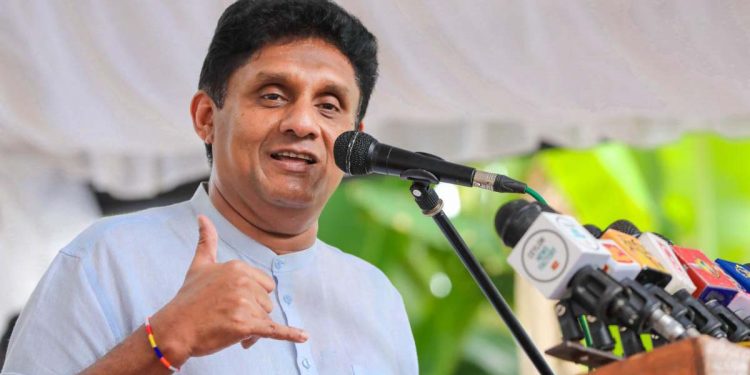
April 29, Colombo (LNW): Opposition Leader Sajith Premadasa has launched a blistering attack on President Anura Kumara Dissanayake’s administration, accusing the government of systematic dishonesty in its communications with the public.
Speaking to a crowd at a campaign rally in Matale yesterday, the Samagi Jana Balavegaya (SJB) leader pointed to what he characterised as a pattern of false statements from the highest levels of government, including President Dissanayake himself.
“The President claimed the US government would issue a joint statement regarding tariff negotiations, but in the end, only the JVP government issued a statement,” Premadasa told supporters. “This is just the latest example of how this administration misleads the public.”
The opposition leader’s criticism comes amid growing public scepticism about the government’s economic policies and diplomatic achievements. Multiple independent analysts have noted discrepancies between the administration’s public claims and verifiable outcomes, particularly in international negotiations.
“Don’t fall into their trap for the third time,” Premadasa warned the crowd, suggesting the current leadership had already deceived voters twice. “We are confident of winning this election.”
The rally, described by observers as well-attended, represents an escalation in campaign rhetoric as the May 6 local government elections approach. Since taking office, the SJB has positioned these elections as a referendum on the Dissanayake government’s performance.
Political commentators note that Premadasa’s focus on government credibility may resonate with voters frustrated by unfulfilled promises and persistent economic challenges despite the administration’s assurances of improvement.
The government has yet to respond to Premadasa’s specific allegations regarding the tariff negotiations with the United States.