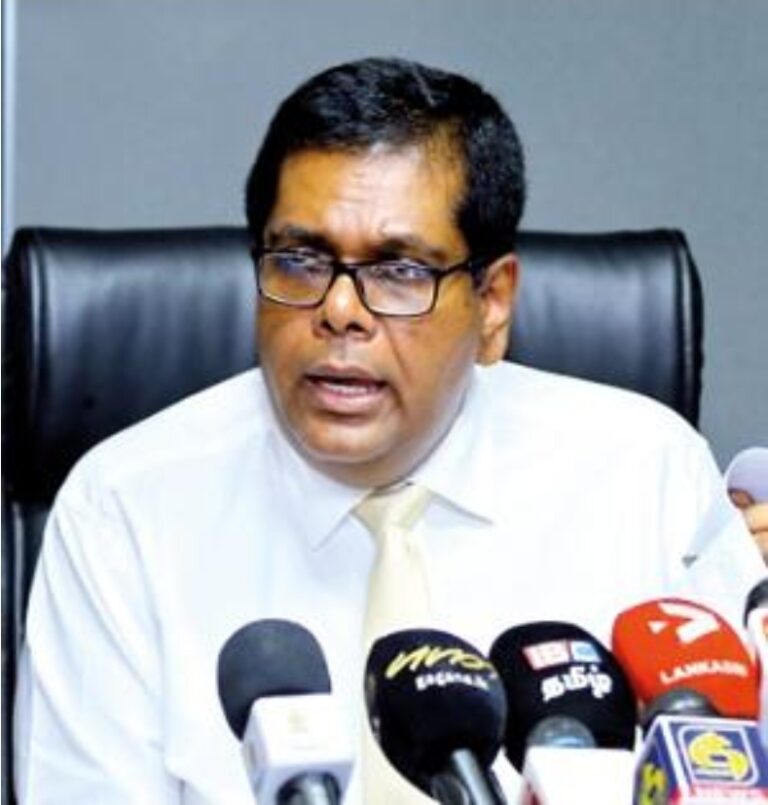
The Secretary to the President, Dr. Nandika Sanath Kumanayake, announced that the government has made a policy decision to continue the “School Nutrition Programme” aimed at reducing anemia among schoolchildren, in collaboration with the World Food Programme (WFP).
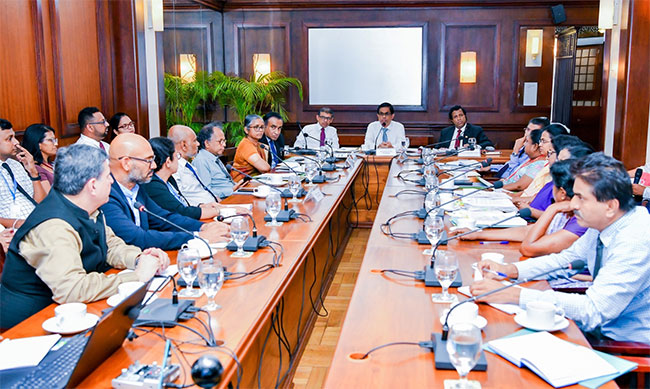
Speaking at a discussion held today (April 23) at the Presidential Secretariat with representatives from relevant ministries, international organizations, and partner institutions, Dr. Kumanayake emphasized the programme’s uninterrupted continuation as a national priority.
The initiative, which provides nutritious lunches to primary school students in malnutrition-prone districts, is designed to address iron deficiency. It is coordinated by multiple stakeholders, including the Ministries of Education and Health, Provincial Councils, the Food Promotion Board, and the Partnership Secretariat for WFP Cooperation. For 2025, the government has allocated Rs. 32 billion to support the effort.
A pilot project is currently underway in four districts, incorporating fortified rice enriched with iron and folic acid. A formal health and nutrition study is being conducted to assess its effectiveness in reducing anemia, with plans to expand the programme nationwide based on its findings.
The World Food Programme, the Bill and Melinda Gates Foundation, the Gateway Foundation, and the Pathfinder Foundation have pledged their continued support.
Key officials present included Secretary to the Prime Minister Pradeep Saputhanthri, Secretary to the Ministry of Education Nalaka Kaluwewa, Secretary to the Ministry of Health Dr. Anil Jasinghe, and other senior representatives.
The Intertropical Convergence Zone (where winds from the Northern Hemisphere and Southern Hemisphere converge) affects the island’s weather.
Showers or thundershowers will occur at times in Western, Sabaragamuwa and North-western provinces and in Galle and Matara districts. Heavy falls above 100 mm are likely at some places in these areas.
Showers or thundershowers will occur elsewhere of the island after 1.00 p.m.
Fairly heavy falls about 75 mm are likely at some places in Central, and Uva provinces and in Batticaloa, Ampara and Polonnaruwa districts.
The general public is kindly requested to take adequate precautions to minimize damages caused by temporary localized strong winds and lightning during thundershowers.
Misty conditions can be expected at some places in Central and Uva provinces and in Ampara district during the morning.
April 24, Colombo (LNW): In the wake of Sri Lanka’s unprecedented economic crisis in 2022, the government launched a bold and far-reaching reform agenda aimed at stabilizing the economy, restoring public trust, and building long-term resilience. Under the leadership of Secretary to the Ministry of Finance, Mahinda Siriwardena—appointed during the peak of the crisis in April 2022—the government prioritized macroeconomic stability, debt sustainability, and inclusive social protection measures.
The 2022 crisis, rooted in structural weaknesses, policy missteps, and external shocks, saw Sri Lanka’s foreign reserves dwindle to just $24 million. The country’s credit rating was downgraded, inflation soared to 70%, and essential goods were in short supply. Widespread power outages and public unrest further underscored the urgency of comprehensive reform.
Recognizing the scale of the challenge, the government collaborated closely with the International Monetary Fund (IMF) to design and implement a wide-ranging economic reform programme. This programme emphasized debt restructuring, revenue-based fiscal consolidation, and institutional strengthening. Siriwardena noted that special attention was given to building a resilient social safety net, acknowledging the disproportionate impact of the crisis on vulnerable communities.
Since January 2021, Sri Lanka has benefited from over 200 IMF missions and training initiatives—around 80 of which focused on public financial management and fiscal governance. This technical support played a crucial role in embedding a culture of disciplined fiscal management and aligning Sri Lanka’s recovery strategy with the IMF’s Extended Fund Facility (EFF) arrangement, approved in March 2023.
Reforms targeted improvements in revenue administration, public finance management, and governance. These efforts not only addressed the immediate symptoms of the crisis but also tackled its root causes, creating a more sustainable economic foundation.
The results have been encouraging. After years of economic contraction, Sri Lanka recorded a 5% GDP growth in the past year. Inflation, once at 70%, has dropped to nearly zero, and foreign exchange reserves now exceed $6 billion. A consistent primary budget surplus reflects the government’s firm commitment to fiscal responsibility.
Despite these gains, Siriwardena cautioned that the recovery remains fragile. Sustaining progress requires continued fiscal discipline, strong macroeconomic management, and enduring collaboration with development partners. He emphasized the importance of context-sensitive reforms, political consensus, stakeholder engagement, and transparent communication as key to maintaining momentum.
Sri Lanka’s path to recovery, while challenging, offers a blueprint for overcoming crisis through timely, coordinated, and inclusive reform strategies.
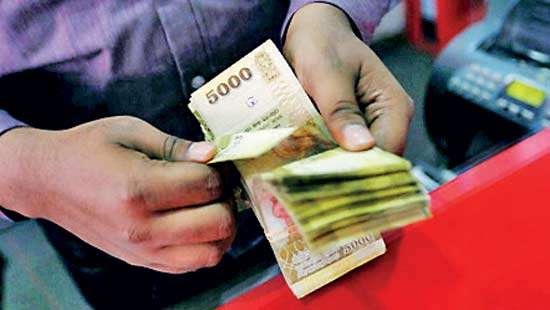
April 24, Colombo (LNW): Sri Lanka is fast-tracking its transition to electronic money and digital transactions in a bid to curb the extensive informal financial sector. With around 45% of the nation’s financial activity taking place outside the formal banking system, the government is moving swiftly to bring these operations under regulatory oversight.
The Ministry of Finance has emphasized that this shift is intended not only to promote financial inclusion but also to strengthen economic efficiency and mitigate the risks associated with unregulated financial practices. This informal sector includes cash dealings, illegal lending operations, and unauthorized digital transfers—practices that, while serving communities with limited banking access, severely challenge financial regulation and transparency.
In response, the Central Bank of Sri Lanka (CBSL) is advancing plans to introduce a Central Bank Digital Currency (CBDC). This government-backed digital currency will offer a secure, traceable, and regulated method of transaction to encourage widespread adoption of e-money. A proof-of-concept for the CBDC was released in 2024, and its findings are expected to shape future integration efforts.
While the Central Bank has not publicly disclosed the full extent of unbanked money, Finance Ministry estimates indicate that approximately Rs. 1.3 trillion circulated outside the formal banking system in 2024. This vast volume of unmonitored capital poses a threat to monetary policy stability, financial oversight, and anti-money laundering efforts.
Economist Prof. Priyanga Dunusinghe of the University of Colombo supports the government’s digital finance agenda, stressing the importance of enhancing digital payment infrastructure and expanding formal banking access—especially in underserved regions. These initiatives, he notes, are vital for reducing financial informality and fostering economic resilience.
In tandem with its digital efforts, the Central Bank has also implemented active monetary policies to absorb excess liquidity. During the first half of 2024, it withdrew about Rs. 546 billion in foreign exchange from the domestic economy to reinforce monetary discipline and curb inflationary pressures.
Digitization offers a host of benefits, including broader financial access, particularly in rural communities, greater transparency through traceable transactions, and reduced costs and delays in processing. For both individuals and businesses, these reforms could lead to more reliable and secure financial practices.
As Sri Lanka undergoes this significant financial transformation, it is vital that regulatory frameworks evolve alongside technological innovation. A forward-looking and inclusive approach will be key to building a more transparent, resilient, and equitable financial system.
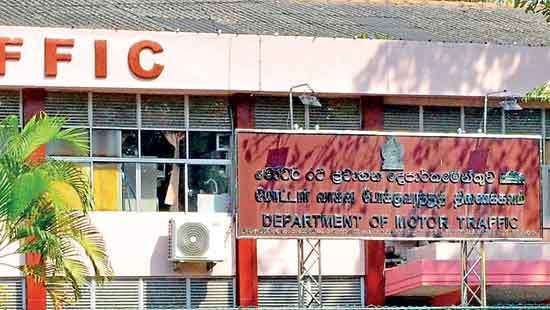
April 24, Colombo (LNW): Sri Lanka’s Motor Traffic Department (DMT) is once again at the center of a significant corruption scandal, highlighting deep-rooted fraudulent activities within the organization. A recent investigation revealed that corrupt officials exploited regulatory gaps to unlawfully import luxury vehicles under false pretenses. This scandal exposes systematic corruption within the DMT, raising serious concerns about governance, accountability, and the integrity of motor vehicle registration procedures.
The fraud involves the illicit importation of luxury cars, including BMW and Mercedes-Benz models, misclassified as tractors in order to bypass regulations and avoid taxes. This was uncovered during a session of the Committee on Public Accounts (COPA), which revealed that DMT officials had been involved in falsifying documents to facilitate these illegal imports. In one instance, 158 vehicles were illegally classified as imports for religious places of worship, violating licensing and registration rules. These abuses show a clear disregard for legal procedures within the department.
During the recent COPA meeting, a high official of the Motor Traffic Department , acknowledged that an internal investigation had led to the suspension of an officer, but the officer was reinstated after a lack of evidence, raising doubts about the effectiveness of accountability mechanisms within the DMT.
COPA members expressed strong dissatisfaction with the department’s preparedness for the meeting and sent officials back with instructions to come better prepared for the next session. The Department of Auditor General, together with the Centre for Public Affairs, uncovered that DMT officials had avoided tax payments and violated laws by misreporting luxury vehicles as tractors. Despite being summoned for questioning, DMT officials failed to fully cooperate with the investigation.
COPA also directed the department to submit a report on the registration of vehicles involved in the fraudulent scheme. However, authorities claimed that no relevant files existed, sparking suspicion that evidence was intentionally destroyed or concealed to protect the culprits.
DMT high official defended his department by stating that the fraud occurred before his tenure. However, his predecessor had already filed a complaint with the Criminal Investigation Department (CID) before leaving office, but no significant follow-up action has been taken under the current administration, fueling further concerns of a cover-up.
As investigations continue, the public remains eager for transparency and accountability. The ongoing corruption scandal at the DMT has severely undermined public trust. Urgent reforms and stricter oversight are needed to restore integrity and ensure that Sri Lanka’s motor vehicle registration system operates without exploitation.
April 24, Colombo (LNW): The Phase II expansion of the Bandaranaike International Airport (BIA) has plunged into controversy following serious allegations of corruption and legal irregularities involving the Sojitz – Larsen & Toubro (L&T) consortium. This development not only questions the legitimacy of the bidding process but also casts doubt on the effectiveness of the government’s anti-corruption promises.
A critical piece of evidence fueling the controversy is a letter from Welcome Hotels, a subsidiary of the ITC Group in India, directed at L&T. The letter accuses the Indian construction company of unprofessional behavior, stating that it abruptly withdrew from a significant hospitality development project mid-execution. This sudden departure allegedly inflicted lasting reputational and financial harm on the hotel group. The incident raises fears about L&T’s reliability and accountability, especially when entrusted with crucial national infrastructure like an international airport terminal.
The situation worsened with a second major revelation: the consortium’s submission included a Power of Attorney (POA) document that had not been attested by a local registrar—a clear and compulsory legal requirement under Sri Lankan procurement laws. This is not a minor oversight; POA attestation is vital to validate the legitimacy of a bidding entity. Historically, similar technical disqualifications have led to outright bid rejection. However, the Sojitz – L&T consortium appears to be progressing in the process, reportedly aided by insiders within the Technical Evaluation Committee (TEC) and airport authorities.
Industry experts argue that overlooking such a critical violation compromises the integrity of the procurement process. If exceptions are made for influential bidders, it could set a dangerous precedent, allowing companies to sidestep legal requirements with the backing of powerful allies. Such a move not only violates procurement norms but also threatens fair competition and national credibility.
Chairman of the TEC, Hasitha Karunaratne, declined to comment when contacted by The Sunday Times Business, stating that the process was conducted in line with government regulations. His silence has only intensified public concern over transparency and fairness.
Critics say the government’s credibility is now at stake. If authorities allow a consortium to proceed despite submitting a legally non-compliant bid and having a history of project abandonment, it would reflect a serious failure in governance and a betrayal of public trust. Reputed project consultants and construction sector leaders stress that this is a defining moment for Sri Lanka’s commitment to anti-corruption. Ignoring due process in favor of convenience or influence would damage investor confidence and international reputation.
As the spotlight remains fixed on the TEC and government response, this case may well become a benchmark for how seriously Sri Lanka upholds procurement laws and fights systemic corruption.
April 24, Colombo (LNW): The Government of Sri Lanka has announced that Sunday, 26 April 2025, will be observed as a National Day of Mourning, following the passing of Pope Francis, a global spiritual leader whose influence resonated far beyond the Catholic Church.
The decision was conveyed by the Ministry responsible for public administration, in recognition of the late pontiff’s profound impact on religious harmony and humanitarian values worldwide.
This symbolic gesture underscores Sri Lanka’s acknowledgement of the Pope’s legacy as a tireless advocate for peace, compassion, and interfaith dialogue.
The government has called upon all citizens to observe the day with due solemnity, encouraging religious institutions and public bodies to pay tribute in a respectful and contemplative manner.
The funeral of Pope Francis is set to take place on Saturday at the historic St. Peter’s Basilica in the Vatican, with a large international gathering of dignitaries, clerics, and mourners expected to attend.
The Vatican has confirmed that his body, transported from his Vatican residence at Casa Santa Marta, will lie in state for three days to allow the faithful to offer their final respects.
His simple wooden coffin has already been placed inside the basilica, where thousands are anticipated to file past in quiet homage.
Pope Francis, who passed away on Monday morning at the age of 88 after suffering a stroke and heart complications, was revered for his unwavering commitment to the poor, his efforts to bridge religious divides, and his role in reshaping the global image of the Catholic Church.
His tenure as pontiff was marked by calls for mercy, environmental stewardship, and social justice, making him a figure of inspiration even among non-Catholics.
In the wake of his death, condolences have poured in from across the world, with leaders and religious figures expressing deep sorrow and admiration. Sri Lankan officials, too, extended heartfelt sympathies to the Vatican and to Catholic communities both locally and abroad.
Sri Lanka, home to a diverse religious population, has historically maintained strong ties with the Vatican and previously hosted Pope Francis during his visit to the island in 2015. That visit, which included an open-air mass in Colombo and a pilgrimage to the Marian shrine in Madhu, was seen as a milestone in post-war reconciliation efforts, drawing crowds in the hundreds of thousands.
In a grave and urgent call to national conscience, eminent lawyer and patriot Panduka Keerthinanda has expressed profound alarm over the spiraling state of insecurity in Sri Lanka, warning that the country is fast becoming a place where “the value of life means nothing.” His words come at a time when rising gun violence, failed governance, and a culture of impunity are shaking the nation to its core.
Keerthinanda, no stranger to personal tragedy, speaks not as a politician or opportunist but as a wounded witness to Sri Lanka’s darkest days. In his youth, he suffered a trauma that few can fathom: his father, Tudor Keerthinanda, a senior executive committee member of the United National Party (UNP), was assassinated in cold blood during the 1988/89 insurgency. His mother was maimed for life, and their family vehicle burned as gunmen fired indiscriminately after hurling a crude bomb into the car in a Colombo suburb. It was a massacre that stunned the nation.
Now, decades later, the cycle of violence appears to be returning, and Keerthinanda fears the state is once again failing to uphold its most basic duty: the protection of life.
Since the election of Anura Kumara Dissanayake and the National People’s Power (NPP) coalition, the situation on the ground has deteriorated rapidly. Sri Lanka has witnessed over 30 shooting incidents, resulting in at least 25 deaths in just the first quarter of 2025. Organized criminal networks have grown bolder, the police seem overmatched, and public trust is evaporating.
“This isn’t just a law-and-order issue, this is a collapse of conscience,” Keerthinanda said. “If the government doesn’t wake up, we will not be able to claim to be a civilized nation. The blood of our people cannot be spilled so easily, so meaninglessly.”
Adding fuel to the fire are two deeply troubling cases that have gripped the public’s attention: the deaths of schoolchildren at the Altaire Building, hastily declared a suicide despite anguished objections from a grieving mother of one of the victims and the mysterious death of Australian national Caleb Delano Alexander at Colombo’s upscale Crescat Residencies – another case that appears to have been swept under the rug with minimal investigation.
In Keerthinanda’s view, these examples underscore a terrifying truth: “We are now a country where not only are people killed but the truth is buried with them.”
The ongoing economic downturn, lack of investor confidence and inexperience in governance are creating a volatile environment. But for Keerthinanda, the red line has been crossed not with fiscal mismanagement, but with the loss of reverence for life itself.
“The duty of any nation begins with the protection of its people. When you can’t even offer that, what legitimacy do you claim?” he asked, visibly distressed.
He also called out what he sees as a hollow performance by state institutions, noting that even the sacred 10-day exposition of the Buddha’s tooth relic in Kandy saw the death of a devotee standing in the long winding queue, the streets turn into makeshift dumps and toilets, reflecting a broader societal breakdown. “If we can’t even manage sacred gatherings with dignity and sanitation, what does that say about our priorities?” he questioned.
Lawyer Panduka Keerthinanda is not simply making a political statement. His appeal is rooted in decades of personal pain, legal insight, and love for his homeland. As one of the few voices rising above the noise, he ends with a solemn warning:
“If this trajectory continues, we will not be debating democracy or economics, we will be sifting through ashes. And this time, there might be no rebuilding.”
The country is listening. The government must now decide. Will it continue to ignore the signs, or rise before it’s too late?
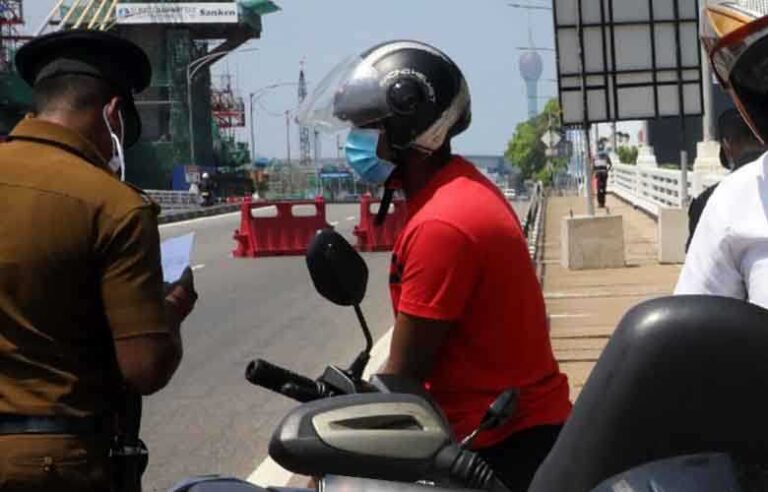
April 24, Colombo (LNW): Law enforcement authorities have implemented a new nationwide directive aimed at enhancing public safety by scrutinising individuals wearing motorcycle helmets in public spaces without accompanying vehicles.
The measure, introduced by Police Headquarters, aims to clamp down on a rising trend of crimes involving concealed identities.
This decision follows a series of serious incidents across the country, in which suspects used full-face helmets to mask their features during armed attacks and other violent crimes.
The anonymity offered by such headgear has been exploited to evade identification by security cameras and eyewitnesses, prompting police to reassess how such items are regulated in non-vehicular settings.
Under the new policy, police officers are authorised to approach and inspect anyone seen wearing a helmet whilst not operating or travelling on a motorcycle.
Officers are particularly encouraged to intervene if the individual appears to be acting in a suspicious manner or loitering in sensitive or high-risk areas. These checks may include verifying identification and examining personal belongings.
Authorities clarified that the intent of the directive is not to inconvenience the public, but rather to create a deterrent effect and mitigate potential threats before they materialise.
Helmets, they stressed, are a protective measure designed strictly for riders and pillion passengers and should not be used outside their intended context.
In addition to routine patrols, police units across urban centres and key transportation hubs have been instructed to remain especially vigilant in their monitoring efforts.
The directive also forms part of a broader campaign to restore public confidence in safety amid concerns over an uptick in targeted shootings and gang-related activity.
Police have appealed to the public for cooperation, asking citizens to report any suspicious behaviour and to adhere to proper use of safety gear. Officers have been briefed to carry out the checks with professionalism and discretion, ensuring that the rights and dignity of individuals are respected throughout the process.
April 24, Colombo (LNW): In a move aimed at tackling the persistent issue of anaemia among schoolchildren, Sri Lanka has reaffirmed its commitment to a comprehensive school nutrition initiative, vowing to ensure its continuity and eventual expansion.
The announcement was made during a high-level meeting held at the Presidential Secretariat, where senior government officials and international development partners gathered to review the progress of the programme.
Dr Nandika Sanath Kumanayake, Secretary to the President, revealed that the government has adopted a clear policy directive to maintain uninterrupted support for the national school meal programme.
This decision underscores the administration’s broader commitment to addressing malnutrition and iron deficiency among primary school pupils, particularly in underserved regions where such issues are most acute.
The programme is being developed in collaboration with several key partners, including the World Food Programme (WFP), the Bill and Melinda Gates Foundation, the Gateway Foundation, and the Pathfinder Foundation.
It forms part of a larger effort to integrate nutrition-focused policies into the national education framework, with the aim of improving both health outcomes and educational performance among young learners.
A pilot phase is currently being conducted in four districts identified as having high incidences of nutritional deficiencies. This trial run includes a thorough health and nutrition study designed to assess the programme’s impact, particularly its effectiveness in reducing anaemia. Based on the results of this research, the government plans to scale the initiative nationwide.
As part of the nutritional intervention, school meals are being fortified with iron and folic acid through the use of enriched rice—an approach specifically targeted at countering iron deficiency.
The fortified meals are designed not only to improve the health of students but also to support their cognitive development and classroom performance, both of which can be adversely affected by malnutrition.
The government has earmarked Rs. 32 billion for this effort in the current fiscal year, highlighting the scale of its investment in public health and education.
Implementation is being coordinated through a multi-agency effort, involving the Ministry of Education, the Ministry of Health, and several provincial councils and national boards, including the Food Promotion Board and the Partnership Secretariat for WFP Cooperation.
The recent meeting brought together a wide range of stakeholders, including senior secretaries from key ministries, representatives from international development agencies, and health and education experts.
Their discussions centred on optimising the implementation strategy, addressing logistical challenges, and ensuring that the programme reaches the intended beneficiaries efficiently.