March 03, Colombo (LNW): Deputy Minister of Economic Development Prof. Anil Jayantha Fernando, has firmly denied claims made by a local newspaper that the government intends to impose a 15 per cent tax on remittances sent by Sri Lankan migrant workers.
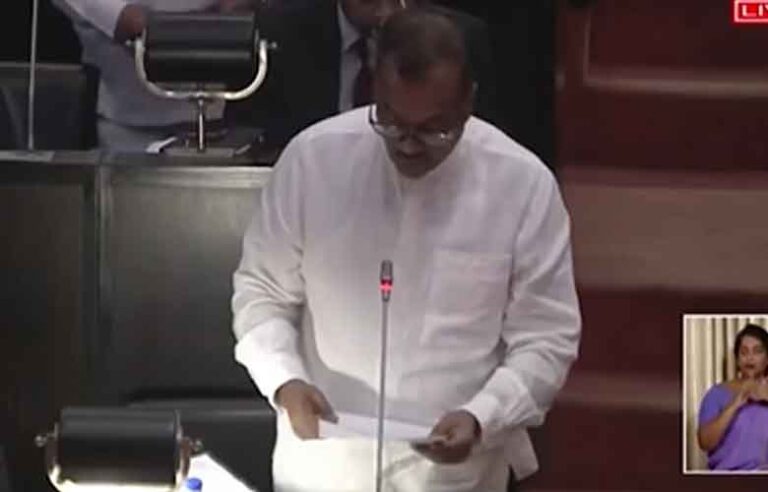
Speaking in Parliament today, Fernando addressed the misinformation, which he described as an attempt to tarnish the government’s reputation and undermine his role as Deputy Minister.
The false reports, published in a Sunday newspaper, suggested that the 2025 Budget would introduce a tax on remittances, a move which would significantly impact the millions of Sri Lankan families who rely on money sent by relatives working abroad.
However, Minister Fernando clarified that the 2025 Budget, which had already been presented and passed in Parliament, did not include any such provision.
He expressed concern that the article, which also quoted him, was not only factually incorrect but had also violated his parliamentary privileges.
Fernando accused the newspaper of deliberately publishing misleading information to create confusion and harm the credibility of both himself and the government.
In response, he called for the matter to be referred to the Parliamentary Privileges Committee to investigate the issue thoroughly and take the necessary action against the publication.
March 03, Colombo (LNW): Sri Lanka’s tourism sector has experienced impressive growth, with earnings reaching $400.7 million in January 2025, as reported by the Central Bank of Sri Lanka (CBSL).
This represents a significant 17.2 per cent increase compared to the $341.8 million generated in the same month of the previous year, highlighting the ongoing recovery and resilience of the industry.
The positive trend continues with the Sri Lanka Tourism Development Authority (SLTDA) reporting that 232,341 international visitors arrived in the country between February 01 and 27, 2025.
This brings the total number of tourist arrivals for the year, up to February 27 to a remarkable 485,102.
Looking at the previous months, the country earned $362.1 million from tourism in December 2024, further reinforcing the sector’s positive momentum.
The figures reflect a broader recovery trend, as total tourism revenue for the entirety of 2024 amounted to $3,168.7 million, marking a robust 53.2 per cent increase from $2,068 million in 2023.
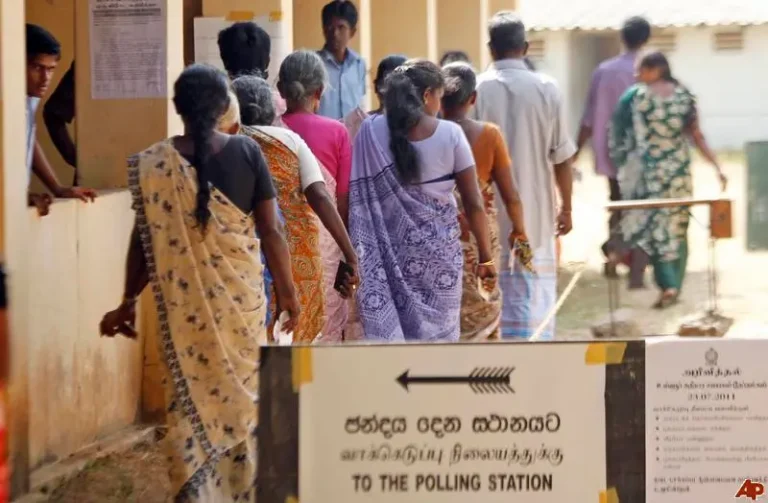
March 03, Colombo (LNW): The Election Commission has officially announced that the submission of nominations for the highly anticipated 2025 Local Government Elections will begin on March 17, 2025.
The nomination period will run for a brief window, closing at 12.00 noon on March 20, 2025.
The Commission has urged all political parties, independent groups, and eligible candidates to prepare their nominations in advance to ensure a smooth process.
This election, which is set to shape local governance across the country, is expected to attract significant participation from a wide range of candidates.
The Commission also reassured the public that all necessary measures are being taken to ensure transparency and fairness in the electoral process.
March 03, Colombo (LNW): One person tragically lost their life due to a lightning strike, whilst hundreds of others have been impacted by severe weather conditions affecting multiple regions, the Disaster Management Centre (DMC) reported.
A total of 726 individuals from 178 families have been affected by the adverse weather, which has brought heavy rains, lightning, and strong winds to several districts, including Galle, Ratnapura, Kegalle, Moneragala, and Jaffna.
In addition to the fatality caused by the lightning strike, the DMC confirmed that one person sustained injuries due to the relentless rainfall in Ratnapura, where a particularly intense downpour has led to widespread disruption.
As a result of the extreme weather, 177 homes have suffered partial damage, leaving many families in distress.
The DMC has urged residents to remain vigilant, as the weather conditions are expected to continue, and advised those in the impacted regions to take precautions to ensure their safety.
March 03, Colombo (LNW): Three individuals have been taken into custody in connection with the brutal murders of two people in the Ethkandura area of the Baddegama Police Division.
The victims were killed in a violent confrontation between two groups on February 27, during which sharp weapons were reportedly used.
The Baddegama Police swiftly launched an investigation into the violent incident, and after days of intensive inquiry, the authorities were able to make arrests on the 2nd of March, apprehending three suspects.
The individuals, aged 21, 33, and 41, are said to be residents of the Batapola and Ethkandura areas.
Whilst further investigations are ongoing, the police are continuing to piece together the events that led to the deadly clash and are exploring the motives behind this gruesome act.
March 03, Colombo (LNW): Air quality was generally good across most cities in Sri Lanka, with moderate levels recorded in Jaffna, Kurunegala, Galle, and Puttalam, according to the Vehicular Emission Test Trust Fund of the Department of Motor Traffic.
The department reported that air quality levels for the day were forecast to range between 26 and 56, which indicates favourable conditions in most areas, although some cities such as Jaffna, Galle, Puttalam, and Badulla showed moderate air quality.
These figures suggest that air pollution is within acceptable limits for the majority of the country.
The highest concentrations of air pollutants were observed during peak hours, particularly between 7.30 to 8.30 AM and again between 1.00 to 2.00 PM, likely due to increased traffic and industrial activities.
Despite these temporary spikes, the air quality in general remained at a manageable level for the rest of the day.
Looking ahead, the forecast indicates that air quality across most of the island will continue to be rated as good over the next 24 hours, offering relief for those concerned about pollution levels.
March 03, Colombo (LNW): The Petroleum Distributors’ Association has raised significant concerns over the government’s apparent plans to transfer ownership of Ceylon Petroleum Corporation (CPC)-owned filling stations to foreign entities.
Kusum Sandanayake, the Vice-Chairman of the association, expressed his worry that the government is actively working towards this objective, which he claims could have serious implications for local businesses and the national economy.
In response to another pressing issue, Sandanayake also revealed that the association plans to visit the Presidential Secretariat this (03) morning to submit a formal memorandum addressing their concerns about the recent reduction in the 03 per cent commission paid to filling station owners.
This move has been met with resistance from local distributors, who argue that the cut undermines their ability to sustain their operations.
Meanwhile, distributors associated with Lanka IOC fuel have announced a halt in placing fuel orders due to mounting financial losses. Kosala Vidana Arachchi, Chairman of Lanka IOC, explained that the influence exerted by CPC has led to a significant loss of approximately Rs. 35,000 per order, making it increasingly difficult for distributors to operate under these conditions.
This development has raised concerns within the industry about the fairness and sustainability of the current fuel distribution system.
In a related development, opposition leader Sajith Premadasa speaking at a public gathering in Nochchiyagama accused the government of failing to address the critical issues surrounding fuel distribution.
Premadasa charged that the government’s lack of a clear vision or strategy has led to a series of problems in the sector, which continues to affect both distributors and consumers.
He emphasised the need for a comprehensive approach to resolve the ongoing challenges and ensure the stability of the fuel supply system.
March 03, Colombo (LNW): In February 2025, consumer prices in the Colombo district continued their downward trend, primarily driven by a significant reduction in electricity tariffs during the third week of January.
This price adjustment, combined with a slight easing of food prices, such as rice, provided further relief to consumers who had been burdened by skyrocketing costs in previous years.
The Consumer Price Index (CPI), a key indicator of inflation, fell by 4.2 per cent in the year ending February 2025, a sharper decline compared to the 4.0 per cent drop seen in January.
This marks the sixth consecutive month of deflation, following the onset of this current phase of falling prices in September 2024. The steady decline in headline prices signals a period of relief for consumers, after experiencing more than a 70 per cent increase in the prices of everyday goods just a few years ago.
On a monthly basis, prices also dipped into negative territory, with a 0.2 per cent decrease observed in February. This decline was largely attributed to a substantial fall in non-food prices, stemming from the reduction in electricity costs.
This followed a 0.5 per cent increase in prices from December 2024 to January 2025, reflecting the volatility often seen in monthly price changes.
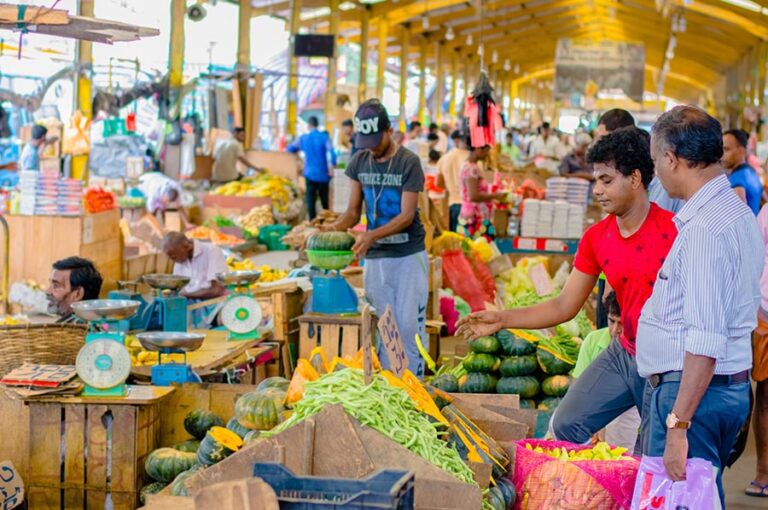
Food prices, on the other hand, showed a modest decrease on an annual basis, dropping by 0.2 per cent as certain staple foods, including rice, saw price reductions. The rising cost of rice had been a major concern in recent months, placing significant pressure on both the government and consumers.
However, other food items such as fresh fish, dried fish, potatoes, and large onions saw price reductions, providing some relief. In contrast, the prices of coconuts, fresh fruits, and vegetables surged in February, leading to a slight 0.3 per cent increase in food prices on a monthly basis, matching the rise seen in January.
Non-food prices experienced a sharp decline of 6.1 per cent in the year through February 2025, reflecting the impact of the electricity tariff cuts. On a month-to-month basis, non-food prices fell by 0.5 per cent, contributing significantly to the overall reduction in the CPI.
Core inflation, which excludes the often volatile categories of food, energy, and transport, rose by 0.7 per cent in the twelve months to February 2025. This represents a slowdown from the 1.2 per cent increase recorded in January, indicating that underlying price pressures remain subdued.
The Central Bank has forecast that the current phase of deflation will persist through the first quarter of 2025, with inflation expected to turn positive from the second quarter onwards.
The Bank anticipates inflation will stabilise around its medium-term target of 5 per cent in the latter half of the year. However, inflation is expected to briefly exceed this target by approximately 2 percentage points in the second quarter of 2026.
March 03, Colombo (LNW): The showery trend is expected to continue further across island, according to the Department of Meteorology.
In its daily weather forecast today (03), the Department said showers or thundershowers will occur at times in Eastern, Southern and Uva provinces and in Matale, Nuwara-Eliyaand Polonnaruwa districts.
A few showers may occur in Northern province and in Anuradhapura district, and showers or thundershowers will occur at several places elsewhere during the afternoon or night, the statement added.
Showers may occur in the coastal areas of Western province during the morning too.
Fairly heavy showers above 75 mm can be expected at some places in Western, Sabaragamuwa, Southern and Uva province and in Matale and Nuwara-Eliya districts.
The general public is kindly requested to take adequate precautions to minimise damages caused by temporary localised strong winds and lightning during thundershowers.
Marine Weather:
Condition of Rain:
Showers or thundershowers will occur at several places in the sea areas off the coast extending from Batticaloa to Galle via Hambantota.
Winds:
Winds will be north-easterly to easterly and speed will be (25-35) kmph.
State of Sea:
The sea areas around the island will be moderate. Temporarily strong gusty winds and very rough seas can be expected during thundershowers.
March 02, Colombo (LNW): China has once again extended its financial and strategic support to Sri Lanka, providing much-needed economic relief through credit lines and grants.
These measures aim to help the island nation stabilize its economy, which has been struggling with a severe financial crisis.
A longside financial aid, Chinese investments in infrastructure, energy, and trade continue to play a crucial role in Sri Lanka’s long-term economic recovery.
China’s investment strategy in Sri Lanka has consistently focused on long-term benefits, even at the cost of short-term financial risks.
A notable example is the Hambantota Port, where a Public-Private Partnership with China Merchant Port Group was established in 2017.
Similarly, the Colombo Port City project highlights China’s commitment to large-scale investments, despite criticisms. These initiatives are seen as key drivers of sustainable economic growth.
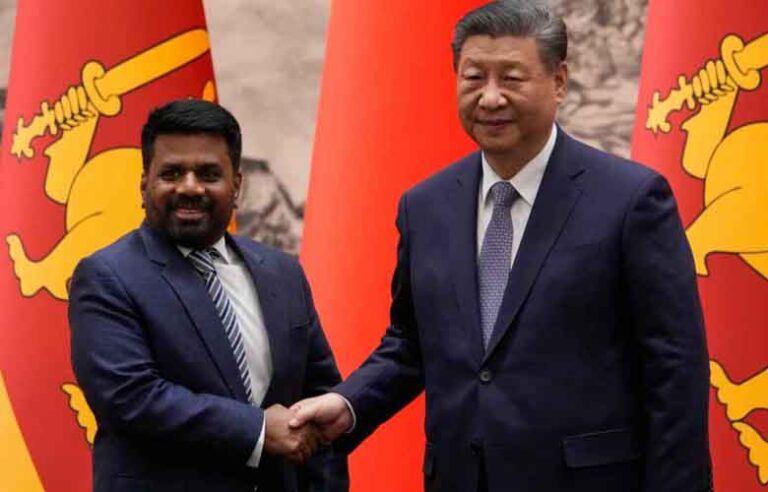
The recent visit of President Anura Kumara Dissanayake to Beijing reinforced China’s commitment to Sri Lanka.
During the visit, 15 agreements were signed, covering economic development, education, media, and culture, aligning with China’s Belt and Road Initiative and Sri Lanka’s 2030 digital economy goals.
These agreements underscore China’s patient investment approach, designed to yield long-term economic benefits.
In another significant development, China’s Triumph Group, in partnership with local company Dilmah, is set to begin mineral processing operations in Aruwakkalu.
The project, approved by Sri Lanka’s Board of Investment, will be managed by Puttalam Ilmenite Ltd., which holds exclusive rights to mineral sands.
Triumph Group is a subsidiary of the China National Building Materials Group (CNBM), a Fortune 500 company with assets exceeding $87 billion and annual revenues of over $51 billion.
The minerals sector presents a valuable opportunity for foreign investment and industrial expansion in Sri Lanka.
However, issues such as policy instability, bureaucratic inefficiencies, political interference, and corruption have hindered the sector’s growth. A strategic foreign partner with expertise and a long-term vision is essential to ensure sustainable development in this area.
Despite securing government approvals, the Aruwakkalu mineral project has encountered difficulties due to access restrictions.
The land, controlled by the Sri Lanka Cement Corporation, requires official clearance for mining operations. In the past, such approvals have been influenced by political bargaining, delaying investment progress.
A petition regarding this issue is currently under review by the Supreme Court of Sri Lanka, following reports from
Transparency International and the Human Rights Commission. Allegations suggest that a former Sri Lanka Cement Corporation chairman, under political influence, granted mineral rights to Asha Minerals—an inexperienced company—without proper authorization.
The Attorney General has since intervened, objecting to the agreement, and the new government is expected to address these irregularities.
With the new administration’s commitment to fighting corruption and improving governance, the public eagerly awaits reforms that will unlock the true potential of the mineral sands sector and other industries.
As expectations rise, Sri Lankans hope that the government will act swiftly to eliminate corruption and create a more transparent and prosperous economic environment.