Home Blog Page 70

Sri Lankan Crew Member Found Dead in Hooghly River After Reported Jump

0

The body of a Sri Lankan crew member serving aboard a Singapore-bound container vessel was recovered from the Hooghly River in Kolkata on Friday evening, after he reportedly jumped into the water near Netaji Subhas Dock.

Police said the deceased was employed on the vessel Kota Dunia. Preliminary information identified him as Bandarawatte Vidanelage Prabashwara Tharindu Bandarawatte, a Sri Lankan national.

According to Deputy Commissioner (Port) Harikrishna Pai, the West Port Police Station received information at around 11.26 p.m. on Thursday that a crew member had allegedly jumped into the river near the dock area. The vessel, travelling from Singapore via Chittagong, was stationed mid-stream at the time and had not yet berthed.

DC Pai stated that other crew members noticed the incident and immediately informed the captain, who alerted the Port Traffic Department and requested urgent assistance. Two tugboats from the Port Marine Department initiated search operations in the surrounding waters, but the individual could not be located during the initial search.

Subsequently, a Disaster Management Group team comprising expert divers was deployed through the Kolkata Police Control Room at Lalbazar. Port divers also joined the operation. After several hours of search efforts, the body was recovered at approximately 5.05 p.m. on Friday.

Police said they have contacted the Sri Lankan Embassy to inform the family and determine whether any complaint would be lodged. Authorities have not released further details regarding the exact location of recovery or the condition of the body, stating that further information will be provided following the post-mortem examination and confirmation of the cause of death.

WEATHER FORECAST FOR 14 FEBRUARY 2026

0

Showers will occur at times in Central and Uva provinces and in Ampara, Batticaloa and Hambantota districts. Fairly heavy falls about 50 mm are likely at some places in Uva and Central provinces and in Ampara and Batticaloa districts. 

Several spells of showers will occur in Northern and North-central provinces and in Trincomalee district. 

Showers or thundershowers will occur at several places elsewhere after 1.00 p.m. and fairly heavy showers about 75 mm are likely at some places in Western and Sabaragamuwa provinces and in Galle and Matara districts.

Misty conditions can be expected at some places in Western, Sabaragamuwa and Central provinces and in Galle and Matara districts during the early hours of the morning.

The general public is kindly requested to take adequate precautions to minimize damages caused by temporary localized strong winds and lightning during thundershowers.

Why Sri Lanka’s Container Depots Need Modern Regulation?

0

LISTEN TO STORY

WATCH STORY

By: A Special Correspondent

February 13, Colombo (LNW): As global trade becomes faster, more complex, and increasingly competitive, countries that fail to modernise their logistics frameworks risk being left behind. In Sri Lanka, one such challenge has quietly persisted for decades: the outdated regulation of inland container depot operators. More than three years after a formal proposal was submitted in February 2023, the issue remains unresolved, raising important questions about the future of the country’s shipping and logistics sector in 2026.

At the heart of this matter is the way container depot operators are currently governed. Under existing law, they fall within the scope of the Shipping Agents Act No. 10 of 1972. This legislation was designed at a time when Sri Lanka’s trade volumes were modest and its logistics systems relatively simple. Over fifty years later, the country operates in a vastly different environment, shaped by containerisation, digital tracking, international leasing companies, and complex supply chains.

Yet, despite these changes, inland container depots continue to be regulated as though they were conventional shipping agents.


A Sector with a Distinct Role

Inland container depots perform a highly specialised function. Once containers are unloaded by importers, they must be stored securely until shipping lines or leasing firms require them again. These depots act as custodians of valuable equipment that is constantly circulating through global networks.

They are not involved in freight forwarding, vessel operations, or agency services in the traditional sense. Their role is focused on storage, maintenance, handling, and logistics coordination. Treating them as ordinary service providers under old legislation has created legal and operational confusion.

Industry stakeholders have long argued that this mismatch discourages investment, limits infrastructure development, and exposes operators to regulations that are irrelevant to their actual work.


The 2023 Proposal: A Call for Reform

In February 2023, a detailed proposal was submitted to address this problem. It called for a new legislative framework exclusively for inland container depot operators. The document highlighted how existing laws had created what it described as an “anomalistic situation”, preventing the sector from evolving in line with modern trade practices.

The proposal urged policymakers to recognise depot operators as a distinct category and to regulate them through tailored legislation. Among its key recommendations were:

– Introducing a separate Act for container depots
– Removing them from the Shipping Agents Act
– Establishing regulations specific to storage and handling services
– Creating transparent guidelines for rates and charges
– Encouraging infrastructure investment and professional standards

The ultimate objective was clear: to bring legal clarity, promote efficiency, and strengthen Sri Lanka’s position in regional logistics.


Why the Issue Matters in 2026

Three years on, the relevance of this proposal has only grown. Sri Lanka is still working to recover from economic shocks, restore investor confidence, and rebuild its trade networks. Ports, warehouses, and inland logistics hubs are critical components of this recovery.

Without clear and modern regulation, inland container depots face uncertainty. Investors hesitate. Banks become cautious. Operators struggle to expand. In the long term, these weaknesses affect exporters, importers, and consumers alike through higher costs and slower services.

Meanwhile, competing ports in South Asia and Southeast Asia continue to upgrade their legal and regulatory frameworks, offering predictable environments for logistics companies. If Sri Lanka does not keep pace, it risks losing business to more agile neighbours.


The Role of Policymakers

The proposal submitted in 2023 called for action from the Cabinet and the Ministry of Ports, Shipping, and Aviation. It recognised that effective regulation is not about imposing more controls, but about creating rules that reflect reality.

Well-designed legislation could help professionalise the sector, prevent arbitrary pricing, improve safety standards, and encourage long-term planning. It would also reduce disputes between depot operators, shipping lines, and regulators by clearly defining responsibilities.

Most importantly, it would send a signal that Sri Lanka is serious about building a modern logistics ecosystem.


A Missed Opportunity—or a Second Chance?

The delay in implementing these reforms represents a missed opportunity. However, 2026 can still become a turning point. With renewed focus on trade-led growth and regional integration, revisiting this proposal could deliver tangible benefits.

Modernising container depot regulation is not a technical issue confined to industry insiders. It affects export competitiveness, port efficiency, employment, and foreign investment. It shapes how smoothly goods move from factories to ships and from ports to markets.

As Sri Lanka looks ahead, policymakers must recognise that strong infrastructure requires strong institutions and smart laws. The framework governing inland container depots is overdue for renewal.

The question is no longer whether reform is needed, but whether the country is ready to act on it.

If it does, Sri Lanka may yet turn a long-standing regulatory weakness into a strategic advantage in the global logistics race.

The X-Press Pearl Crisis: Technical Failures in Handling, Not Blame

0

LISTEN TO STORY

WATCH STORY

By: A Special Correspondent

February 13, Colombo (LNW): The MV X-Press Pearl disaster in May-June 2021 off Sri Lanka’s western coast released toxic chemicals, oil residue, and billions of plastic pellets into the sea, devastating ecosystems and fishing communities. Rather than dwelling on assigning fault, the real issues stem from systemic gaps in maritime emergency protocols and port decision-making that allowed a containable hazard to escalate. With Singaporean parties open to negotiation through proper channels, focus should shift to procedural reforms for future prevention.


Origins of the Crisis

The fire aboard the Singapore-flagged vessel began with a leaking chemical container identified days before it neared Colombo. Ports in Qatar’s Hamad and India’s Hazira declined refuge, citing risks to their infrastructure, leaving the ship to proceed under port discretion rules that lack binding obligations for assistance. By arrival in Sri Lankan waters, the situation had worsened irreversibly, turning a manageable issue into an environmental catastrophe.

This sequence highlights how international maritime law prioritises life-saving over pollution prevention, treating environmental risks as secondary until damage occurs. Sri Lanka, positioned on a busy shipping corridor, inherited the problem without prior influence over upstream choices.


Flaws in Port Discretion

Global shipping relies on voluntary port decisions for distressed vessels, a flexibility that protects local interests but externalises costs to downrange coastal states. The X-Press Pearl case exposed this: no enforceable mechanism compelled early intervention, allowing hazards to migrate geographically. Ports face incentives to refuse, fearing legal liabilities without shared frameworks, resulting in deferred responsibility.

Sri Lanka’s experience underscores vulnerability for nations without advanced leverage or infrastructure to demand action elsewhere. Discretion, while rational for individual ports, creates a chain of inaction where environmental harm accumulates predictably.

Legal and Accountability Gaps

Sri Lanka’s Supreme Court ordered around US$ 1 billion in compensation in 2025, valid domestically but unenforceable abroad without international ratification. Singapore resists direct payment, arguing it upholds jurisdictional norms and global shipping predictability, where liabilities require arbitration or conventions. This stance frames the disaster as a multi-jurisdictional failure, not isolated negligence.

Rather than defiance, Singaporean communications emphasise legal process over unilateral demands, warning that bypassing it could raise insurance costs and alter trade routes. The impasse reveals limits in holding parties accountable across borders without aligned mechanisms.


Exclusion of Key Expertise

Post-disaster reviews by the Sri Lankan government omitted critical experts involved in the incident, undermining comprehensive analysis of handling errors. This procedural oversight missed opportunities to dissect technical decisions, such as anchoring protocols and containment strategies, perpetuating knowledge gaps. Inclusive processes could have identified specific lapses in communication and response coordination.


Path Forward Through Negotiation

Singapore’s position signals readiness for dialogue via recognised channels like arbitration, prioritising systemic fixes over retrospective penalties. Negotiations could address compensation while reforming port obligations, such as binding assistance for pollution risks. Sri Lanka stands to gain by engaging constructively, leveraging the accused parties’ willingness to avoid prolonged stalemate.


Reforms for Prevention

True resolution demands structural changes: mandatory early intervention protocols, shared liability funds, and elevated status for environmental threats in maritime law. Enhancing regional cooperation in the Indian Ocean corridor would distribute risks fairly, preventing recurrence. By focusing on these technicalities, stakeholders can build resilience beyond the X-Press Pearl’s shadow.

Legacy SIM Crackdown Tests Digital Trust Framework

0

Sri Lanka’s plan to mandate re-registration of SIM cards issued before August 2019 signals a significant tightening of digital identity oversight, reflecting the Government’s broader effort to modernise telecommunications regulation and strengthen investigative capacity.

Under existing regulations introduced in 2019, mandatory subscriber verification applied only to new SIMs. Millions of earlier-issued numbers remain outside that regulatory net, with incomplete or unverifiable subscriber records. Authorities argue that this gap has impeded criminal investigations and court proceedings, particularly in cases involving cybercrime, fraud, and organised networks.

Yet implementing retroactive compliance presents operational and social challenges.

Telecommunications companies will be required to collect, verify, and securely store updated personal data potentially including national identity card details and proof of residence—for a vast subscriber base. Ensuring accuracy while preventing identity fraud during the re-registration process will test administrative systems.

More critically, the initiative expands the state’s centralised visibility over citizen communication identifiers. Although officials emphasise lawful investigative needs, privacy advocates question the absence of publicly detailed safeguards governing data access, retention limits, and oversight mechanisms.

Sri Lanka’s evolving data protection laws remain in early stages of enforcement. Without strong independent regulatory supervision, expanded SIM databases may heighten fears of profiling or political misuse particularly in a context where the new administration has launched multiple probes into financial and governance irregularities.

On the ground, subscribers face immediate hurdles. Individuals who obtained SIM cards years ago through resellers or informal arrangements may not possess matching documentation. Migrant workers, estate communities, and low-income citizens could face service disruptions if verification deadlines are strict.

Service suspension would extend beyond voice calls. Mobile numbers now anchor two-factor authentication for banking, digital payments, and government platforms. Any interruption risks excluding vulnerable populations from essential services.

The Government’s proposal also introduces registration pathways for minors aged 16-17 and simplifies issuance for foreign tourists measures aligned with digital economy expansion and tourism growth. However, expanding eligibility while tightening compliance underscores the complexity of balancing inclusion with regulation.

The broader question remains whether the re-registration drive strengthens security without undermining public confidence. Transparent communication, phased implementation, grievance mechanisms, and clear legal boundaries will be essential to prevent the initiative from being perceived as intrusive rather than protective.

Sri Lanka’s digital governance trajectory now hinges on whether enhanced oversight translates into improved security or diminished trust.

#ActiveColombo Vision Gains Momentum through Global Triathlon

0

Beyond tourism revenue, IRONMAN 70.3 Colombo is being deployed as a catalyst for urban transformation under the broader #ActiveColombo initiative an ambitious effort to reshape the capital into a healthier, more walkable, and globally competitive city.

Organizers describe the event as a “platform for national confidence,” highlighting its symbolic significance amid Sri Lanka’s economic rebuilding phase. By hosting a world-recognized endurance race, authorities aim to demonstrate stability, organizational capability, and readiness for international investment.

The triathlon aligns with Colombo’s longer-term urban strategy. Improved pedestrian pathways, cycling infrastructure, public spaces, and waterfront development are all part of positioning the city as an “active lifestyle” destination. Events like IRONMAN test not only athletic endurance but also urban functionality traffic management, emergency services, hospitality readiness, and public coordination.

Importantly, the initiative complements Sri Lanka’s introduction of Digital Nomad visas, designed to attract long-stay remote workers. An active, internationally connected city environment strengthens Colombo’s appeal to this emerging market segment, who often prioritize quality of life, safety, and recreational opportunities.

Port City Colombo’s role as venue partner also underscores an economic narrative. By hosting a high-profile international event in the new financial district, planners signal that the area is operational and investment-ready.

Yet, the long-term benefits depend on consistent follow-through. Infrastructure upgrades must extend beyond event zones, and community engagement must ensure inclusivity rather than exclusivity.

If sustained, #ActiveColombo could transform the capital from a transit stop into a destination city leveraging sports not merely as entertainment, but as a blueprint for urban renewal and economic revitalization.

Sri Lanka’s Four-Band Tariff Plan Carries Revenue Risks

0

Sri Lanka’s transition to a Four-Band Tariff Policy marks one of the most significant trade policy restructurings in recent years. While the Government presents it as a move toward simplification and international alignment, the reform arrives amid rising US tariffs on Sri Lankan exports—introducing external pressures that could complicate its fiscal and financial objectives.

The proposed system aims to consolidate existing duties into four clearly defined bands, enhancing predictability for businesses and reducing distortions in the tariff regime. By aligning classifications with UN standards, policymakers hope to foster transparency, encourage investment, and integrate Sri Lanka more effectively into global value chains.

However, trade policy does not operate in isolation. The US tariff increases may reduce competitiveness of key Sri Lankan exports, particularly in labour-intensive sectors. A slowdown in exports could dampen economic growth and foreign exchange inflows, both of which are essential to maintaining macroeconomic stability after the 2022 crisis.

From a fiscal perspective, tariff restructuring has revenue implications. Import duties and border taxes contribute meaningfully to Government income. Rationalising tariff bands could narrow rate differentials and potentially reduce average effective protection levels. While this may stimulate efficiency and competition, it could also lower short-term customs revenue unless offset by higher compliance or increased import volumes.

Sri Lanka’s fiscal consolidation programme depends heavily on stable revenue mobilisation. Any shortfall may place additional pressure on domestic borrowing, influencing interest rates and liquidity conditions within the banking system.

Financial stability considerations are equally important. Export-driven industries rely on trade credit, foreign currency financing, and supply chain funding from domestic banks. If US tariff hikes weaken profitability, non-performing loans in export segments could rise. At the same time, tariff protection for selected domestic sectors might boost local production, potentially redistributing credit demand within the financial system.

The Government’s decision to conduct broad stakeholder consultations reflects awareness of these interconnected risks. Industry chambers, the National Tariff Policy Committee, and World Bank economists are engaged in assessing sector-specific impacts before finalisation.

Ultimately, the success of the Four-Band Tariff Policy will depend on calibration. If designed carefully, it could stabilise revenues, enhance competitiveness, and strengthen investor confidence. If misaligned with global trade realities, however, it may amplify external shocks at a time when Sri Lanka’s economic recovery remains fragile.

New Bonds Test Sri Lanka’s Economic Reform Credibility

0

Sri Lanka’s next phase of debt restructuring hinges not only on technical completion but on the successful implementation of newly issued performance-linked sovereign bonds an ambitious financial instrument tied directly to macroeconomic and governance benchmarks under the International Monetary Fund (IMF) programme.

Treasury Secretary Dr. Harshana Suriyapperuma has assured International Sovereign Bond (ISB) holders that the Government will strictly adhere to IMF targets under its 17th programme. Yet, beneath these assurances lie significant structural and operational challenges that could test the credibility of the reform process.

The newly issued Macro-Linked Bonds (MLBs) and Governance-Linked Bonds introduce performance triggers tied to debt-to-GDP ratios, revenue mobilisation and fiscal benchmarks. While baseline projections already assume activation of the first MLB threshold, sustaining compliance through 2032 when debt is targeted to fall to 95% of GDP requires consistent primary surpluses and controlled gross financing needs.

One major obstacle is revenue generation. Although fiscal consolidation has improved markedly since the 2022 crisis, maintaining surplus levels depends heavily on strengthened tax administration, VAT reforms and politically sensitive revenue adjustments scheduled for 2027. Any slippage could activate higher coupon payments on governance-linked instruments beginning in 2028, increasing debt servicing costs.

State-owned enterprise reform remains another critical vulnerability. The unbundling of the Ceylon Electricity Board (CEB) into five entities is a core IMF benchmark aimed at improving governance and eliminating quasi-fiscal losses through cost-reflective pricing. However, electricity tariff adjustments have historically triggered public resistance, creating political risk that could delay reform timelines.

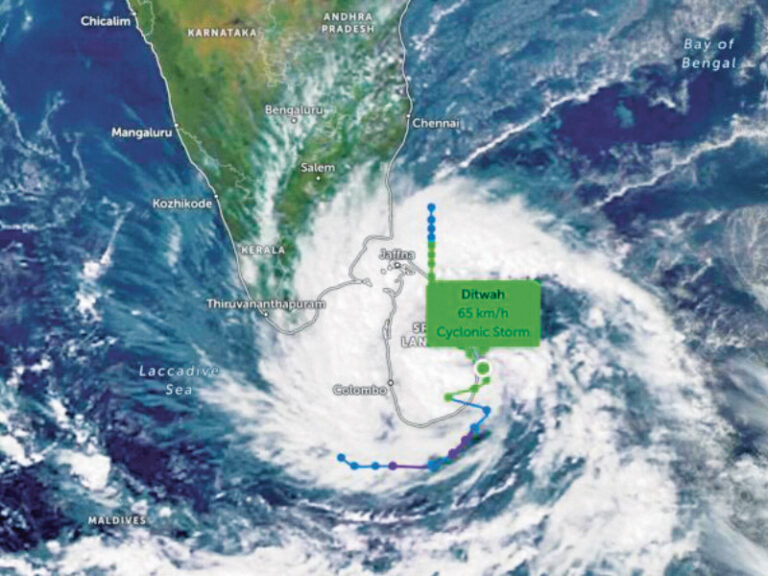
External risks further complicate implementation. Cyclone Ditwah, which caused an estimated $4.1 billion in damage, underscores climate-related fiscal exposure. While recovery costs have been integrated into the 2026 Budget transparently, reconstruction spending could strain fiscal discipline if revenue underperforms.

On the legal front, unresolved litigation with holdout creditor Hamilton Reserve Bank introduces uncertainty, even though 98% of ISB holders accepted the exchange. Court outcomes could influence investor confidence in the new bond structure.

Despite these challenges, over 92% of Sri Lanka’s external debt has been restructured, and agreements cover nearly 99% of total exposure. Credit rating upgrades to CCC+ and resumed multilateral disbursements signal restored credibility—but only conditional on continued reform momentum.

The issuance of these new bonds marks a turning point: success depends less on negotiation and more on disciplined execution over the next decade.

Sri Lanka stands at one of the most strategic maritime crossroads in the world

0

Nalinda Indatissa, President’s Counsel

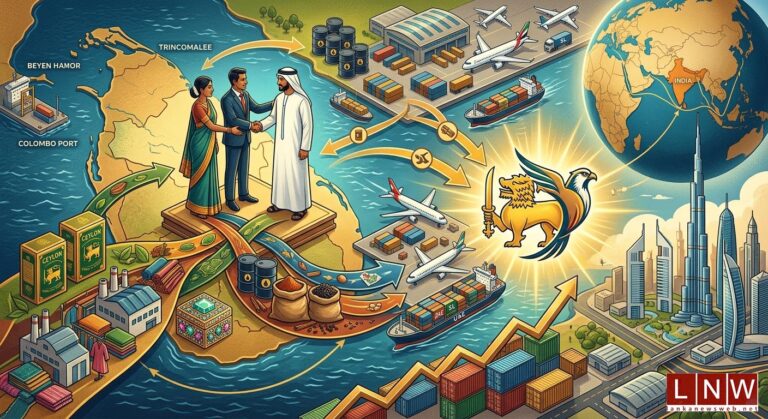
Situated along the main East–West shipping route of the Indian Ocean, the island lies just a few nautical miles from the sea lanes that carry a significant portion of global trade, including energy shipments and container traffic between Asia, the Middle East and Europe. Geography has already given Sri Lanka an advantage that many nations can only dream of. The real question is whether we are prepared to use it intelligently.


In a global economy dominated by scale, Sri Lanka cannot compete by size. Our domestic market is small. Our production volumes cannot rival those of regional giants. But what we lack in size, we compensate for in location. The future of Sri Lanka lies not in attempting to become a mass manufacturing powerhouse, but in transforming itself into a highly efficient, technology-driven trading and logistics hub.


Colombo Port already serves as a major transshipment centre for South Asia. Yet the opportunity is far greater. With state-of-the-art port infrastructure, automated cargo handling systems, deep-water terminals capable of accommodating the largest vessels, advanced warehousing, integrated customs digitalization and seamless multimodal transport connectivity, Sri Lanka can position itself as the preferred gateway to the region. Efficiency must become our national brand. Ships should dock, unload, reload and depart with minimal delay. Documentation should move electronically. Approvals should be granted quickly, transparently and predictably.


Speed is not a luxury in global trade; it is a necessity. Investors and global shipping lines choose locations where procedures are clear and time-bound. A smart approval system—digitized, centralized and accountable—can eliminate unnecessary bottlenecks. When investors know that their proposals will be processed within fixed timelines, without hidden obstacles or arbitrary decision-making, confidence grows. Bureaucratic efficiency becomes a competitive advantage.


Equally important is integrity. No trading hub can succeed in a corrupt environment. Global capital flows toward jurisdictions where rules are clear and fairly enforced. Corruption increases transaction costs, creates uncertainty and damages reputation. Therefore, Sri Lanka’s recent positive movement in international corruption perception rankings is not merely symbolic; it is economically significant. It signals to the world that governance standards are improving and that the country is committed to transparency and accountability. This progress must not be temporary. It must become irreversible national policy.
A clean, rules-based environment, combined with strategic geography and world-class infrastructure, can transform Sri Lanka into the Singapore of the Indian Ocean. Singapore did not succeed because of land or natural resources. It succeeded because of discipline, efficiency and incorruptible systems. Sri Lanka possesses the same geographical potential. What remains is institutional determination.
Beyond ports, the strategy must extend to financial services, maritime arbitration, ship repair, bunkering services and regional headquarters operations. When trade flows through a country, related industries naturally develop around it. Each layer adds employment, technology transfer and revenue. Human capital must be trained to operate advanced logistics systems, manage global supply chains and provide professional services that meet international standards.


Small countries survive in a global economy of scale by becoming indispensable connectors. Sri Lanka’s destiny lies in being a trusted bridge between continents. Our location cannot be relocated. It is permanent. If combined with modern infrastructure, fast and intelligent governance, digital transformation and a corruption-free environment, that location becomes economic power.


The path forward requires consistency, policy stability and national unity of purpose. If Sri Lanka commits itself to transparency, efficiency and strategic clarity, the island will not merely survive in a competitive global economy—it will thrive as a dynamic hub of trade, confidence and opportunity in the Indian Ocean region.

Govt Aims to Secure Sixth and Seventh IMF Installments Simultaneously

0

Labour Minister and Deputy Minister of Finance and Planning Dr. Anil Jayantha Fernando stated that the Government is seeking to secure the release of both the sixth and seventh installments of the International Monetary Fund (IMF) loan facility at the same time.

The Minister explained that the fifth review, which relates to the sixth installment, was delayed due to the impact of Cyclone Ditwah. He noted that by conducting the fifth review and the sixth review—linked to the seventh installment—in close succession, Sri Lanka would likely be able to obtain both installments simultaneously.

The fifth review had originally been scheduled for December 15 last year, but was postponed to the early months of this year due to the cyclone. With the sixth review scheduled for mid-year, Minister Fernando expressed confidence that the Government could expedite both processes to secure the two pending installments together.

Sri Lanka entered into a four-year IMF Extended Fund Facility (EFF) arrangement worth US$ 2.9 billion on March 22, 2023, to support recovery from the severe economic crisis experienced in 2022.

Under the programme, the first installment of US$ 330 million was released on March 20, 2023. This was followed by a second installment of US$ 337 million on December 12, 2023, and a third installment of US$ 336 million on June 12, 2024. The fourth installment of US$ 334 million was disbursed on February 28, 2025, while the fifth installment of US$ 350 million was released on June 1, 2025.

Minister Fernando also revealed that IMF Managing Director Kristalina Georgieva is scheduled to arrive in Sri Lanka next Monday (16). During her visit, she is expected to hold high-level discussions with President and Minister of Finance and Economic Development Anura Kumara Dissanayake, Prime Minister Dr. Harini Amarasuriya, and senior officials of the Ministry of Finance and the Central Bank of Sri Lanka.