May 11, Colombo (LNW): The low-level atmospheric disturbance in the vicinity of Sri Lanka is likely to develop into a low-pressure area around the next 36 hours. Therefore, the prevailing showery conditions over the island are expected to continue during the next few days.
Showers or thundershowers will occur at times in most parts of the island and Cloudy skies are expected, under the influence of the aforementioned system.
Heavy falls about 100 mm are likely at some places in Western, Sabaragamuwa, Central, Uva, Southern, North-western, Northern and North-central provinces and in Trincomalee district.
The general public is kindly requested to take adequate precautions to minimise damage caused by temporary localised strong winds and lightning during thundershowers.
Marine Weather:
The low-level atmospheric disturbance in the vicinity of Sri Lanka is likely to develop into a low-pressure area around the next 36 hours.
Therefore, wind speed can increase over the sea areas around the island during the coming days.
The naval and fishing communities are requested to be attentive to the future forecasts and bulletins issued by the Department of Meteorology in this regard.
Condition of Rain: Showers or thundershowers will occur at several places in the sea areas around the island.
Winds: Winds will be South-westerly or variable in direction.
Wind speed will be (20-30) kmph.
Wind speed can increase up to 50 kmph at times in the sea areas off the coast extending from Galle to Hambantota via Matara
State of Sea: The sea areas off the coasts extending from Galle to Hambantota via Matara will be fairly rough at times.
The other sea areas around the island can be Slight to moderate.
Temporarily strong gusty winds and very rough seas can be expected during thundershowers.
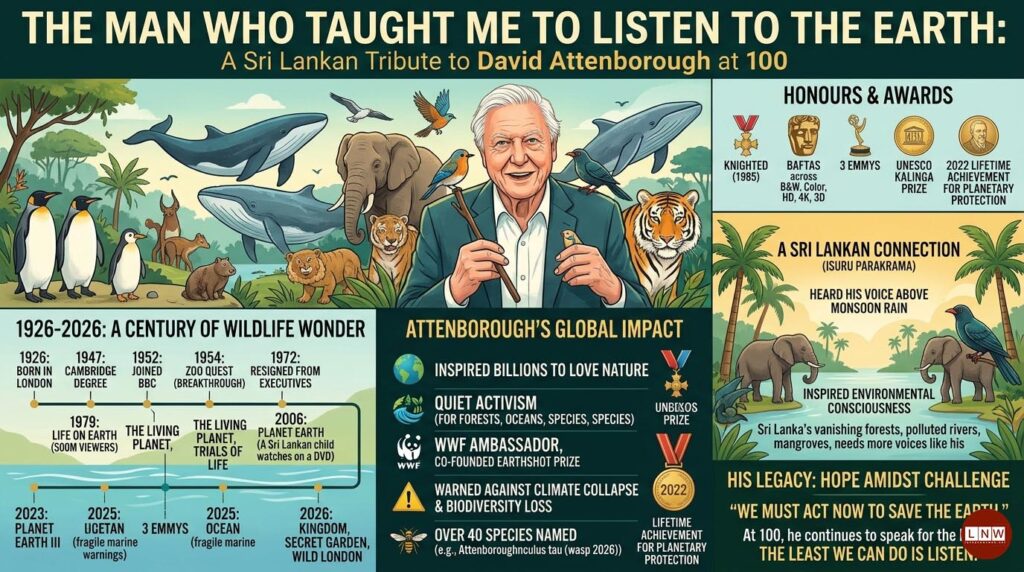
For an entire century, Attenborough has done something few human beings ever achieve — he changed the way humanity sees the living world. To generations raised on his documentaries, he was never merely a television presenter; he became the voice of forests, oceans, deserts, and endangered creatures struggling to survive in a rapidly collapsing world. This memoir explores how one gentle voice shaped our understanding of nature, inspired environmental consciousness across continents, and left an indelible mark even on a young journalist growing up beside the monsoon-soaked landscapes of Sri Lanka.
By:Isuru Parakrama
May 10, Colombo (LNW): There are some voices that do not merely narrate the world — they become part of it. For me, growing up in Sri Lanka with the scent of rain-soaked earth drifting through open windows and the distant cry of koels at dawn, the voice of David Attenborough was one of them.
On May 08, 2026, Attenborough turned 100. A century. It is difficult to comprehend that one man could spend nearly an entire hundred years not simply observing nature, but persuading billions of people to fall in love with it. Yet that is precisely what he has done.
As a teenager in Warakapola, I remember watching pirated DVD copies of Planet Earth on an ageing television while monsoon rain hammered our roof. I did not understand then how extraordinary those documentaries were. I only knew that a man with a calm, reverent voice could make me care deeply about penguins in Antarctica, insects in the Amazon, and whales beneath dark oceans I would probably never see.
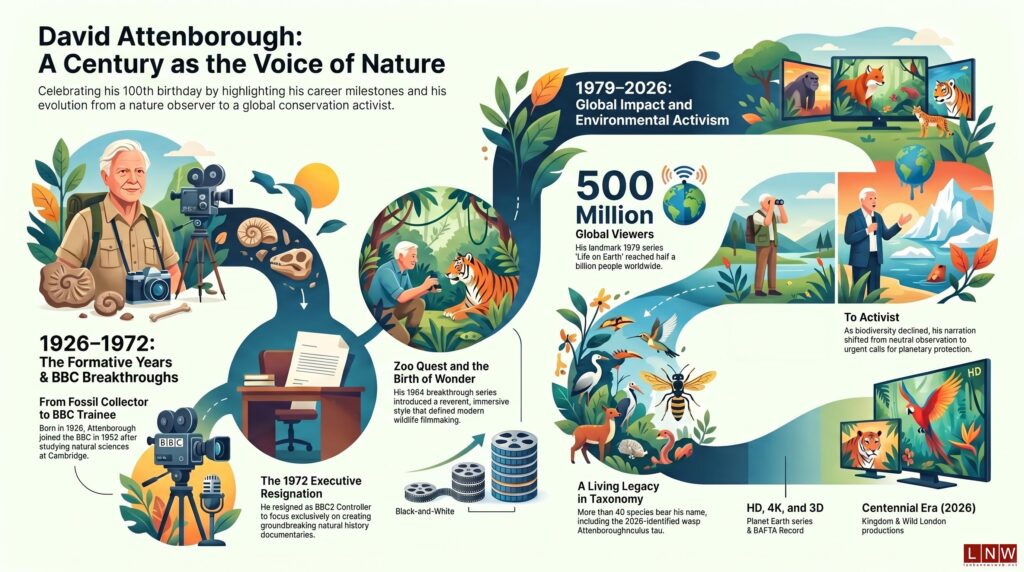
Attenborough’s journey began far from the tropical chaos of Sri Lanka. Born David Frederick Attenborough on May 08, 1926, in Isleworth, London, he was the son of a university principal. Even as a boy, he collected fossils and stones, developing an obsession with the natural sciences long before the world knew his name. After earning a degree from Cambridge University in 1947, serving in the navy, and working in publishing, he joined the BBC as a trainee producer in 1952.
It is astonishing to think how much modern environmental consciousness can be traced back to that decision.
His television breakthrough came with Zoo Quest in 1954, a programme that sent him travelling across remote parts of the world to capture wildlife on film. Today, wildlife documentaries are everywhere, often bloated with dramatic music and artificial suspense. But Attenborough approached nature differently. He carried wonder into every frame. He made audiences feel as though the Earth itself was speaking.
By the mid-1960s, he had risen to become controller of BBC2, helping introduce colour television to Britain while commissioning programmes such as Monty Python’s Flying Circus. Yet perhaps his greatest act of wisdom was resigning from executive positions in 1972 to focus entirely on documentary filmmaking.
That decision changed natural history broadcasting forever.
His landmark series Life on Earth in 1979 attracted an astonishing 500 million viewers and launched a trilogy that continued with The Living Planet in 1984 and The Trials of Life in 1990. Later came The Private Life of Plants, The Blue Planet, Frozen Planet, and the visually breathtaking Planet Earth series, culminating most recently in Planet Earth III in 2023.
Even at 99, Attenborough refused to slow down. His 2025 documentary Ocean with David Attenborough once again focused on fragile marine ecosystems, combining breathtaking cinematography with a sombre warning about humanity’s destruction of the seas. Upcoming productions for 2026 include Kingdom, focusing on African animal families, alongside Secret Garden and Wild London.
There is something profoundly moving about a man nearing a century of life still dedicating himself to the future of a planet he may not live long enough to see healed.
What separates Attenborough from many broadcasters is that he evolved morally alongside his work. In his earlier years, he was primarily an observer of nature. But as forests vanished, oceans warmed, and species disappeared, neutrality became impossible. Gradually, his documentaries transformed into acts of quiet activism.
He never became preachy. He understood that awe can often persuade people more effectively than anger. Still, the urgency in his recent work is unmistakable.
He has served as an ambassador for the World Wide Fund for Nature, co-founded the Earthshot Prize with Prince William in 2019, and consistently urged global leaders to confront climate collapse and biodiversity loss. More than 40 species now carry his name, including the newly identified wasp Attenboroughnculus tau in 2026 and the British wildflower Hieracium attenboroughianum.
The honours he has received barely seem adequate for his contribution. Knighted in 1985, Attenborough has won BAFTAs across black-and-white, colour, HD, 4K, and 3D broadcasting formats — a record that mirrors the technological evolution of television itself. He has also received three Emmy Awards, UNESCO’s Kalinga Prize, the Royal Television Society Silver Medal, the Descartes Prize for science communication, and a 2022 Lifetime Achievement Award for planetary protection.
Yet perhaps his greatest achievement cannot be measured in awards.
It lies in the millions of children who looked at forests differently because of him. In the people who began recycling, planting trees, or questioning environmental destruction because his documentaries made the crisis feel personal. In young journalists like me, who learned that storytelling can be an act of conservation.
Sri Lanka, with its collapsing forests, polluted rivers, vanishing mangroves, and reckless development projects, desperately needs more voices like Attenborough’s. We are a country blessed with astonishing biodiversity, yet cursed with a political culture that often treats nature as expendable. Watching Attenborough at 100 is both inspiring and uncomfortable. He reminds us what stewardship looks like — and how badly we are failing at it.
There is an old sadness in many of his recent narrations. You can hear it between the pauses. It is the sorrow of a man who has spent a lifetime documenting beauty while witnessing its destruction in real time.
And yet, somehow, he still sounds hopeful.
Perhaps that is his final lesson to us.
At 100 years old, David Attenborough continues to speak for the Earth. The least we can do is listen.
The derivative action now before the Commercial High Court against the board of National Development Bank PLC and its auditors Ernst & Young may become one of the most consequential governance cases in Sri Lanka’s banking history.
The issue is no longer merely about a Rs. 13.2 billion fraud. The larger question is whether directors of systemically important financial institutions can be held personally accountable for prolonged governance failures, weak oversight, and breakdowns in internal controls. In simple terms, can directors lose not just reputations, but potentially their personal financial protection and legal standing?
A derivative action is rare in Sri Lanka. It allows shareholders to sue on behalf of the company when they believe the board itself has failed to act in the company’s best interests. That alone signals the seriousness of the allegations. The petition paints a troubling picture: prolonged concentration of duties in a sensitive settlements role, inadequate segregation of responsibilities, weak system controls, suspicious growth in suspense account balances, and alleged failures to react even after an earlier fraud warning emerged.
If proven, these are not ordinary operational lapses. They strike at the heart of fiduciary responsibility. Directors of banks are not ceremonial figures. They are custodians of depositor confidence, shareholder value, regulatory trust, and systemic stability. Banking boards are expected to exercise a far higher standard of diligence than ordinary corporate boards because they oversee institutions that operate largely on public trust.
The most damaging aspect may not ultimately be the fraud itself, but the allegation that warning signals were visible over a prolonged period. An eightfold increase in a suspense account should ordinarily trigger heightened scrutiny from management, the Board Audit Committee, the Risk Committee, internal audit, compliance functions, and external auditors. Questions naturally arise: Who asked the difficult questions? Who challenged management explanations? Were board papers sufficiently interrogated? Was there overreliance on management assurances?
The case also puts the spotlight on the evolving role of independent directors. Regulators increasingly expect directors to demonstrate active oversight rather than passive attendance. Modern governance standards require directors to understand technology risk, cyber vulnerabilities, operational resilience, anti-money laundering controls, and data governance. Banking today is as much about digital risk as financial risk.
Importantly, the legal threshold for personal liability is high. Courts generally distinguish between business judgment errors and reckless negligence. Directors are not insurers against every fraud. Even the best-controlled institutions globally have experienced internal frauds. However, where there is evidence of sustained inaction, ignored red flags, or systemic governance indifference, courts may take a far sterner view.
This case will therefore be closely watched not only by bankers and lawyers, but by every boardroom in Sri Lanka. It could redefine expectations of accountability in listed companies and financial institutions.
Whether the NDB board ultimately “loses their trousers” will depend on what the court concludes about negligence, oversight, and fiduciary failure. But regardless of the outcome, one lesson is already clear: the era of passive directorships is rapidly coming to an end. Chairman and Directors better watch out . If they are not compensated for the risk they take, it is better to get out than ending up paying hefty fines.
May 10, Colombo (LNW): The Ministry of Education, Higher Education and Vocational Education has established a high-level expert committee to develop a comprehensive national policy framework for medical education, amid growing attention on the future direction and quality standards of healthcare training in the country.
Officials said the newly appointed 15-member panel has been entrusted with examining key challenges within the medical education sector and proposing long-term reforms aimed at improving academic standards, institutional coordination and professional training pathways.
The committee is expected to study a broad range of issues affecting medical education, including curriculum development, accreditation systems, clinical training capacity, research standards and the integration of emerging medical technologies into higher education programmes.
May 10, Colombo (LNW): President Anura Kumara Dissanayake has conveyed his congratulations to C. Joseph Vijay following his assumption of office as the new Chief Minister of Tamil Nadu, while reaffirming the long-standing relationship between Sri Lanka and the southern Indian state.
In a message shared on the social media platform X (formerly Twitter), the Sri Lankan President highlighted the centuries-old cultural and historical links that connect the peoples of Sri Lanka and Tamil Nadu, noting that the relationship extends beyond geography and is rooted in trade, tradition and social ties built over generations.
President Dissanayake also underscored the growing opportunities for stronger economic cooperation between the two sides, particularly at a time when relations between Sri Lanka and India continue to deepen across multiple sectors including trade, investment, tourism and regional connectivity.
He expressed optimism that closer engagement under the broader India–Sri Lanka partnership would create new avenues for shared development and long-term prosperity for both nations and their peoples.
Congratulations to Hon. C. Joseph Vijay on being sworn in as Chief Minister of Tamil Nadu.
Sri Lanka and Tamil Nadu are connected through history, culture, enterprise, and enduring people-to-people ties across generations. Our future holds immense economic promise and…
— Anura Kumara Dissanayake (@anuradisanayake) May 10, 2026
May 10, Colombo (LNW): Authorities investigating the death of former SriLankan Airlines Chief Executive Officer Kapila Chandrasena have obtained statements from 15 individuals, including former national cricketer Aravinda de Silva, as inquiries continue into the circumstances surrounding the incident.
The Colombo Crime Division said investigations are now progressing based on findings from the post-mortem examination and additional forensic assessments. Officials confirmed that Chandrasena’s remains have been referred to both the Government Analyst and the Judicial Medical Officer for further scientific evaluation.
The post-mortem examination was reportedly carried out by a panel of five specialist forensic medical experts, reflecting the high-profile nature of the investigation and the need for a comprehensive medical assessment.
Chandrasena’s body was discovered on Tuesday morning at the residence of a relative in the Kollupitiya area of Colombo, prompting an immediate police inquiry.
The former airline executive had been facing legal proceedings linked to allegations that he accepted a payment of US$2 million during a controversial aircraft procurement deal involving Airbus in 2013. The case had drawn considerable public attention due to its connection to corruption allegations within the national carrier.
Earlier this month, Chandrasena had been granted bail by the Colombo Chief Magistrate’s Court after being produced before court by the Commission to Investigate Allegations of Bribery or Corruption. Bail conditions included a cash deposit and several high-value personal sureties.
However, investigators later informed court that irregularities had allegedly emerged in relation to two of the sureties submitted on his behalf. According to officials, individuals had reportedly been paid a comparatively small amount of money to stand as guarantors for bonds valued at millions of rupees.
Following those revelations, the Bribery Commission sought permission from court to revoke Chandrasena’s bail, arguing that the conditions imposed by the judiciary had been violated. The Commission further requested that he be remanded under provisions of the Anti-Corruption Act until the conclusion of the proceedings.
Subsequently, Asanga S. Bodaragama, Chief Magistrate of Colombo, directed that Chandrasena be arrested and produced before court without delay.
Police sources stated that preparations were underway to execute the court order when the former airline executive was later found dead, adding another layer of complexity to an already high-profile corruption investigation.
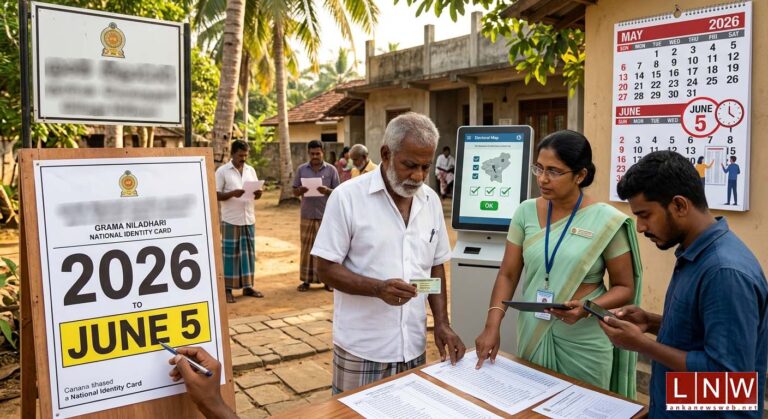
May 10, Colombo (LNW): The National Election Commission has announced that members of the public will have until 5 June 2026 to submit claims, corrections and objections relating to the preparation of the country’s electoral register for next year.
Commission Chairman R.M.A.L. Rathnayake said the preliminary voters’ list has now been made available for public review as part of the annual revision process aimed at ensuring the accuracy of electoral records.
According to election officials, citizens are encouraged to verify their personal details, including names, addresses and polling divisions, in order to avoid complications during future elections. Authorities noted that early verification is particularly important for individuals who have recently changed residence, reached voting age or identified discrepancies in previous registrations.
The draft register has been displayed at District Election Offices as well as local Grama Niladhari offices across the country, allowing voters to inspect their information conveniently within their respective areas.
In addition, the Commission has expanded digital access to the verification process by making the register accessible through its official online platform, enabling voters to review their details remotely without having to visit Government offices in person.
Election authorities also urged the public to make use of the correction period responsibly, stressing that maintaining an accurate electoral register is essential to safeguarding transparency and public confidence in the democratic process.
Officials added that complaints and amendment requests submitted before the deadline will be reviewed before the final register is certified for use in future elections and referendums.
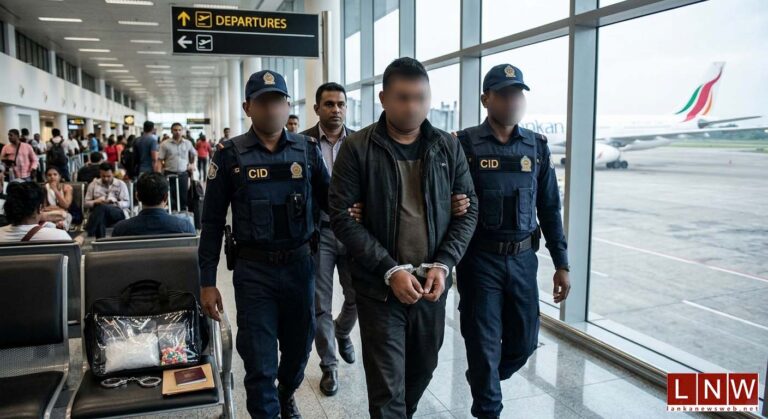
May 10, Colombo (LNW): An alleged organised crime suspect believed to have links to large-scale narcotics trafficking is expected to be brought back to Sri Lanka from Dubai today under tight security arrangements.
The suspect, identified as “Batuwatte Chamara”, is reportedly being repatriated following coordination between Sri Lankan authorities and foreign law enforcement agencies. A special team from the Criminal Investigation Department has already travelled overseas to oversee the transfer process and escort him back to the country for further investigations.
Security sources said the suspect is believed to have maintained connections to a wider drug distribution network operating across several parts of the island, with investigators examining possible links to organised criminal activities and financial operations connected to the narcotics trade.
The latest development comes shortly after officers attached to the Police Special Task Force carried out a targeted raid that led to the arrest of three individuals allegedly associated with the suspect’s operations.
During the search operation, authorities recovered a quantity of crystal methamphetamine, commonly known as “Ice”, along with a stock of narcotic tablets and a sum of cash believed to be connected to illegal drug transactions. Investigators stated that the seized substances are being subjected to further forensic examination as inquiries continue.
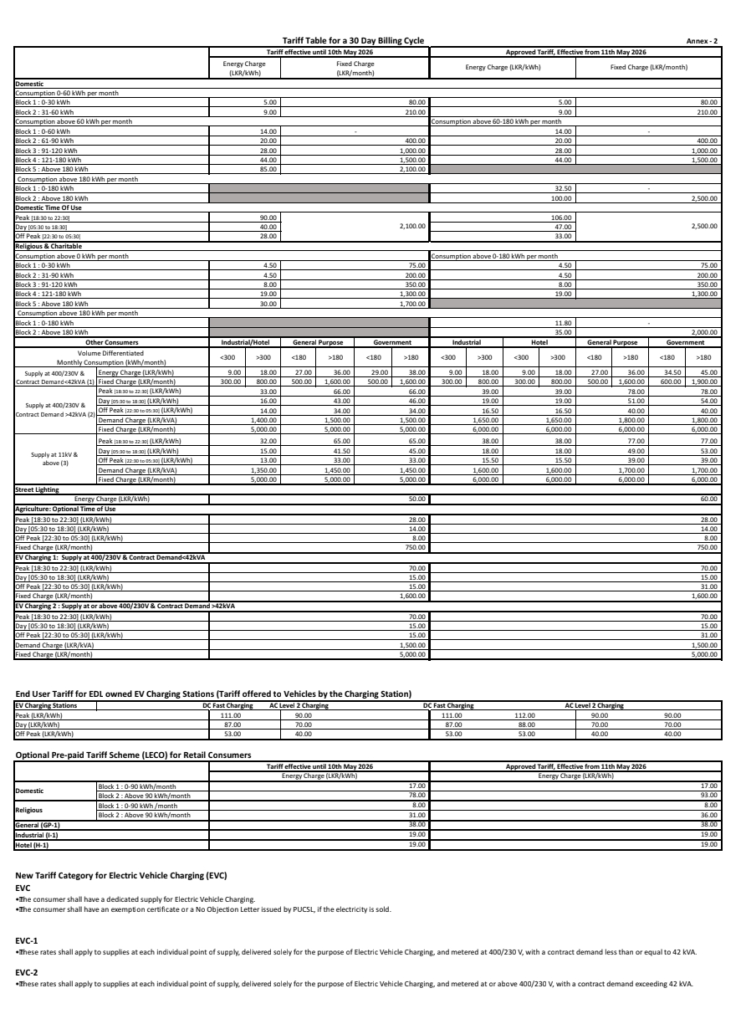
May 10, Colombo (LNW): The Public Utilities Commission of Sri Lanka has approved an increase in electricity charges for selected consumer groups, with revised tariffs set to come into force from midnight tomorrow.
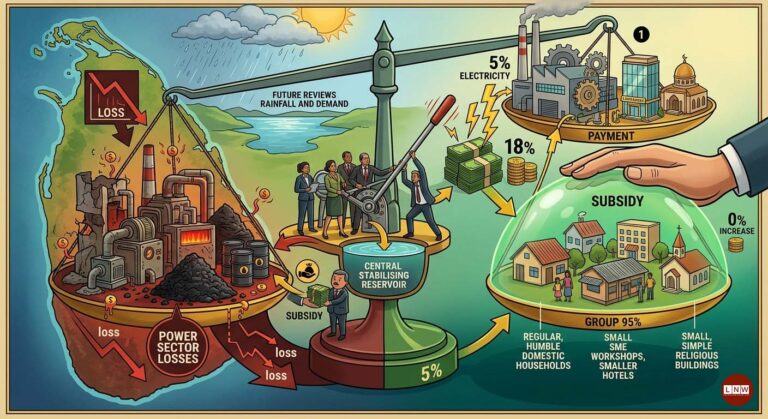
Under the latest revision, electricity bills will rise by 18 per cent during the second and third quarters of 2026 for domestic consumers whose monthly usage exceeds 180 units. Officials said the adjustment is aimed at easing mounting financial pressure on the power sector amid escalating generation and operational costs.
Despite the increase, the Commission stressed that the vast majority of households would not be affected. Domestic users consuming below the 180-unit threshold will continue to pay existing rates, a move intended to protect ordinary families from additional financial strain during the ongoing cost-of-living challenges.
According to regulators, the decision was taken following projections of a revenue gap estimated at nearly Rs. 38 billion, driven largely by higher fuel and electricity generation expenses expected over the coming months. Authorities noted that Government intervention helped soften the impact of the proposed revision, with the State agreeing to provide a subsidy of Rs. 15 billion to support the sector.
As a result, only a relatively small segment of consumers — estimated at around five per cent of total electricity users — will face higher charges, while approximately 95 per cent of customers are expected to remain unaffected by the adjustment.
The revised pricing structure will also apply to a number of institutional and commercial categories. Government establishments, large-scale industrial operations and consumers classified under General Purpose GP2 and GP3 categories will all be subject to the full 18 per cent increase.
In addition, religious institutions and GP1 category consumers exceeding the 180-unit consumption level will see corresponding increases in their electricity bills.
Meanwhile, several sectors considered economically sensitive have been exempted from the revision for the time being. Small and medium-sized enterprises, along with hotels operating under the H1 and H2 classifications, will continue under existing tariff rates unless their electricity consumption rises substantially beyond standard levels.
Energy analysts say the selective adjustment reflects an effort to stabilise the country’s electricity supply system while limiting the burden on lower and middle-income households. Officials have also indicated that future tariff reviews will depend on fuel prices, rainfall conditions and national power demand trends later in the year.
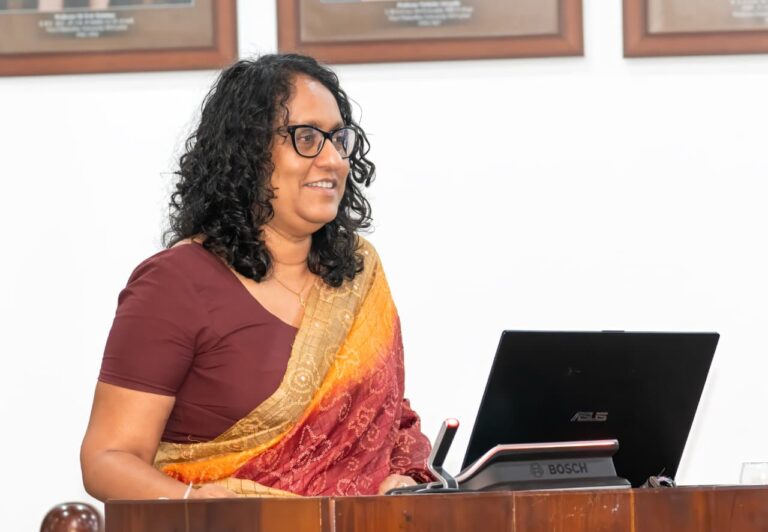
May 10, Colombo (LNW): Prime Minister Dr Harini Amarasuriya has called for Sri Lanka to take an active role in shaping the direction of artificial intelligence, stressing that the country must establish strong policies and ethical safeguards instead of merely reacting to rapid technological change.
She made the remarks while attending the launch of the AI Policy Framework for State Universities at the University of Colombo Senate Hall on May 08, according to the Prime Minister’s Office.
The initiative has been introduced through a collaboration between the University Grants Commission and the United States Embassy in Sri Lanka, with the aim of establishing national guidelines for the responsible and equitable use of artificial intelligence within the State university sector.
The event drew participation from university administrators, researchers, technology specialists and policymakers, who discussed both the opportunities and challenges posed by AI in higher education. Officials also outlined plans for introducing the framework across universities in the coming months.
Delivering the keynote address, the Prime Minister noted that artificial intelligence is evolving at a pace that often outstrips regulation and public understanding, making effective governance increasingly important. She observed that higher education institutions would be among the sectors most deeply transformed by AI, particularly as universities play a central role in producing knowledge, encouraging critical thinking and preparing future professionals.
She further pointed out that the impact of AI differs across academic disciplines, with areas such as the humanities and social sciences facing complex ethical and intellectual questions as automated technologies become more influential in research and learning environments.
The Prime Minister also warned against allowing technological advancement to widen existing inequalities in education. She said any national AI strategy should prioritise accessibility and inclusion, including support for students with disabilities and efforts to overcome linguistic barriers through digital tools.
Emphasising the importance of broad consultation, she encouraged continuous dialogue between students, lecturers, researchers and policymakers to ensure that the framework remains practical and responsive to the realities of the academic sector.
The programme featured opening remarks by Kapila Seneviratne, Chairman of the University Grants Commission, while K. L. Wasantha Kumara, Vice Chairman of the Commission, presented the proposed roadmap for implementation. AI specialists also delivered presentations highlighting the framework’s core principles and future applications.
The Government believes the initiative marks an important step towards preparing Sri Lanka’s university system for a rapidly changing digital future, while ensuring that innovation is balanced with accountability, social responsibility and long-term national development.