Home Blog Page 866

SEC acquires world-class market surveillance system

0

By: Staff Writer

September 03, Colombo (LNW): The Securities and Exchange Commission of Sri Lanka (SEC) has taken a significant step towards strengthening its market surveillance role by acquiring a world class state-of-the-art market surveillance system from NASDAQ, a leading global technology company.

This acquisition aligns with the SEC’s commitment to ensure a fair, transparent, and efficient securities market in Sri Lanka. The parties are continuing commercial discussions to deepen their relationship.

SEC and NASDAQ signed the contractual agreement on 30 August 2024 in Colombo. The ceremony was attended by key officials from the SEC, including SEC Chairman Faizal Salieh, Commission Member Anton Godfrey, Director General Chinthaka Mendis, Deputy Director General Tushara Jayaratne, and Director – Legal Rishdha Zarook and Chief Digital Officer Madura Wanigasekara, and representatives from NASDAQ.

The system will undergo extensive testing and is expected to be fully operational within five months of signing the agreement.

Commenting on this landmark decision, SEC Chairman Faizal Salieh said: “The acquisition of this market surveillance system is a major milestone in our regulatory journey.

As Sri Lanka’s capital market evolves, it is fundamentally necessary to keep our regulatory market oversight mechanisms abreast with global standards and expectations.

Our partnership with NASDAQ equips us with world-class technology to monitor the market, enforce regulations in a timely manner, and foster a more transparent and investor-friendly market environment.”

NASDAQ’s market surveillance platform is world renowned for its advanced capabilities in market monitoring and regulatory compliance and will provide the SEC with cutting-edge technology to detect and respond to market anomalies, potential fraud, and other forms of market manipulation and abuse.

The system’s sophisticated algorithms, customisable alert and report generation capabilities, visualisation tools and real-time data analytics with market replays, will enable the SEC to proactively safeguard market participants and enhance the overall stability and credibility of Sri Lanka’s capital market.

 The system is scalable to support increasing market activity, capable of processing large volumes of data, and can integrate AI and machine learning to enhance its detection capabilities.

By adopting this platform, the SEC joins an elite group of market regulators who have prioritised the use of cutting-edge technology to maintain market fairness and transparency.

Government plays Critical Role of Revenue and Fiscal Reforms

0

By: Staff Writer

September 03, Colombo (LNW): The economic crisis in Sri Lanka was exacerbated by weak government revenue, a problem that has been worsening over the past three decades, the finance ministry elaborated.

A significant factor was the ill-timed tax cuts in late 2019, which led to the country’s credit rating downgrades and, eventually, a sovereign debt default.

By 2021, government revenue had declined to 8.3% of GDP, while public expenditure remained high at 20% of GDP, ministry sources said .

This imbalance forced the government to finance its budget deficit, which stood at 11.7% of GDP, through inflationary monetary financing (money printing).

Consequently, urgent revenue measures were needed to phase out this practice and control inflation, which peaked at 70% in 2022 and severely impacted the poor, it added. .

The government’s macroeconomic reform program included fiscal consolidation as a key component, aiming for a primary budget surplus of 2.3% of GDP by 2025.

To achieve this, government revenue needs to increase to 15.1% of GDP by 2025. In Sri Lanka, where natural resources are limited, taxes are the primary source of government revenue, contributing about 80%.

Contrary to popular belief, revenue from exports, tourism, and other external inflows goes to private enterprises, not the government. Non-tax revenue from state enterprises is minimal due to their consistent losses, making taxes crucial for government revenue.

Improving tax compliance and administration is essential but takes time to show results. Although such measures were implemented alongside tax rate increases, the immediate revenue increase was primarily due to higher tax rates.

The IMF does not consider gains from better tax administration as a reliable short-term revenue measure.

With urgent cash flow needs, such as mandatory payments on interest, salaries, and welfare, the government had to rely on specific revenue measures rather than hope for gains from reducing tax leakages.

Several tax administration and compliance improvements were implemented, including digitizing tax processes, mandatory information sharing between government agencies, and upgrading the Inland Revenue Department’s management information system.

These measures led to a 128% growth in active tax files in 2023 compared to 2022. As the tax base expands, the government hopes to gradually reduce tax rates without compromising revenue targets.

The government has also taken steps to curtail public expenditure, focusing on maintaining fiscal discipline and transparency.

Measures include restricting new hires, overtime payments, fuel consumption, and foreign travel. Digitization initiatives, such as the Integrated Treasury Management Information System (ITMIS), and zero-based budgeting for the largest ministries, aim to eliminate waste and improve efficiency. 

Despite these efforts, the non-discretionary nature of most public expenditure, coupled with the need for increased spending in priority areas, means that the government must continue to expand its revenue base from the record low of 8.3% of GDP to at least 15% of GDP to support long-term sustainable economic growth.

Official exchange rates in SL today (Sep 03)

0

September 03, Colombo (LNW): The Sri Lankan Rupee (LKR) happens to be steady against the US Dollar today (03) in comparison to yesterday, as per the official exchange rates released by the Central Bank of Sri Lanka (CBSL).

Accordingly, the buying price of the US Dollar has dropped to Rs. 294.65 from Rs. 294.78, and the selling price to Rs. 303.83 from Rs. 303.84.

EC warns candidates will lose civic rights for exceeding campaign spending limits

0

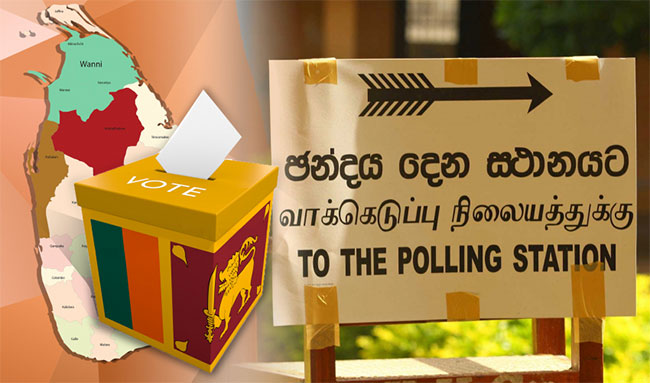
September 03, Colombo (LNW): Presidential candidates who exceed the legally mandated spending limit of Rs. 109 per voter could face severe repercussions, the Election Commission has warned.

Commissioner General of Elections, Saman Sri Ratnayake, outlined the stringent measures in place to ensure transparency and accountability during the electoral process.

Candidates are required to submit comprehensive reports detailing their campaign income and expenditures within 21 days of the election. These reports will be scrutinised and subsequently made public through newspapers and online platforms.

Ratnayake stressed that any discrepancies or falsified information in these financial reports could lead to serious consequences. Not only could a candidate lose their elected position, but they might also be stripped of their civic rights for a period of three years, he added.

The public is encouraged to report any inaccuracies or suspicions of malpractice to the police, with legal actions being a possible outcome.

Govt approves training of over 7,000 teachers in Robotics and AI to propel digital education

0

September 03, Colombo (LNW): The Cabinet of Ministers has approved a significant initiative to train 7,500 teachers in the fields of robotics and Artificial Intelligence (AI), marking a crucial step in the nation’s digital transformation efforts.

During a recent Cabinet press conference, Cabinet Spokesman and Minister Bandula Gunawardena highlighted that digital transformation is a key priority within the national education policy framework.

Recognising the importance of integrating cutting-edge technologies into education, the government has endorsed collaboration between public and private sectors to enhance the use of AI and other advanced technologies in schools.

The training programme follows a successful pilot project conducted by the Skills College of Technology (SCOT CAMPUS), an institution with a strong track record in delivering practical courses in information technology, mechatronics, and robotics.

The pilot’s success has paved the way for a broader initiative aimed at equipping educators with the skills necessary to teach the next generation of students in these critical areas.

The Cabinet has approved a joint proposal by the President and the Minister of Education to roll out this training programme in three stages.

The initiative will cover selected schools across all provinces, focusing on the STEAM (Science, Technology, Engineering, Arts, and Mathematics) concept.

Teachers will receive specialised training in subjects such as information technology, biotechnology, engineering technology, science, and mathematics at the SCOT CAMPUS.

By empowering teachers with the knowledge and tools to teach robotics and AI, the government aims to foster a new generation of innovators who can contribute to the nation’s technological and economic growth.

Government announces immediate cancellation of farmer crop loans to provide financial relief

0

September 03, Colombo (LNW): In a significant move aimed at supporting the agricultural sector, the government has announced the immediate cancellation of all crop loans taken by farmers.

This decision comes in response to persistent requests from various farmer associations, reflecting the administration’s commitment to alleviating the financial burdens faced by those in the farming community.

According to a statement from the President’s Media Division (PMD), the government has recognised the critical importance of providing economic relief to farmers, particularly in light of the ongoing challenges that have impacted agricultural productivity and livelihoods.

The cancellation of these loans is expected to offer substantial financial respite, enabling farmers to focus on enhancing their crop yields without the looming pressure of debt.

By easing the debt load, the government aims to encourage sustainable farming practices and increase agricultural output, ultimately contributing to food security and rural development.

Dollar value against LKR at banks today (Sep 03)

0

September 03, Colombo (LNW): The Sri Lankan Rupee (LKR) indicates steadiness against the US Dollar today (03) in comparison to yesterday, as per leading commercial banks in the country.

At Peoples Bank, the buying price of the US Dollar has dropped to Rs. 293.60 from Rs. 293.65, and the selling price to Rs. 304.14 from Rs. Rs. 304.19.

At Commercial Bank, the buying price of the US Dollar has dropped to Rs. 293.20 from Rs. 294.14, and the selling price to Rs. 303.00 from Rs. 304.

At Commercial Bank, the buying price of the US Dollar has increased to Rs. 293.44 from Rs. 293.20, and the selling price to Rs. 303.02 from Rs. 303.00.

At Sampath Bank, the buying and selling prices of the US Dollar remain unchanged at Rs. 294.50 Rs. 303.50, respectively.

Election Commission warns Media of strict measures over non-compliance ahead of Presidential Polls

0

September 03, Colombo (LNW): The National Election Commission has issued a stern warning to media outlets, stating that punitive actions will be taken against those who fail to comply with election laws.

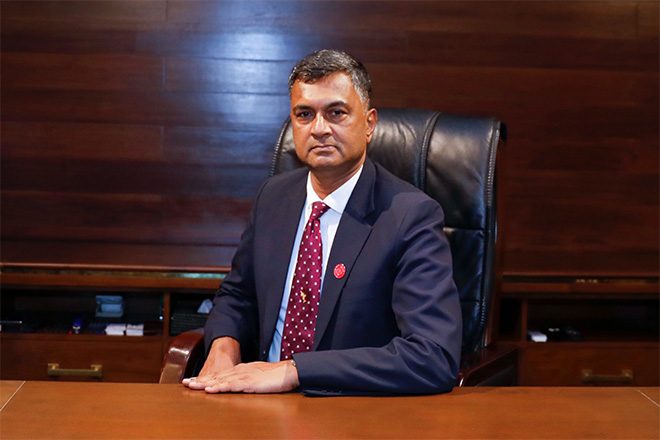
During a recent press briefing, Election Commission Chairman R. M. A. L. Rathnayake highlighted concerns over certain media institutions disproportionately promoting specific Presidential candidates, based on multiple complaints received by the Commission.

Chairman Rathnayake revealed that the Government Information Department has been closely monitoring candidate promotion across both mainstream and electronic media platforms.

Their analysis has indicated a significant imbalance in the airtime and coverage allocated to various Presidential candidates, with some receiving notably more exposure than others.

In response, the Election Commission has already advised these media organisations to correct this disparity.

However, Rathnayake warned that if these entities continue to disregard the Commission’s guidance and persist in favouring particular candidates, the Commission is prepared to take decisive action.

The potential measures outlined by Rathnayake include suspending the association between the Election Commission and the non-compliant media institutions, withholding media statements, excluding them from press conference invitations, and even suspending the release of election results through these channels.

The Chairman urged all media outlets to strictly adhere to the guidelines set forth by the Election Commission for the upcoming 2024 Presidential Election, emphasising the importance of fair and balanced coverage to ensure a transparent and democratic electoral process.

Sri Lanka advances in clean energy with new LNG-ready power plant

0

September 03, Colombo (LNW): As the global economy evolves, the demand for energy continues to rise, pushing countries towards more sustainable resource use.

The era of oil and coal-fired power generation is drawing to a close, making way for cleaner energy sources. Sri Lanka, in line with this global shift, is actively working to diversify its energy mix.

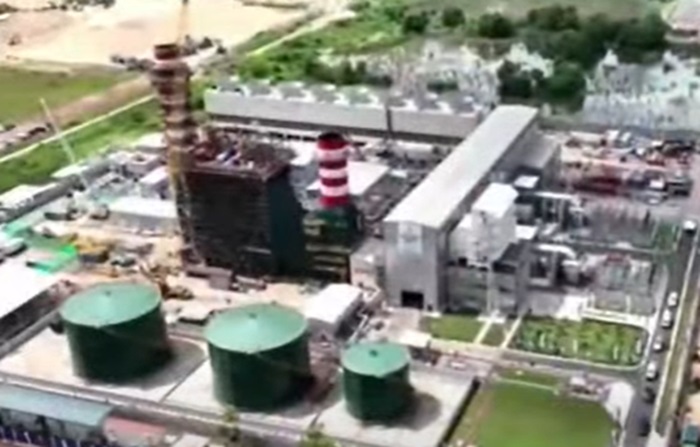
In a significant move towards this transition, Sri Lanka has recently completed the first phase of the Sobadhanavi Combined Cycle Power Plant.

This state-of-the-art facility, which is both LNG (Liquefied Natural Gas) ready and Hydrogen capable, marks a major milestone in the country’s journey towards clean energy.

Currently, the plant contributes a dependable capacity of 220 megawatts to the national grid, with plans to increase this output to 350 megawatts upon completion of the next phase by early next year.

Chief Operations Officer of Lakdhanavi Limited, Kithsiri Egodawatta, outlined the ambitious plans for the plant’s expansion.

“We have successfully installed a power generation capacity of 220 megawatts. The next phase will see the installation of a Steam Turbine and a Heat Recovery Steam Generator. This technology will allow us to harness exhaust heat from the gas turbine to generate additional energy, enabling us to produce another 130 megawatts. By February or March next year, we aim to fully realise the plant’s potential, bringing total power generation to 350 megawatts.”

Currently operating on diesel, the Sobadhanavi plant incorporates cutting-edge technology to enhance efficiency, resulting in lower generation costs compared to other diesel-based plants.

Importantly, the facility is poised to transition to LNG power generation as soon as LNG becomes available in the country. The cost benefits of this switch are substantial, with LNG power generation being only one-third the cost of diesel.

Egodawatta also discussed Sri Lanka’s current energy mix, noting that the country relies on renewable sources, primarily hydropower, for 50-55 per cent of its energy needs. The remainder is supplied by thermal power, with coal being the dominant source, supplemented by diesel and furnace oil.

He emphasised that LNG serves as a transitional fuel in the shift from thermal power to cleaner energy options, with hydrogen as the next frontier. “Our equipment is already capable of using hydrogen to some extent, which makes it even more environmentally friendly. When hydrogen is burned, it produces only water, making it an ideal clean energy source.”

The strategic location of the Sobadhanavi plant in the Western Province, where energy consumption is highest, is expected to stabilise the national grid and reduce transmission costs.

“By positioning the plant close to the area of highest demand, we significantly lower transmission expenses, which is crucial for improving the overall efficiency of our power system,” Egodawatta explained.

This development is a key step in Sri Lanka’s efforts to modernise its energy infrastructure, reduce transmission losses, and ultimately lower costs.

CB Governor to address Parliament on SL’s economic health

0

September 03, Colombo (LNW): Governor of the Central Bank of Sri Lanka (CBSL) Dr. Nandalal Weerasinghe today (03) will provide a comprehensive briefing to all Members of Parliament on the nation’s current financial status.

This special session was announced by Speaker Mahinda Yapa Abeywardena, highlighting its importance in keeping lawmakers informed of the country’s economic trajectory.

This briefing is set to take place as part of the provisions outlined in the Central Bank Amendment Bill, which was passed by Parliament in 2023. The amendment mandates regular updates from the Central Bank to ensure transparency and enhance parliamentary oversight of financial matters.

The initiative is seen as a crucial step in fostering informed decision-making and promoting accountability within the legislative process.

Governor Weerasinghe’s address is expected to cover a range of topics, including recent economic developments, fiscal policies, and the overall financial performance of the country.

With Sri Lanka navigating a challenging economic landscape, the briefing aims to equip MPs with the necessary insights to address ongoing economic issues effectively.

The session will also provide a platform for MPs to engage directly with the Central Bank Chief, allowing for a constructive exchange of ideas and concerns regarding the country’s financial direction.