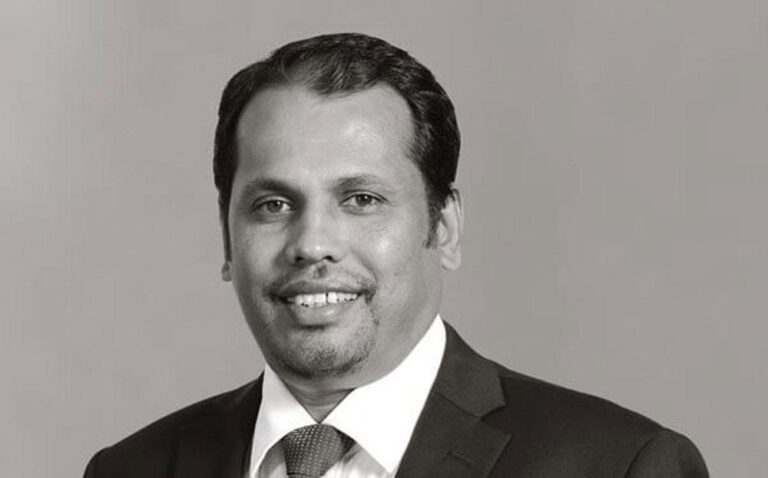
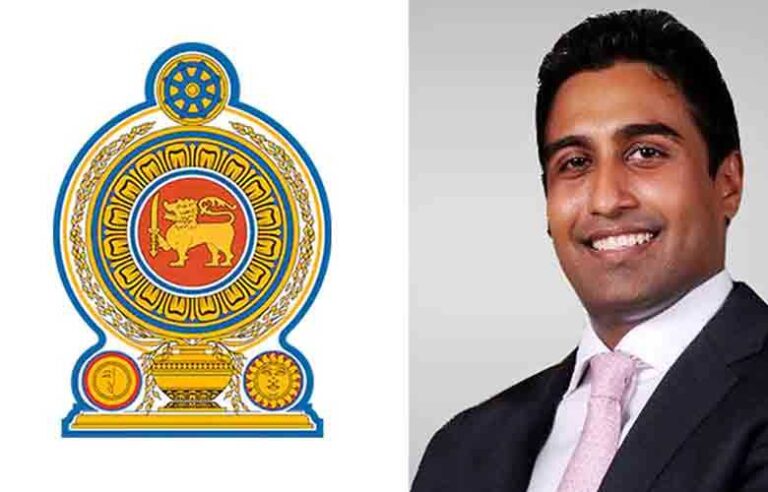
October 15, Colombo (LNW): The Export Development Board (EDB) has announced the appointment of Mangala Wijesinghe as its new Chairman and Chief Executive Officer.
This strategic leadership change aims to enhance the board’s effectiveness in driving Sri Lanka’s export growth and development initiatives.
Prior to his new role at the EDB, Wijesinghe held the position of Chief Operating Officer at Brown and Company PLC, where he gained extensive experience in operational management and strategic planning.
His background in the private sector, coupled with his expertise in trade and commerce, positions him well to spearhead the EDB’s efforts in promoting Sri Lankan exports on a global scale.
Wijesinghe succeeds Dr. Kingsley Jayasinghe, who has served the organisation with distinction and has been instrumental in advancing various initiatives during his tenure.
Under Dr. Jayasinghe’s leadership, the EDB made significant strides in enhancing the country’s export capabilities and fostering partnerships with international markets.
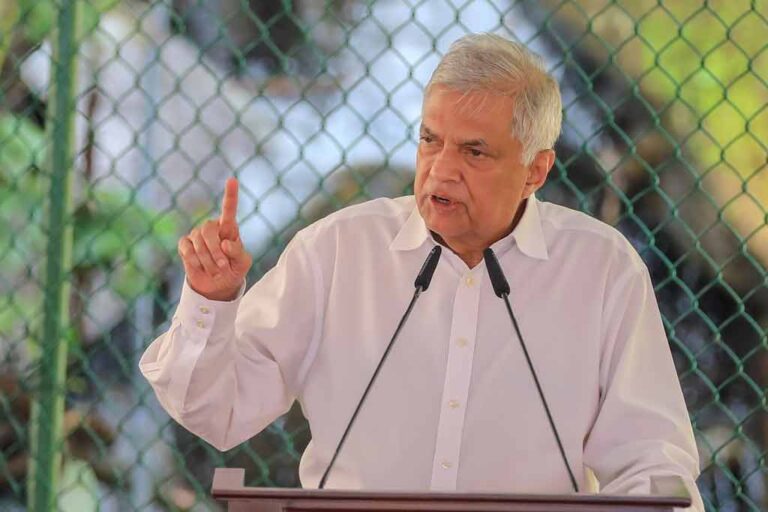
October 15, Colombo (LNW): Ranil Wickremesinghe, the leader of the United National Party (UNP) and former President, has announced that he will deliver a significant public address on Thursday (17).
This forthcoming statement marks Wickremesinghe’s first public engagement since the 2024 Presidential Election.
In this much-anticipated announcement, Wickremesinghe is expected to discuss the current political landscape in Sri Lanka, shedding light on what he describes as the “political behaviour of the country.”
Furthermore, he will outline his future strategies and vision in light of recent electoral developments.
Since the declaration of the General Election, Wickremesinghe has made it clear that he will not be a candidate in the election and has no intentions of entering Parliament through the National List.
This decision has prompted speculation regarding his next steps and the direction he envisions for his party and supporters.
In a noteworthy shift, various political factions that rallied behind Wickremesinghe during the recent Presidential Election have chosen to contest the upcoming General Election under the banner of the New Democratic Front (NDF), adopting the “Gas Cylinder” as their electoral symbol.
This coalition is a strategic move aimed at consolidating support and maximising their chances in the upcoming polls.
Interestingly, Wickremesinghe himself contested the presidential election under the same “Gas Cylinder” symbol, although he ran as an independent candidate.
October 15, Colombo (LNW): The Sri Lankan government is set to strengthen its public debt management framework following the recent implementation of the Public Debt Management Act No. 33 of 2024.
This legislation mandates the creation of a Public Debt Management Office (PDMO), designed to ensure that public debt data is recorded accurately, comprehensively, and in a timely manner through a robust system.
Presently, Sri Lanka relies on the Commonwealth Secretariat Debt Recording and Management System (CS-DRMS) for the management of its foreign debt, a tool overseen by the Department of Foreign Resources.
However, the Commonwealth Secretariat has halted updates and annual licensing for the CS-DRMS, highlighting the urgent need for an upgraded system that meets contemporary requirements.
In light of this situation, the government has engaged in discussions with technical experts from the International Monetary Fund (IMF) and the World Bank to explore the establishment of the PDMO.
Two promising software alternatives have emerged: the Commonwealth Meridian software, provided by the Commonwealth Secretariat, and the Debt Management and Financial Analysis System (DMFAS) from the United Nations Conference on Trade and Development (UNCTAD).
After thorough evaluation, the government has favoured the Commonwealth Meridian software for adoption.
This choice is underpinned by several considerations, including its cost-effectiveness, streamlined data transmission capabilities, assurance of data integrity, and compatibility with existing systems, as detailed by the Cabinet Office.
In a meeting held on Monday, 14 October, the Cabinet of Ministers endorsed the proposal put forth by President Anura Kumara Dissanayake, who serves as the Minister of Finance, to procure the Commonwealth Meridian software.
Furthermore, the Cabinet plans to solicit recommendations from a procurement committee appointed specifically for this purpose to facilitate the acquisition process.
The Cabinet Office has emphasised that this initiative is expected to substantially enhance Sri Lanka’s capacity to manage its public debt more effectively, thereby ensuring increased transparency and accuracy in reporting debt-related information.
As the country faces various economic challenges, these improvements in debt management are seen as essential for maintaining fiscal stability and fostering investor confidence.
By implementing a more efficient system, Sri Lanka aims to better navigate its financial obligations whilst promoting sound economic governance.
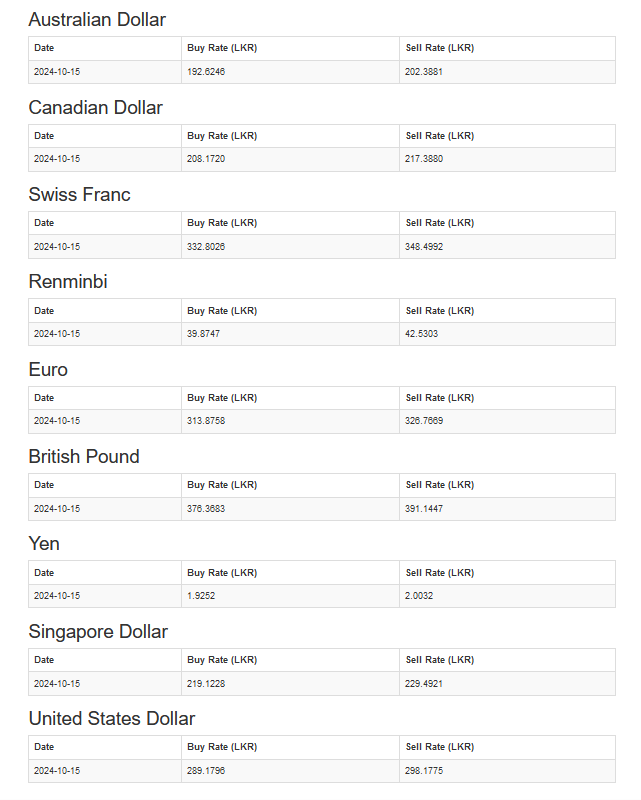
October 15, Colombo (LNW): The Sri Lankan Rupee (LKR) further indicates the trend of depreciation against the US Dollar today (15) in comparison to yesterday, maintaining, however, below the Rs. 300 threshold, as per the official exchange rates released by the Central Bank of Sri Lanka (CBSL).
Accordingly, the buying price of the US Dollar has increased to Rs. 289.17 from Rs. 288.50, and the selling price to Rs. 298.17 from Rs. 297.49.
The LKR has also depreciated largely against several other foreign currencies, including Gulf currencies.
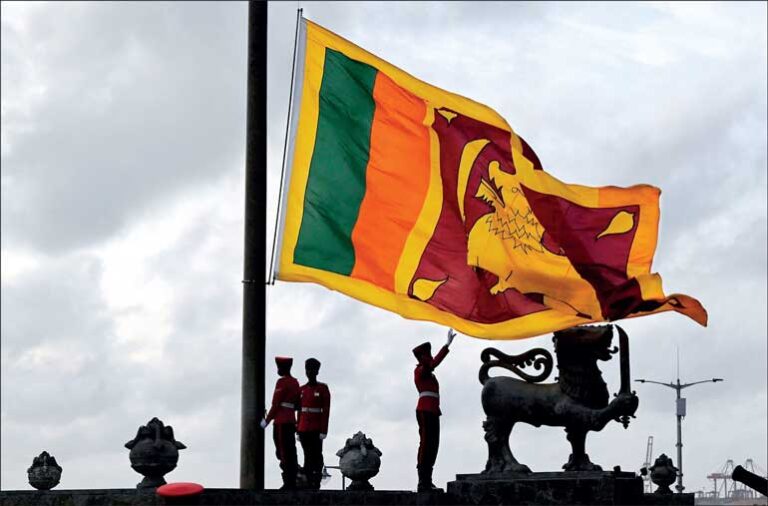
October 15, Colombo (LNW): The government has established two key committees tasked with overseeing the planning and execution of the 77th Independence Day celebrations, scheduled for February 04, 2025.
This initiative aims to ensure that the event is conducted with the utmost dignity and grandeur, reflecting the nation’s pride in its sovereignty.
The announcement was made by Cabinet Spokesman Minister Vijitha Herath, who confirmed that the committees will consist of senior Cabinet Ministers, including the President, Prime Minister, and the Minister of Buddhism, Religious and Cultural Affairs, alongside representatives from various sectors including National Integration, Social Security, and Mass Media.
In addition to the ministerial committee, a dedicated monitoring group has been appointed, featuring chief officials from all relevant ministries and departments, as well as representatives from the tri-forces and police.
This collaborative approach is designed to streamline preparations and ensure that every aspect of the celebrations is meticulously organised.
“The formation of these committees is crucial for coordinating efforts across different sectors, enabling us to celebrate our Independence Day in a manner befitting the occasion,” Minister Herath went on. “We aim to showcase our national heritage and unity while involving communities in the celebrations.”
The proposal for these committees was put forth by Prime Minister Dr. Harini Amarasuriya, who serves in multiple capacities, including Minister of Justice, Public Administration, Home Affairs, Provincial Councils, Local Government, and Labour.
Furthermore, the committees are expected to incorporate input from local communities to ensure that the celebrations resonate with citizens and strengthen national unity.
This inclusive approach aims to encourage public participation and foster a collective sense of ownership over the celebrations.
October 15, Colombo (LNW): The government has pledged to take firm action to recover the unpaid value added tax (VAT) amounting to Rs. 3.5 billion owed by Arjun Aloysius, Director of W.M. Mendis and Company Ltd., who was recently sentenced to six months in prison for defaulting on the tax payment.
Cabinet Spokesman Vijitha Herath, speaking at the weekly briefing to announce Cabinet decisions, emphasised that while Aloysius’ imprisonment serves as a punishment for tax evasion, it does not address the immediate need to recover the outstanding funds.
“Although the six-month sentence has been imposed, the government still has not received the Rs. 3.5 billion,” Herath said.
He further outlined the government’s intention to pursue legal and financial measures to reclaim the significant tax sum, which is critical for the state’s revenue.
“We are committed to recovering this tax money and ensuring that this liability is met,” Herath added.
The case has garnered widespread attention due to the substantial amount involved and the high-profile nature of Aloysius, who has been entangled in several financial controversies in the past.
The defaulted VAT pertains to a period from 2016 to 2019, during which the company failed to fulfil its tax obligations.
October 15, Colombo (LNW): The Secretary to the Leader of the Opposition in Parliament, Thisath Devapriya Bandara Wijayagunawardena, has formally stepped down from his position, with his resignation taking effect from September 10, 2024.
His decision to relinquish the role comes amidst a period of political shifts within the parliamentary landscape.
The resignation was duly accepted following a proposal put forth by the Prime Minister.
The Cabinet of Ministers, during a recent meeting, granted its consent to the proposal, signalling the official approval of Wijayagunawardena’s departure from his post.
October 15, Colombo (LNW): The Cabinet of Ministers has approved a proposal by President Anura Kumara Dissanayake, in his capacity as the Minister of Finance, Economic Development, Policy Compilation, Planning, and Tourism, to secure necessary funds from the Department of National Budget’s development programme.
These funds will be allocated to implement several key financial assistance measures aimed at supporting vulnerable sectors of society.
One of the primary decisions includes an interim monthly allowance of Rs 3,000 for all pensioners. This additional payment is intended to provide relief amidst rising living costs and economic pressures, ensuring pensioners can maintain a basic standard of living.
This move acknowledges the financial difficulties faced by retirees, especially given the country’s broader economic challenges.
In addition, the Cabinet has agreed to increase the fertiliser subsidy for paddy farmers. The subsidy will now cover up to Rs 25,000 per hectare, with a limit set at two hectares per farmer for the upcoming 2024/25 Maha season.
This measure aims to alleviate the financial burden of farmers and promote higher productivity in rice cultivation, a crucial sector in the nation’s agriculture-based economy.
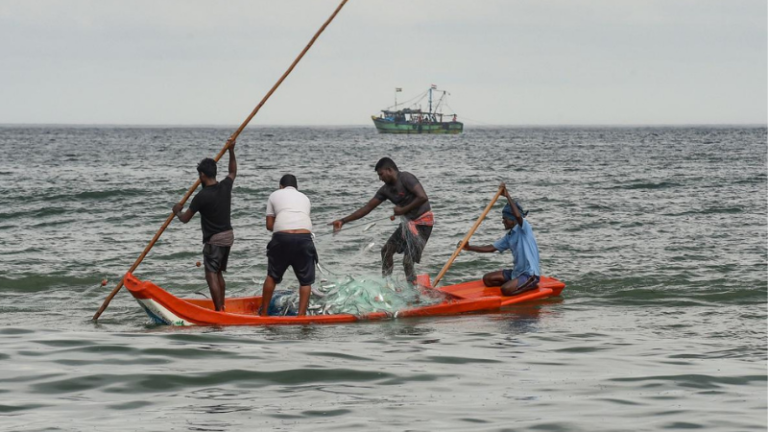
Further, the Cabinet has greenlit financial assistance for owners of fishing vessels. This aid is intended to support those involved in the fishing industry, which plays a vital role in food security and livelihoods for coastal communities.
The provision is expected to help vessel owners meet the challenges posed by fluctuating fuel prices, equipment costs, and other operational expenses, thereby sustaining the local fisheries sector.
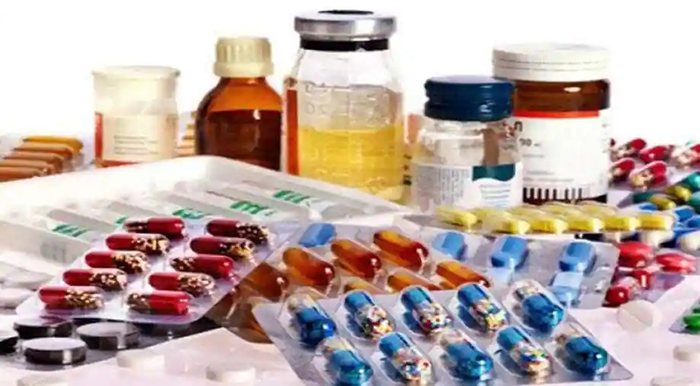
October 15, Colombo (LNW): The Cabinet of Ministers has granted approval to establish buyback agreements for the procurement of locally produced medicines and medical supplies from identified institutions for a period of one year.
This decision aims to bolster domestic pharmaceutical production and ensure a more self-sufficient supply of medical products in Sri Lanka.
This latest decision builds upon previous initiatives dating back to November 2013, when the Cabinet first approved the purchase of locally manufactured medicines under the Buyback Agreement procedure.
This move sought to prioritise the State Pharmaceutical Corporation (SPC) and incentivise local drug manufacturers.
Additionally, in October 2018, a further extension was approved, allowing contracts with local pharmaceutical companies to last up to 15 years. This agreement prioritised medicines produced in collaboration with the Sri Lanka State Pharmaceutical Manufacturing Corporation (SPMC), with agreements set for a 10-year supply period.
The latest decision will allow local pharmaceutical manufacturers to continue playing a pivotal role in the country’s healthcare system. A pricing committee has been established to oversee the costs of these medicines, ensuring that they remain affordable and accessible to the public.
Currently, the buyback agreements cover approximately 20 per cent of Sri Lanka’s medical supply needs. However, there is potential for this to increase to 40 per cent, given the existing capacity within local production lines.
According to the Ministry of Health’s Medical Supplies Division, 49 local pharmaceutical manufacturing companies have been identified, capable of supplying 454 different medical products, including vital drugs.
With the new agreement in place, these manufacturers will have the opportunity to contribute significantly to the nation’s medical supply chain.
Prime Minister Dr Harini Amarasuriya, in her capacity as Minister of Health, spearheaded the proposal. She emphasised that this initiative will not interfere with the pharmaceutical manufacturing processes of the SPMC nor with the local pharmaceutical companies that have already been sub-contracted.
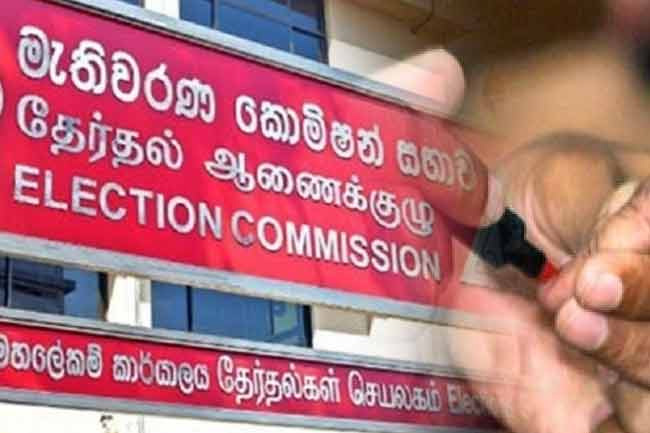
October 15, Colombo (LNW): The Election Commission has announced that the preference numbers for candidates contesting the forthcoming general election will be made public by tomorrow (16).
A spokesperson for the commission confirmed that the necessary information has already been collected from all districts and is currently undergoing the verification process.
Once the verification is complete, the preference numbers will be submitted back to the respective district secretaries for final approval.
The commission is working diligently to finalise the issuance of these numbers between today and tomorrow to ensure that all procedural timelines are met ahead of the election.
In addition to this, a meeting between representatives of political parties and the Election Commission has been scheduled for this morning.
The gathering will serve as a platform to discuss key matters related to the upcoming parliamentary election, with a particular focus on the maximum expenditure allowed per candidate.