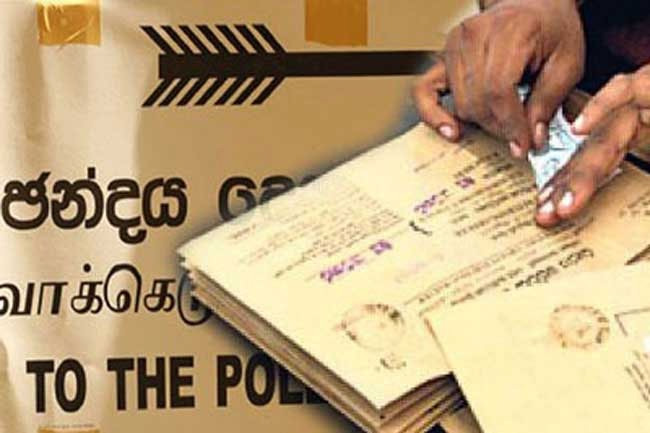
October 10, Colombo (LNW): The deadline for submitting postal voting applications for the 2024 General Election will close at midnight today (10).
The Election Commission has urged all public sector employees, except those exempted from election duties, to submit their applications before the deadline.
It was highlighted that failure to apply or submitting incorrect forms will not excuse officials from performing their election responsibilities.
In addition to postal voting applications, the deadline for independent groups to place their deposits for the upcoming election will end at 12 p.m. noon today.
According to the Election Commission, this rule applies to all independent groups contesting the election, with the exception of recognised political parties.
As of 9 October, a total of 293 independent groups have already placed deposits to participate in the 2024 General Election. The Digamadulla Electoral District recorded the highest number of independent groups, with 42 entries.
The Election Commission has also confirmed that nomination papers can be submitted to District Secretariats across the country until 12 noon tomorrow (11 October).
Following the submission, there will be a 90-minute window for filing any objections to nominations, according to the Commission.
With key deadlines for the General Election fast approaching, the Election Commission is focused on ensuring a smooth and transparent process.
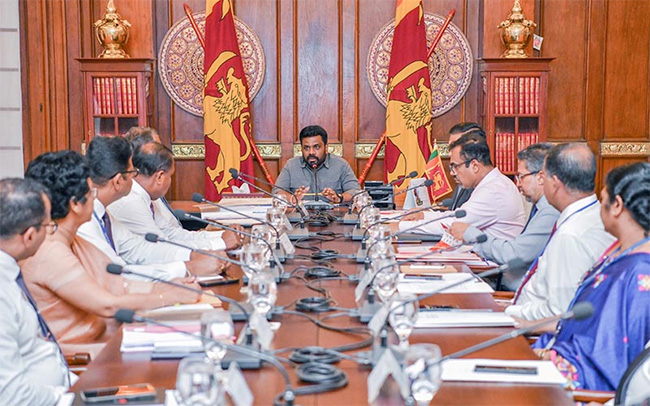
October 10, Colombo (LNW): President Anura Kumara Dissanayake convened a significant meeting with senior officials from the Sri Lanka Customs Department and the Inland Revenue Department (IRD) at the Presidential Secretariat yesterday (09).
The discussions, aimed at bolstering the country’s revenue generation, focused on improving the operational efficiency of these critical departments as part of the government’s broader economic objectives, a statement by the President’s Media Division (PMD) revealed.
The meeting addressed the pressing challenges that both departments face, particularly in the areas of revenue management and tax evasion.
Officials from both agencies emphasised the need for enhanced coordination to address these issues more effectively.
The importance of stronger inter-departmental collaboration was highlighted as a way to ensure the strict enforcement of tax laws, minimise tax leakage, and boost the country’s revenue collection efforts.
Customs and tax officials presented their respective concerns and outlined the steps required to streamline their operations. A more unified approach to combat tax evasion was discussed as a solution to the ongoing challenges in preventing financial losses to the state.
This joint effort is expected to result in a more resilient system of revenue enforcement, benefiting the national economy in the long term.
Attendees from the Sri Lanka Customs Department included Director General PBSC Nonis, along with Additional Director Generals Mrs. HW SP Karunaratne, Mr. CSA Chandrasekara, Mr. WSI Silva, Mr. SP Arukgoda, and Mr. JMMG Wijeratna Bandara. Mr. AWLC Weerakoon, Senior Deputy Director, and Chief Financial Officer MRGAB Muthukuda were also present.
From the Inland Revenue Department, Commissioner General Mrs. WS Chandrasekara, along with Deputy Commissioner Generals Mr. BKS Shanta, Mrs. JADDB K Siriwardena, Mrs. JD Ranasinghe, Mr. DMNSB Dissanayake, and Senior Commissioner Ms. TMS Thennakone, participated in the talks.
President Dissanayake reinforced the government’s commitment to reforming fiscal policies, stressing the importance of tackling tax evasion and enhancing revenue collection for the betterment of the country’s economic outlook.
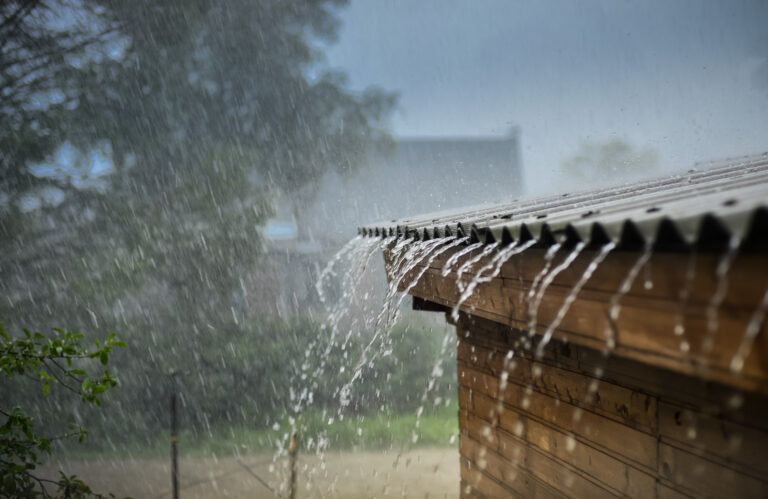
October 10, Colombo (LNW): Showery condition is expected to enhance to some extent in the south-western part of the Island in the next few days starting from today (10th), due to the development of atmospheric disturbance in the vicinity of Sri Lanka, the Department of Meteorology said in its daily weather forecast today (10).
Showers or thundershowers will occur at times in Western, Sabaragamuwa, Southern and North-western provinces, and heavy showers above 100mm are likely at some places in Western and Sabaragamuwa provinces and in Galle and Matara districts, the statement read.
Showers or thundershowers will occur elsewhere at several places in the island during the evening or night.Fairly heavy showers above 75mm are likely at some places.
Showers may occur in Northern province in the morning too.
The general public is kindly requested to take adequate precautions to minimise damages caused by temporary localised strong winds and lightning during thundershowers.
Marine Weather:
Condition of Rain:
Showers or thundershowers will occur at several places in the sea areas around the island.
Winds:
Winds will be Westerly to south-westerly in the sea areas off the coasts extending from Mannar to Hambantota via Colombo and Galle. Wind speed will be (30-40) kmph and can be increase up to (50-60) kmph at times. Winds will be variable in direction and wind speed will be (25-35) kmph in the other sea areas around the island.
State of Sea:
The sea areas off the coasts extending from Mannar to Hambantota via Colombo and Galle can be fairly rough at times. Other sea areas around the island can be slight to moderate. Temporarily strong gusty winds and very rough seas can be expected during thundershowers.
President Anura Kumara Dissanayake holds a crucial meeting with senior officials from the Sri Lanka Customs and Inland Revenue Departments to discuss strategies for enhancing revenue generation and operational efficiency: Officials highlighted challenges in managing revenue and tackling tax evasion, stressing the need for stronger coordination between the two departments to improve tax law enforcement, prevent leakage, and boost national revenue collection.
Ex Minister and Ceylon Workers’ Congress (CWC) Secretary General Jeewan Thondaman officially signs his nomination papers to contest the upcoming General Election from the Nuwara Eliya District, under the United National Party (UNP) led alliance formed by ex President Ranil Wickremesinghe.
Veteran actor Kamal Addaraarachchi and actress Damitha Abeyratne are entering politics for the first time in Sri Lanka’s upcoming General Elections: Addaraarachchi will contest from the Devana Parapura Party, led by Uvindu Wijeweera, son of JVP founder Rohana Wijeweera, and Abeyratne the Samagi Jana Balawegaya (SJB) from the Ratnapura district: This reflects the ongoing trend of artistes joining politics: Meanwhile, former MP and actor Ranjan Ramanayake together with former Sri Lankan cricketer T.M. Dilshan forms a new political party, the United Democratic Voice (UDV), having Ramanayake as the Leader and Dilshan the National Organiser.
The Deputy Head of Mission at Japan’s Embassy in Colombo, Naoki Kamoshida, meets with Defence Secretary Air Vice Marshal Sampath Thuyacontha (Retd) at the Defence Headquarters in Kotte: Accompanied by Defence Attaché Captain Yuki Yokohari, the delegation discussed strengthening defence cooperation and bilateral ties between Sri Lanka and Japan: exchanged souvenirs to mark the meeting.
The Court of Appeal schedules a petition hearing for 13 November, seeking disciplinary action against former SIS Director Nilantha Jayawardena for failing to prevent the Easter Sunday terror attack despite prior intelligence: Filed by the Centre for Society and Religion (CSR), the petition faces potential dismissal as a new investigation, initiated by the National Police Commission, is already underway.
CB Governor Nandalal Weerasinghe says the Central Bank has recommended to the Finance Ministry to allow vehicle imports without affecting the country’s foreign reserves: While import restrictions were imposed during Sri Lanka’s 2022 economic crisis, they have since been relaxed: The final decision on vehicle imports remains with the Finance Ministry.
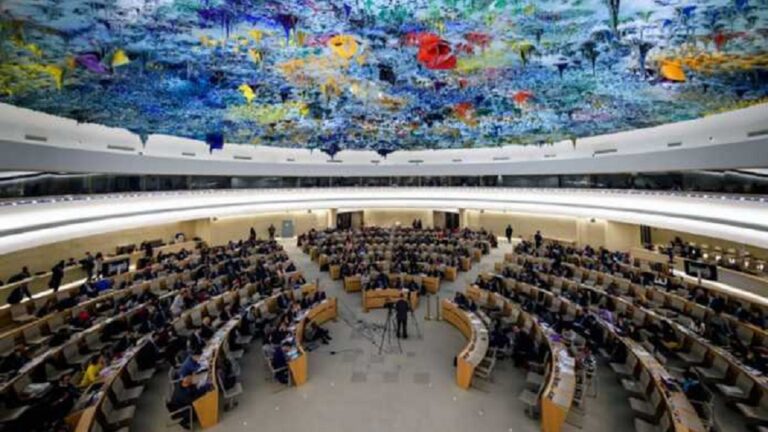
Sri Lanka rejects a UNHRC draft resolution extending the mandate of Resolution 51/1, aimed at promoting reconciliation, accountability, and human rights: Sri Lanka’s Permanent Representative Himalee Arunatilaka argued against the external evidence-gathering mechanism within the OHCHR, calling it an expansion of the Council’s mandate: Despite rejecting the resolution, Sri Lanka reiterated its commitment to engage constructively with the UNHRC and domestic human rights processes.
Air Chief Marshal Harsha Abeywickrama has been appointed Chairman of Airport & Aviation Services Sri Lanka (Private) Ltd.: He brings extensive experience from his distinguished Sri Lanka Air Force career to his new role at AASL, contributing his leadership and expertise to enhance the country’s aviation sector.
The Colombo Fort Magistrate’s Court issues an arrest warrant for Bodu Bala Sena (BBS) General Secretary, Galaboda Atte Gnanasara Thera, for failing to appear in court regarding a hate speech case: The case alleges that he insulted Muslim religious beliefs in 2014 near Slave Island police station: The warrant was issued after his absence at the hearing.
Sri Lanka Cricket has announces a 17-member squad for the upcoming T20I series against the West Indies, scheduled for 13th, 15th, and 17th October 2024 in Dambulla: The squad, led by Charith Asalanka, includes prominent players like Kusal Mendis and Wanindu Hasaranga: The team was approved by Prime Minister and Sports Minister Dr. Harini Amarasuriya.
October 09, Colombo (LNW):Cabinet Spokesman and Mass Media Minister Vijitha Herath assured yesterday that the government will ensure justice is served to those responsible for the 2019 Easter Sunday attacks. Speaking at the weekly Cabinet media briefing, held at the Government Information Department, Minister Herath emphasized that the mistakes of the past will not be repeated under the current administration.
In response to a journalist’s query, Minister Herath confirmed that President Anura Kumara Dissanayake has taken initial steps by appointing a special committee to investigate any potential irregularities connected to the President’s Office and to review issues arising from the reports of the Presidential Commission on the attacks.
“We have already initiated actions in this regard, despite the short time since the President assumed office,” Minister Herath stated. “We will not allow any injustice to befall the people of this country.” The Minister reaffirmed the government’s commitment to ensuring that the law is fully implemented against those responsible for the tragic event.
October 09, Colombo (LNW):The United States has pledged to provide crucial support to strengthen Sri Lanka’s economy, according to a statement from the President’s Media Division yesterday (8). In a meeting at the Presidential Secretariat, US Ambassador to Sri Lanka, Julie Chung, announced that the support will focus on fostering an export-driven economy to enhance Sri Lanka’s economic resilience.
During the meeting, Ambassador Chung conveyed US President Joe Biden’s congratulations to Sri Lankan President Anura Kumara Dissanayake, delivered via President’s Secretary Dr. Nandika Sanath Kumanayake. She emphasized that both the International Monetary Fund (IMF) and the United States Agency for International Development (USAID) are prepared to offer financial aid aimed at improving Sri Lanka’s economic prospects.
Additionally, the United States pledged financial and technical support for President Dissanayake’s initiatives to combat fraud and corruption, promote good governance, and enhance national security. Ambassador Chung reiterated the US’s commitment to supporting renewable energy development, export-oriented agriculture, and poverty alleviation in rural areas.
In further support of social development, the United States will expand the current rural school lunch program to include urban schools, contributing to improved nutrition for schoolchildren. The meeting was also attended by USAID Deputy Director for Sri Lanka and the Maldives, along with economic expert Christopher Gooch.
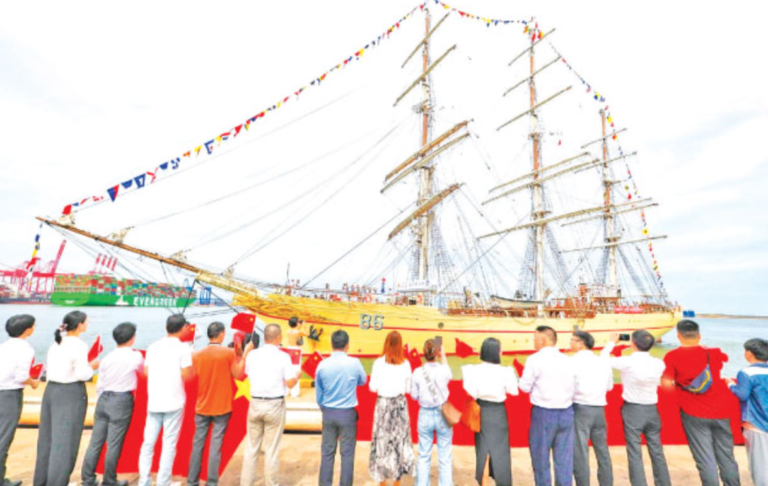
October 09, Colombo (LNW): The Chinese Navy’s sail training warship, ‘Po Lang’, arrived at the port of Colombo on a formal visit and was welcomed by the Sri Lanka Navy with traditional naval honors. The 86-meter-long vessel, which serves as a training platform, is crewed by 130 personnel, including 35 officer cadets.
During their stay in Colombo, the crew will explore various tourist attractions in Sri Lanka, and Sri Lanka Navy personnel will have the opportunity to participate in operational briefings aboard the ship.
The ‘Po Lang’ is set to depart from Colombo on October 11, marking the conclusion of the visit.
October 09, Colombo (LNW): Cabinet Spokesperson, Minister Vijitha Herath, announced yesterday that Sri Lanka will continue to oppose draft resolution 51/1 of the United Nations Human Rights Council (UNHRC) and has not agreed to any extension of the external evidence collection mechanism’s powers. He made these remarks during the weekly Cabinet media briefing at the Government Information Department.
The decision was made following submissions by the Foreign Affairs Minister regarding the ongoing 57th session of the UNHRC in Geneva. The Cabinet of Ministers has officially endorsed Sri Lanka’s position to reject the draft resolution.
However, Minister Herath emphasized that Sri Lanka remains dedicated to addressing human rights issues, including reconciliation, through its own local mechanisms. He reassured that Sri Lanka will continue to engage in meaningful discussions with the UNHRC and its regular human rights mechanisms.
Commenting on the political landscape, Minister Herath highlighted that a newly elected President is in office and a new government will soon be formed after the upcoming parliamentary elections. Many of the elements within the UNHRC proposal align with the policies of the new administration, and the government’s stance will be conveyed during the final UNHRC session in Geneva.
While the new government is committed to safeguarding human rights, Herath noted that it will take time to fully implement these measures. The rejection of certain aspects of the proposal will be part of the position communicated to the UNHRC during the concluding session tomorrow.
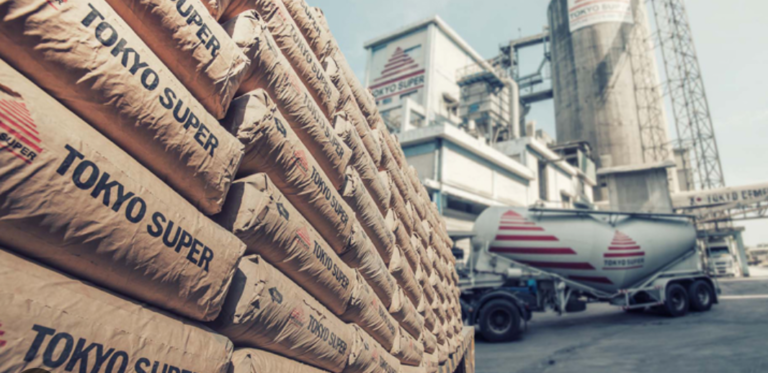
October 09, Colombo (LNW): The Commercial High Court of Colombo has issued an order to wind up Walkers Piling Ltd., once a major player in Sri Lanka’s piling industry, following a petition by Tokyo Supermix Ltd. This marks the end of operations for the now-defunct subsidiary of MTD Walkers PLC.
Tokyo Supermix Ltd., a subsidiary of Tokyo Cement PLC, initiated the winding-up petition in 2019, alleging that Walkers Piling had failed to settle a statutory debt owed to the petitioner. During the legal proceedings, other creditors also joined the case, lending support to the petition against Walkers Piling.
The petitioner highlighted in its submission that Walkers Piling’s assets include various construction equipment, yards, and other properties valued at over Rs. 1 billion, located across multiple sites in Sri Lanka. The court was informed that these assets represented significant holdings that could be utilized to address the company’s financial obligations.
Earlier, Commercial High Court Judge Pradeep Hettiarachchi had issued an interim order restricting Walkers Piling and its directors from selling, transferring, or placing any encumbrances on its assets. Despite presenting several settlement plans in court, Walkers Piling repeatedly failed to fulfill its commitments to the creditors, leading to the continuation of the winding-up process.
Legal representation for Tokyo Supermix Ltd. was provided by Attorney-at-Law Nishan Sydney Premathiratne, with instructions from Attorney-at-Law Gamindu Karunasena. Representing Walkers Piling Ltd. in court was Attorney-at-Law Sujith Rohana, under the guidance of Attorney-at-Law Kaushalya Thilakarathna.
Intervening creditors also participated in the proceedings, with Attorney-at-Law Lakshmanan Jeyakumar representing Unilanka Enterprises, following instructions from Attorney-at-Law Subashini Jayasuriya. Seylan Bank PLC was represented by Attorney-at-Law Senaka De Seram.
The court’s decision brings to a close a lengthy legal battle and signifies a major shift in Sri Lanka’s construction sector, with Walkers Piling Ltd., once a prominent figure, now officially dissolved.
Tokyo Supermix set out in its Petition that the assets of Walkers Piling inter alia include assets located at various locations, construction yards, and construction sites.
The Petitioner had also supported the allegation with an Affidavit given by a former employee of the company. Tokyo Supermix also through the Petition to Court had set out that the assets of Walkers Piling are valued at over Rs. 1 billion and such assets are located at various sites around the country.
It also set out in the Petition that, after finding out about the recent arrangements taking place with regard to the assets of the company sought to be wound up, the Petitioner submitted through the Petition that creditors of Walkers Piling would be severely prejudiced if the assets of Walkers Pilling Ltd., are liquidated either directly or indirectly.
October 09, Colombo (LNW): Sri Lanka recently highlighted the significance of Indian External Affairs Minister S. Jaishankar’s visit in advancing its debt restructuring with international sovereign bondholders.
Jaishankar’s one-day trip on October 4 marked him as the first foreign official to visit Sri Lanka since Anura Kumara Dissanayake took office as president on September 23.
Cabinet spokesman and Foreign Affairs Minister Vijitha Herath stated that India’s endorsement of the debt restructuring agreement as a bilateral creditor demonstrated compliance with the principle of comparative treatment in handling debt.
Prior to last month’s presidential election, on September 19, Sri Lanka announced a preliminary agreement with external commercial creditors to restructure approximately USD 17.5 billion of external commercial debt.
The country had previously declared its first sovereign default in April 2022, its first since gaining independence from Britain in 1948, due to depleted foreign exchange reserves.
This default halted debt servicing, preventing multilateral creditors and commercial lenders from extending new financing.
By July, Sri Lanka reached a debt restructuring agreement with international sovereign bondholders after lengthy negotiations with countries like China, India, France, and Japan.
Currently, Sri Lanka is in talks with the International Monetary Fund (IMF) for the next installment of the USD 2.9 billion bailout package, contingent on progress in external debt restructuring.
The IMF’s third tranche was released in mid-June, with the lender noting positive results from Sri Lanka’s economic reform efforts in August.
Herath mentioned that the bondholders sought confirmation from bilateral creditors on the principle of equal treatment in debt management.
He also addressed questions about Indian projects in Sri Lanka, including the Adani investment projects, stating that since the current government is a transitional one with parliamentary elections set for November, these matters were not discussed.
The ruling National People’s Power (NPP) had previously expressed intentions to annul the Adani wind power project. Herath emphasized that the government would reassess the project’s pros and cons, particularly due to concerns over high energy costs, after the next government is formed.