08 Oct 2024 | BY Jatila Karawita
- Says unscrupulous reporters, social media influencers in tow with disgruntled elements
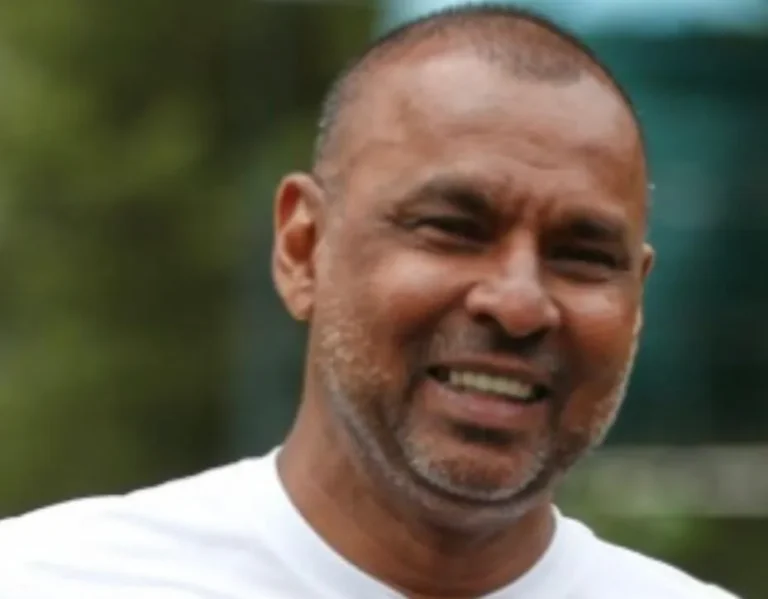
Former Sri Lanka Rugby (SLR) President and ex-National Cap Asanga Seneviratne in an exclusive interview with The Daily Morning, charged that certain disgruntled elements have dragged the sport into the gutter for their personal gains.
He said that if rugby administration is cleaned up of uncouth elements who thrive under misinformation and slander by circulating false, negative and misleading articles, Sri Lanka may yet have a future to aspire to in the sport.
He however refused to reveal what ramifications SLR will face in the event of it failing to put its house in order by November from World and Asia Rugby respectively.
Following are excerpts from the interview:
What is your frank view of the state of rugby in this country now and the time that you were involved from a perspective of being a former national player, national coach and President of SLR?
The junior competitions are growing even though the structure is not conducive to long-term growth and success of the players of the future national teams. Some negative coaching methods and practices have been highlighted with over training and serious physical injuries to players and this has to be properly investigated and remedies and controls put in place.
The top club competition has managed to drive away fans to the extent that only a handful turn up for a game. It’s badly organised and there is hardly any interest. Most of the top clubs don’t even have a second side and the rest of the competitions are mainly low level 7’s tournaments. Foreign players have to be allowed to participate once again. Games must be played under lights. No one wants to make it to the grounds at 3.30 p.m.
We have lost our main sponsor in 2020 and this has resulted in over a 400m loss of revenue in the last four years to SLR.
Our national team has dropped in the Asian rugby rankings in the 7’s from a high of no. 2 to no. 9 and to no. 8 in the 15’s and played with India, Qatar and Kazakhstan for the first time. We were in the top four for most of our rugby history. Our women have dropped from no. 4 in Asia to no. 9 as well. Both teams are out of the top 8 in the Asian rankings and top tournaments for the first time including the prestigious Asian 7’s series, a serious setback for a founding member of Asia Rugby with a 140-year playing history.
After hosting over 22 world class international tournaments from 2011-2018 we have hosted just one tournament last year which was the quadrangular mentioned above. Overseas tours have also come to a standstill with both men and women failing to turn up for the Asian 7’s Championships in Dubai.
We made over 25 overseas tours in Men’s, Women’s and age grade rugby Under-17 ,19, 20 (won an Asian championship) during this period.
The Carlton International 7’s held from 2012 – 2017 was a catalyst that gave our top 75 players the financial security needed to play at the highest level and also took out the fear factor in playing against world class foreign opposition. The tournament cost over Rs. 250 million. We managed to convince most of the sponsors to tie up with the A Division clubs as well. Our spectators got to see the top 50 players in the world playing in Sri Lanka and we were the example, developing rugby nations wanted to follow and World Rugby (WR) acknowledged as a potential growth nation and Olympic participant.
This was mainly possible because of the support and efforts of former Parliamentarian Namal Rajapaksa who had a vision and wanted to see SL rugby succeed in becoming a major international participant and sports tourist destination.
SLR separately raised close to Rs. 200 million during the course of the year thus ensuring stability and long-term growth. We had all world-class coaches and trainers looking after our national sides together with a CEO (Priyantha Ekanayake) and Head of Rugby (Imthi Marikar) overlooking the entire operation with a dedicated top-level team of experienced professionals.
In reality SLR was overlooking an investment of over Rs. 450 million per year for rugby in Sri Lanka.
As a former President of Sri Lanka Rugby (SLR), did you ever envisage this type of stalemate and what do you think has brought about the current impasse between the officials of the Ministry of Sports and those helming the local rugby administration?
The main stakeholders have to take responsibility for the state of the game and administration today. What has happened is that the main clubs are so focused with the own administration they tend to ignore participating in the administration of the national body. The national administration has in the past few years seen an almost complete lack of top-level leadership from the main stakeholders. This has led to a complete breakdown of leadership and critical decision-making. We have also seen over a dozen former national players of repute and professionals resign from the governing body due to the uncouth behaviour of the leadership, thus leaving a massive vacuum in management and basic rugby etiquette.
The Sports Ministry is involved since all the main stakeholders (the A Division clubs) have engaged them to sort out the issues concerning governance and the constitution since they have found it impossible to work with the remaining officials of SLR. Also now the office bearers have been removed for the third time in three years by three different Sports Ministers thus leaving the stakeholders very little option but to deal directly with the Sports Ministry.
It is the concerted view of rugby critics that certain disgruntled elements within the local rugby fraternity have brought about this situation for their personal gain, rather than working together to take the game in this country to the next level. Do you concur with this assessment or if not why?
Disgruntled elements and trouble makers in sports administration is nothing new in sports in Sri Lanka. Since of late we have seen some elements drag the sport into the gutter with how they conduct themselves. They are only interested in destroying all the hard work done with misinformation and slander because they are envious. Unable to fathom how to manage the process and office they represent. Chaos is created by getting unscrupulous reporters and social media influences to circulating false, negative and misleading articles.
SLR has fallen to a new low with an interim administration having to take over running affairs, after a fallout with stakeholders, sponsors, administrators, international bodies and pretty much all concerned.
Before we talk about taking it to the ‘Next level’, we will have to consider how we get back to the level we were at six years ago. We have no junior international rugby programme, no senior programme and our club and schools’ tournaments need serious restructuring with sponsors coming in. We need a top CEO, Men, Women and Youth Head of Coaching a world-class trainer, manager and basic administration. Whoever aspires to take over the leadership of SLR must do so with a concrete plan and the ability to deliver.
Basically we will have to start from scratch since all the coaching and management structures, administration, player welfare, international hosting and tours for our Men, Women and Youth teams have been dismantled and destroyed.
Do you reckon that the current rugby politics in Sri Lanka would have a detrimental effect on the overall future of the game and on those plying the trade if things are not resolved satisfactorily sooner than later?
As stated previously it has already had a serious negative impact and we are in a perilous state. Most young school leavers are walking away from the sport since they see no future. We have lost a host of top players in the last four to five years due to uncertainty, no international competitions or a pathway, lack of funds and employment and with all the major sponsors pulling out.
It’s no longer a dream of a young player to play club and national rugby. Only the ones with no other options are continuing.
The challenges an incoming administration has are many. Appointing a competent, qualified CEO with top-level rugby experience and setting up a team to raise finance, resurrect the A Division and other tournaments, restoring the national team with top-level coaches, management, trainers and setting up and ensuring age grade and women’s teams participate internationally.
In your view, being an official with inside knowledge of Asia Rugby, do you think Sri Lanka will be at risk of its membership being suspended by both AR and WR in the event of the SLR administration failing to resolve its current deadlock?
I am not involved in the decision-making of this nature in Asia Rugby. Neither have I participated in these matters in the past. I am one of the two independent members of the Council representing 36 member countries and the Chairperson of Competitions and High Performance. My committee at Asian Rugby conducts approximately 25 tournaments across the largest continent. WR has already conducted investigations, facilitated discussions and hosted stakeholder meetings at which decisions were made and agreed by all. Now some self-appointed officials seem to want to go back on what was agreed. Yes, SLR will face serious consequences if it does not resolve its administrative issues and have an elected body in place shortly.
If the current impasse were to continue for a few months more, will it affect Sri Lanka’s participation in both 15 and Sevens competitions in the region in the coming months and what would its impact be for the stakeholders concerned?
SLR is not in the top 8 in the 7’s in the Asian circuit so they are not participating in the 7’s Championships taking place at the moment. They are due to play in the next tier of teams in October in Nepal. WR has extended the time limit to comply until mid November. I cannot comment on what may happen after the deadline if we don’t comply and have an administration in place.
Are you content with the current standards of school rugby and sports and do you think we do enough to help school boys and girls aspire to national honours?
The standard of school-boy rugby has to be improved if we are serious about being competitive internationally. Our youth must be given the opportunity, training, nutrition and guidance in order to be successful. We must have a system in place like we did from 2011-2018 where SLR took on the responsibility of Youth Rugby. We must invest in educating our coaches and players continuously like we did in those years. This is a massive ask and the current rugby administration managing schools’ rugby is diabolical and clueless. They don’t even know what to ask sponsors and have no interest in developing youth or competing Internationally. The sad part is none of the Heads of schools seem to care.
The local product at the moment is exciting to watch and enjoyable since they are competing on pretty much on even terms. This all changes when you have to play overseas against unfamiliar opponents and conditions.
The sad fact is that as a nation we really don’t care much about our youth. This is amply demonstrated in a majority of sports and how we conduct our sporting activities and competitions across the boards. The facilities we offer are dire and no one cares. The impact sports have on one’s life is completely lost on our leadership be it in schools, clubs or national bodies.
Can you also give us your candid view of the standard of local referees this year in the schools rugby circuit and do you also champion the cause for hiring foreign referees, as done by both Royal and Trinity for the Bradby this season?
The standard will be what the administration invests and puts in place in terms of finance, management and accountability.
There is a lot at stake since the game is professional and the Schools tournament is now a Rs. 400-500 million investment.
The behaviour and language displayed by some parents, old boys and supporters at matches have been disgraceful and unacceptable. School authorities must take action to ensure decency and an enjoyable experience for all. Most of the time the calls they are questioning, made by the referee are incorrect. Unfortunately, it’s gone against their team and the referee is blamed.
Yes, we must bring in foreign referees from time to time. The two matches were a joy to watch. In the past we had some of the best referees in the world overlooking match day and conducting training and education programs for our local referees. New Zealander Garratt Willamson, South African Jonathan Kaplan were two of top referees and the calibre of gentleman overlooking and training our charges. They are gentlemen who have officiated in World Cup finals and been ranked 1 in the world. The local referees went to the Sports Minister and got the committee appointed to overlook the development disbanded and sent Williamson home.
The SLR must overlook the Referees Society and ensure accountability. The Referees Society members can’t be the judge, jury and executioner. We had a midweek review where a complaint could be lodged and reviewed. I am not sure if they do this anymore.
The biggest challenge I see is that we don’t have any top-level players taking up the whistle. This creates a massive discrepancy in how some calls are made. There has to be some serious changes made before next season as to how referee performances are analysed and managed. training and overseas exposure is a must.
Besides rugby, what are the other sports that you were actively engaged in from an administrative side ?
I was involved with Sri Lanka Cricket from 2011-2015 and we came into four World Cup finals and won one. We increased local sponsorship from Rs. 300 million to Rs. 1.1 billion and the TV rights from $ 29 million to $ 42 million. It’s a lot larger now with the explosion in the T 20 format, the World Test Championship (WTC) and the limited overs all drawing massive viewership and worldwide sponsors. I was also involved with the National Olympic Committee from 2016-2020. We created a High Performance Unit which I headed and introduced a training, monitoring and finance model which was well received. I am also Heading Baseball which I believe has a good future in Sri Lanka.
Also as a former first-class cricketer for CCC and Sri Lanka Youth teams, what is your honest take on the state of cricket in Sri Lanka and do you reckon we are on the right track after a lull in team performances?
I think we have finally somewhat got our act together. The appointment of Sanath Jayasuriya, a top-class local cricketer as a coach is a good decision. Cricketers in the 90’s and 2000’s were on par or better than the best in the world. How they are overlooked for overseas personnel who have hardly played the game at any decent level is mind-boggling. The difference now is we have a former legend in the dressing room, on the grounds, at practice and in the hotel spending time with the players. This is critical. He will talk the talk and walk the walk. It’s a learning experience for him and we must be patient. It’s probably one of SLC’s best investments. Mahinda Halangoda, another top-class former cricketer as the manager is also a good foil for Sanath.
Shammi Silva and Ashley De Silva are two of the finest first class cricketers to have played the game. Both captains of their schools and clubs and have represented Sri Lanka. They know the game inside out and were both excellent leaders on the field. If they are allowed to run SLC’s cricket side of things independently we will see tremendous progress and results will follow. Jerome Jayaratne being appointed back to the role of High Performance Head and Development is a critical move that will help us identify real talent and transfer them to national representation. He did this from the early 90’s to 2015 and was suddenly discarded. You can see the fall out and repercussions. He will have to rebuild his team since almost all our top coaches have left for overseas assignments. He is technically the most qualified coach in Asia and I place him amongst the best in world cricket today. He will also introduce and push to play outstanding local talent that has been ignored and deserve breaks which clearly has been the bane in the past 10 years.
All these gentlemen were incredible athletes with over 100 first class matches each behind them with multiple National Championships under their belts and decades of experience at the highest level. They hate losing and have all individually achieved real success on the field and I have no doubt they will impart extremely positive vibes that will create champions.
Source: The Morning