Home Blog Page 933

Rare Lunar Occultation of Saturn to be visible in Sri Lanka

0

July 21, Colombo (LNW): A rare astronomical event, the Lunar Occultation of Saturn, will be visible in Sri Lanka just after midnight on 24th July 2024.

The Arthur C Clarke Institute for Modern Technologies has announced that the event will commence at approximately 00:50 a.m. on 25th July 2024, and can be seen with the naked eye by observing the Moon from around 00:40 a.m.

For a clearer view of Saturn’s disappearance and reappearance, the Institute recommends using a telescope or binoculars.

In an occultation, one celestial body passes in front of another, blocking it from view. This event occurs when the Moon moves in front of Saturn, obscuring it from view on Earth.

The Moon will hide Saturn for about one hour and twenty minutes, and this phenomenon will only be visible from specific regions on Earth. In Sri Lanka, the visibility time and duration will slightly vary by location.

The next Lunar Occultation of Saturn visible from Sri Lanka will occur on 24th April 2037.

New CB Act enables govt to independently manage budget deficit: Finance State Minister

0

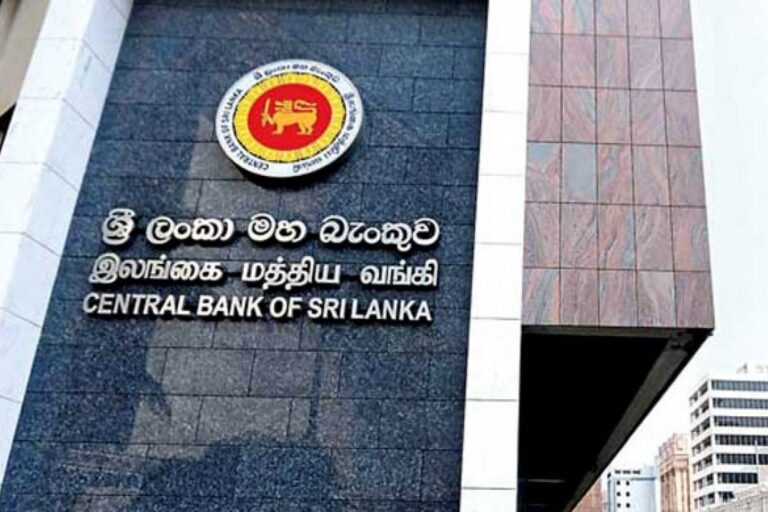
July 21, Colombo (LNW): The government is effectively managing the budget deficit independently, following the implementation of a new Central Bank Act, Finance State Minister Shehan Semasinghe said.

In a post on ‘X’, Semasinghe revealed that during the first six months of 2024, the government repaid Rs 129 billion more than it borrowed through treasury bonds and bills.

Specifically, the government borrowed Rs 4,852 billion through these instruments but repaid Rs 4,981 billion by rolling them over.

He emphasised the importance of highlighting net borrowing rather than gross borrowing.

Semasinghe also pointed out that prior to overcoming the economic crisis, the government heavily depended on central bank financing, resulting in an inflation rate that soared to 70 per cent.

However, with the new Central Bank Act in place, the government has now taken full control of managing the budget deficit.

Presidential Polls in SL estimated to cost Rs. 10 bn

0

July 21, Colombo (LNW): The upcoming Presidential Election in Sri Lanka is expected to cost Rs. 10 billion, R.M.A.L. Ratnayake, Chairman of the Election Commission disclosed.

A significant portion of this expense, approximately Rs. 8 billion, is allocated for printing, including ballot papers.

Ratnayake noted that the cost of printing has quadrupled since 2019, attributing the increase to the rising prices of goods and services.

For the first time, the Presidential Election will be conducted under the Election Expenditure Regulation Act No. 3 of 2023, which was enacted to ensure the true will of the people is reflected without bribery, coercion, or voter intimidation.

This law, which has been in effect since 24 January 2023, sets a cap on the maximum amount that political parties and candidates can spend on their campaigns.

Following the receipt of nominations, political party secretaries will be consulted to determine the allowable campaign expenditure for each candidate.

All candidates are required to submit detailed expenditure reports to the Election Commission within 21 days after the election concludes.

Ratnayake also mentioned that the public can report any violations of the expenditure limits, and the police have been authorised to investigate such complaints and take legal action through the Attorney General’s office.

Additionally, measures will be taken to monitor and regulate candidates’ self-promotion on social media platforms such as Facebook and YouTube during this year’s Presidential Election.

Former Australian Premier praises Sri Lanka’s tourism potential

0

July 21, Colombo (LNW): Scott Morrison, former Prime Minister of Australia, praised Sri Lanka’s tourism sector, highlighting its immense potential, particularly in showcasing the island’s cuisine.

During an event in Mount Lavinia, Morrison, accompanied by his wife Jenny, expressed his admiration for Sri Lankan cuisine.

Known for his fondness for the island’s dishes, he demonstrated his cooking skills by preparing a mud crab curry and a chicken curry, both using authentic Sri Lankan spices.

The event also saw the presence of the Australian Deputy High Commissioner in Colombo, Lalita Kapur.

Morrison arrived in Sri Lanka for a vacation on 17 July and plans to stay until 25 July.

In addition to his culinary demonstration, he also attended the Sri Lanka Human Capital Summit 2024 as the Guest of Honour on 18 July.

President announces new bill for bankrupt businesses and support for entrepreneurs

0

July 21, Colombo (LNW): President Ranil Wickremesinghe has declared the necessity of replacing the temporarily suspended Parate law with a new bill addressing bankrupt enterprises.

In his announcement, President Wickremesinghe proposed a bill that includes provisions for restructuring loans taken by Micro, Small, and Medium Enterprises (MSMEs).

Additionally, a new institution called “Enterprise Sri Lanka” will be established to support and assist MSME entrepreneurs.

The President emphasised the government’s dedication to encouraging and empowering these business owners in Sri Lanka.

President Wickremesinghe made these remarks at the “Critical Initiative to Revitalise Sri Lanka’s Micro, Small, and Medium-Scale Economy” event, organised by the Ceylon Federation of MSME, at the Bandaranaike Memorial International Conference Hall (BMICH) in Colombo.

A copy of the newly drafted bill can be provided to the Ceylon Federation of Micro, Small, and Medium Enterprises. The President invited MSMEs to submit their views and suggestions on the bill.

Furthermore, he mentioned the possibility of arranging a discussion with the International Monetary Fund delegation visiting Sri Lanka at the end of this month to address the issues faced by MSMEs.

During the event, the President of the Sri Lanka Micro, Small, and Medium Enterprises Federation, Mrs Sashika De Silva, presented a special commemorative gift to President Wickremesinghe.

President Wickremesinghe elaborated on the economic challenges the country faced, the steps taken to stabilise the economy, and the measures to support small and medium enterprises.

He outlined the removal of subsidies and the increase in VAT as part of the strategy to manage the country’s economy with its own resources.

He highlighted the introduction of the ‘Aswesuma’ programme, which provides benefits to 2.4 million low-income earners, and the ‘Urumaya’ programme, aimed at granting land rights to 2 million people.

The President also announced the establishment of a National Bank for Development and emphasised the importance of boosting exports.

He encouraged MSMEs to review the new bill and discuss their needs and concerns with the government and the IMF representatives.

The event was attended by former Finance Minister Ravi Karunanayake, President’s Senior Advisor Neranjan Dev Adhitya, Secretary of the Ministry of Industries Shantha Weerasinghe, Industrial Development Board Chairman Dr Saranga Alahapperuma, President Counsel Ronald C. Perera, as well as chairmen and representatives of public and private banks, and officials from the Ceylon Micro, Small, and Medium Enterprises Federation.

Former INSSSL Director arrested at airport

0

July 21, Colombo (LNW): Asanka Abeygunasekara, the former Director General of the Institute of National Strategic Studies of Sri Lanka (INSSSL), has been taken into custody by the police.

Abeygunasekara, who had an outstanding open warrant issued by the Inland Revenue Department (IRD), was apprehended at Bandaranaike International Airport (BIA) in Katunayake this morning (21), according to police reports.

Showers expected in Western, Sabaragamuwa, strong winds forecast across several regions (July 21)

0

July 21, Colombo (LNW): A few showers may occur in Western and Sabaragamuwa provinces and in Galle and Matara districts, but mainly fair weather will prevail elsewhere of the island, the Department of Meteorology said in its daily weather forecast today (21).

Strong winds of about (50-55) kmph can be expected at times over Western slopes of the central hills and in Northern, North-central and North-western provinces and in Trincomalee, Monaragala and Hambantota districts.

Fairly strong winds about (30-40) kmph can be expected at times elsewhere of the island.

Marine Weather:

Condition of Rain:
Showers may occur at a few places in the sea areas off the coast extending from Colombo to Matara via Galle.  
Winds:
Winds will be westerly to south-westerly and wind speed will be (25-35) kmph. Wind speed can increase up to 60 kmph at times in the sea areas off the coasts extending from Kankasanthurai to Puttalam via Mannar and from Hambantota to Pottuvil. Wind speed can increase up to 50 kmph at times in the sea areas off the coasts extending from Trincomalee to Kankasanthurai via Mullaittivu and Puttalam to Hambantota via Colombo and Galle.
State of Sea:
The sea areas off the coasts extending from Kankasanthurai to Puttalam via Mannar and from Hambantota to Pottuvil can be very rough at times. The sea areas off the coasts extending from Trincomalee to Kankasanthurai via Mullaittivu and Puttalam to Hambantota via Colombo and Galle can be fairly rough at times. The swell waves (about 2.0–2.5 m) height (this is not for land area) may increase in the sea areas off the coast extending from Kalpitiya to Pottuvil via Colombo, Galle, and Hambantota. Naval and fishing communities are requested to be attentive in this regard.

President Ranil Wickremasinghe offers full financial package for SMES 

0

A comprehensive financial package has been formulated to support micro, small, and medium-scale enterprises (MSMEs) in Sri Lanka. 

This initiative, introduced  on the directions of President Ranil Wickremasinghe aims to revitalize MSMEs by providing investment and working capital, particularly to those affected by the Covid-19 pandemic and the 2022 economic crisis.

President Wickremesinghe emphasized the importance of strengthening MSMEs for the country’s progress, noting that small and medium-scale entrepreneurs were the most affected by the recent economic collapse.

The government is prioritizing their recovery and has announced the establishment of a National Development Bank to provide necessary capital to MSMEs.

A detailed analysis reveals a significant employment reduction in non-agricultural MSMEs. From employing 2,796,600 people in 2018, the number decreased by 8.8% to 2,551,200 in 2022, resulting in a loss of 245,400 jobs. 

The economic crises have severely impacted MSME employment, emphasizing critical challenges in debt management and access to finance. 

Effective debt management strategies and improved financial resource access are essential for the sustainability and growth of these enterprises. 

The reliance on banks highlights the importance of formal financial systems, while the varied dependence on other financial institutions and money lenders reflects the diverse financing needs and challenges different enterprise sizes face. 

The data suggests enhancing financial resilience and adaptability is crucial for MSMEs to navigate economic uncertainties successfully.

The financial package involves 15 participating financial institutions, including Licensed Commercial Banks and Licensed Specialized Banks, offering loans at subsidized interest rates to support MSMEs that have maintained operations despite the ongoing crisis.

 These loans are categorized into two main types: support for MSMEs and assistance for MSMEs with non-performing loans. 

The Ministry of Industries will issue recommendation letters to eligible MSMEs requiring financial support with the potential to upgrade their businesses.

The Micro, Small, and Medium Enterprises Strengthening Investment Loan scheme offers loans at a concessional interest rate of 7% for ten years, with a maximum limit of Rs. 15 million. A total of Rs. 13 billion has been allocated for this scheme. 

For MSMEs under the non-performing loans category, a working capital loan of up to Rs. 5 million is provided for five years at an interest rate of 8%.

The total allocated amount for this initiative is Rs. 5 billion. Participating financial institutions include Bank of Ceylon, People’s Bank, Regional Development Bank, State Mortgage and Investment Bank, Hatton National Bank, Seylan Bank, Sampath Bank, Commercial Bank, DFCC Bank, National Development Bank, Nations Trust Bank, Sanasa Development Bank Ltd., Union Bank, Pan Asia Bank, and Cargills Bank.

Special attention is given to sectors such as agriculture, tourism, manufacturing, technical and export-oriented industries, and women-led MSMEs (excluding trading, leasing, and business rental) that require working capital financing. 

Government to tax the rich 40%, easing middle-class burden

0

Sri Lanka is setting an ambitious target to collect 40 percent of its taxes directly through income, wealth, and property taxes by 2025, up from the current 30 percent. 

This strategy aims to expand the tax net and take legal action against tax evaders, according to State Finance Minister Ranjith Siyambalapitiya.

 He pointed out that achieving a stable economy requires state revenue to be 15 percent of the GDP, noting that the country’s previous financial troubles were due to revenue falling to 8.3 percent of the GDP.

The state minister made this statmentment in the backdrop of government revenue excluding grantsincreased by 48.3 percent to Rs. 1,216.0 billion in the first four months of 2024 compared toRs. 820.1 billion in the same period of 2023.

Thiswas mainly due to the increase in tax revenueby 50.5 percent to Rs. 1,117.8 billion from Rs.742.6 billion.

The focus on direct taxes, which are typically paid by individuals with higher incomes and substantial asset ownership, comes in response to the severe economic crisis that led to a sovereign debt default. In response, both direct and indirect taxes have been increased. 

The current administration, led by President Ranil Wickremesinghe, is also considering introducing new wealth, property, and inheritance taxes next year, as part of commitments made to the International Monetary Fund (IMF).

Siyambalapitiya stated that once the government achieves the target of 15 percent state revenue with 40 percent direct taxes, they plan to reduce indirect taxes and raise the threshold level for Pay As You Earn (PAYE) tax, which is currently at 100,000 rupees.

While acknowledging the challenges in increasing tax revenue from 8.3 percent to 13 percent of GDP, he expressed confidence in reaching the 15 percent target with public cooperation. He assured that the government is ready to cut taxes once the desired economic level is reached, though no specific date can be promised.

Siyambalapitiya noted that state revenue has increased to nearly 13 percent of the gross domestic product (GDP) from 8.3 percent in 2022. 

When the recovery process began, the tax structure was heavily skewed with 80 percent of taxes being indirect and only 20 percent being direct. This meant that both rich and poor were equally burdened by taxes. The current ratio has improved to 70:30, with direct taxes now contributing 30 percent.

The government’s goal is to further improve this ratio to 40:60 by 2025, meaning 40 percent of tax revenue will come from those who can afford to pay taxes, and 60 percent will come from indirect taxes. This shift aims to create a fairer tax system.

SL economy outperforms in 1Q, but uncertainty looms due to elections: ADB

0

Sri Lanka’s economy outperformed expectations in the first quarter, but the outlook for the rest of the year and beyond remains uncertain, according to the Asian Development Bank (ADB). 

Despite surpassing the April forecast, the ADB cautioned that projections for 2024 and 2025 are clouded by the upcoming election cycle.

Economists and analysts have raised policy reforms and continuity as some of the key concerns as the island nation gears up for elections this year. 

Meanwhile, South Asia as a region is on course to largely achieve ADB April 2024 growth forecasts. 

According to the ADB, downward revisions for GDP growth in Bangladesh and Maldives over the forecast period are offset in 2024 by upward revisions for Bhutan, Nepal, and Pakistan, leaving the region’s 2024 growth forecast unchanged at 6.3 percent.

In terms of inflation, forecasts for South Asia are nudged up to 7.1 percent in 2024 and maintained at 5.8 percent in 2025. Although inflation forecasts of Bhutan, India, and Pakistan for FY2024 and FY2025 remain the same as in ADB forecasts for April 2024, the inflation projections for Bangladesh and Maldives are now expected to be higher.

In the case of Sri Lanka, the inflation forecast for 2024 is revised down as supply-side conditions improved alongside better external buffers and the availability of foreign currency, the Asian Development Bank said.

The Central Bank of Sri Lanka (CBSL) in its third monetary policy review in May, noted the incoming data suggests that headline inflation is likely to be below the targeted level of 5 percent in the upcoming months. It said this is due to the combined impact of the administered price adjustments and eased food prices, although some upside risks remain. 

However, inflation is expected to eventually align with and remain around the target level over the medium term, supported by appropriate policy measures.

The Government has reduced the prices of fuel and electricity tariff easing the burden of cost of living of the people while paving the way for debt sustainability 

Following successive credit rating downgrades and the loss of access to global capital markets in early 2020, Sri Lanka’s foreign currency reserves steadily declined until April 2022, and usable reserves had declined to near zero levels. 

On April 12th 2022 the government implemented a temporary moratorium on the service of Sri Lanka’s official bilateral debt and external commercial debt

This situation has now been reversed following the government’s efforts to gain US$ 2.9 billion IMF  Extended Fund Facility after approaching  the international lender 17 times without gaining much results due to the bungling of previous regimes. .  

But President Ranil Wickremasighe has been turning around every economic blunder made by his predecessors and created fiscal and debt stability to a considerable level with the support of his cabinet ministers during the past two years.

Now Sri Lnka cannot go back wards from its forward march which will definitely bring relief for the suffering people soon easing the cost of living burden as a result of reducing fuel and electricity prices,and other favourable economic indicators several economic experts said.