Home Blog Page 963

SriLankan Airlines to undergo restructuring rather than being sold: Minister

0

July 04, Colombo (LNW): Ports, Shipping, and Aviation Minister Nimal Siripala de Silva has confirmed that SriLankan Airlines will be restructured rather than sold.

He clarified that current regulations permit transferring up to 49 per cent of the airline’s shares to another party, but no suitable investor has yet come forward.

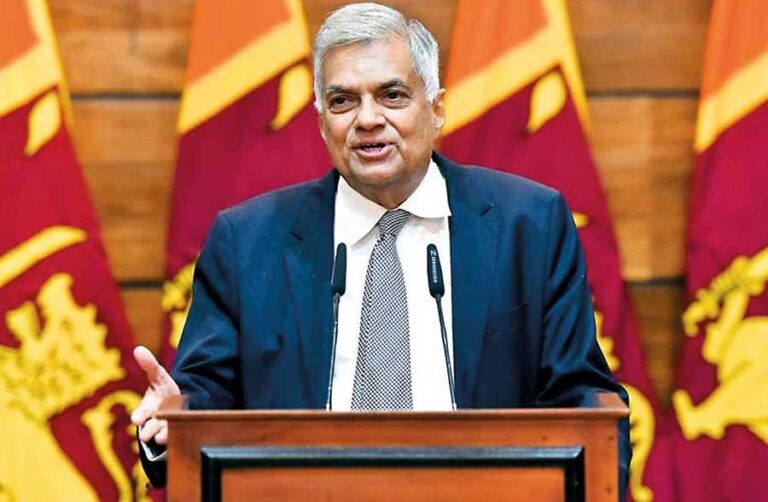
During a briefing titled “Collective Path to a Stable Country” at the Presidential Media Centre (PMC), Silva noted President Ranil Wickremesinghe’s recent parliamentary address on the importance of ongoing debt restructuring for the nation’s economic recovery.

Despite some opposition scepticism, the overall message was deemed beneficial for the country. he claimed.

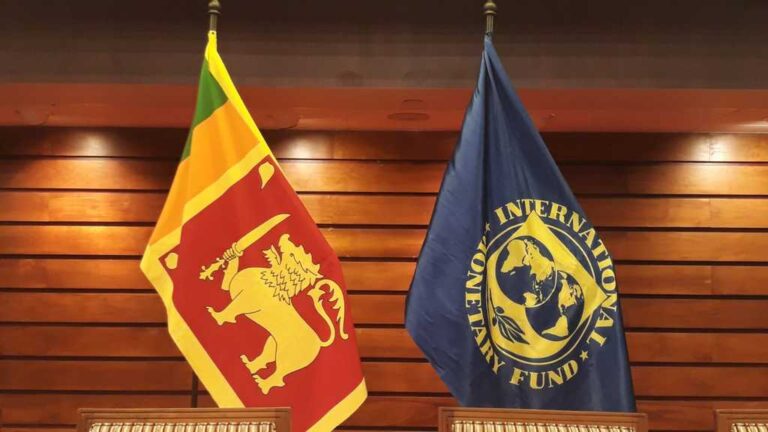
The International Monetary Fund (IMF) is actively involved in the restructuring process, adhering strictly to legal frameworks and regulations, the Minister noted.

Discussions on restructuring Sri Lanka’s commercial debt are ongoing, with criteria influenced by IMF evaluations of economic resilience.

The Minister stressed the importance of aligning political actions with international realities, adding that the President’s initiatives mark the first steps towards national recovery, aiming to prevent a regression to previous economic challenges.

The budget for this year includes allocations for provincial councils, pradeshiya sabhas, government departments, and social security benefits like “Aswesuma,” independent of election considerations.

Regarding SriLankan Airlines, Minister Siripala de Silva reiterated the focus on restructuring rather than outright sale.

Despite minimal interest from international investors, any potential Sri Lankan investor would need to demonstrate capability.

The Japan International Cooperation Agency (JICA) will discuss resuming their projects next week, highlighting another benefit of debt restructuring.

While Chinese firms have shown interest in the airport project, contractual obligations with Japan stipulate that contracts should be awarded to Japanese companies.

Additionally, the management of Mattala Airport will soon be handed over to a joint venture between Russia and India.

Development at Kankesanthurai port is progressing with a USD 69 million investment from India.

Indian Foreign Minister Dr. S. Jaishankar, during his recent visit to Sri Lanka, confirmed plans to initiate a ferry service between the two countries soon.

Revised payment scheme announced for new renewable energy projects

0

July 04, Colombo (LNW): Power and Energy Minister Kanchana Wijesekera has announced a revised payment system for new rooftop solar panels and other renewable energy projects, effective from July 01.

The new scheme applies only to projects commencing from July 01, while the payment method for projects initiated before this date remains unchanged.

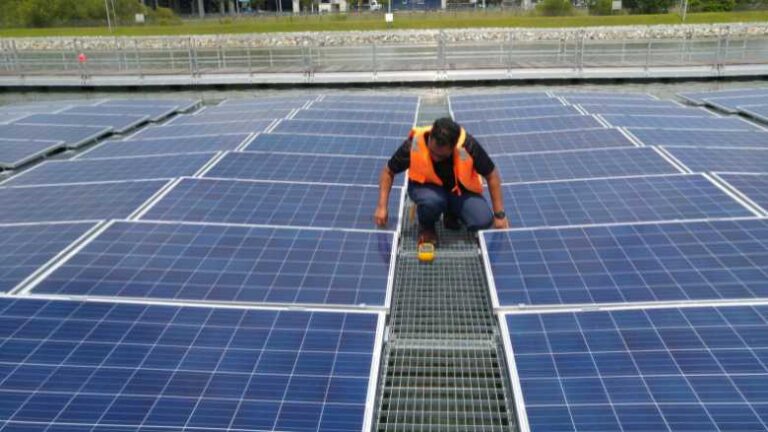
Under the revised system, the 20-year fixed tariff for rooftop solar panel projects will be Rs.27.06 per unit for installations up to 500 kilowatts and Rs.23.18 per unit for those exceeding 500 kilowatts.

Ground-mounted solar panel projects will have a fixed tariff of Rs.25.48 per unit for 20 years.

Small hydro power plants will receive Rs.30.53 per unit, wind power projects will be compensated at Rs.29.86 per unit, and biomass power generation projects will be paid Rs.52.77 per unit.

A payment system for renewable energy projects below 10 megawatts, including rooftop solar panels, was initially implemented in 2022, considering factors such as exchange rates, bank interest rates, and other economic variables.

According to a spokesperson from the Ceylon Electricity Board (CEB), the tariff system introduced in 2022 has been reviewed in light of current economic challenges based on recommendations from stakeholders, consultants, and the charging committee.

An official from the Electricity Board indicated that the new system will result in some reductions in payments for renewable energy projects, including those involving solar panels, starting after July 1.

President vows to safeguard school education from disruptions

0

July 04, Colombo (LNW): President Ranil Wickremesinghe emphasised yesterday (03) that no disruptions to school education between 7.30 am and 1.30 pm will be tolerated.

He has instructed the Attorney General to explore additional measures to ensure this.

The President highlighted the need for uninterrupted education for children, stating, “It is crucial that school closures and strikes do not impede the learning of our children. Our focus must be on future generations.”

He criticised school strikes as harmful and unwarranted, noting, “In 2022, during President Gotabaya Rajapaksa’s tenure, the only salary increase was for teachers. This year, we provided a Rs.10,000 stipend to all government employees. Considering the country’s economic situation, further increases are not viable. Some trade unions have called for additional salary revisions, which is surprising given that teachers have already received two increments.”

These remarks were made during a ceremony at Temple Trees on the 3rd, where appointments were given to officers of the Education Administrative Service, as well as teaching positions to graduates and diploma holders.

The President called on everyone to prioritise children’s education and urged the opposition not to support disruptive actions.

He mentioned discussions with the Education Minister about future teacher transfers and promotions through an online system to ensure fairness.

President Wickremesinghe underscored the importance of dedication in the teaching profession, noting that education cannot flourish without discipline.

He awarded appointments to 60 individuals approved by the Education Service Committee of the Public Service Commission, as well as teaching positions to 1,706 graduates and 453 English diploma holders.

He remarked, “Today, you are assuming a significant responsibility. Even during the past two years of economic hardship, funding for education was increased. Teachers were recruited for both current and future needs, reflecting our commitment to the country’s future.”

Emphasising the government’s dedication to preparing the next generation with modern knowledge and technology, President Wickremesinghe stated, “Our future lies with our children. This is a responsibility we all share.”

He concluded by stressing the need for discipline in education, comparing the role of teachers to that of military officers who train adults.

“If we do not protect the country’s education system and allow disruptions, we jeopardise our future generation,” he warned.

To ensure economic growth, President Wickremesinghe set an ambitious goal: “In the next 20-25 years, we should aim to raise our Gross Domestic Product (GDP) from US$ 85 billion to at least US$ 350 billion for the benefit of future generations.”

Surge in renal disease linked to skin whitening creams, warn health officials

0

July 04, Colombo (LNW): Sri Lankan health authorities have raised serious concerns about a notable rise in kidney disease cases attributed to the use of skin whitening creams, surpassing even the incidence of cancer.

At a recent briefing held by the Health Promotion Bureau, Dr. Indira Kahawita, a Consultant Dermatologist, highlighted this worrying trend.

“There is a collaborative effort between the World Health Organisation and the Sri Lankan Ministry of Health to eradicate mercury use entirely, aiming for zero mercury utilisation. Despite this, these hazardous substances are being widely applied to the body, resulting in severe health repercussions. Mercury exposure can lead to kidney failure,” Dr. Kahawita explained.

Dr. Kahawita shared her observations from recent clinical practice, stating, “In a single day, I examined approximately 60 patients across 40 clinics. Of these, 10 per cent had conditions directly linked to the use of whitening creams. These are not long-term consequences but immediate concerns, such as the development of stretch marks.”

She also noted an increase in alarming symptoms, including blackening of the palms and discolouration of nails turning brown or orange, which have become more prevalent in recent months.

She added that these short-term side effects are occurring more frequently and pose significant health risks even before cancer develops.

ADB urges SL to embrace green bonds for sustainable growth and climate action

0

July 04, Colombo (LNW): The Asian Development Bank (ADB) has urged Sri Lanka to intensify its growth efforts while tackling climate change challenges, emphasising the potential of green bonds to fulfil the country’s financial needs.

Public sector funding alone is insufficient for this task, necessitating the mobilisation of private finance through the capital market.

“The sustainable bond market is crucial for attracting private investment in climate mitigation and adaptation, which Sri Lanka desperately needs. This presents a significant opportunity for the nation,” stated ADB Country Director Takafumi Kadono.

Promoting the development of a sustainable capital market is a key aspect of the ADB’s initiatives in Sri Lanka to foster sustainable recovery, build resilience, and encourage inclusive growth.

Kadono commended the efforts of the Securities and Exchange Commission (SEC) and Colombo Stock Exchange (CSE) in promoting green and sustainable market yields but emphasised that further progress is necessary.

Speaking at the ‘Towards a Greener Economy’ forum in Colombo, Kadono announced the ADB’s commitment to supporting pilot issuances of sustainable bonds in collaboration with the SEC and CSE.

He highlighted that green bonds could play a pivotal role in addressing climate change and driving sustainable development.

“This initiative can help Sri Lanka navigate its economic crisis, set a strong growth trajectory, and build the resilience needed for the future,” Kadono remarked.

The ADB estimates that developing Asia will require approximately US$ 1.7 trillion annually from 2016 to 2030 to achieve its economic growth targets while addressing climate change challenges.

Nationwide crackdown on illicit activities under ‘Yukthiya’ intensifies today

0

July 04, Colombo (LNW): The ongoing ‘Yukthiya’ nationwide operation to eradicate illegal activities will be reinvigorated from today (07), according to the Sri Lanka Police.

Police spokesman Deputy Inspector General (DIG) Nihal Thalduwa announced that the operation will also enlist the support of the Sri Lanka Army.

DIG Thalduwa further indicated that the operation, already active in several regions around Colombo, will soon be extended to cover the entire island.

Heavy showers, strong winds expected in multiple provinces, public urged to take precautions (July 04)

0

July 04, Colombo (LNW): Showers will occur at times in Western and Sabaragamuwa provinces and in Galle and Matara districts, with several spells of showers being expected to occur in North-western province and in Kandy, Nuwara-Eliya districts, the Department of Meteorology said in its daily weather forecast today (04).

Showers or thundershowers may occur at a few places in Uva province and in Ampara and Batticaloa districts in the evening or night.

Strong winds of about (40-50) kmph can be expected at times over the Western slopes of the central hills, Northern, North-central and North-western provinces and in Trincomalee, Hambantota and Monaragala districts.

General public is kindly requested to take adequate precautions to minimise damages caused by temporary localised strong winds and lightning during thundershowers.

Marine Weather:

Condition of Rain:
Showers will occur at several places in the sea areas off the coast extending from Puttalam to Hambanthota via Colombo, Galle and Matara.
Winds:
Winds will be south-westerly in the sea areas around the island. The wind speed will be (30-40) kmph and it can increase up to (50-55) kmph at times in the sea areas off the coasts extending from Trincomalee to Puttalam via Kankasanthurai and Mannar and from Hambantota to Pottuvil. The wind speed will be (25-35) kmph in the other sea areas around the island.
State of Sea:
The sea areas off the coasts extending from Trincomalee to Puttalam via Kankasanthurai and Mannar and from Hambantota to Pottuvil will be rough at times. The other sea areas around the island will be moderate.

Sri Lanka outstanding credit card balance declines in May

0

Sri Lanka’s outstanding credit card balance slipped in May after rising in April in a sign that people are still reluctant to use credit card debt due to exponentially high rates which are long overdue for correction.

Rate on unpaid card balance still remains around 28, an inexplicable level considering the eased financial conditions

The data for May showed that the outstanding credit card balance has declined by Rs.1,894 million to a total outstanding of Rs.149.7 billion.

In April, this balance rose by a relatively robust Rs.2,891 million as people swiped their cards more often during the month of festivities and extended holidays.

The banks have since ramped up promotional campaigns, offers, discounts and easy payment schemes to persuade their card holders to swipe their cards more often.

Offers on leisure packages, healthcare payments and other big ticket purchases are becoming more ubiquitous by almost all banks and some have even said to cut off their lifetime annual fee to certain groups to lure more customers.

In the first five months, the total outstanding card balance has slipped by Rs.1,687 million.

Although the prime lending rate has come down substantially to around 8 percent levels by the end of last week, the rate on unpaid card balance still remains around 28 percent, an inexplicable level considering the eased financial conditions.

The banks are accused vehemently from all around for cutting the rates only for their big clients but not for the small businesses and others, holding back the potential growth in the economy.

While the consumer demand has certainly picked up from where it was a year ago, it is undermined by still high rates on consumer credit, tight credit conditions and unconscionable levels of taxes.

The business confidence has however risen to over one year levels, reaching 101 index points in June reflecting that the corporates are feeling better on their top and bottom-lines.

However, the lower taxes are required to translate it meaningfully to the consumers who are substantially worse off financially after the hyper-inflationary spiral during 2022 and part of 2023.

52 key SOEs record net profits of  Rs.185 billion in first four months of 2024

0

Sri Lanka’s State-Owned Enterprises (SOEs) that come under harsh criticism for their financial inefficiencies have reported “robust performance” in the first four months of 2024, according to the Ministry of Finance.

The surge in profitability is attributed to the appreciation of the rupee and comprehensive SOE reforms. 

These reforms include the introduction of cost-reflective electricity tariff adjustments in 2022, the implementation of a fuel price formula, and the restructuring of balance sheets for key SOEs.

Accordingly, the key 52 SOEs recorded a total profit of Rs. 185.9 billion in the first four months of 2024, compared to the total profit of Rs. 144 billion recorded in the same period of 2023, data released in the Mid-Year Fiscal Report 2024 showed.

The collection of levies and dividends from the SOEs increased to Rs. 13.2 billion in the first four months of 2024, compared to Rs. 9.6 billion in the same period of 2023.

The report highlighted that key initiatives for major SOEs paved the way for the improvement in performance.

For State Owned Banks, the entities were pushed to enhance credit quality and improve monitoring and collections. 

While the banks were expected to be updated with the evolving regulatory landscape, implement necessary changes, and maintain transparent reporting practices, they were urged to adopt digital technologies to enhance operational efficiency, and improve customer experience, and expand the reach. 

Developing new products to assist existing customers and attract new customers was an area of focus, however, the entities were also urged to expand financial services to underserved population and promoting financial inclusion. 

One of the key initiatives was to strengthen governance and risk management practices as approved by the Cabinet of Ministers in order to make the State-Owned Banks more competitive in the market.

For the Ceylon Electricity Board (CEB), the Sri Lanka Electricity bill was passed on 6 June, which intends to unbundle the entity. This helps to ensure greater autonomy and transparency between the generation, transmission, and distribution segments of the entity, the Finance Ministry said.

At the Sri Lanka Ports Authority, a Collective Bargaining Agreement with employees for the next 3 years was approved and signed with conditions to achieve Key Performance Indicators (KPIs).

Meanwhile, the Airport and Aviation Services saw the approval of a separate salary structure for other staff excluding Air Traffic Controllers in 2024, to address salary anomalies. Similarly, Essential Carder was approved to improve the efficiency of the airport to cater the expanding demand for tourism.

 Further, to make national carrier SriLankan Airlines attractive, the Cabinet of Ministers approved to transfer US$ 310 worth of loans to the government’s balance sheet. Rs. 5 billion worth of equity was infused into SLA to relieve working capital issues

Supreme Court flags constitutional conflicts in two economic reform bills 

0

Supreme Court flags constitutional conflicts in two economic reform bills 

Sri Lanka’s attempt of enduring a legislative transformation by introducing a series of new laws and amending prevailing ones taken embroiled in legal tangle following the Supremecourt determination on two bills related to economic and fiscal reforms  

Speaker Mahinda Yapa Abeywardena yesterday announced the Supreme Court’s determination on the Economic Transformation Bill in Parliament, revealing that the apex court found several clauses in the proposed bill inconsistent with the Constitution.

Under Article 121(1) of the Constitution, the Supreme Court reviewed the Bill and proposed several amendments to align it with constitutional principles.

 Key recommendations include deleting certain clauses, empowering the Economic Commission, clarifying qualifications and procedures, and removing inconsistencies with the Constitution to safeguard its integrity.

Pending these amendments, the Supreme Court believes the Bill can pass with a simple majority while upholding constitutional integrity.

President Ranil Wickremesinghe has declared a pivotal move towards economic stability with the introduction of the Economic Transformation Bill.

 Emphasising the bipartisan nature of this initiative, he underscored the necessity for any future Government to uphold this agreement to effectively rejuvenate the national economy

In the second determination against the government, the Supreme Court yesterday held that Clauses 32(3) and 32(4) of the Public Financial Management Bill are unconstitutional, and must only be passed by a Special Majority of Parliament and be approved by the people at a referendum. 

The proposed Public Financial Management law in Sri Lanka aims to enhance fiscal discipline by setting a 13 percent primary spending limit of GDP and repealing the breached Fiscal Management Responsibility Act. 

This landmark legislation, designed to provide a framework for future fiscal management, includes a 2 percent budget reserve and provisions for exceeding the spending limit under specific circumstances such as national emergencies. 

Transparency International Sri Lanka (TISL) challenged the Bill in the Supreme Court on the basis that Clause 32 seriously weakens the controls on public procurement, thereby increasing corruption risk and weakening the level playing field.

The Court held that Clause 32 (3), which allowed the Minister of Finance to exempt State Owned Enterprises (SOEs) from compliance with the procurement guidelines, and Clause 32 (4), which allowed Provincial Councils to adopt their own guidelines, violate Articles 3 and 12(1) of the Constitution. 

The Court proposed that Clause 32(3) to be amended to: “The National Procurement Commission may, if it deems necessary, formulate and publish in the Gazette specific guidelines for State-Owned Enterprises,” in which case the said inconsistency shall cease.

The Court proposed Clause 32(4) to be amended as “The National Procurement Commission may, if it deems necessary, formulate and publish in the Gazette specific guidelines for Provincial Councils.”