
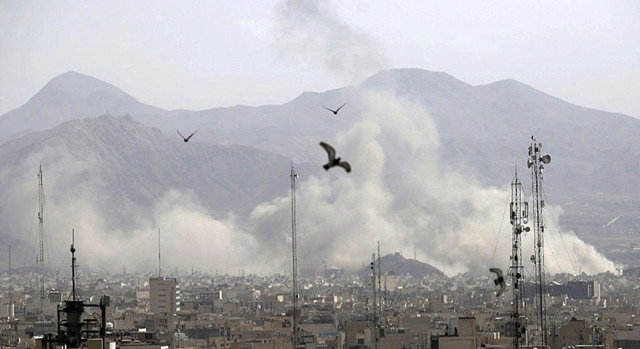
Tehran, Iran — The conflict between the United States, Israel and Iran took a dramatic turn in the early hours of 28 February 2026 as coordinated strikes were carried out against Iranian military targets. Iran has since launched a series of retaliatory actions, heightening fears of a broader regional confrontation.
According to officials in Washington and Tel Aviv, the joint operation targeted multiple sites linked to Iran’s military infrastructure, including facilities in and around the capital, Tehran. In response, Iranian military forces have launched missiles, drones and other counter-strikes toward Israeli territory and US bases in the region.
Sirens sounded in parts of Israel as air-defence systems were activated in response to incoming threats. Authorities in several Gulf states — including Qatar, Saudi Arabia, Bahrain and the United Arab Emirates — also reported explosions and elevated alert levels amid growing uncertainty.
Inside Iran, daily life has been disrupted. The government closed Iranian airspace and issued public advisories urging citizens to remain calm while avoiding public gatherings. Schools and universities in major cities were ordered to suspend classes, and transportation services have been partially affected as authorities assess security risks.
International reactions have begun to emerge. Russia condemned the strikes as an “unprovoked act of armed aggression” and called for renewed diplomatic engagement. Iranian leadership appealed to the United Nations Security Council, asserting that the attacks violated international law and sovereignty.
Global governments are increasingly urging their citizens in the Middle East to seek shelter or temporarily leave affected areas. Several countries are reviewing travel advisories as airlines adjust flight routes in response to restricted airspace.
Meanwhile, reactions within Iran remain deeply divided. Some citizens expressed fear and concern over the escalating violence, while others — already critical of the current regime — saw the developments as potentially marking the beginning of political change. Social media posts captured both distress and cautious commentary, reflecting a population grappling with uncertainty.
As events continue to unfold, world leaders are monitoring the situation closely, warning that diplomatic channels must remain open to prevent further escalation. The coming hours and days are expected to be pivotal for the stability of the broader Middle East region.