
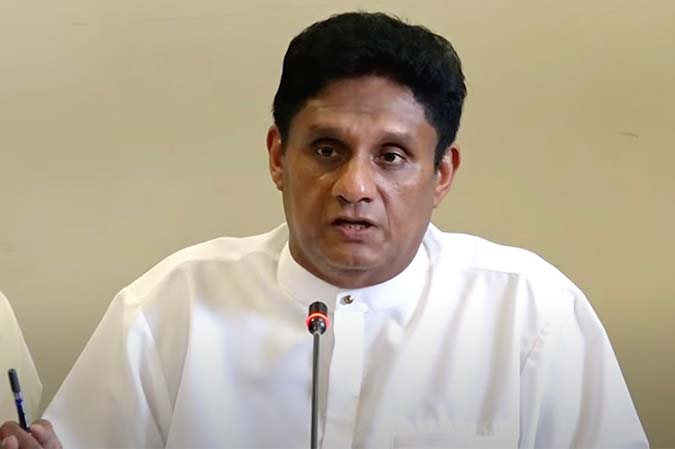
May 17, Colombo (LNW): Opposition Leader Sajith Premadasa has launched a sharp criticism of the government’s latest vehicle taxation measures, accusing authorities of burdening the public while failing to address the country’s wider economic difficulties.
Speaking to journalists following a visit to Ven. Magama Mahanama Thero in Tissamaharama, Premadasa questioned the government’s decision to impose what he described as steep additional taxes on imported vehicles, despite earlier political promises of making motor vehicles more affordable for ordinary citizens.
The opposition leader remarked that politicians who once spoke of drastically reducing the price of popular compact cars were now presiding over policies that could significantly increase vehicle costs for consumers. He argued that the public was being forced to shoulder the consequences of inconsistent economic planning and unrealistic assurances.
Premadasa also challenged recent statements made by government representatives claiming that the revised taxation structure would not result in higher vehicle prices. He insisted that both the administration and its parliamentary majority must accept responsibility for the economic pressures now facing the public.
Turning to broader economic concerns, Sajith Premadasa warned that the continuing depreciation of the Sri Lankan rupee against the US dollar could further intensify inflationary pressures and increase the prices of essential goods and services. He cautioned that weakening currency conditions would directly affect household expenses and worsen the cost-of-living crisis already impacting many families.
According to Premadasa, restoring economic stability would require a stronger focus on expanding exports, reviving tourism, attracting greater foreign direct investment and encouraging higher levels of overseas remittances. He argued that these sectors were essential to rebuilding confidence in the economy and strengthening foreign exchange reserves.
The opposition leader further accused the government of making repeated policy miscalculations and claimed that poor economic decision-making was placing additional strain on citizens already coping with financial hardship.
Referring to ongoing global instability and international conflicts, Premadasa said Sri Lanka should have prepared earlier for potential economic shocks affecting fuel prices, trade and international markets. He maintained that this was not the time to reduce public assistance programmes and instead called for broader relief measures and stronger subsidies to support struggling households.
He also stressed that rising living expenses were creating growing challenges for parents attempting to provide proper nutrition and education for their children, adding that economic recovery efforts should prioritise public welfare rather than short-term fiscal targets.
Premadasa concluded by emphasising the importance of maintaining stronger foreign reserves and preventing further sharp declines in the value of the rupee, warning that failure to do so could complicate debt repayments and undermine long-term economic recovery efforts.