
By: Staff Writer
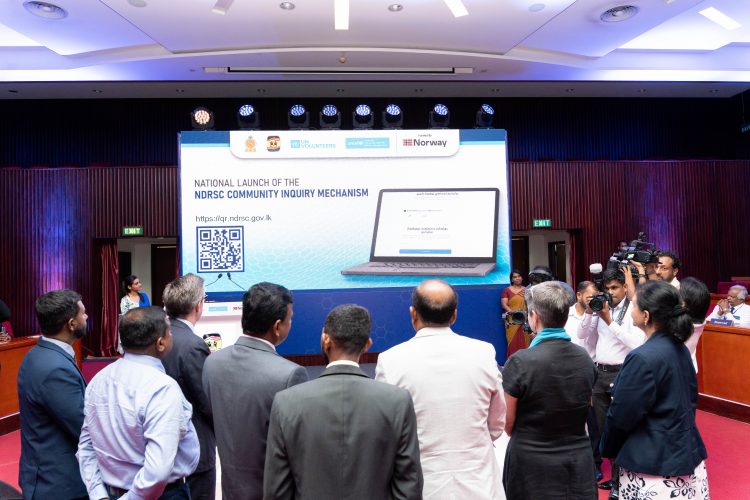
May 19, Colombo (LNW): Sri Lanka has introduced two new digital systems designed to overhaul how disaster relief is managed, following growing pressure to improve efficiency after Cyclone Ditwah left thousands of families in urgent need of assistance. The government unveiled the platforms at a formal ceremony in Colombo’s BMICH on Monday, signalling a move away from traditional manual processes toward a more technology-driven response model.
The initiative is led by the National Disaster Relief Services Centre (NDRSC) under the Ministry of Defence and is supported by international partners including the Government of Norway, UNICEF Sri Lanka, and UN Volunteers. Officials describe the reform as part of a wider effort to modernise public service delivery in the aftermath of increasingly frequent and severe climate-related disasters.
The first platform, the Compensation Management System, digitises what was previously a slow and heavily bureaucratic process. Under the old system, disaster-affected families often faced long delays in submitting and processing claims, requiring multiple in-person visits and extensive paperwork. The new system allows claims to be submitted digitally through Grama Niladhari officers, significantly reducing administrative delays and physical barriers for affected communities.
Authorities say the change is expected to improve accuracy in data collection while also reducing the workload on frontline officials who manage large volumes of claims after major disasters. It also aims to ensure that aid reaches eligible families more quickly, particularly those who lost property, income sources, or loved ones during Cyclone Ditwah.
The second platform, the Community Inquiry Mechanism, is intended to address long-standing complaints about poor communication between disaster victims and government agencies. Through this system, citizens can directly raise concerns or request updates regarding compensation, resettlement, and rehabilitation services.
Accessible via QR code and a dedicated hotline (0716 807 807), the system operates in Sinhala, Tamil, and English during weekday working hours. Each inquiry generates a tracking number, enabling users to follow the status of their request an accountability feature officials say is critical to rebuilding public trust in disaster management institutions.
Speaking at the launch, NDRSC Senior Assistant Secretary Namal Liyanage said the new systems represent a shift toward faster and more responsive governance. He emphasised that emergencies require immediate action and that digital tools allow authorities to respond with greater speed and precision.
UNICEF Sri Lanka Representative Emma Brigham highlighted that the platforms strengthen transparency and ensure fairer distribution of aid, particularly during emergencies when resources are stretched and demand is high. She noted that improved communication systems can significantly reduce gaps between affected communities and service providers.
The development process also involved 34 UN Volunteers, including specialists in information technology and community engagement, according to UN Volunteers Sri Lanka Country Coordinator Sharmalee Jayasinghe. Their contribution helped shape both the technical and operational aspects of the platforms.
Government officials believe the initiative will play a key role in strengthening Sri Lanka’s broader disaster resilience strategy. However, questions remain about accessibility in remote areas, where digital infrastructure and connectivity may still limit participation.
Despite these concerns, the rollout is being positioned as a landmark reform in disaster relief administration one that aims to replace delays and inefficiencies with a more transparent, trackable, and citizen-centred system for future emergencies.