
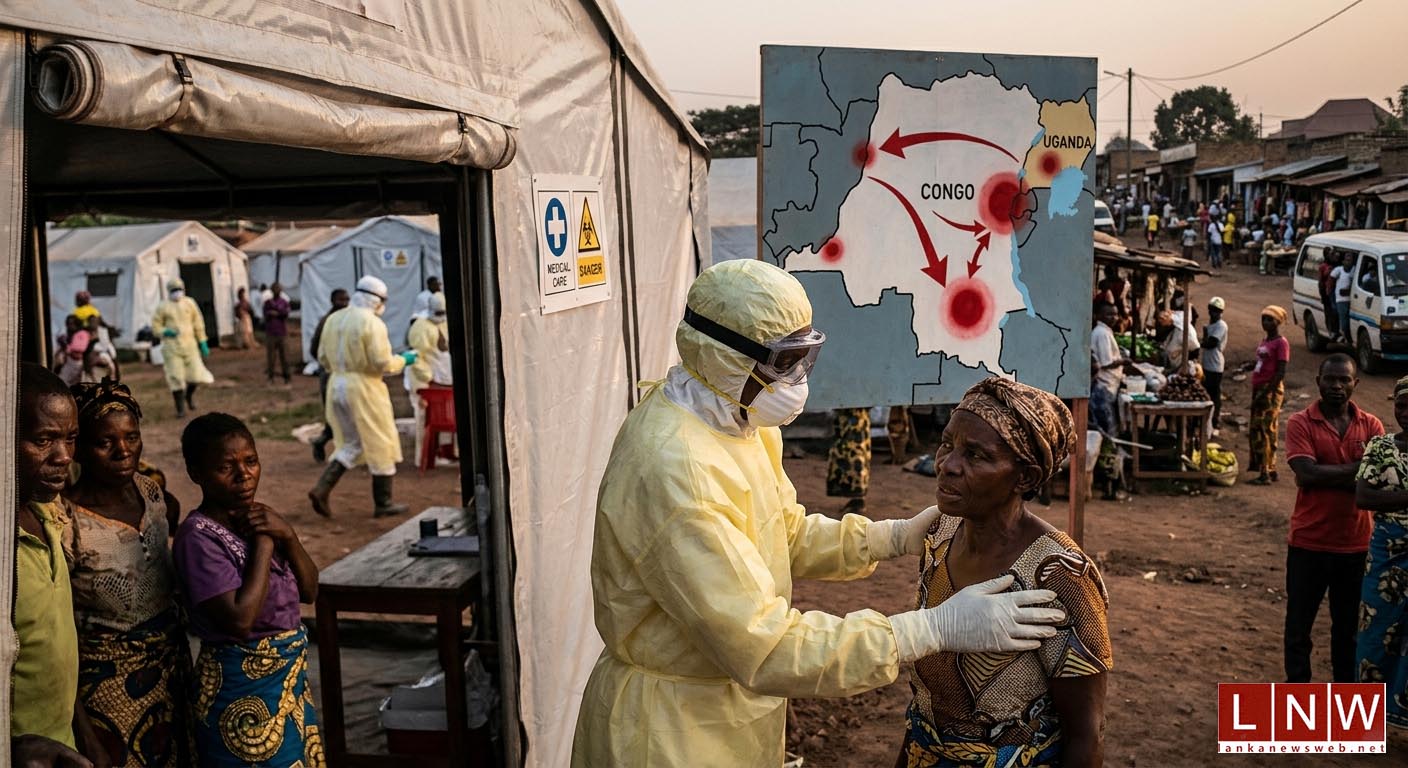
May 31, World (LNW): Health authorities and humanitarian organisations are expressing growing concern over the escalating Ebola outbreak in the Democratic Republic of Congo, where infections are rising at an unprecedented pace and efforts to contain the disease are facing mounting challenges.
Just weeks after the outbreak was officially declared, more than 1,000 suspected infections have been recorded across affected areas, with the death toll climbing to at least 246. The virus has also crossed national borders, with neighbouring Uganda confirming several cases and reporting a fatality linked to the outbreak.
Medical aid organisation Médecins Sans Frontières (MSF) has described the situation as extremely serious, warning that the number of cases identified in such a short period is unlike anything previously seen in the early stages of an Ebola emergency. Field teams say the outbreak is advancing faster than response measures can be expanded, raising fears that the true scale of the crisis may be significantly larger than current figures suggest.
Health workers continue to encounter difficulties in assessing the full extent of the epidemic, as large numbers of suspected cases await laboratory confirmation. Officials have cautioned that daily reports of new infections indicate that transmission remains active in several communities.
Complicating matters further are logistical and security obstacles that have slowed the delivery of medical assistance and outbreak-control operations. Restrictions affecting transport links, coupled with ongoing instability in parts of eastern Congo, have hampered the movement of personnel, equipment and emergency supplies.
Amid the worsening situation, World Health Organization Director-General Dr Tedros Adhanom Ghebreyesus travelled to Ituri Province, the region at the centre of the outbreak, to review response efforts and engage with local authorities and healthcare teams. During his visit, he stressed the importance of community involvement, noting that local residents play a critical role in identifying risks and helping health officials curb transmission.
Dr Tedros also highlighted the need for caution during traditional funeral practices. While recognising the cultural significance of mourning rituals, he warned that direct contact with the bodies of Ebola victims remains one of the most effective routes of transmission and could accelerate the spread of the disease if proper precautions are not observed.
Despite the growing health emergency, many towns in the affected region continue to function much as normal. Markets remain busy, public transport services are operating, and residents are largely carrying on with their daily routines, even as health authorities work urgently to prevent the outbreak from expanding further.
Experts warn that the coming weeks will be critical in determining whether the outbreak can be brought under control or develops into a far larger regional public health crisis.