
By: Staff Writer
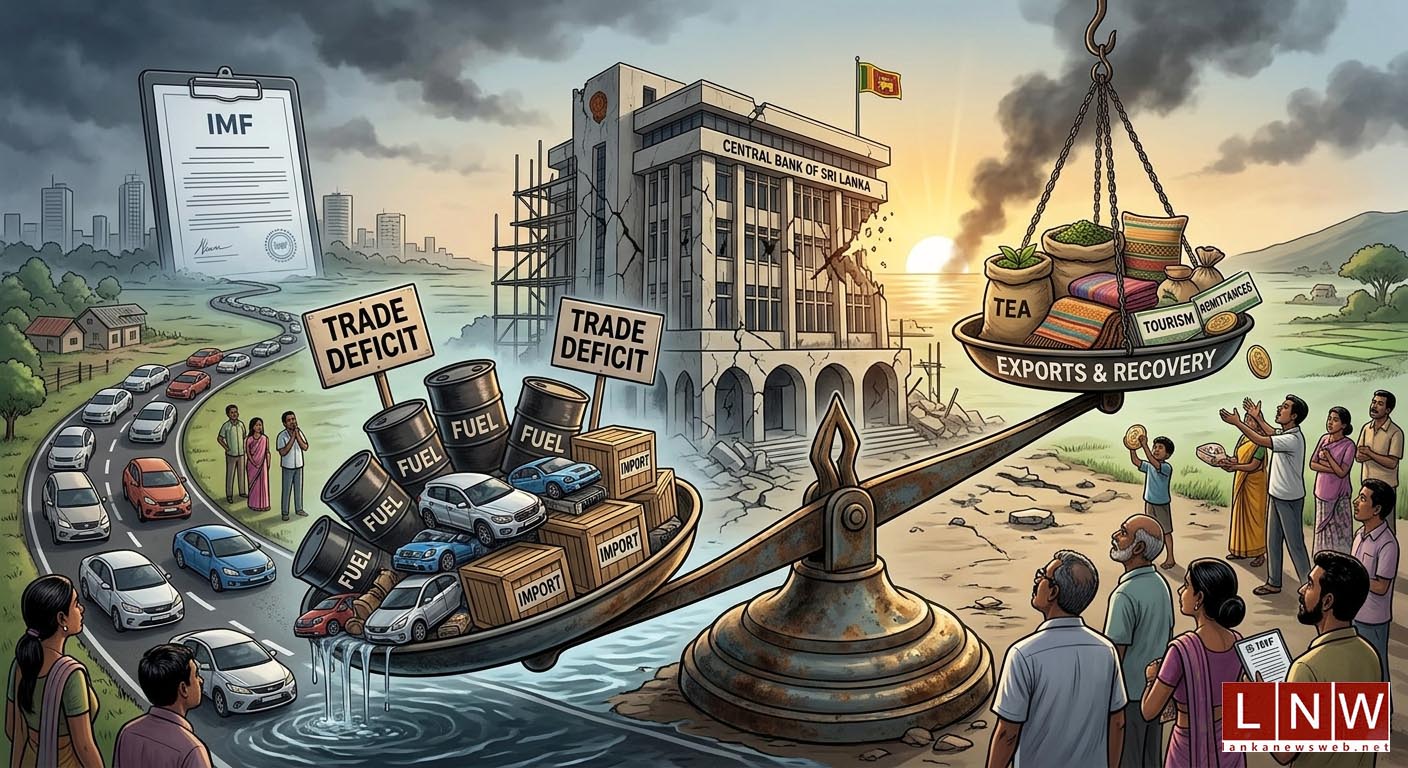
May 31, Colombo (LNW): Sri Lanka’s external sector pressures intensified in April 2026 as rising fuel and vehicle imports widened the trade deficit and reversed the early-year current account surplus. The shift underscores the economy’s sensitivity to global energy prices and domestic demand recovery under an IMF-supported reform program.
While remittance inflows and services earnings continue to provide partial buffers, they are increasingly outweighed by import expenditure, raising concerns about the sustainability of the external adjustment path.
The Central Bank data shows that the trade deficit expanded to USD 3.7 billion in Jan–Apr 2026 from USD 2.3 billion a year earlier, largely driven by import-side pressures. Fuel imports alone reached USD 886 million in April, reflecting both price and volume effects in global energy markets.
Motor vehicle imports, which had been tightly controlled during the crisis period, surged again to USD 208 million in April and USD 821 million cumulatively in the first four months. Meanwhile, export growth remained relatively subdued, constrained by weak external demand and limited diversification.
The services surplus, supported mainly by tourism and IT-related exports, moderated compared to earlier months, further weakening the external balance.
Under the IMF program, Sri Lanka has prioritized fiscal consolidation through tax reforms, subsidy rationalization, and expenditure controls, while also maintaining a flexible exchange rate regime.
However, the resurgence in imports highlights the policy dilemma between supporting growth and maintaining external stability. Tight monetary conditions have helped anchor inflation expectations, but they may also be encouraging short-term capital inflows and consumption recovery that increase import demand.
Energy pricing reforms, while fiscally necessary, have also transmitted global price volatility into domestic costs, complicating political acceptance of reforms. The challenge remains balancing stabilization objectives with the need to sustain economic recovery.
The outlook for fiscal and monetary stability is cautiously positive but exposed to significant risks. Continued adherence to IMF conditions could support reserve accumulation and gradual debt sustainability improvements.
However, persistent import growth without a corresponding export expansion could widen external financing gaps. Any delay in structural reforms, particularly in energy sector restructuring and tax administration, may undermine confidence and pressure the currency. While the macroeconomic framework is far stronger than during the crisis years, the current account deterioration suggests that recovery is still uneven and vulnerable to external shocks.