
By: Staff Writer
June 09, Colombo (LNW): Beyond the headlines surrounding billions of rupees in investment, Sri Lanka’s latest petroleum infrastructure programme represents a strategic attempt to redefine how fuel moves across the island and strengthen national energy security amid growing regional competition.
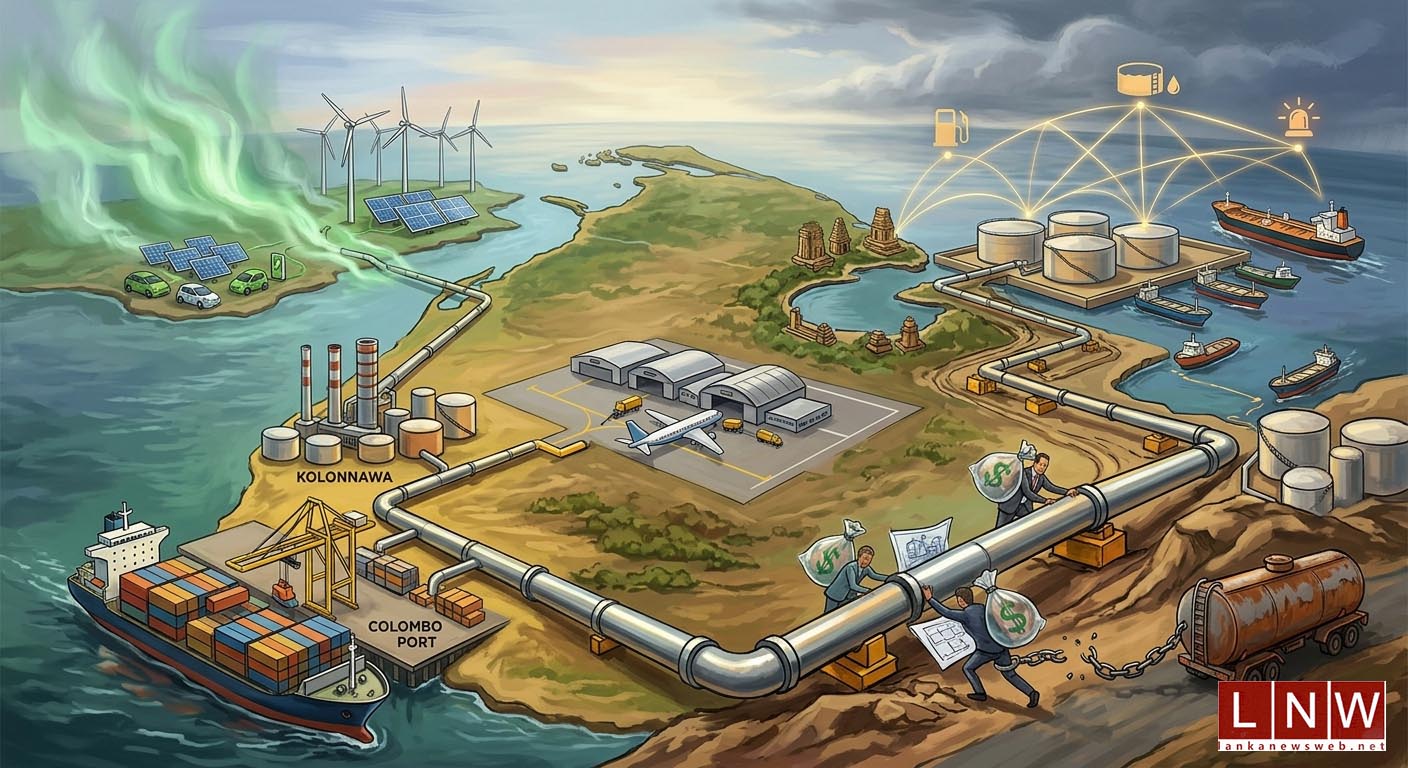
The proposed network upgrades extend well beyond simple pipeline replacements. Projects connecting Colombo Port to Kolonnawa, Muthurajawela to Katunayake Airport, and future developments in Trincomalee suggest a broader effort to create a modern fuel logistics system capable of supporting economic growth, aviation demand, and potential regional energy ambitions.
Particularly significant is the planned expansion of infrastructure around Trincomalee. Long regarded as one of South Asia’s most strategically located natural harbours, Trincomalee has attracted interest from multiple regional powers and investors seeking a foothold in the Indian Ocean energy trade. Any future pipeline and storage development in the area could elevate Sri Lanka’s role as a regional petroleum hub.
The aviation fuel pipeline to Katunayake is another project attracting attention. Currently, fuel transportation often relies heavily on road-based logistics, increasing traffic congestion, transport costs, and accident risks. Dedicated pipeline infrastructure could improve reliability for the aviation sector while reducing dependence on fuel tanker movements.
However significant concerns remain. Financing large-scale infrastructure during a period of fiscal consolidation presents challenges for a Government still recovering from sovereign debt distress. Although the investment is expected to deliver long-term benefits, public scrutiny over procurement transparency and project management is likely to intensify.
Another question involves future energy trends. Around the world, governments are investing heavily in renewable energy, electric mobility, and lower-carbon fuel systems. Critics argue that committing billions to petroleum infrastructure could risk locking Sri Lanka into fossil fuel dependency at a time when global energy markets are undergoing profound transformation.
Supporters counter that such arguments overlook present realities. Petroleum products continue to dominate transportation, aviation, shipping, and industrial operations in Sri Lanka. Even under optimistic energy-transition scenarios, liquid fuels are expected to remain essential for decades. Modernising infrastructure therefore addresses immediate operational needs while providing flexibility for future energy planning.
There is also a national security dimension. Modern pipelines and storage facilities can improve fuel reserves management, reduce vulnerability to supply disruptions, and strengthen emergency preparedness during economic crises or geopolitical shocks. Lessons from the 2022 fuel shortages remain fresh in public memory, reinforcing the importance of reliable distribution systems.
Ultimately, the success of the programme will depend not only on engineering excellence but also on transparency, environmental compliance, and efficient execution. If managed effectively, the investment could become one of Sri Lanka’s most consequential energy-sector reforms in decades. If not, it risks becoming another expensive infrastructure promise struggling to deliver its anticipated benefits.