
By: Staff Writer
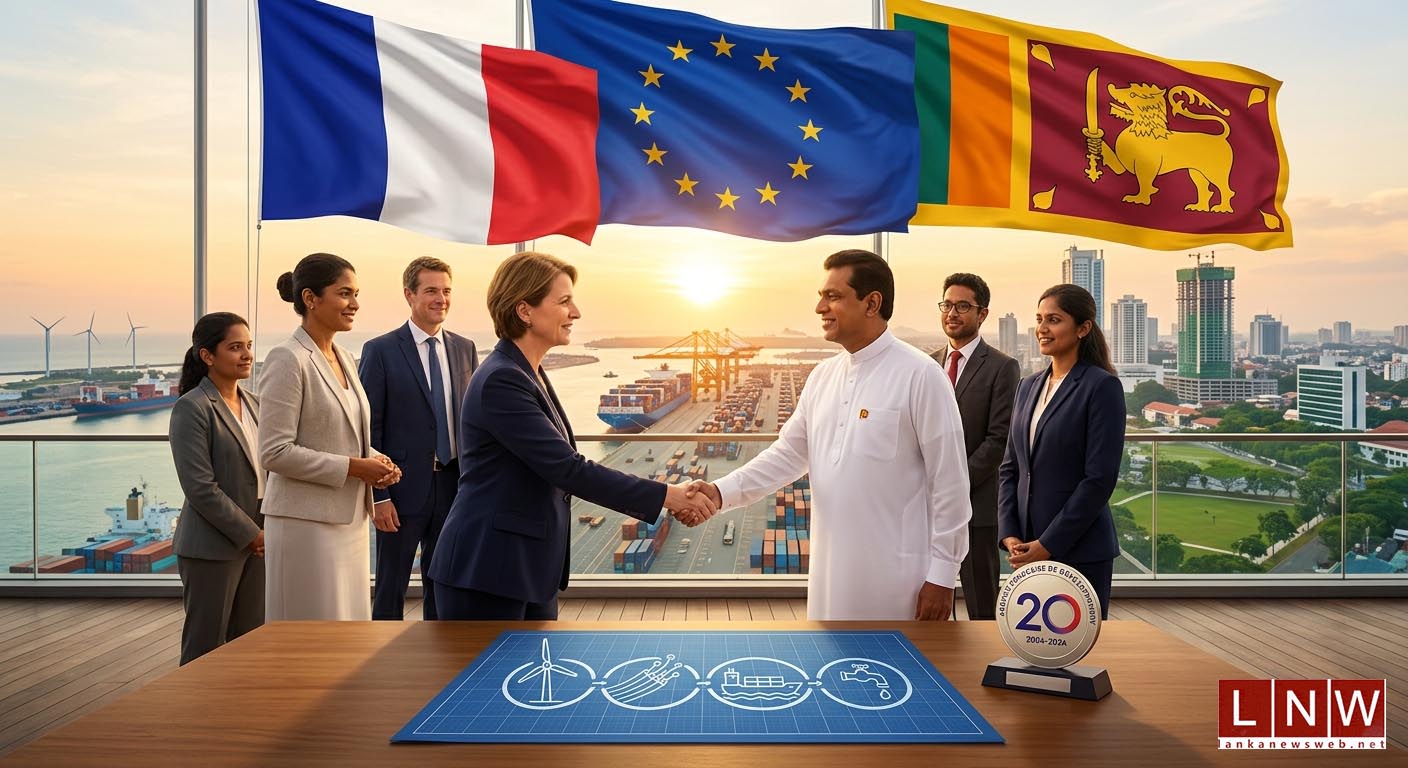
June 11, Colombo (LNW): Sri Lanka is seeking to deepen its strategic partnership with France and the European Union as it navigates economic recovery, climate challenges, and long-term development goals. The message emerged clearly during celebrations marking the 20th anniversary of Agence Française de Développement (AFD) operations in the country, where officials outlined a vision for expanded cooperation in several critical sectors.
Addressing diplomats, development experts, and government representatives, Deputy Minister of Foreign Affairs and Foreign Employment Arun Hemachandra praised AFD’s longstanding contribution to Sri Lanka’s development journey while calling for stronger collaboration in emerging areas of national importance.
AFD first established its presence in Sri Lanka in the aftermath of the 2004 Indian Ocean tsunami, a disaster that devastated coastal communities and caused extensive economic losses. At the time, international assistance played a vital role in reconstruction efforts, and AFD became one of the agencies supporting the country’s recovery process.
Two decades later, Sri Lankan officials say the relationship has matured into a comprehensive development partnership that extends far beyond post-disaster assistance. Investments supported by AFD have touched several sectors, including water management, sanitation infrastructure, urban development, renewable energy projects, and climate adaptation initiatives.
Government representatives argue that these investments have produced tangible benefits for communities while contributing to broader national development objectives. The projects are also viewed as examples of how international partnerships can support sustainable growth in developing economies.
However, the anniversary event was not solely a celebration of past achievements. It also served as a forum for discussing future priorities. Sri Lanka continues to face multiple challenges, including climate change impacts, resource management concerns, food security pressures, and the need for sustainable economic expansion.
Officials emphasized that these issues are increasingly interconnected and require coordinated international responses. In this context, Sri Lanka appears eager to strengthen ties with partners capable of providing expertise, investment, and technical support.
Among the key areas identified for future collaboration were sustainable development, digital transformation, maritime cooperation, and institutional strengthening. Analysts note that each of these sectors aligns closely with Sri Lanka’s long-term development strategy and its efforts to improve economic competitiveness.
Digital transformation, in particular, has emerged as a priority as governments worldwide seek to modernize public services and strengthen technological infrastructure. Maritime cooperation also holds strategic significance given Sri Lanka’s location along major international shipping routes in the Indian Ocean.
Hemachandra used the occasion to express gratitude to the governments and people of France and European Union member states for their continued engagement. He also acknowledged AFD’s role in supporting projects designed to enhance resilience and improve quality of life across the country.
Looking ahead, Sri Lankan policymakers hope the next phase of cooperation will deliver even greater social and economic impact. As development priorities evolve, the partnership with France, the EU, and AFD is expected to remain a key component of the country’s efforts to achieve sustainable and inclusive growth.
For Sri Lanka, the anniversary represents not only a reflection on two decades of cooperation but also the beginning of a new chapter in international development partnerships.