
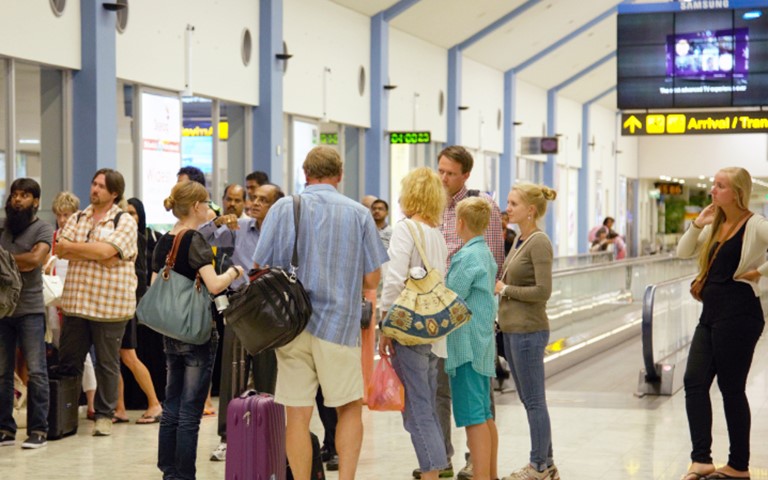
Sri Lanka’s tourism industry is confronting a troubling contradiction. While visitor arrivals continue to climb, foreign exchange earnings are moving in the opposite direction, exposing deeper structural weaknesses in the country’s tourism strategy.
The latest figures from the Central Bank reveal that tourism earnings declined by 5.13% year-on-year to US$155.7 million in May 2026 despite recording a 10% increase in arrivals to a historic monthly high of 145,745 visitors. The discrepancy has reignited debate over whether Sri Lanka is measuring tourism success through the wrong lens.
For years, policymakers have celebrated arrival statistics as the primary indicator of tourism performance. However, the latest data suggest that growing visitor numbers alone are not translating into stronger economic gains. The more critical measure visitor spending appears to be under pressure.
The situation is particularly concerning because tourism remains one of Sri Lanka’s most important sources of foreign exchange. Yet cumulative earnings during the first five months of 2026 fell by 12% compared to the same period last year, reaching only US$1.36 billion.
One explanation lies in revised revenue calculations introduced by the Sri Lanka Tourism Development Authority (SLTDA). Following a fresh expenditure survey, average daily tourist spending was reduced from US$172 to US$148. Tourism Minister Vijitha Herath has defended the methodology, arguing that the revised figures provide a more accurate representation of actual tourism earnings rather than indicating a decline in performance.
Nevertheless, industry stakeholders remain unconvinced. Many question whether arrival numbers accurately reflect the quality of tourism activity, particularly when earnings continue to stagnate despite increasing visitor flows.
The challenge facing Sri Lanka extends beyond statistics. The country is still recovering from a series of devastating shocks, including the Easter Sunday attacks in 2019, the COVID-19 pandemic, and the economic crisis of 2022. These events damaged the country’s international reputation and altered global travel patterns.
Another concern is the composition of tourist arrivals. Industry analysts argue that Sri Lanka has increasingly relied on budget-conscious travellers and short-stay visitors. While such arrivals boost headline numbers, they generate lower economic returns compared to high-spending tourists seeking premium experiences.
The figures from 2025 reinforce this concern. Tourism earnings increased by only 1.6% to US$3.22 billion despite arrivals growing by more than 15% to 2.36 million visitors. Such a gap highlights declining per-capita expenditure and raises questions about the effectiveness of current tourism development policies.
As the Government prepares to launch a global promotional campaign targeting three million visitors and US$4 billion in earnings for 2026, experts warn that volume-driven growth alone will not be enough. Success will depend on attracting higher-value travellers, extending average lengths of stay, and creating premium tourism products that encourage greater spending.
Without a shift from quantity to quality, Sri Lanka risks celebrating record arrival numbers while continuing to underperform where it matters most foreign exchange earnings.