
By: Staff Writer
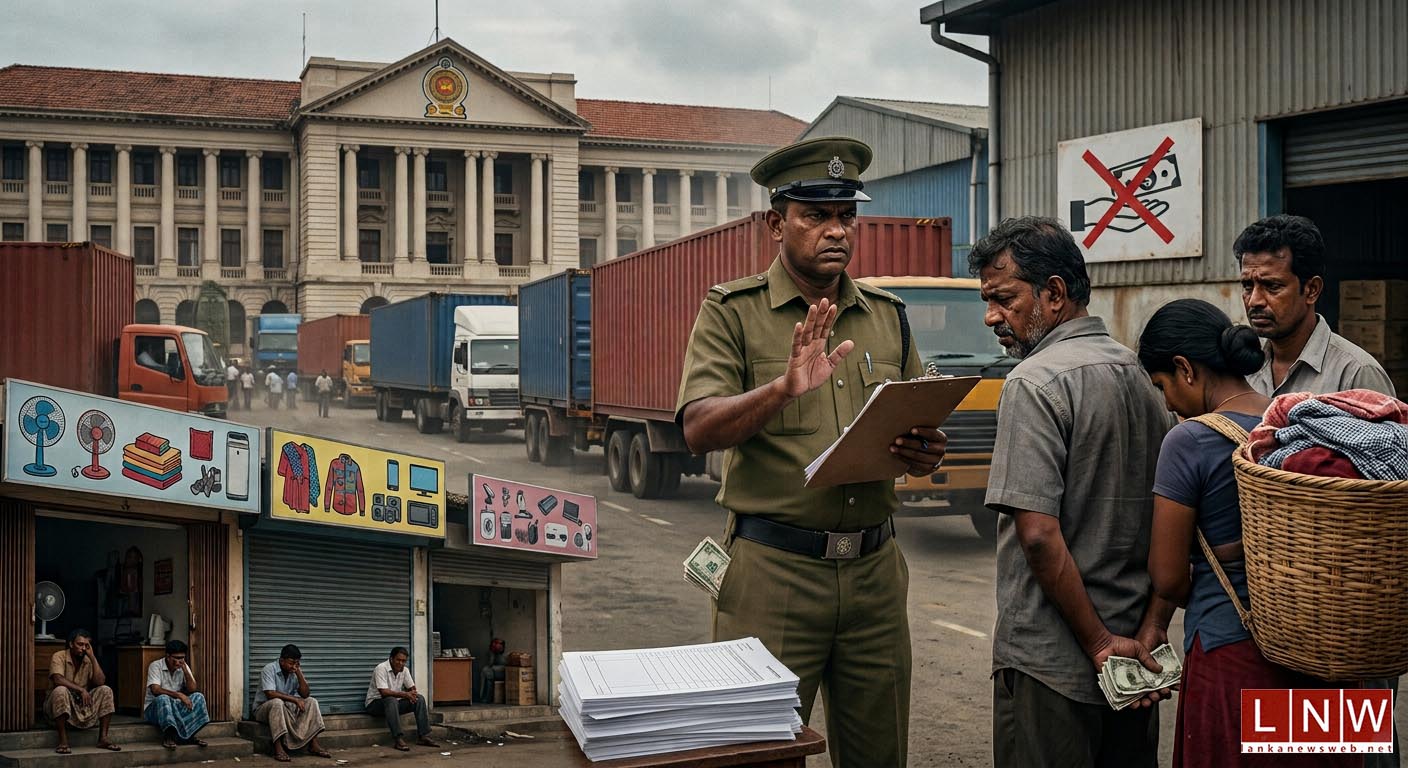
September 15, Colombo (LNW): Sri Lanka’s Customs Department is facing serious allegations of institutionalised extortion, with the Opposition warning that harassment, repeated fines and unchecked official discretion are driving micro, small and medium enterprises (MSMEs) out of the import trade. The allegations raise a fundamental question: can the State pursue ambitious revenue targets while allowing enforcement practices that undermine the very businesses generating employment, incomes and tax revenue?
Speaking in Parliament last week, Samagi Jana Balawegaya (SJB) MP Mujibur Rahman accused Customs officials of subjecting importers to “draconian” treatment and questioned the National People’s Power (NPP) Government’s silence over what he described as a longstanding problem.
Rahman said both major enterprises employing thousands and smaller importers employing 100–200 people were being affected. He claimed imports had declined steadily in recent months as businesses faced sustained harassment, delays and uncertainty.
The most serious allegation concerns the distribution of Customs fines. According to Rahman, 50% of fines is allocated to a rewards scheme for Customs officials, 20% to the Sri Lanka Customs Welfare Fund and only 30% to the Treasury. With penalties ranging from Rs. 100 to Rs. 500 million, he argued that the structure creates an incentive for enforcement to focus on revenue-generating penalties rather than prevention.
The MP acknowledged that some importers deliberately undervalue goods to evade duties. However, he questioned whether the response was proportionate and lawful. He described a system in which Customs’ Valuation Department identifies under-invoicing, imposes a fine and releases the consignment, only for other Customs or Excise units to later raid the same importer’s warehouse or outlet and impose another penalty.
“This is extortion,” Rahman declared, arguing that importers were being subjected to double jeopardy. He questioned why officials who released the goods after the first assessment faced no comparable accountability.
The alleged harassment extends beyond financial penalties. Rahman said genuine importers were summoned in the morning but had statements recorded only late in the evening. Some, he claimed, were pressured to amend invoices or accept officials’ rulings under threat of having warehouses and business premises sealed.
Complaints to senior Customs officials allegedly produced little relief, with importers reportedly instructed to comply with field officers. Many, Rahman said, avoided legal action because they feared further inspections and delays affecting subsequent shipments.
These allegations are particularly damaging because importers operate within a system where delays can rapidly translate into demurrage costs, working-capital shortages, lost customers and job cuts. For smaller enterprises, a prolonged dispute with Customs may threaten the survival of the entire business.
Rahman called on the President and Finance Minister to reform Customs and the Excise Department, warning that continued dysfunction would deepen the economic burden at a time when inflation is near 8% and the import sector is stagnating.
The Government’s response will determine whether Customs is treated merely as a revenue machine or as a public institution whose legitimacy depends on fairness, transparency and accountability.
