
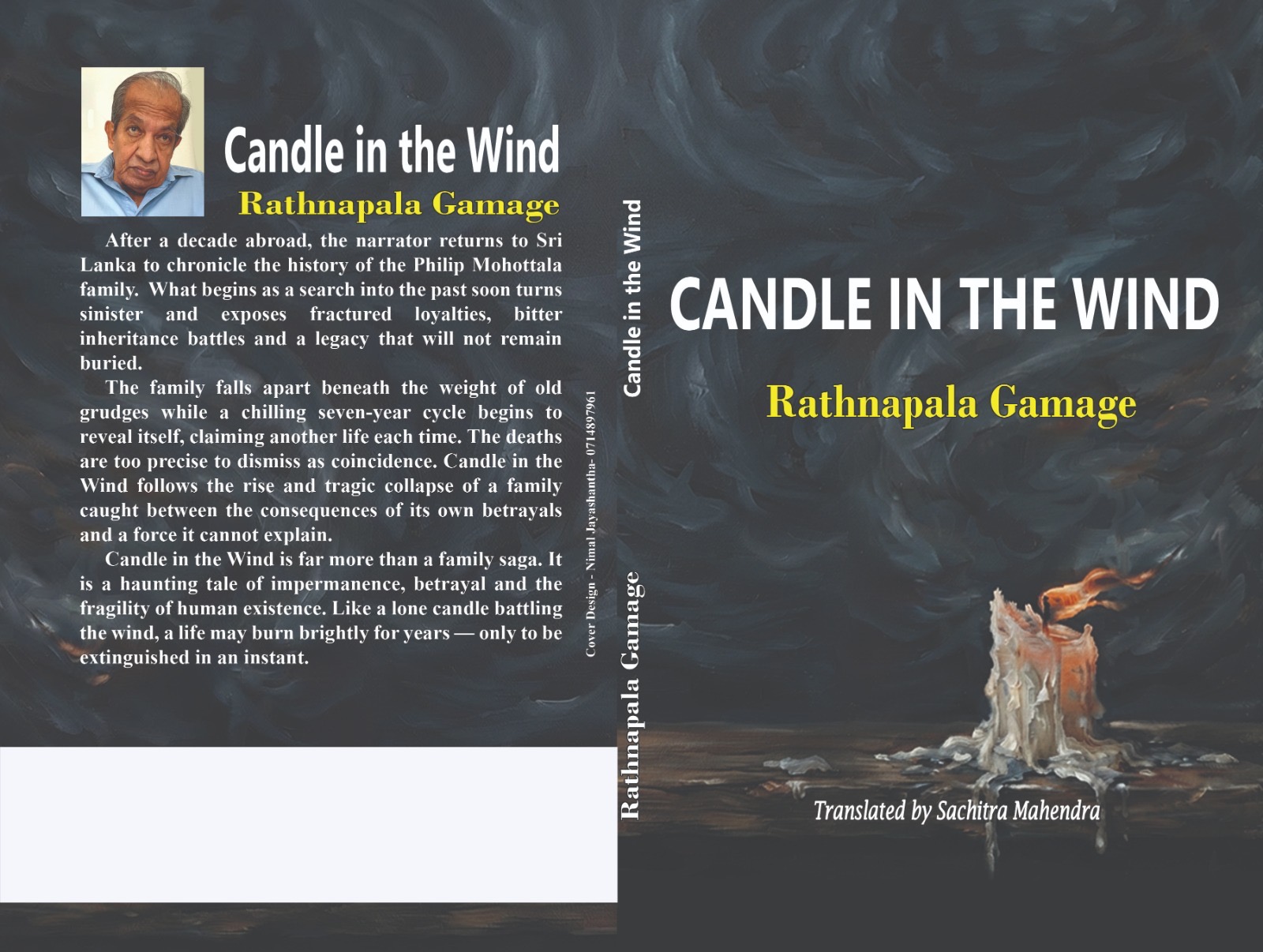
LNW (Colombo): Some stories come to an end when the final page of a novel is turned. Others continue to remain in the reader’s mind, leaving behind questions, emotions and memories. “Itipahan Sila” (Candle in the wind), the latest novel by writer Ratnapala Gamage, is a story that explores such lasting impressions through the lives of several characters.
The novel goes beyond the framework of a family story, bringing together themes of love, loss, memory, death, human relationships and unexplained mysteries.
The narrator’s journey into the past begins with the story of a man named Philip Mohottala, whose name emerges through conversations with his mother. As the narrative develops, the reader encounters a range of ordinary people whose lives are shaped by love, mistakes, separation and memories of those they have lost.
Among the characters, Sarojini occupies a particularly memorable place. Her simple expressions of affection, including an ordinary question such as, “Have you eaten?”, acquire a deeper meaning after her absence. Through her character, the novel reflects on how seemingly insignificant acts of kindness can become treasured memories after someone is gone.
The novel also introduces an element of mystery through Sirimevan. An old house, unusual incidents, deaths and events from the past gradually become connected, leaving the reader to question whether the experiences are the result of supernatural forces, fear within the human mind, or events that cannot easily be explained.
Rather than providing a definitive explanation, the author allows the mystery to remain open to interpretation. This approach encourages readers to consider what may have actually taken place while following the characters’ journey through the past.
At a deeper level, however, the novel focuses on the themes of death and impermanence. People disappear, homes change, possessions pass from one person to another, and even the inscriptions on graves gradually fade with time.
A hidden grave among the lantana bushes at Mount Lavinia Cemetery, bearing the fading words “Anicca Vata Sankhara,” becomes an important symbolic element within the story. The phrase, reflecting the Buddhist teaching on the impermanence of conditioned things, echoes one of the central ideas explored throughout the novel.
The story ultimately raises a question that extends beyond its fictional characters: What remains of a person after death?
Is it wealth, property, social status and possessions—or is it the memory of the kindness and affection shared with others?
Through its exploration of these themes, Candle in the Wind invites readers to reflect on the temporary nature of life and the lasting influence of human relationships.
Like the candle flame suggested by its title, life is presented as something fragile and fleeting—flickering in the wind, unable to remain unchanged forever.
“Candle in the Wind” is published by Vijitha Yapa Publications, Sarasavi Publishers and Godage Publishers and is priced at Rs. 700.
The novel is available for purchase at the BMICH International Book Fair.
At its heart, Candle in the Wind is not simply a story about the past. It is an invitation to reflect on life, loss, memory and the traces people leave behind in the lives of others.