
By: Staff Writer
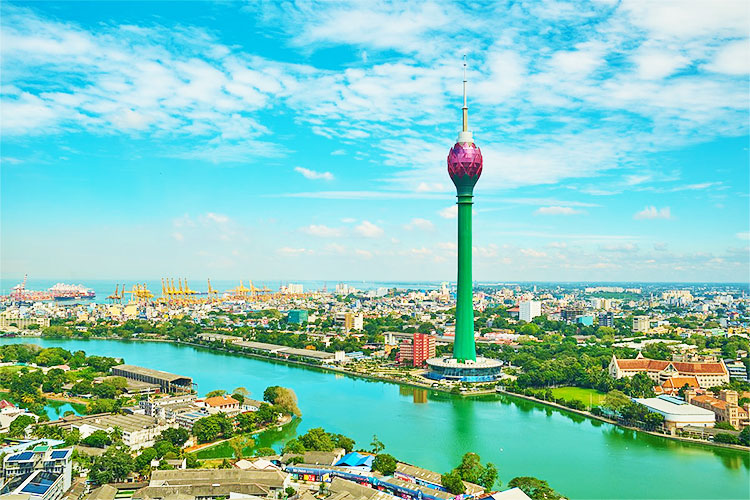
November 10, Colombo (LNW): Sri Lanka’s iconic Colombo Lotus Tower has recorded a significant improvement in revenue generation and commercial activity, but questions remain over whether its growing business operations can deliver sustainable financial returns on an investment of more than US$104 million, largely financed through Chinese loans.
The latest extension of the management agreement with Citrus Leisure PLC until June 30, 2027, provides an opportunity to examine whether the NPP Government has succeeded in transforming the controversial structure into a commercially sustainable national asset during its two years in office.
According to a market disclosure dated November 6, 2026, the Colombo Lotus Tower Management Company (CLTMC) board decided on November 2 to extend the existing agreement with Citrus Leisure, which operates the Blue Orbit revolving restaurant, banquet facilities and six suites.
The original three-year agreement was signed in May 2023, before the NPP Government assumed office. Its extension indicates continuity in the commercial management arrangement rather than the introduction of an entirely new operating model.
Nevertheless, the tower’s financial performance has shown encouraging developments.
According to the Government’s 2024 Annual Performance Report, CLTMC generated Rs.966 million through observation deck tickets, commercial space leasing and event management. The souvenir shop contributed another Rs.50 million, the Digital Art Museum Rs.43 million and the revolving restaurant and banquet facilities Rs.722 million.
This brought the combined reported revenue from these activities to approximately Rs.1.781 billion in 2024.
The tower also attracted 1,012,311 local visitors and 69,842 foreign visitors to its observation platform during that year, while another 161,095 people visited the digital art gallery.
These figures demonstrate that the facility has developed a substantial visitor base and diversified its commercial activities beyond observation deck ticket sales.
More importantly, CLTMC announced in September 2025 that revenue for the eight months ending August had reached Rs.1.43 billion, representing a 31 per cent increase compared with the corresponding period in 2024.
Gross profit reportedly increased by 77 per cent to Rs.786.86 million, while profit before tax rose by 192 per cent to Rs.539.93 million.
The improvements were attributed to operational efficiency, cost controls and stronger commercial management following the management transition in October 2024.
However, the critical question is whether these improvements translate into sufficient cash generation to meet the tower’s long-term financial obligations, including debt servicing, maintenance, electricity, staffing and capital expenditure.
The 350-metre structure was constructed at a contractual cost of US$104.3 million, with approximately 80 per cent of the financing coming from China’s Exim Bank.
The original project was also dogged by construction delays, financing complications and questions raised by the Auditor General concerning project administration.
Revenue growth alone cannot establish that the investment has become financially viable. The Government must disclose audited net profits, operating expenditure, outstanding loan balances, annual debt repayments and accumulated liabilities.
The extension of Citrus Leisure’s agreement is commercially significant, but it should not become a substitute for public disclosure of the tower’s actual financial position.
Ultimately, taxpayers deserve to know whether the Lotus Tower is becoming a profitable national investment or merely generating impressive turnover while its underlying financial obligations remain unresolved.