
By: Staff Writer
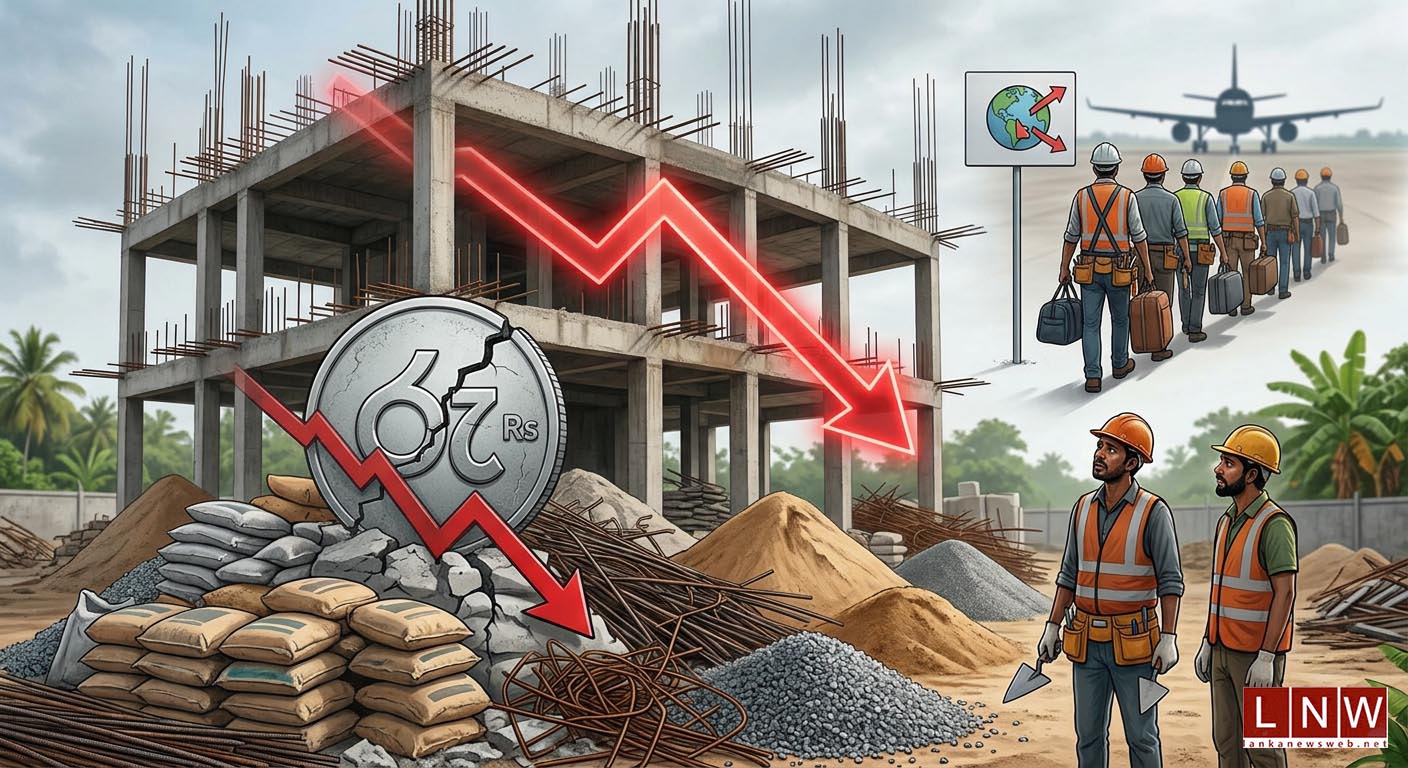
November 10, Colombo (LNW): The Government’s failure to contain escalating construction material prices, coupled with an alarming shortage of skilled workers, is threatening to undermine Sri Lanka’s construction industry at a time when the country urgently needs investment, infrastructure development and employment generation.
With nearly 1.5 million people reportedly dependent on the domestic construction sector, the latest price increases raise serious questions about the Government’s ability to protect an industry that plays a critical role in economic recovery.
The National Construction Workers Union (NCWU) has sounded the alarm over what it describes as an increasingly unsustainable operating environment, accusing construction material manufacturers and the authorities of allowing prices to rise without adequate intervention.
Addressing a media briefing, NCWU General Secretary Supun Abeysekara disclosed that the price of a 50-kilogram bag of cement had increased by nearly Rs. 300 within two to three months. A bag previously selling for approximately Rs. 1,900 was now priced at around Rs. 2,250, while maximum retail prices printed on certain bags had reached Rs. 2,400.
The increase represents a substantial additional burden for contractors, developers, household builders and infrastructure projects already struggling with high financing and operating costs.
The implications extend beyond individual consumers. Cement is a fundamental input for housing, commercial buildings, roads, bridges and public infrastructure. Sustained price increases can raise project costs, delay construction schedules, reduce the affordability of housing and discourage private investment.
Abeysekara also highlighted rising prices of aluminium, sand and other essential construction materials, arguing that manufacturers were gradually transferring additional costs to consumers without sufficient regulatory scrutiny.
However, the central economic concern is whether Sri Lanka’s construction industry can sustain its recovery when material costs continue to increase while the purchasing power of households and the financial capacity of contractors remain constrained.
The sector’s importance should not be underestimated. Construction generates demand across cement, steel, aluminium, transport, engineering, equipment rental and other supporting industries. It also provides employment opportunities for skilled and unskilled workers, contributing to household incomes and economic activity.
The union’s estimate that approximately 1.5 million people depend on the industry illustrates the potential social consequences of a prolonged downturn. Any significant contraction could affect not only construction workers but also small contractors, suppliers, transport operators and businesses operating throughout the building-material supply chain.
The Government must therefore recognise that the problem is not simply about the retail price of cement. It concerns the affordability of construction, the viability of ongoing projects and the capacity of the industry to generate employment and economic growth.
Abeysekara further warned that the shortage of skilled labour was aggravating the crisis, with experienced workers migrating overseas, including to Romania and Israel, in search of better employment opportunities.
This combination of rising input costs and declining domestic labour availability threatens to create a vicious cycle of higher project costs, reduced competitiveness and weaker investment.
The union has called on the relevant Minister and authorities to intervene through effective pricing regulations and measures to prevent unfair pricing practices.
But the Government must go beyond responding to complaints. It needs to examine the cost structure of construction materials, competition among manufacturers, distribution margins and the effectiveness of existing consumer-protection mechanisms.
Without a transparent pricing framework and a broader construction-sector recovery strategy, Sri Lanka risks weakening an industry essential to rebuilding its economy.
Latest economic indicators: Construction sector
The latest available national accounts and industry indicators reveal a significant contrast between the sector’s recovery and its underlying vulnerabilities.
Indicator Latest available data
Construction contribution to GDP, 2025 5.7%
Construction value added, 2025 Rs. 1,874.4 billion
Real construction growth, 2025 9.2%
Construction growth, Q1 2026 16.3%
Construction growth, Q2 2026 13.9%
Construction bank lending, end-June 2026 Rs. 1,913 billion
Annual growth in construction lending 16.1%
Sources: Central Bank of Sri Lanka national accounts and related industry analysis.
One important historical comparison is that construction’s GDP share declined from 9.5% in 2015 to 5.7% in 2025, despite the sector’s recent recovery. This demonstrates why headline growth rates alone do not establish that the industry has regained its former economic importance.