
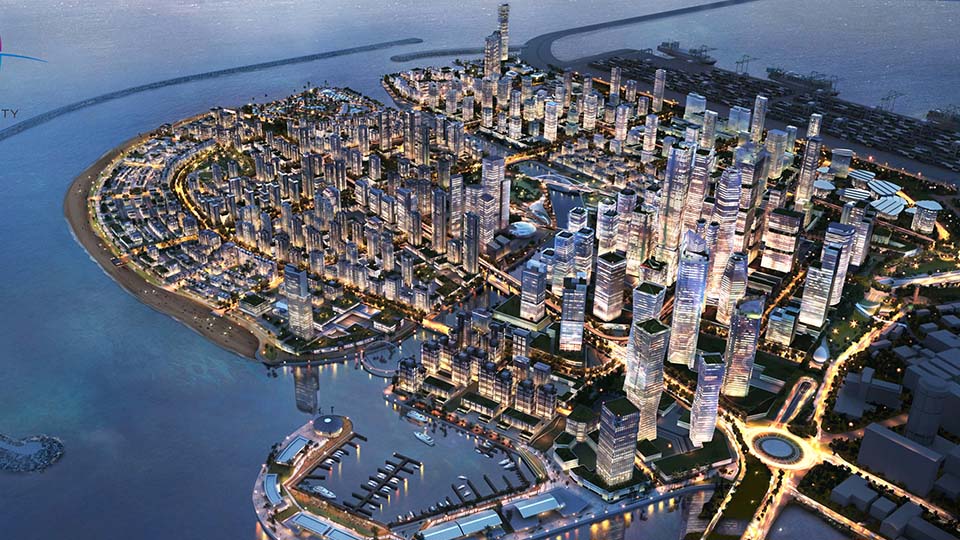
As Sri Lanka enters 2026 with cautious economic optimism, Colombo Port City stands at a critical juncture, transitioning from a long-term infrastructure ambition into an operational financial and commercial zone with measurable economic implications. More than a decade after construction began, the 269-hectare development is no longer defined by land reclamation and policy promises, but by its ability to generate investment flows, employment, and export-driven growth.
Developed by CHEC Port City Colombo (Pvt) Ltd., the project has endured a turbulent operating environment since its inception in 2014. Political transitions, the 2019 Easter Sunday attacks, the COVID-19 pandemic, and the 2022 sovereign debt crisis each tested investor confidence. Despite these disruptions, Port City progressed steadily, culminating in the completion of land reclamation in 2019 and the passage of the Colombo Port City Economic Commission Act in 2021.
That legislation established Sri Lanka’s first Special Economic Zone with an independent regulatory framework, offering tax incentives, simplified approvals, and foreign exchange flexibility. As of early 2026, 146 enterprises have registered within the zone, largely focused on financial services, IT, logistics, and professional services aimed at international markets. While many remain in early operational stages, officials argue this represents a shift toward modern service exports rather than traditional goods-based growth.
A key operational milestone was reached in October 2025 with the commissioning of water, electricity, and sewerage connections to Colombo’s main city grid. This step enabled large-scale commercial activity and vertical construction to proceed without reliance on interim infrastructure an issue previously flagged by analysts as a bottleneck to investor confidence.
Retail and lifestyle developments have also moved from concept to reality. The Mall at Port City Colombo, opened in September 2024, introduced South Asia’s first downtown duty-free retail model, drawing regional attention and contributing to tourism-linked consumption. Meanwhile, the Business Centre, positioned as an IT and business park, began tenant handovers in mid-2025, signaling the start of recurring commercial occupancy.
Private capital participation has further strengthened Port City’s outlook. The USD 120 million Luxury Marina Development by Browns Investment PLC broke ground in January 2025, adding a maritime leisure component expected to attract high-net-worth visitors and regional yacht traffic.Economists caution, however, that Port City’s long-term success will depend on integration with the wider economy. Job creation, skills transfer, and linkages with domestic firms will determine whether the project becomes an isolated enclave or a genuine growth engine. As 2026 unfolds, Port City’s performance will increasingly be judged not by infrastructure delivered, but by economic value created