
By: Staff Writer
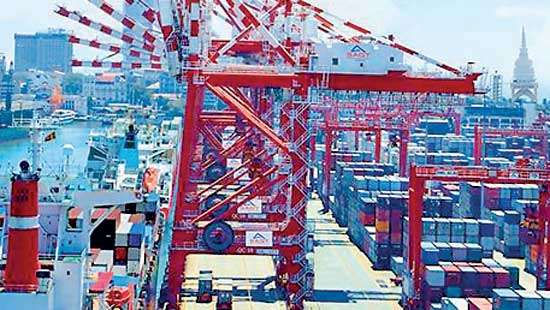
January 26, Colombo (LNW): Operational delays at the Colombo East Container Terminal (CECT) are increasingly translating into measurable losses in container handling efficiency and port revenue, threatening Sri Lanka’s standing as a regional maritime hub. While the terminal was envisioned as a future-ready, green facility, prolonged equipment procurement failures have left capacity underutilized during a critical growth phase for regional shipping.
Between 2025 and early 2026, Colombo Port recorded steady growth in vessel calls and transshipment demand. However, container handling at CECT remained limited to partial operations, forcing shipping lines to rely heavily on older terminals. Industry data indicates that thousands of containers experienced longer dwell times due to yard congestion and restricted internal movement an issue directly linked to the absence of straddle carriers.
Port officials privately acknowledge that without these machines, container clearing and repositioning cannot keep pace with incoming volumes. Containers awaiting customs clearance have reportedly accumulated at the terminal, increasing storage costs and slowing vessel turnaround. This congestion undermines Colombo’s competitiveness, particularly against regional ports offering faster clearance and predictable handling timelines.
The Sri Lanka Ports Authority has attempted multiple procurement processes since 2021, yet none have resulted in delivery of the required equipment. Shifting tender strategies from leasing to diesel, and later to hybrid technology reflect changing policy priorities but also expose weak execution and planning. Each failed tender cycle has pushed CECT further behind its original operational targets.
Port unions and employee associations argue that these delays are eroding confidence among global shipping lines. While demand for Colombo’s transshipment services remains strong, uncertainty over equipment readiness has discouraged some operators from committing higher volumes to CECT. One internationally reputed equipment supplier is reported to have withdrawn from the latest tender, citing concerns over transparency and evaluation standards.
Financially, the implications are significant. SLPA has continued to generate revenue through existing terminals and recently transferred approximately Rs. 5 billion to the Government Consolidated Fund. However, analysts suggest that full-scale CECT operations could substantially increase annual earnings, offset foreign exchange pressures, and create long-term cost efficiencies through automation and green technology.
The fifth tender has become the focal point of controversy. Revised eligibility criteria allow manufacturers with minimal production history to compete for a contract valued at around USD 50 million. Critics warn that installing unreliable or poorly supported equipment could lead to frequent breakdowns, higher maintenance costs, and operational disruptions further delaying revenue realization.
Employees stress that safeguarding port assets has been a long-standing priority. Their intervention in 2021 preserved national control over the East Container Terminal, and similar concerns are now being raised about CECT’s procurement integrity. As containers continue to pile up and shipping schedules tighten, the cost of inaction grows daily.
Unless decisive, transparent procurement action is taken, CECT risks becoming a symbol not of progress, but of missed opportunityat a time when regional competition has never been fiercer.