
Nalinda Indatissa, President’s Counsel
Situated along the main East–West shipping route of the Indian Ocean, the island lies just a few nautical miles from the sea lanes that carry a significant portion of global trade, including energy shipments and container traffic between Asia, the Middle East and Europe. Geography has already given Sri Lanka an advantage that many nations can only dream of. The real question is whether we are prepared to use it intelligently.
In a global economy dominated by scale, Sri Lanka cannot compete by size. Our domestic market is small. Our production volumes cannot rival those of regional giants. But what we lack in size, we compensate for in location. The future of Sri Lanka lies not in attempting to become a mass manufacturing powerhouse, but in transforming itself into a highly efficient, technology-driven trading and logistics hub.
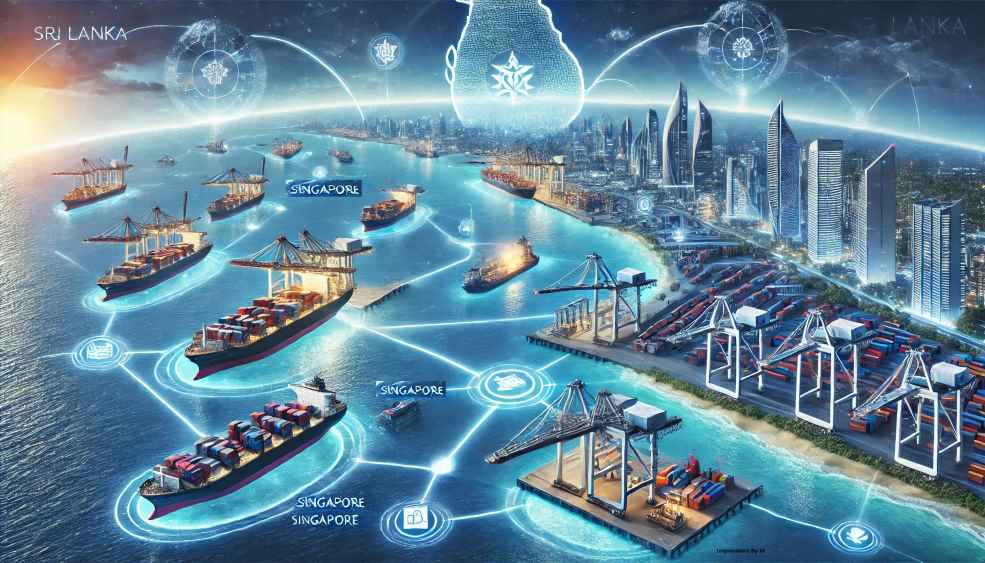
Colombo Port already serves as a major transshipment centre for South Asia. Yet the opportunity is far greater. With state-of-the-art port infrastructure, automated cargo handling systems, deep-water terminals capable of accommodating the largest vessels, advanced warehousing, integrated customs digitalization and seamless multimodal transport connectivity, Sri Lanka can position itself as the preferred gateway to the region. Efficiency must become our national brand. Ships should dock, unload, reload and depart with minimal delay. Documentation should move electronically. Approvals should be granted quickly, transparently and predictably.
Speed is not a luxury in global trade; it is a necessity. Investors and global shipping lines choose locations where procedures are clear and time-bound. A smart approval system—digitized, centralized and accountable—can eliminate unnecessary bottlenecks. When investors know that their proposals will be processed within fixed timelines, without hidden obstacles or arbitrary decision-making, confidence grows. Bureaucratic efficiency becomes a competitive advantage.
Equally important is integrity. No trading hub can succeed in a corrupt environment. Global capital flows toward jurisdictions where rules are clear and fairly enforced. Corruption increases transaction costs, creates uncertainty and damages reputation. Therefore, Sri Lanka’s recent positive movement in international corruption perception rankings is not merely symbolic; it is economically significant. It signals to the world that governance standards are improving and that the country is committed to transparency and accountability. This progress must not be temporary. It must become irreversible national policy.
A clean, rules-based environment, combined with strategic geography and world-class infrastructure, can transform Sri Lanka into the Singapore of the Indian Ocean. Singapore did not succeed because of land or natural resources. It succeeded because of discipline, efficiency and incorruptible systems. Sri Lanka possesses the same geographical potential. What remains is institutional determination.
Beyond ports, the strategy must extend to financial services, maritime arbitration, ship repair, bunkering services and regional headquarters operations. When trade flows through a country, related industries naturally develop around it. Each layer adds employment, technology transfer and revenue. Human capital must be trained to operate advanced logistics systems, manage global supply chains and provide professional services that meet international standards.
Small countries survive in a global economy of scale by becoming indispensable connectors. Sri Lanka’s destiny lies in being a trusted bridge between continents. Our location cannot be relocated. It is permanent. If combined with modern infrastructure, fast and intelligent governance, digital transformation and a corruption-free environment, that location becomes economic power.
The path forward requires consistency, policy stability and national unity of purpose. If Sri Lanka commits itself to transparency, efficiency and strategic clarity, the island will not merely survive in a competitive global economy—it will thrive as a dynamic hub of trade, confidence and opportunity in the Indian Ocean region.