
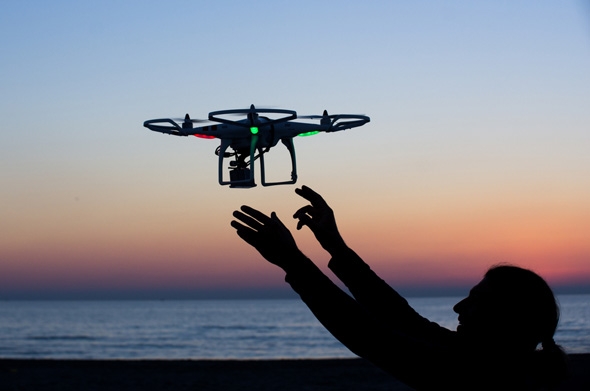
Sri Lanka’s proposed acquisition of four advanced unmanned aerial vehicles (UAVs) from Israel for Rs.4,261 million represents a potentially significant transformation of the country’s maritime surveillance and disaster response capabilities. However, while the initiative offers substantial operational advantages, questions surrounding procurement transparency, financial priorities and long-term sustainability deserve closer scrutiny before the Government commits to expanding the programme.
Deputy Minister of Defence Aruna Jayasekera told Parliament that the emergency procurement would be undertaken through a government-to-government arrangement involving BlueBird Aero Systems, in which Israel Aerospace Industries holds an equity stake. The proposed fleet is expected to strengthen the Sri Lanka Air Force’s ability to monitor the country’s Exclusive Economic Zone (EEZ), covering approximately 517,000 square kilometres, nearly 27 times the country’s landmass.
The operational justification is compelling. Sri Lanka’s extensive maritime territory exposes it to illegal fishing, suspicious vessel movements, maritime smuggling and other security threats. Conventional aircraft surveillance is expensive, particularly when continuous monitoring is required over such a vast area. Long-endurance UAVs could provide a more economical alternative by remaining airborne for extended periods while transmitting surveillance information.
The proposed fleet includes two ThunderB aircraft capable of remaining airborne for up to 14 hours, alongside other platforms with endurance of up to 20 hours. Their vertical or short take-off capabilities could also reduce dependence on conventional runway infrastructure.
Beyond national security, the aircraft could deliver considerable humanitarian benefits. Locating missing fishermen, monitoring fishing vessels in distress and supporting rescue operations during floods, cyclones and other natural disasters could strengthen emergency response capabilities. The ability to identify affected areas rapidly could improve coordination among the armed forces, disaster management authorities and rescue services.
Nevertheless, the procurement’s financial structure requires careful examination. The Government says the Rs.4,261 million expenditure will be financed by redirecting funds previously allocated for Air Force helicopter maintenance under Financial Regulation 66, rather than seeking additional Treasury allocations.
Although this avoids requesting new funds, it does not make the acquisition cost-free. Diverting an existing allocation carries an opportunity cost. Parliament should establish whether the helicopter maintenance programme can absorb the reduction without compromising aircraft availability, operational readiness or aviation safety.
Another important consideration is the three-year maintenance arrangement and operational training included in the agreement. What happens after those three years? Spare-parts availability, software upgrades, technical expertise and dependence on foreign suppliers could create additional recurring expenditure.
The Government must also establish clear rules governing surveillance data, cybersecurity, operational control and information-sharing arrangements. These safeguards are particularly important when acquiring sophisticated foreign-manufactured surveillance technology.
The increase from two aircraft under earlier discussions to four under the revised arrangement also deserves an explanation supported by operational assessments and cost-benefit analysis.
Ultimately, the initiative could strengthen maritime sovereignty, disaster preparedness and national security. However, expanding it should depend on measurable operational results, transparent procurement procedures and independently verified financial sustainability. National security investment must deliver lasting public value rather than create another long-term financial obligation for taxpayers.