
By: Staff Writer
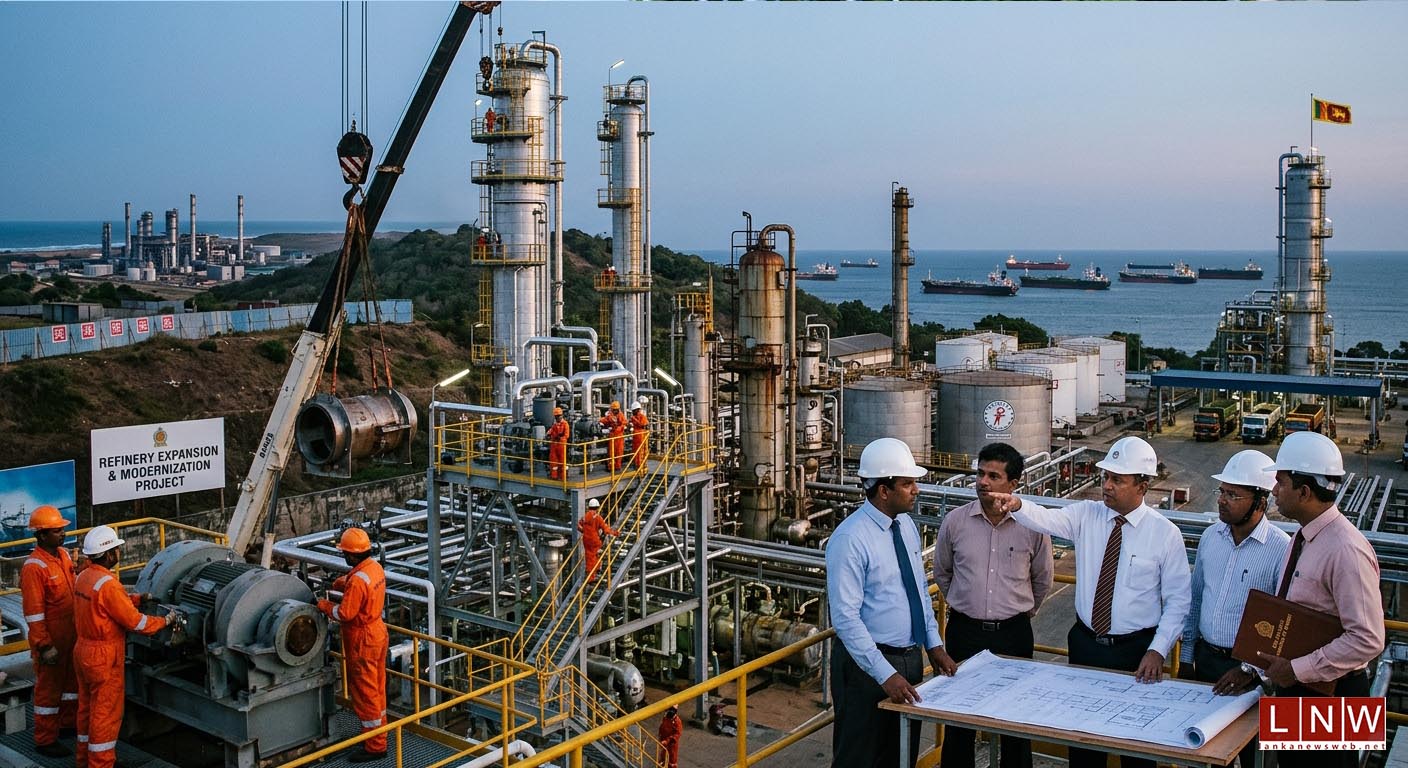
November 16, Colombo (LNW): The controversy surrounding Sinopec’s proposed US$3.7 billion Hambantota refinery has brought renewed attention to an equally important question confronting Sri Lanka: why has the modernisation and expansion of the Sapugaskanda Oil Refinery remained such a prolonged national priority without reaching implementation?
While the Government’s decision to resist unfavourable conditions attached to the proposed Chinese investment has been presented as a defence of national energy security, the real test of its economic leadership will be whether it can accelerate a strategically important domestic refining project.
The Government has already initiated an international investor-selection process for the proposed Sapugaskanda public-private partnership (PPP). Expressions of Interest have been evaluated and prospective investors shortlisted, creating an opportunity to move beyond preliminary assessments towards a concrete investment decision.
The proposed expansion could significantly strengthen the country’s domestic petroleum infrastructure. Sri Lanka remains dependent on imported refined petroleum products, exposing its economy to international price movements, foreign exchange pressures and disruptions in global supply chains.
Increasing domestic refining capacity would provide an opportunity to reduce some of this dependence, improve foreign exchange management and strengthen the operational capacity of the Ceylon Petroleum Corporation (CPC).
However, the economic benefits will depend on the project’s final investment structure, financing arrangements, technology, operating efficiency and ability to compete with internationally sourced petroleum products.
The Hambantota controversy has also highlighted the importance of determining the appropriate balance between foreign investment and domestic economic interests. Rejecting excessive concessions in one project will have little practical significance if the Government cannot deliver an alternative investment that produces tangible national benefits.
The Sapugaskanda project therefore requires urgent attention from the Ministry of Energy, the CPC and the relevant economic authorities.
The investor-selection process must be conducted transparently, with clear technical and financial evaluation criteria. The Government must establish whether shortlisted investors possess the necessary financial strength, refining expertise and long-term commitment to undertake a complex industrial modernisation programme.
Equally important is the question of financing. Sri Lanka cannot afford to enter into another multibillion-dollar commitment without establishing the project’s commercial viability, repayment responsibilities and potential contingent liabilities.
The Government must also ensure that the PPP arrangement does not weaken CPC’s strategic role or transfer excessive control over essential petroleum infrastructure to a private investor.
A properly structured partnership could introduce modern technology, operational efficiency and private-sector capital while retaining appropriate public oversight.
Nevertheless, the danger is that prolonged administrative procedures, political disagreements and repeated revisions to investment conditions could once again delay implementation.
Sri Lanka’s energy requirements cannot be addressed through declarations of policy ambition alone. Every year of delay prolongs exposure to imported refined products and leaves the country vulnerable to external supply disruptions.
The Government must now publish a credible implementation timetable covering final investor selection, financial closure, regulatory approvals and construction.
The public deserves to know when this long-awaited project will begin delivering results.
The decisive measure of success will not be the rejection of one controversial foreign investment, but the successful establishment of a modern refinery capable of strengthening CPC, protecting consumers and reducing the country’s long-term energy vulnerabilities.