
By Banker
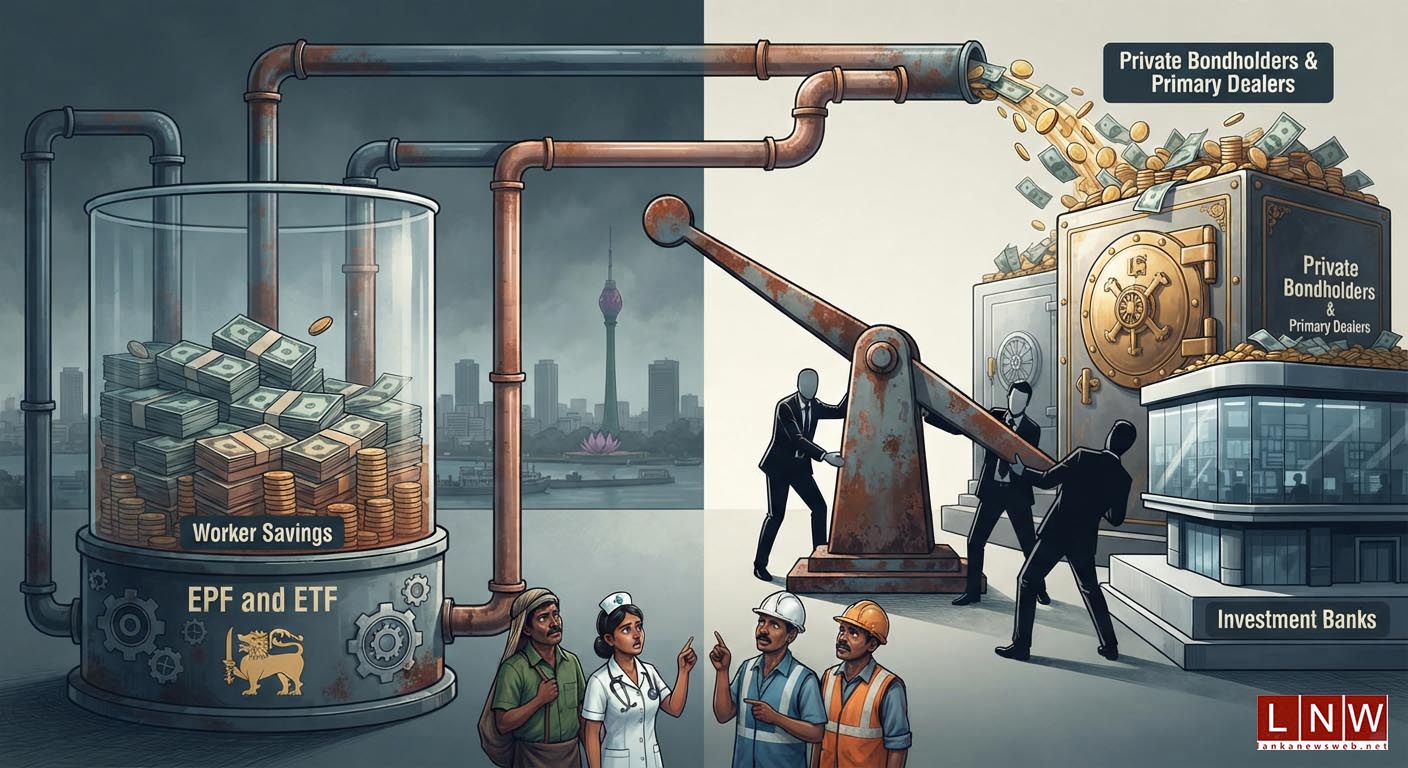
The Employees’ Provident Fund (EPF) and Employees’ Trust Fund (ETF) are not ordinary investment funds. They represent the hard-earned savings of millions of Sri Lankan workers, accumulated over decades to provide financial security after retirement. Their protection must therefore take precedence over the commercial interests of primary dealers, investment banks and other market participants.
The controversy surrounding Sri Lanka’s government securities market raises important questions about who ultimately bears the risks when investment strategies go wrong. In particular, the allocation of losses of debt restructuring by CBSL during the debt restructuring arising from the restructuring of government securities, and the treatment of the EPF and ETF, deserve greater public scrutiny. The Funds lost billions for the benefit of the bond traders. Why?
Investigate
The central issue is one of fairness and accountability. If private market participants benefited from favourable arrangements while a greater share of the burden was transferred to workers’ retirement funds, the public deserves a clear explanation. The regulator must demonstrate that the interests of ordinary workers were not sacrificed to protect financial institutions. Not only the Bond Traders who were about to collapse.
When the Market Turns, Who Pays?
The latest financial results of First Capital Holdings PLC provide an interesting perspective on the risks associated with these business models. For the six months ended 30 September 2026, the company reported a loss after tax of Rs. 1.27 billion, compared with a profit of Rs. 3.43 billion in the corresponding period last year. Its second-quarter loss alone amounted to approximately Rs. 540 million.
The Primary Dealer Division recorded a loss after tax of approximately Rs. 537 million, compared with a profit of Rs. 1.57 billion a year earlier. More significantly, it incurred a trading loss of Rs. 1.69 billion on government securities, against a trading gain of Rs. 1.81 billion in the previous corresponding period.
The Corporate Dealing Securities Division also moved from a profit of Rs. 1.78 billion to a loss of Rs. 834 million. These numbers demonstrate how quickly profitability can change when interest rates and government securities yields move in an unfavourable direction. A business model that generates substantial profits during falling interest-rate cycles can experience considerable losses when the cycle
reverses.
Management attributed the deterioration primarily to the 100-basis-point monetary policy rate increase in May 2026, together with volatility in government securities yields and geopolitical developments.
There is an important distinction, however, between legitimate market losses and losses arising from regulatory decisions or the allocation of risks between public and private institutions. The former is an inherent feature of investment banking; the latter raises questions of accountability and fairness.
Lanka Business News.
The EPF and ETF Question Cannot Be Ignored The Domestic Debt Optimisation (DDO) programme of 2023 remains central to this debate. The EPF was required to exchange a portion of its Treasury bond holdings for longer-dated securities with reduced coupon rates over time.
The arrangement was justified as necessary to restore debt sustainability and protect the financial system. However, questions were raised about why private bondholders and primary dealers First Capital and Capital Allience were largely excluded from comparable restructuring measures while retirement funds were required to participate. The CBSL defended the approach, arguing that primary dealers and private bondholders represented relatively small proportions of outstanding Treasury bonds and that protecting the functioning of the domestic securities market was essential.
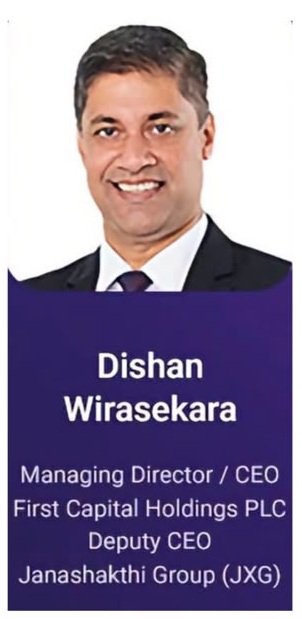
How true was this? Did Ajith Fernando the notorious Bond Dealer and the Bond King Dilshan Weerasekara cut a deal with the CBSL to spare them of grief?
This raises a fundamental question: should the country’s workers’ retirement savings carry a disproportionate burden of sovereign debt restructuring while private market participants are protected from similar treatment?
It is important to distinguish between the restructuring of government securities held by pension funds and the commercial trading activities of primary dealers. They are not the same. Nevertheless, the distribution of risks and benefits deserves independent examination.
When the Tide Goes Out
The latest First Capital results are a reminder that investment banking is cyclical. When interest rates fall, institutions holding substantial government securities portfolios can generate significant trading profits. When rates rise, those same positions can generate substantial
losses.
Capital Alliance and other primary dealers operate in the same market and face similar interest-rate risks. Their performance should also be examined, rather than singling out one institution.
The CBSL, as regulator and overseer of the government securities market, has a responsibility to ensure that the market operates fairly, transparently and without preferential treatment.
There are several questions that deserve answers:
- Were private primary dealers given preferential treatment during the domestic debt restructuring?
- Did regulatory decisions transfer risks that should otherwise have been borne by market participants to the EPF and ETF?
- Were the interests of workers adequately represented when these decisions were made?
- Were the risks associated with the business models of primary dealers properly assessed and supervised?
The issue is not whether investment banks should make profits or incur losses. They are entitled to both, provided they operate within the law and appropriate regulatory safeguards.
But workers’ retirement savings are not a safety net for private financial institutions. The ultimate test of a regulator is not how well it protects the institutions it supervises, but how effectively it protects the public interest.
The EPF and ETF belong to workers, not to the financial establishment. Those responsible for decisions affecting these funds must be prepared to explain them.
Sri Lanka cannot afford a financial system in which profits are privatised while risks are socialised.