
By: Staff Writer
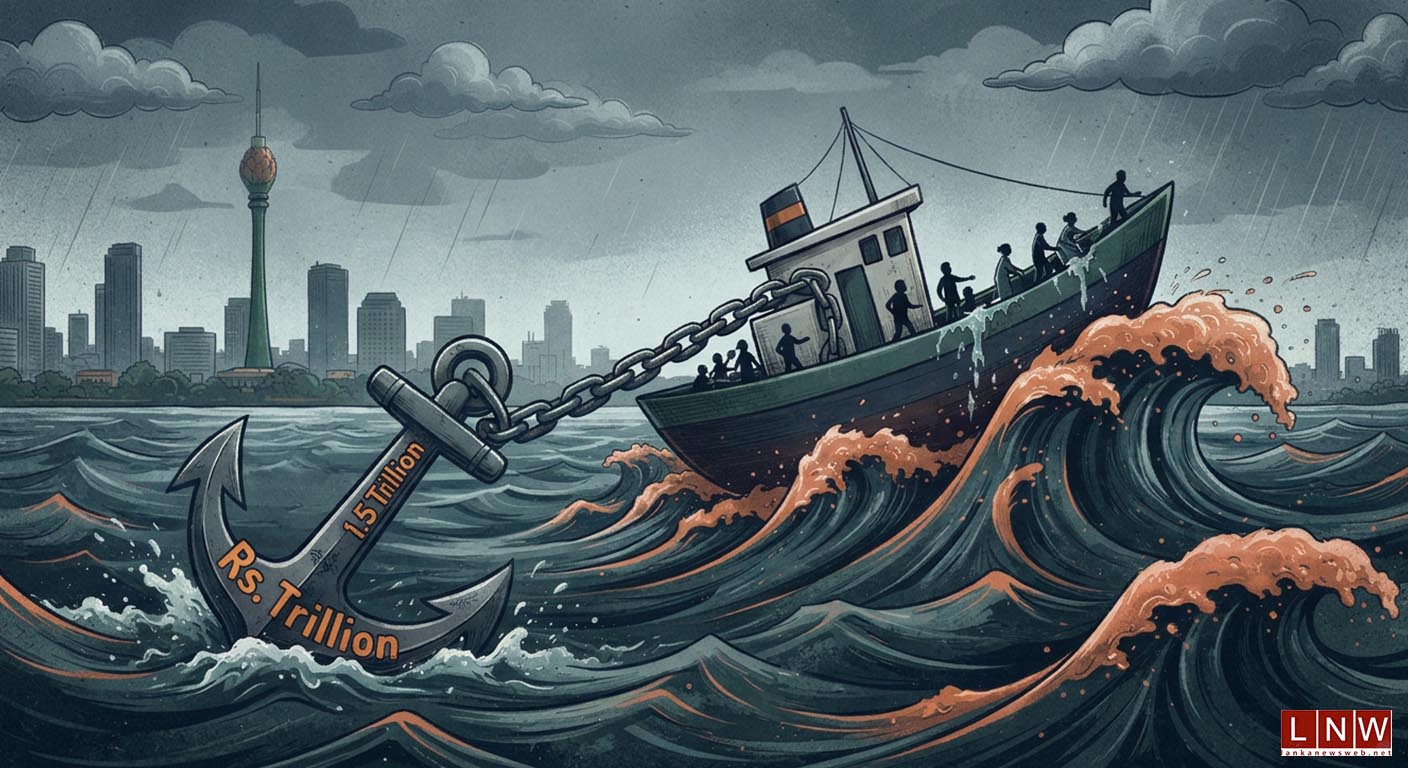
November 19, Colombo (LNW): Sri Lanka’s Rs.1.5 trillion subsidy allocation in Budget 2027 is facing an increasingly important test as inflation continues to accelerate, raising questions about whether the Government’s fiscal response can adequately protect households or whether taxpayers will once again bear the cost of an economic crisis without receiving sufficient relief.
Former Central Bank Deputy Governor Dr. W.A. Wijewardena has argued that when inflation rises beyond the upper limit of the Central Bank of Sri Lanka’s (CBSL) target range and monetary policy cannot bring it down without damaging economic activity, responsibility must increasingly shift towards fiscal authorities.
His intervention at the Budget Highlights 2027 forum organised by the Institute of Certified Management Accountants of Sri Lanka comes at a critical moment for the National People’s Power (NPP) Government, which is attempting to balance economic recovery, fiscal consolidation and public expectations of lower living costs.
The latest inflation figures underline the urgency.
Headline inflation, measured by the Colombo Consumer Price Index, rose to 8.3 per cent in October from 8 per cent in September, remaining above the CBSL’s upper target threshold of 7 per cent for the fourth consecutive month.
This is a significant deterioration from the 2.1 per cent inflation recorded in October 2025.
The central bank expects inflation to remain in high single digits through the first quarter of 2027, suggesting that households could face continued pressure on their purchasing power even as the Government implements its latest budgetary measures.
Dr. Wijewardena warned against relying exclusively on monetary tightening to control prices. Reducing inflation from around 8 per cent to 3 per cent through aggressive demand restrictions could severely contract economic activity, increase unemployment and undermine the recovery.
He therefore proposed that the Treasury and CBSL jointly manage inflation through a fortnightly Coordination Council, allowing fiscal authorities to introduce relief measures whenever inflation exceeds the permitted threshold.
However, the more difficult question concerns the composition, targeting and economic sustainability of the Rs.1.5 trillion subsidy allocation.
Subsidies can provide immediate protection against rising living costs, particularly for low-income families and economically vulnerable communities. But poorly targeted subsidies can also consume substantial public resources while providing benefits to households that may not require Government assistance.
For a country still operating under International Monetary Fund-supported fiscal consolidation commitments, the allocation also creates a challenge of balancing social protection with expenditure discipline.
The Government must demonstrate whether the proposed expenditure represents carefully targeted assistance or another substantial commitment that could place pressure on borrowing requirements and public finances.
There is also a distinction between temporarily compensating consumers for higher prices and addressing the structural reasons behind inflation.
Import costs, exchange-rate movements, energy prices, food supply disruptions, distribution inefficiencies and domestic production constraints can all influence consumer prices. Monetary tightening alone cannot resolve these underlying weaknesses.
Consequently, the Treasury must establish whether its subsidy programmes are supported by reliable household data, transparent eligibility criteria and effective monitoring mechanisms.
The proposed fortnightly coordination mechanism could help connect inflation forecasts with budgetary interventions, ensuring that relief is introduced before vulnerable households experience further deterioration in living standards.
But fiscal intervention must not become an excuse for postponing necessary structural reforms or concealing weaknesses in economic management.
The NPP Government has promised to improve governance, eliminate waste and protect ordinary citizens from economic exploitation. Its handling of the inflation challenge will provide an important measure of whether those commitments translate into tangible improvements.
Ultimately, the success of the Rs.1.5 trillion allocation should not be judged by the amount of money announced in the Budget, but by how effectively it reduces the cost-of-living burden on ordinary families while preserving fiscal stability.
Sri Lanka cannot afford to finance temporary relief indefinitely without confronting the structural weaknesses that keep prices under pressure.