
By: Staff Writer
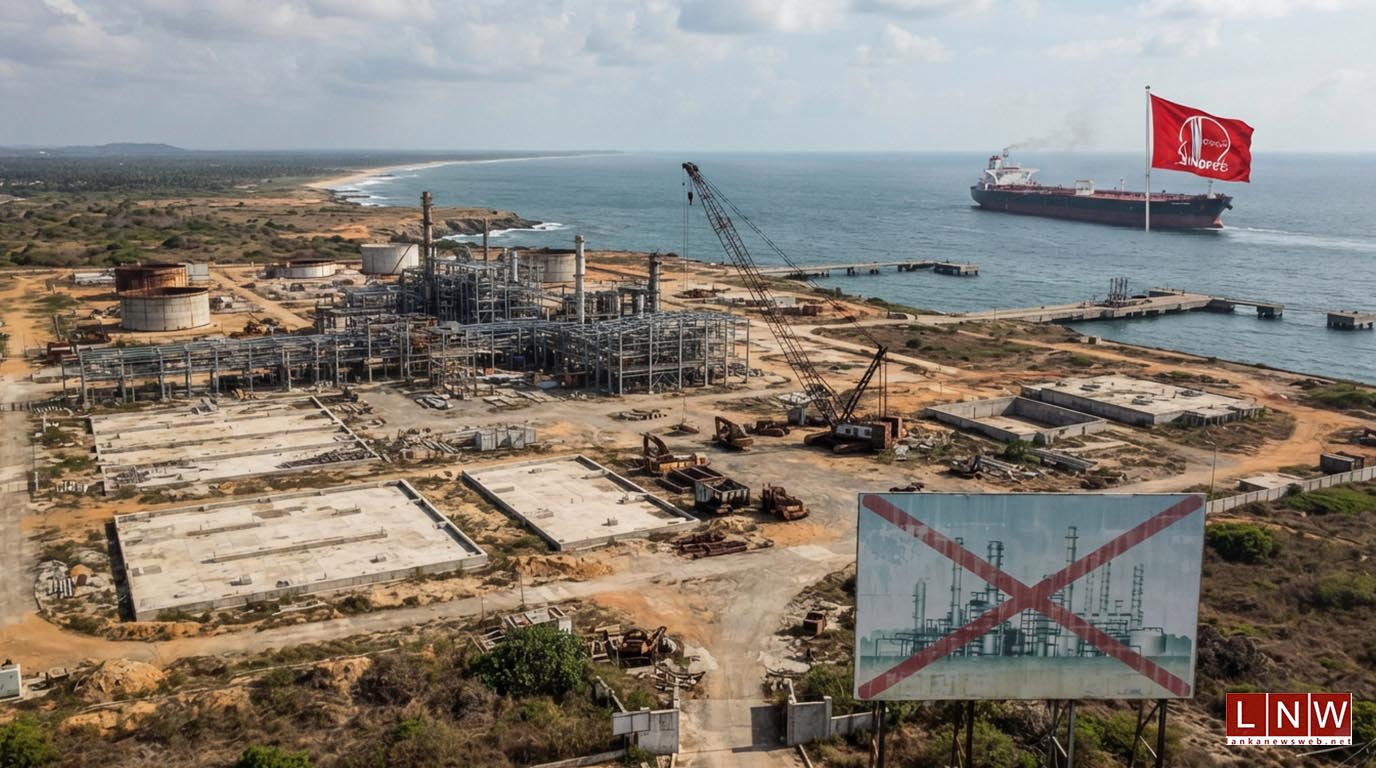
November 23, Colombo (LNW): Sri Lanka’s ambitious US$3.7 billion Hambantota oil refinery project with China’s Sinopec has stalled, exposing the challenges facing the Government’s efforts to attract major foreign investments while protecting national energy interests. The setback has also raised questions about the country’s investment negotiating strategy, commercial priorities and ability to convert large-scale infrastructure proposals into operational projects.
The proposed 200,000-barrel-per-day refinery was expected to transform Hambantota into a major petroleum and industrial centre while generating foreign exchange through fuel exports. However, disagreements over market access and tax concessions reportedly prevented the negotiations from reaching a satisfactory conclusion.
Sinopec’s withdrawal followed the Government’s refusal to provide additional market access and tax relief. The company reportedly advised the authorities to cancel the agreement after abandoning the proposal.
The Energy Ministry, however, has maintained that the project cannot officially be considered terminated without a Cabinet decision. Energy Minister Anura Karunathilaka has said that another two months would be required to reach a decision on the Hambantota refinery.
Importantly, ministry officials have indicated that Sri Lanka would not face financial penalties arising from the withdrawal because no formal Letter of Intent had been signed between the Government and Sinopec.
Nevertheless, the absence of a financial penalty does not eliminate the economic consequences of the setback. Sri Lanka has lost valuable time in pursuing a project that could have strengthened its petroleum infrastructure, attracted foreign capital and expanded export earnings.
The central challenge now confronting the Government is whether to revive the Hambantota proposal through alternative investors or reconsider the country’s broader refinery development strategy.
Energy analysts have identified three major objectives: increasing foreign exchange earnings through petroleum exports, supporting industrial development around Hambantota Port and strengthening national energy security.
One proposal involves integrating the Hambantota refinery with the China Bay Oil Tank Farm in Trincomalee and a proposed multi-product pipeline connecting southern India with Sri Lanka. Such integration could potentially establish the country as a regional petroleum storage, bunkering and refining centre.
However, achieving this ambition requires more than announcing investment proposals. It demands commercially viable agreements, reliable infrastructure, transparent negotiations and long-term energy planning.
The Government has also emphasised that national energy sovereignty, taxation and domestic market interests must not be sacrificed merely to secure foreign investment.
The critical question is whether the authorities have developed a comprehensive commercial strategy before inviting multinational investors into projects of this magnitude.
Sri Lanka’s experience with the Sinopec negotiations demonstrates that foreign investment agreements must balance investor expectations with national economic priorities.
The Government now faces an important decision: whether to continue pursuing a new Hambantota refinery or redirect resources and negotiating efforts towards strengthening existing facilities.
Unless that decision is supported by a clear timetable, transparent investment conditions and an accountable implementation framework, the US$3.7 billion refinery ambition could remain another expensive example of Sri Lanka’s inability to translate investment announcements into economic reality.