
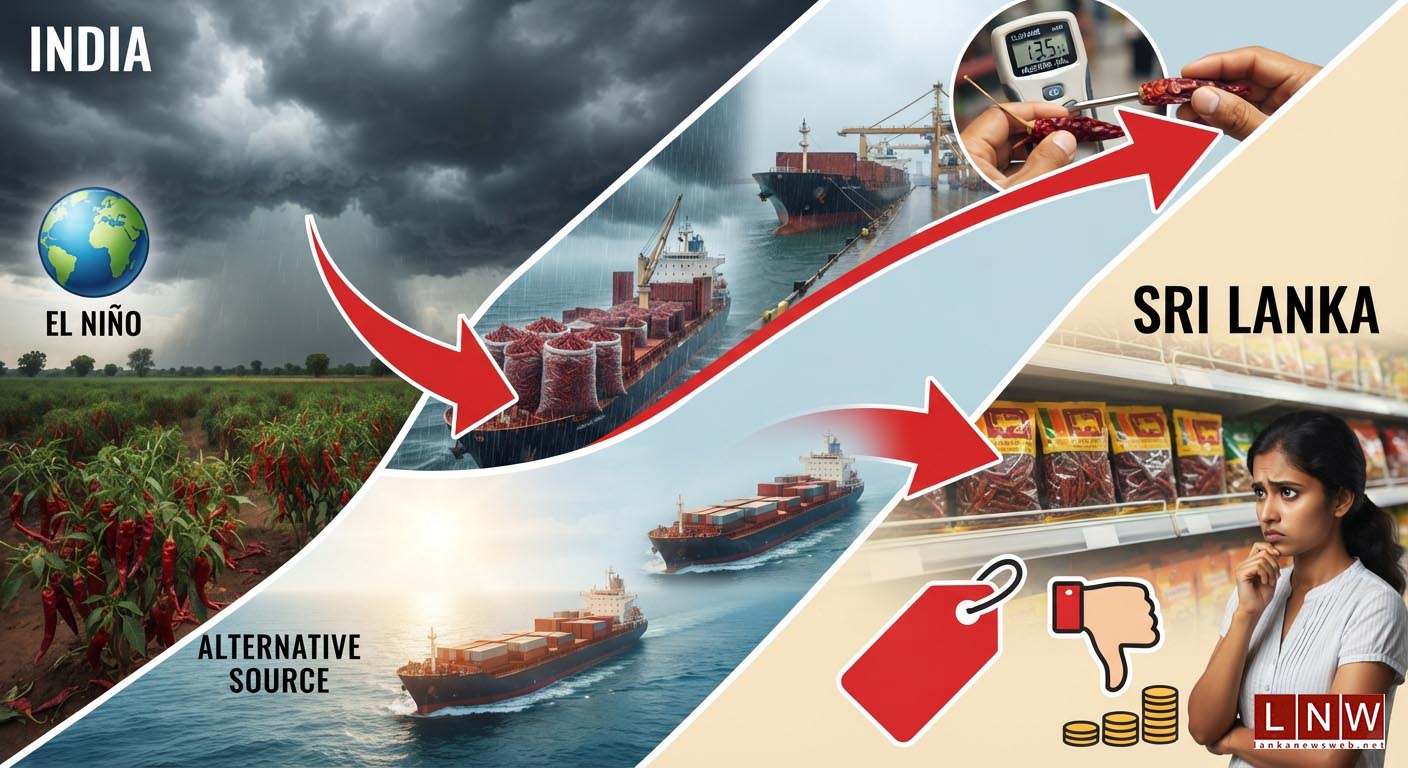
November 24, Colombo (LNW): Sri Lankan consumers could face higher prices for certain imported food products as adverse weather conditions in India, linked to the El Niño phenomenon, threaten to disrupt supplies, Trade Minister Wasantha Samarasinghe has warned.
However, importers have given assurances that they will seek alternative sources where necessary and take steps to maintain the uninterrupted availability of essential food commodities, particularly during the forthcoming festive season.
The Minister disclosed this following discussions with food importers at the Ministry of Trade, convened to assess potential supply difficulties and price pressures ahead of the holiday period.
According to Samarasinghe, traders have indicated that supplies of imported goods can be maintained without major interruptions, with dried chillies emerging as the principal exception due to difficulties encountered in clearing certain consignments.
He explained that the problem was associated with excessive moisture in dried chillies imported from India. Existing Sri Lanka Standards Institution (SLSI) requirements and food safety regulations stipulate that such imports must contain less than 12 per cent moisture to qualify for clearance.
Nevertheless, heavy rainfall and weather disturbances associated with El Niño have reportedly affected some Indian shipments, resulting in moisture levels of between 13 and 14 per cent. The consignments have consequently faced delays as they do not meet the required standards.
The Minister stressed that the situation should not be interpreted as a shortage of dried chillies in the domestic market. Rather, the immediate difficulty concerns the release of imported stocks that have failed to satisfy the prescribed quality and safety requirements.
Importers have also raised concerns that subsequent shipments could encounter similar problems if unfavourable weather conditions continue in India. In response, they have requested discussions with the authorities on introducing a temporary arrangement to address the difficulties, potentially remaining in force until March next year.
Samarasinghe said the Government was prepared to monitor developments closely to prevent supply-related concerns from being used as an opportunity for unjustified price increases.
He noted that prices should generally respond to normal market forces, with supply and demand determining movements rather than unnecessary Government intervention. However, authorities would not hesitate to act if traders attempted to take advantage of the situation at the expense of consumers.
The Minister warned that the Consumer Affairs Authority and the Consumer Services Council could be brought into action to address unfair trading practices, including the introduction of controlled prices if circumstances warranted such measures.
The Government’s immediate priority, he said, was to safeguard the availability of essential food items during the festive period while ensuring that consumers were not subjected to excessive price increases arising from external supply disruptions.