
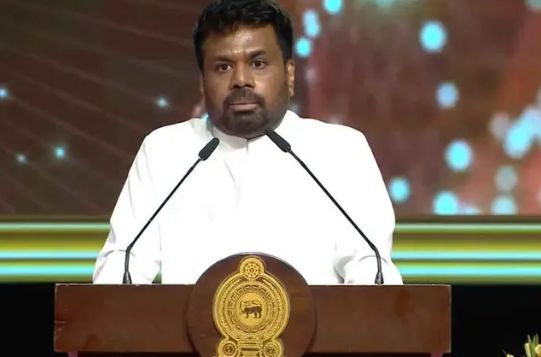
November 29, Colombo (LNW): President Anura Kumara Dissanayake has underscored the relevance of Buddhist teachings to modern governance, arguing that building a stronger economy for the people and addressing criminal activity are essential elements in achieving a stable and prosperous nation.
The President made the remarks yesterday (28) at the opening ceremony of the 60th anniversary celebrations of the World Buddhist Sangha Council, which is being held in Sri Lanka with the participation of religious leaders and delegates from across the world.
Referring to the teachings of the Buddha, Dissanayake said the conduct of those entrusted with governing a country plays a decisive role in determining its direction, stability and overall wellbeing.
He observed that principled and righteous leadership could pave the way for national progress, whereas corruption and unjust governance could undermine social order and lead a country towards disorder.
The President said such teachings were not confined to a particular era or society, but offered enduring guidance on leadership, responsibility and the management of public affairs, making Buddhism a philosophy with practical relevance to contemporary challenges.
The anniversary programme is being held at the auditorium of the Nagananda International Institute for Buddhist Studies in Kelaniya, bringing together chief prelates representing 50 countries, local and foreign devotees, and other participants.
Established in Sri Lanka in 1966, the World Buddhist Sangha Council has sought to promote peace and strengthen cooperation within the global Buddhist community.
The Nagananda Study Institute was also formally inaugurated as part of the anniversary proceedings, with the ceremony held under the patronage of President Dissanayake.
The gathering was attended by members of the Maha Sangha, including Mahanayake and Anunayake Theros representing the three Nikayas.
Further religious observances and organisational activities are scheduled to continue in Sri Lanka until December 2. These include the Second Executive Committee Meeting of the 11th General Conference of the World Buddhist Sangha Council, alongside a series of programmes marking the council’s six decades of existence.