“To know your future, you must know your past. – George Santayana”
June 1st evokes the scar of the Burning of Jaffna Public Library in 1981, the irreplaceable asset of Tamil people. This calculated arsenic destruction was one of the major cultural genocides against Tamil people masterminded by Sri Lankan state to destroy historic evidence of Tamil peoples’ rare books and manuscripts that are not available elsewhere.
BTF’S INITIATIVE WITH THE ADVANT OF SRI LANKA ACCOUNTABILITY PROJECT (SLAP)
With the advent of SLAP based on HRC 46/1 and HRC 52/1 of the UNHRC Resolutions achieved by the BTF’s relentless efforts in UNHRC Geneva, the Evidence Collection for SLAP is not limited to the last phase of the war, but is extended even up to the year 1948, when Sri Lanka became independent. This implies that the collection of evidence on “Burning of the Jaffna Public Library” plays an important element among much other crucial evidence. BTF has already submitted documentation with credible evidence in this regard.
BACKGROUND
The Jaffna Public Library was the pride of invaluable asset of Tamil people, not only for those who lived in Jaffna peninsula, but also for academics and research-scholars from all around the world. With a modest beginning in 1933, it grew to become a repository of significant Tamil palm leaf manuscripts, original copies of regionally important historic documents in the contested political history of Sri Lanka and newspapers that were published hundreds of years ago in the Jaffna peninsula. It thus became a place of historic and symbolic importance to the Tamil people.
On 01 June 1981, Jaffna Public Library was reduced to ash by the premeditated willful and malicious act of then Sri Lankan government with the presence of two cabinet ministers Gamini Dissanayake and Cyril Matthew were stationed in Jaffna to oversee the election process and campaign. They abetted the police forces and thugs especially brought from south and housed in Duraiappa Stadium under the guise of election duty of the District Council election on June 04th. Duraiappa Stadium is situated right across a road of Jaffna Public Library is and was adjacent to the location of Jaffna Police Station; all were in the same bordering vicinity separated by a road; at that time.
At around 10pm on 01 June 1981, Jaffna’s then Municipal Commissioner Mr. C V K Sivagnanam received a call from Mrs Yogendra Duraisamy, the wife of then Government Agent of Jaffna District and their house was within the vicinity of the library, telling him that there were smoke and fire coming around the library and asked him to check up. When he contacted his staff over the phone, and they told him that the library has been set on fire.
Please find former Municipal Commissioner Mr C V K Sivagnanam’s testimony as video statement (https://youtu.be/jzQ_6Wt0wew)
For Tamils, the devastated library became a symbol of cultural genocide. The attack was seen as an assault on their aspirations, the value of learning and traditions of academic achievement.
Thereafter, a committee was appointed by the President J R Jayawardena, and one-man committee was headed by Kingly Wickramasooriya, who was the DIG, came to Jaffna and collected evidence from several high-ranking officials and witnesses in Jaffna, including then Jaffna Municipal Commissioner Mr. C V K Sivagnanam, who was threatened to be shot by the police by a road barricade, when Mr. Sivagnanam was rushing in his car after receiving a phone call about Jaffna Library was on fire. Mr. Sivagnanam had seen the burning library and the policemen in the library area from the location where he was stopped by the police.
Despite of appointing a committee by the government at that time and up to now no action have been taken by any successive Sri Lankan government came to power thereafter, to grant justice to the heinous crime committed by the perpetrators by burning the cultural treasure of Tamil people.
This shows the clear evidence of Tamil genocidal intent of the Sri Lankan state’s policy that it hitherto continues.
TAMIL PEOPLE RIGORUSLY ENDEAVOURED TO RETAIN THE RUINED LIBRARY AS A MEMORIAL OF STRUCTURAL GENOCIDE OF TAMIL PEOPLES’ INVALUABLE INHERITANCE AND TO BUILD ANOTHER IDENTICAL ONE NEARBY
Nonetheless, their endeavor was shattered when subsequent Sri Lankan governments tacitly planned and refurbished the ruined Jaffna Library building with the motive of eradicating all evidence of their genocidal act. Despite the fascia of the library is restored, the acrimony of destroying irrecoverable invaluable manuscripts, original copies of historic documents and newspapers will continue to traumatise Tamil people as long as they live.
Tamil peoples’ will to retain and preserve the charred building as a living memory of structural genocide; a part of the atrocity crimes being continuously inflicted on them, has also been deliberately denied.
During one of the truce negotiations between Chandrika Kumaratunga’s government and the LTTE in 1994 – 95, the government of Sri Lanka purposely brought the issue of the Jaffna Public Library and a compromise was reached between the negotiating parties for a new library to be built next to the old one. Subsequently, an architectural design for the new library was submitted by the LTTE representatives to the government negotiators.
Nevertheless, contrary to such a negotiated compromise to retain the burnt library building, President Chandrika Kumaratunga, after militarily occupying the Jaffna district in 1996, undertook to repair & refurbish the old library building, deliberately to erase the scars of the burnt library.
This has been the hallmark of the Sri Lankan state’s structural genocide with the notion of eliminating Tamil people and their historical invaluable records form Sri Lanka’s history. Its enduring psychological scar will continue to traumatise Tamil people as long as they live.
SET FORWARD
· Establishing justice for the loss and suffering that we, Tamil People, hitherto incurred is depending on the outcome of the SLAP report and forthcoming UNHRC Resolutions for taking the perpetrators to an international criminal justice mechanism.
· Founding a permanent political solution for Tamil people with the arbitration of countries like India, the USA, the EU and the UK recognizing the legitimate aspirations of Tamils to live in peace and harmony by precluding the reoccurrence of cycles of violence and genocide inflicted on Tamil people to date.
June 03, Colombo (LNW): The Article IV Consultation and second review under the Extended Fund Facility (EFF) for Sri Lanka are slated on the agenda of the International Monetary Fund’s (IMF) Executive Board meeting scheduled for June 12, Finance State Minister Shehan Semasinghe announced.
In a communication shared on ‘X’ Semasinghe stated, “The session will assess Sri Lanka’s economic policies and reform progress.”
The Article IV consultation and second review under the Extended Fund Facility (EFF) for Sri Lanka are on the IMF Board meeting agenda for June 12. The session will evaluate Sri Lanka's economic policies and reform progress. We look forward for continued support of all countries…
He further expressed Sri Lanka’s anticipation for continued support from all nations to facilitate a successful review, aiming to unlock the third tranche.
This, he noted, would bolster economic stability, growth, and reform initiatives.
Julie Kozack, Director of IMF Communications, previously disclosed that IMF staff and Sri Lankan authorities had reached a staff-level agreement on economic policies, marking progress towards concluding the second review of the four-year EFF-supported program and the 2024 Article IV Consultation.
“Upon approval by IMF Management and completion by the IMF Executive Board, Sri Lanka is poised to access approximately US$337 million in financing,” Kozack added.
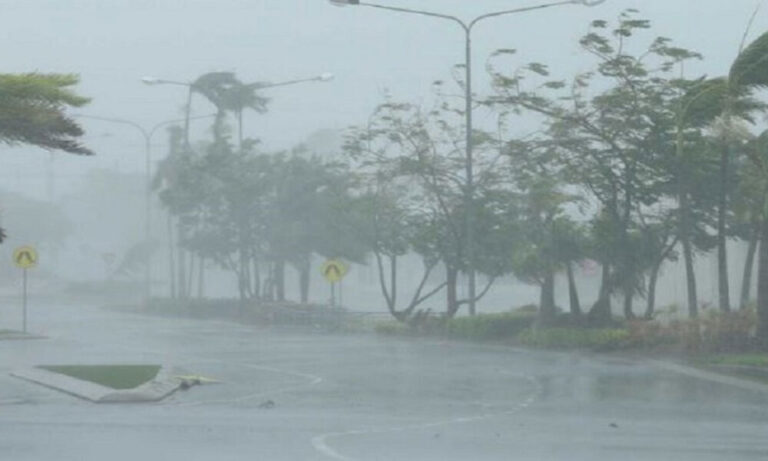
June 03, Colombo (LNW): The ongoing adverse weather conditions across the island have resulted in at least 10 fatalities, the Disaster Management Centre (DMC) has confirmed.
Additionally, five individuals remain missing, while 20 others have sustained injuries due to various incidents prompted by the inclement weather.
Reports indicate that residents from 177 Divisional Secretariat divisions across 20 districts have been affected by the adverse weather, with a total of 36,504 individuals, representing 9,764 families, impacted.
Of these, 5,174 people have sought refuge in 38 designated safe shelters.
Moreover, there have been 28 instances of complete property damage and 4,119 cases of partial damage to houses reported.
The most substantial rainfall recorded within the past 24 hours, ending at 6:00 p.m., measured 377 mm in the Pallewela area of the Rathnapura district.
The Department of Meteorology has forecasted that many regions in the country may experience rainfall exceeding 150 mm today.
Meanwhile, the Irrigation Department has issued a statement indicating that the flood situation in several low-lying areas of the Nilwala River basin may persist, as outlined in an earlier announcement today (03).
Although floodwaters are receding in Pasgoda, Kotapola, Pitabeddara, and Akurassa, areas linked to the Nilwala River basin, flooding may persist until the end of the day in Athuraliya, Malimbada, Kamburupitiya, Thihagoda, Devinuwara, and Matara Divisional Secretariat Divisions.
As the water level continues to rise downstream, there is a possibility of slight overflow from the BR5 embankment, commonly known as ‘Galbund’, within approximately two hours.
However, the Irrigation Department assures that the overflow does not pose significant flood risks as the areas protected by the Nilwala flood protection dykes currently do not contain substantial water levels.
June 03, Colombo (LNW):The prevailing showery conditions are expected to continue in the south-western part of the island today. the Department of Meteorology said in its daily weather forecast today (03).
Showers or thundershowers will occur at times in Western, Sabaragamuwa, Central, Southern and North-western provinces.
Heavy showers about 100mm are likely at some places in Western and Sabaragamuwa provinces and in Galle and Matara districts.
Showers or thundershowers may occur at several places elsewhere of the island in the evening or night.
General public is kindly requested to take adequate precautions to minimise damages caused by temporary localised strong winds and lightning during thundershowers.
Marine Weather:
Condition of Rain:
Showers or thundershowers will occur at times in the sea areas off coast extending from Puttalam to Pottuvil via Colombo, Galle and Matara. Showers or thundershowers may occur at a few places in the other sea areas around the island.
Winds:
Winds will be south-westerly and wind speed will be (30-40) kmph. Wind speed may increase up to (55-65) kmph at times in the sea areas off the coasts extending from Kankasanthurai to Puttalam via Mannar and from Hambanthota to Pottuvil, and wind speed may increase up to 50 kmph at times in the sea areas off the coasts extending from in the sea areas off the coasts extending from Galle to Hambanthota via Matara.
State of Sea:
The sea areas off the coasts extending from Kankasanthurai to Puttalam via Mannar, and from Hambanthota to Pottuvil can be very rough at times. The sea areas off the coasts extending from Galle to Hambanthota via Matara can be rough at times. Waves heights may increase (about 2.0–3.0 m) in the sea areas off the coast extending from Kalpitiya to Pottuvil via Colombo, Galle, and Hambantota (this is not for land area). Naval and fishing communities are also requested to be attentive in this regard.Temporarily strong gusty winds and very rough seas can be expected during thundershowers.
June 03, Colombo (LNW): Rupert Murdoch has married for the fifth time at the age of 93.
The media mogul tied the knot with Elena Zhukova, a 67-year-old retired molecular biologist, at a wedding at Moraga, his vineyard and estate in California.
Ms Zhukova, from Moscow, wore a white dress while Mr Murdoch wore a dark suit and patterned yellow tie.
The couple met at a family gathering last year.
The former 21st Century Fox and News Corp chairman called off an engagement to former San Francisco police chaplain Ann Lesley Smith last year.
Mr Murdoch divorced his fourth wife Jerry Hall in August 2022.
He was previously married to entrepreneur Wendi Deng, whom he divorced in 2014 after 14 years of marriage. They have two daughters together.
Mr Murdoch split from his second wife Anna Murdoch Mann, a Scottish journalist with whom he had three children, in 1999.
He also had a daughter with his first wife Patricia Booker, who was a former flight attendant. They divorced in 1966.
June 02, Colombo (LNW): As we celebrate PRIDE month commencing from June, in remembrance of the revolutionary Stonewall Riots in the United States in the 60s that opened eyes wide to many people of the rights of people of diverse sexual orientations, gender identities, gender expressions and sex characteristics (SOGIESC), let us take a moment to pay tribute to ‘Nachchi’, a gender identity perceived to be the sole indigenous non-heteronormative queer identity found in Sri Lanka.
In the vibrant tapestry of Sri Lanka’s diverse cultural landscape, queer identities are often being overlooked, due to various reasons. These reasons could either be politically motived or otherwise, developing a cloaking effect over their existence and plunging them into the non-recognition we, as a society, experience today.
Nestled within the LGBTQIA+ community of Sri Lanka is a unique and indigenous gender identity known as the ‘Nachchi’ community. Originated from the hindu term ‘nautch‘ which roughly deciphered as ‘the dancer’, Nachchi is believed to be a community resided in Sri Lanka in the late 19th century, for the delivery of classic dancing performances for cultural events.
The Nachchi community, according to some activists, first resided in Bilinwatta, Kotahena area, and later spread island-wide. Their contributions to the cultural events of Sri Lanka are still recognised, however minimal, in areas such as Moratuwa, Murawatta, Hettiyawatta, Dehiwala, Kadirana, Negombo, and Kandana.
Some activists argue that the Nachchi identity, scientifically analysed, is a congruity which stands in between an effeminate gay man and a transgender woman, whilst others speak for their uniqueness breaking the ‘binary norm’ of being a man or a woman to be recognised as a ‘third gender,’ similar to that of Hijra people living in India.
However, there is no substantial evidence to suggest that being Nachchi is an exemplification for being homosexual.
Gender transformation has historically been prevalent within ancient Asian culture, where a blurred line between biological sex (or assigned sex at birth) and cultural gender identities often persists. In Sri Lanka, individuals identifying as Nachchi have deep-rooted connections with a Hindu goddess of fertility, with folklore suggesting that they willingly forego their own fertility to bestow blessings upon others.
However, any evidence suggesting a direct link between the identity of Hijra, who attain a semi-sacred status allowing them to bestow blessings upon newlyweds and newborns, and Nachchi remains elusive.
Notwithstanding the division of opinions within the queer community about their origin, the Nachchi community is unanimously agreed upon as a testament to the resilience and diversity of gender expressions in the Sri Lankan society.
The Nachchi community is revered for its distinct identity, encompassing individuals who identify outside the conventional ‘gender binary’. Whilst the concept of gender diversity has long been embedded in Sri Lankan culture, the Nachchi community emerges as a manifestation of this ancient tradition.
The Nachchi community, according to activists, had happened to have traditions of their own, one in which a Nachchi person is welcomed to their community via the holding of a ceremony called the ‘Dehi Mangalyaya‘. The Dehi Mangalyaya ceremony is perceived to be a tradition similar to how the Sri Lankan society holds ceremonies when a girl has her first period of menstruation, commonly known as ‘Big Girl’ parties.
Apart from serving as a cultural link to the Sri Lankan society, Nachchi people are known for their contributions to wedding ceremonies as dancers, hair and make-up dressers and cooks, perahera as dancers, funeral events as cooks, and Sinhala and Tamil New Year celebration as cooks and traditional drum (Rabana) players. Nachchis play a pivotal role in Sri Lankan ‘Jogi‘ and ‘Baila‘ dancing mostly evident in public events.
The relationship between Nachchi and dancing is quite unique, that according to activists they had happened to have their own dancing style called ‘Item Paha‘ (The Five Items). These items include the playing of the roles of five types of women in society in events welcoming the community. They are:
‘Westen Gaani’ (a western woman),
‘Manamaali‘ (a Sri Lankan bride),
‘Wedakaara Gaani‘ (a woman servant),
‘Thenmangu‘ (a Tamil woman), and
‘Thasi‘, or ‘Nalangana‘ (woman dancer for pleasure).
Nevertheless, the Nachchi community is also recognised within the sex-worker community, due to which they are often being labelled as sex workers, subject to discrimination, harassment, and persecution by queerphobic individuals, but quite notably, by the law enforcement officers.
Due to the widespread scientific discoveries of non-binary gender identities, young people of diverse gender identities and expressions in Sri Lanka today hardly recognise themselves as Nachchi. With scientific classifications categorising the Nachchi identity under the transgender umbrella for academic purposes, the Nachchi community continues to remain cloaked, only to be recognised by the activists and long-standing associates and allies of this colourful community.
In Sri Lankan cinema, it is believed that people of Nachchi identities contributed to short dancing and comedic roles, serving as extras in the face of camera. Movies such as ‘Cherio Captain,’ ‘Vala In London,’ and ‘Paaradise‘ are believed to have featured actual Nachchi people.
At the heart of Nachchi identity lies a profound sense of belonging and authenticity. Members of this community navigate their gender journey with courage and conviction, embracing their true selves in a society often bound by rigid gender norms.
Through their lived experiences, they challenge prevailing stereotypes and pave the way for greater acceptance and understanding.
Despite their cultural significance, the Nachchi community continues to face challenges and discrimination in their everyday lives. Stigmatisation and marginalisation remain persistent barriers, hindering their access to fundamental rights and opportunities.
In recent years, there has been a growing recognition of the Nachchi community’s rights and visibility within Sri Lankan society. Advocacy efforts and grassroots initiatives have sought to amplify their voices and address systemic injustices.
Through education and advocacy, strides are being made towards fostering a more inclusive and equitable society for all.
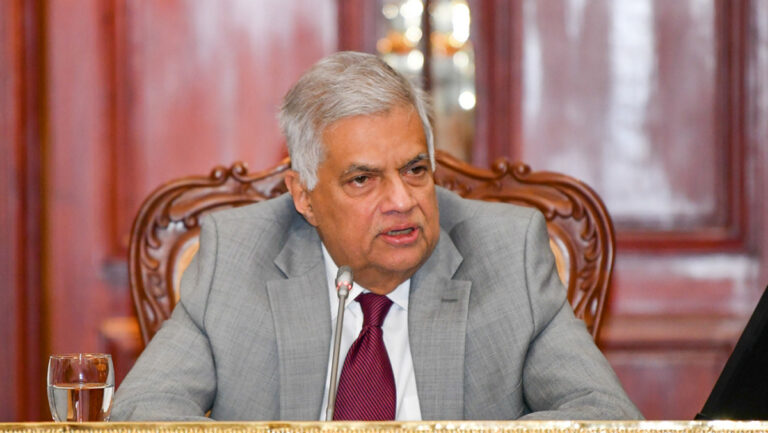
President Ranil Wickremesinghe emphasises the constitutional priority of Buddhism: stresses the responsibility of the executive, legislature, and judiciary to uphold Buddhist principles, highlighting any opposition as a constitutional breach: shares progress on a critically ill patient’s recovery and thanked the Maha Sangha for support.
The SLFP faction led by Nimal Siripala De Silva convenes a special central committee meeting today: State Minister Lasantha Alagiyawanna says all central committee members and all electoral organisers have been informed to take participation in the event: adds the new alliance led by the SLFP will convene its first public rally on June 08, and matters related to the rally will be discussed in today’s meeting: However, ex President Maithripala Sirisena, whose chairmanship of the party is temporarily suspended by court order says today’s central committee meeting is ‘unlawful’: asserts such meetings cannot be convened by a minority within the party.
Former JVP MP and member of the NPP’s Economic Council Sunil Hadunnetti clarifies his recent remarks regarding billionaire businessman Elon Musk, stating that he did not intend to categorise Musk as an ‘economic hit-man’: expresses regret for any misunderstanding, highlighting that his comments on economic hit-men were aimed at individuals associated with the previous Ranil Wickremesinghe regime, namely James Packer and George Soros: emphasises Sri Lanka’s challenges, including instability, political interference, and lawlessness, which deter renowned investors: apologises to Musk, asserting that his remarks were misquoted and not directed towards Musk.
Defence State Minister Premitha Bandara Tennakoon pays tribute to war heroes and their families at a Sri Lanka Army event in Diyatalawa: Help desks were set up to assist retired personnel and war hero families, addressing grievances and providing support: Plans for healthcare, preferential services, land allocation, job quotas, and a subsidised loan scheme were discussed, aiming to prioritise the welfare of veterans and their families.
The Secretary to the Ministry of Power and Energy says the power supply has been disconnected to several areas as a precautionary measure due to the prevailing adverse weather conditions and floods: Several areas in the Galle, Kalutara, Ratnapura, Colombo and Kegalle districts will experience the power outage.
The Meteorology Department issues a stern warning regarding continued showers and thundershowers in the southwestern part of the island, affecting Western, Sabaragamuwa, Central, and Southern provinces: Very heavy showers exceeding 150 mm are anticipated in Western and Sabaragamuwa provinces, as well as in Galle and Matara districts: urges the public to take necessary precautions to minimise damages caused by temporary localised strong winds and lightning during thundershowers: All schools will be temporarily be closed from tomorrow.
Hoteliers, tourism authorities, and law enforcement are dismayed by NATA’s decision to ban ‘Happy Hour’ promotions, citing it as harmful to tourism and consumers: NATA instructed hotels to stop offering alcohol discounts, threatening fines for non-compliance under the NATA Act No. 27 of 2006: While NATA defends its stance, industry leaders criticise it as damaging to business and tourism recovery: SLTDA Chairman Priyantha Fernando vows to escalate the issue, while Commissioner General of Excise M. J. Gunasiri suggests a review at the next NATA Board Meeting: NATA Chairman Dr. Alan Ludowyke, unavailable for comment.
LMD’s latest edition reports a modest uptick in Sri Lanka’s business confidence for the third consecutive month, with the LMD-PEPPERCUBE Business Confidence Index reaching 99 points in May: Despite the improvement, it remains below the all-time average but slightly above last year’s level: PepperCube Consultants attribute this optimism to cautious economic outlooks, signalling a preference for maintaining sales volumes: However, challenges persist, including the cost of doing business and tax and interest rates: The global economy, as per the IMF, faces uncertainties despite steady growth and inflation deceleration: Locally, pending agreements on debt restructuring add to economic turbulence, with hopes pinned on the completion of negotiations by mid-year, aiming to reduce borrowings to 95% of GDP by 2032.
The Department of Irrigation reports alarming floods hit Millakanda and Pitabeddara areas: Heavy rainfall, up to 149.8 mm, inundates Millakanda region along Kalu River: Overflowing riverbanks cause widespread damage to infrastructure, including major roads: Communities face disruptions to daily life as authorities mobilise resources for relief efforts.
Sri Lanka’s top women’s golfer Kaya Daluwatte clinches victory at the 10th Nepal Amateur Golf Championship held at Gokarna Golf Club in Kathmandu: finishes four under-par with five birdies and one eagle, securing the title in stunning fashion: Daluwatte’s impressive performance, including a final round of 68, propelled her to victory, with India’s Dia Cris Kumar trailing in second place: The championship featured 65 players from Nepal, India, Sri Lanka, Bangladesh, and Bhutan, supported by various organisations including the National Sports Council and Nepal Tourism Board.
June 02, Colombo (LNW): Hoteliers, tourism authorities, and law enforcement expressed dismay at the National Authority on Alcohol and Tobacco’s (NATA) decision to eliminate ‘Happy Hour’ promotions, deeming it detrimental to the already struggling tourism sector and consumers.
In a circulated letter, NATA instructed hotels to cease offering discounts on alcohol, citing violation of the NATA Act No. 27 of 2006.
The directive, signed by Chairman Dr. Alan Ludowyke, warned of fines and legal repercussions for non-compliance.
The NATA said in its letter that this practice constitutes a clear violation of Section 37(2) of the NATA Act No. 27 of 2006 and that violation of such nature can be liable to a fine of Rs. 50,000, and each director of the offending establishment will be deemed guilty of the offence.
While NATA defends its decision as enforcing the law, industry leaders criticise it as detrimental to business and tourism recovery efforts.
Sri Lanka Tourism Development Authority (SLTDA) Chairman Priyantha Fernando labelled it ‘absurd’ and vowed to escalate the matter to higher authorities.
Commissioner General of Excise M. J. Gunasiri acknowledges concerns, suggesting a review at the next NATA Board Meeting regarding the practicality of abrupt enforcement.
Despite attempts, NATA Chairman Dr. Alan Ludowyke remained unavailable for comment.
Imagine a world where one man’s vision reshapes the future. President Xi Jinping, with his unwavering resolve, has tightened his grip on China, ushering in sweeping reforms and a new era of assertive diplomacy. His actions ripple through global markets, shifting economies and narratives alike. Under his leadership, China has become a force that commands attention, from the bustling streets of New York to the crowded markets of Mumbai.
Xi’s strategy is as meticulous as it is bold. He has purged opposition within his ranks, securing a loyal cadre committed to his vision of Chinese supremacy on the world stage. His deft handling of relationships with giants like the US, India, Japan, and Russia has redefined traditional alliances and rivalries. For those watching, there’s a palpable sense of urgency – a recognition that we are witnessing the dawn of a new global order where China’s influence is inescapable and undeniable.
Meanwhile, the stage is set in India for a political showdown as the Lok Sabha Elections close. Prime Minister Narendra Modi is poised to secure a third consecutive term with his charisma (for his critics – an engineered charisma) and steadfast leadership. Despite murmurs of an upset from the Opposition Indian National Developmental Inclusive Alliance (INDIA), Modi’s decade-long tenure has undeniably transformed India into a formidable force on the global stage despite growing dissent, frustrations, and inequality in the constituency.
Under his watch, India’s economy has flourished and its population of 1.5 billion stands as its greatest asset, driving innovation and growth. As the election results loom, the world watches closely, recognising that India’s trajectory under Modi’s continued leadership could redefine the balance of power in Asia and beyond.
China and India hold the key to unlocking the full potential of Asia, bearing the hopes and aspirations of 4.5 billion people in the region. This is undeniably Asia’s century, a period marked by rapid growth, technological innovation, and unprecedented influence on the global stage. As China leverages its economic clout and India capitalises on its vast human resources, both nations are poised to lead Asia into a new era of prosperity and power. The world can no longer deny these two giants’ pivotal role in shaping Asia’s future and the world.
Anti-Modi narratives
Focusing on the Indian elections, many predicted an easy victory for Modi, yet doubt crept in during the campaign trail with various narratives at play. A section of Western media and their proxies crafted stories forecasting Modi’s downfall, challenging his bid for a third consecutive term.
Historically, Western media narratives have often been critical of Asia’s rise and this election cycle was no different. For decades, one of Asia’s finest, Lee Kuan Yew, showcased the hypocrisy of Western media with one-sided narratives and it was the turn of the Bharatiya Janata Party (BJP) to turn the heat on the Western press this time.
Hundreds of op-eds and articles from around the globe were critical of Premier Narendra Modi, and the BJP mushroomed during the campaign trail. Some projected Modi as a face and Home Minister Amit Shah as everything else. It would have been a tremendous and balanced story if they had also mentioned the Bush-Cheney and Blair-Mandelson combinations without projecting only in Asia, as these things occur. Politics is universal; no one has a monopoly on the power play.
However, dissent is reasonable as it allows you to recreate your narrative compellingly, if necessary; otherwise some of it can be ignored. Premier Modi and the Opposition leaders, such as Rahul and Priyanka Gandhi and Arvind Kejriwal, all faced cyberbullying and hate from millions of social media critics.
Dhruv Rathee, a young Indian YouTuber with 20.8 million subscribers, was adored by the anti-Modi section and hated by the Modi lovers. On average, his videos had 15 million views; some reaching 25 million views based on controversial subjects. Some of my colleagues who held independent or anti-Modi sentiments wanted to end Modi rule. Some were fearless and some were fearful. Young Rathee has shown the price of being daring, taking on a “tyrant,” as he narrated. Some enjoy money, some want fame, and some want power. Some want all three.
In our digital age, anti-Modi sentiments were widely disseminated and consumed. However, the impact on India’s 960 million voters will only become apparent in a few days as the world watches to see if these narratives swayed the electorate.
Modi and BJP campaign
The Modi and BJP campaign was bolstered by a decade of tangible successes, earning credibility despite facing numerous challenges and frustrations. Modi was presented as the definitive leader, synonymous with India’s recent economic strides and global presence.
In contrast, the Opposition’s campaign lacked a singular anchor, relying instead on a collective team effort. Going up against a worldwide brand like Modi, with his track record of economic achievements, demanded a monumental and unified Opposition strategy. As election results loom, the question remains whether this collective effort was enough to challenge the incumbency and sway the electorate.
Modi projected himself as a divine gift to rejuvenate India and secure its rightful place on the global stage. This ‘messiah’ narrative is a familiar trope in political communications, evoking a sense of destiny and inevitability.
The Opposition needed another charismatic leader or a robust alternative policy, action plan, and narrative to counter such an influential figure. However, Rahul and Priyanka Gandhi, the latest torchbearers of the Nehru-Gandhi dynasty, were criticised for their lack of imagination and coherence in their campaign. As a result, their efforts struggled to gain traction against Modi’s well-crafted persona and proven track record.
It is seldom that a leader can blow his own trumpet. You need your allies to project how great you are. However, Modi said he was a godsend and gifted and his team said he was a godsend and gifted. It was missing in the Rahul and Priyanka duo. INDIA leaders like Kumar, Banerjee, Kejriwal, Yadav, Stalin, and Pawar seldom backed an anchor in cohesion. It’s understandable; all the above political brands are too big to sing hosanna for someone else. The fragile egos, personal interests, and political empires do not allow you to be united. Even in sports, all-star teams end up faring poorly.
Modi, the saviour
Modi’s projection of himself as India’s saviour draws parallels to historical figures like Ashoka, Napoleon, and Alexander the Great, who also cast themselves as divinely-ordained leaders. After his transformative embrace of Buddhism, Ashoka positioned himself as a benevolent ruler destined to bring peace and prosperity to South Asia. Similarly, Napoleon portrayed himself as bringing order and reform to post-revolutionary France. At the same time, Alexander the Great saw himself as a destined conqueror, spreading Greek culture across the known world.
In the book ‘Discovery of India’ (written in 1946), the great Jawaharlal Nehru (first Prime Minister of India from 1947 to 1964) writes: “Often, as I wandered from meeting to meeting, I spoke to my audience of this India of ours, of Hindustan and of Bharata, the old Sanskrit name derived from the mythical founder of the race. I seldom did so in the cities, for their audiences were more sophisticated and wanted strong fare. But to the peasant, with his limited outlook, I spoke of this great country for whose freedom we were struggling, of how each part differed from the other and yet was India, of common problems of the peasants from north to south and east to west, of the swaraj that only could be for all and every part and not for some.
“I told them about journeying from the Khyber Pass in the far northwest to Kanyakumari or Cape Comorin in the distant south and how everywhere the peasants put me identical questions, for their troubles were the same – poverty, debt, vested interests, landlords, moneylenders, heavy rents and taxes, police harassment, and all these wrapped up in the structure that the foreign government had imposed upon us – and relief must also come for all.
“I tried to make them think of India as a whole and even to some little extent of this wide world of which we were a part. I brought in the struggle in China, Spain, Abyssinia, Central Europe, Egypt, and the countries of Western Asia. I told them of the wonderful changes in the Soviet Union and the great progress made in America. The task was not easy, yet it was not so difficult as I had imagined, for our ancient epics, myths, and legends, which they knew so well, had made them familiar with the conception of their country. Some there were always who had travelled far and wide to the great places of pilgrimage, situated at the four corners of India.”
I quote him again: “Sometimes I reached a gathering, a great roar of welcome would greet me. ‘Bharat Mata Ki Jai’ – ‘Victory to Mother India’. I would ask them unexpectedly what they meant by that cry: who was this ‘Bharat Mata,’ Mother India, whose victory they wanted? My question would amuse them and surprise them, and then, not knowing exactly what to answer, they would look at each other and me. I persisted in my questioning. At last, a vigorous Jat, wedded to the soil from immemorial generations, would say it was the ‘dharti,’ the good earth of India, that they meant. What earth? Their particular village patch, or all the patches in the district or province, or in the whole of India? And so question and answer went on till they would ask me impatiently to tell them all about it.
“I would endeavour to do so and explain that India was all this that they had thought, but it was much more. The mountains and the rivers of India, and the forests and the broad fields, which gave us food, were all dear to us, but what counted ultimately were the people of India, people like them and me, who were speared out all over this vast land. ‘Bharat Mata,’ Mother India, was essentially these millions of people, and victory to her meant victory to these people. You are parts of this ‘Bharat Mata,’ I told them, you are in a manner to yourselves ‘Bharat Mata,’ and as this idea slowly soaked into their brains, their eyes would light up as if they had made an extraordinary discovery.”
Rahul and Priyanka, the great-grandchildren of the great Jawaharlal Nehru, were leading the anti-Modi campaign. The above paragraph could have been their campaign narrative, but it was Modi’s campaign line for the last 10 years – and for the next five years, if he succeeds in securing a third successive term on 4 June.
Religio-political wars
‘Bharat Mata’ was the underlying campaign theme for Modi 3.0, which took Nehru’s ‘Bharat Mata’ concept to a different level. Nehru was widely regarded for his stand for secular India but there are severe questions and critics of Modi’s path for India – weaponising Hinduism for political power. In India, approximately 80% of the population by religion are Hindus and 14% are believers of Islam as per the 2011 census. As per census reports, a 1951 to 2011 comparison shows a 5% reduction of Hindus and in the same period a 45% growth of believers of Islam.
The religious political wars have become the norm again; even the rise of Muslim political leadership in the United Kingdom has been the talk of the town recently, with Sadiq Khan holding onto the Mayorship of London since 2016. In Indonesia, vote bank politics are shaping up, with Islam as a shield; in Russia, the orthodox church plays a role in politics; and in the US, Christian nationalism is on the rise.
Unfortunately, over centuries, humankind has been divided by religion. Instead, can religion unite people? Can a rejuvenated Bharat show the way for tolerance, diversity, and harmony to the world?
In the last 30 years, India rebranded its main cities from colonial names to national names. Today, Bombay is Mumbai, Calcutta is Kolkata, Madras is Chennai, Bangalore is Bengaluru, Poona is Pune, and Banaras is Varanasi. If Modi succeeds in securing his third successive term on 4 June, will we see Bharat instead of India? Bharat will be Modi’s Ashoka moment. If that occurs, this will be one of the most significant brand changes in humanity’s history.
Xi and the ‘Chinese dream’
Like Modi, Xi crafted a narrative positioning himself as the chosen one, uniquely destined to lead China into a new era of greatness. Xi didn’t rely solely on revolutionary or economic credentials like Mao Zedong or Deng Xiaoping. Instead, he blended these legacies, portraying himself as the leader who could fulfil China’s historic rejuvenation mission.
Just as Ashoka, Napoleon, and Alexander the Great used the mantle of destiny to consolidate their power, Xi presented himself as the harbinger of a ‘Chinese dream’ – a vision of national renewal and global prominence. Through sweeping reforms, an assertive foreign policy, and strategic purges within his party, Xi solidified his position, projecting an image of stability and certainty.
These modern leaders harnessed historical narratives of messianic leadership in China and India, crafting personas destined to elevate their nations. Modi and Xi’s stories underscore a timeless political truth: when a leader casts themselves as a divinely favoured saviour, it becomes a formidable task for any opposition to mount a practical challenge without an equally compelling vision or figurehead. As a result, their nations stand at the forefront of Asia’s rise, shaping the region’s destiny in profound and lasting ways.
Enter Arvind Kejriwal
In China, the one-party rule under Xi ensures a controlled political landscape. However, in India’s vibrant democracy, winning a third successive term is an uphill battle for any leader. Modi’s stature and the BJP’s well-oiled political machinery present formidable challenges. Yet, amidst this daunting scenario, INDIA began to find momentum in the middle of the campaign.
Emerging against all odds, this coalition started to resonate with voters, presenting a united front capable of challenging Modi’s dominance. Its late surge introduced an element of unpredictability, with many fearing an upset. The alliance’s ability to galvanise support and craft a compelling narrative in the final stages underscored the dynamic and resilient nature of Indian democracy, where even the most entrenched leaders can face significant challenges.
Not many would agree with me, but the Arvind Kejriwal fiasco and his subsequent jail term significantly disrupted INDIA’s momentum. Suddenly, amid a carefully orchestrated campaign, the focus shifted entirely to Kejriwal. This unplanned and unwarranted incident highlights how fragile political campaigns can be.
In the high-stakes arena of political campaigning, unexpected events can swiftly derail even the most well-planned strategies. INDIA, which had begun to find its footing and generate genuine enthusiasm, was blindsided by the controversy surrounding Kejriwal. Instead of pushing forward with its collective message, it was forced into a defensive position, grappling with damage control and standing for Kejriwal.
Power struggle on the cards
If Kejriwal survives his legal battles and Modi secures another victory, the political arena is set for a dramatic power struggle. Kejriwal, driven by boundless ambition and armed with a reputation for grassroots activism, could challenge the leadership of Rahul and Priyanka Gandhi within the Opposition. His relentless focus on anti-corruption (but he is booked for corruption now) and governance reforms resonates strongly with urban middle-class and disenfranchised voters, positioning him as a compelling alternative to Modi.
This rise would inevitably clash with the Gandhis, who have long been the faces of the Congress Party and national politics. As Kejriwal’s influence grows, a fierce battle for dominance within the Opposition is likely to unfold, with his soaring ambitions threatening to overshadow the traditional leadership of the Gandhis. This internal struggle could redefine the dynamics of Indian politics, with both sides vying for the mantle of a chief challenger to Modi’s BJP.
‘Messiah’ narrative
The ‘messiah’ narrative is not confined to Asia. Donald Trump’s rise to the presidency in 2017 was a masterclass in creating a narrative more significant than life itself. With his ‘Make America Great Again’ slogan, he cast himself as the saviour of a nation that, in his telling, had lost its way. This powerful, emotionally-charged message resonated deeply with many Americans who felt left behind by the political establishment.
Trump’s unconventional, often irrational approach allowed him to dominate the news cycle and overshadow his opponent, Hillary Clinton. While Clinton campaigned on experience and policy, Trump ran circles around her with his relentless energy and brash rhetoric. His ability to tap into the fears and hopes of voters, combined with a relentless focus on his narrative of national rejuvenation, ultimately won him the day. Despite his unpredictability and contentious style, Trump’s message struck a chord, propelling him to a victory that defied conventional political logic.
Trump vs. Biden in 2024 will be a great watch. The US needs a strongman at the negotiation table with Xi, Modi, and Putin. If the former President runs, he will inevitably invoke ‘Make America Great Again’ with more vigour than in 2016. The US is not Reagan’s US anymore. It’s easier to talk about the inner core desires of Americans for pride. The pride they grew up with is slowly vanishing by the day.
Politics makes strange bedfellows. It’s not for the faint-hearted. It’s a blood sport. It’s all about the art of possibility. It’s about capturing power and, most importantly, sustaining power. The below from ‘The Panchatantra’ sums up the world: ‘All things in the world live off one another, using many different strategies to do so, some peaceful, others not so peaceful. Think.’
Rulers live off their lands,
Physicians off the sick,
Merchants live off the consumers,
They learned from fools;
Thieves live off the unwary,
Almsmen off householders;
Harlots off pleasure seekers,
And workers of the whole world.
Snares of many sorts are carefully set;
Day and night, they lie in wait, watchful,
Surviving by sheer strength – fish eating fish.
Fish eating fish — for survival. Once in power, you would not want to leave. Politics is a microcosm of human life. ‘Messiahs’ are not immortal and there is a downside. The sustainability of the narrative depends on not only the leader’s code of conduct but also his followers and the machinery.
In the midst of this, Asia is rising. There is hope for the world.
June 02, Colombo (LNW): Leading business magazine LMD reports in its latest edition that “the barometer of business confidence has regained lost ground showing steady but lukewarm growth
For the third consecutive month, the LMD-PEPPERCUBE Business Confidence Index (BCI) has shown steady but tepid growth, reaching the 99 point threshold in May (vs. 96 in April).
Despite this improvement, the index still falls short of its all-time average of 123. However, it’s only three points below its marker from a year ago – when ironically, the IMF instigated domestic debt optimisation (DDO) plan was mooted.
PepperCube Consultants attributes the ongoing positivity to cautious optimism regarding the economy, resulting in a slight inclination towards maintaining sales volumes over the next 12 months.
It says this shift indicates a sense of stability with the corporate sector adopting a cautious yet positive attitude towards economic and business prospects.
The ground reality however, is that the business community is still wrestling with critical indicators such as the cost of doing business (despite inflation being in the low single digits), and the tax and interest rate regimes.
Amid such difficulties, the IMF maintains that the global economy exhibits remarkable resilience with steady growth and a notable deceleration in inflation.
It characterises the global economic journey as eventful, beginning with supply chain disruptions in the pandemic’s aftermath, followed by an energy and food crisis stemming from Russia’s war in Ukraine – and subsequently, a surge in inflation, leading to a globally synchronised tightening of monetary policy.
It is an undeniable fact that following the announcement of a time frame for the presidential election, the turbulence that uncertainty creates is set to become even rockier.
And while many key indicators point towards a smooth landing for the world economy, the local equivalent is perched on a cliff edge with a heady mix of the good (pre-election relief for the people perhaps), the bad (should the debt restructuring process not be finalised in time for the release of IMF funds) and the ugly (an election outcome that threatens to undo the progress made since the economic crisis unfolded in early 2022).
Sri Lanka’s internal affairs are heating up with critical agreements pending regarding debt restructuring. The government however, is confident that the process will be completed in time for the release of the third IMF tranche in June.
President Ranil Wickremesinghe announced that the country has initiated formal economic stabilisation and recovery programmes, and says he expects to conclude all negotiations by mid-year, emphasising the ultimate objective of debt restructuring to reduce our borrowings to 95 percent of GDP by 2032.