Home Blog Page 1041

Sri Lanka’s Pre-Election Climate Post-May Day Celebrations

0

LNW – Political Editorial

May 16, Colombo (LNW): As Sri Lanka marches towards its presidential elections due before October 17, 2024, political temperatures are soaring. The incumbent President, Ranil Wickremesinghe, has indicated a preference for a presidential poll over parliamentary elections, contrary to the aspirations of SLPP chief Basil Rohana Rajapaksa. The strategic meetings and movements of key political figures underscore a landscape brimming with anticipation and strategies to capture leadership.

President Wickremesinghe’s international advisory team has been reportedly convening in Sri Lanka to finalise their campaign strategy, signalling a proactive approach towards his election bid. This move to prioritise the presidential election is constitutionally necessitated, yet it reflects a tactical choice in the face of rising opposition momentum.

Sajith Premadasa of the SJB and Anura Kumara Dissanayake from the JVP/NPP have been active on the campaign trail for months, positioning themselves as frontrunners in the impending election. Recent opinion polls present a mixed picture, though a notable controversy has emerged over fake polling data circulated with the UN logo, muddying public perceptions.

The SLPP camp, still reeling from the legacy of Mahinda Rajapaksa, faces a dilemma. With constitutional constraints sidelining Mahinda, Basil and the ageing Chamal Rajapaksa out of the limelight, the focus has shifted towards Namal Rajapaksa. Discussions within Namal’s circle suggest a calculated risk to propel him as a candidate, despite the possibility of a loss in 2024, aiming for a longer-term political establishment by 2029. However, emerging SLPP leaders like Kanchana Wijesekera, Shehan Semasinghe, Pramitha Bandara Tennakoon, Tharaka Balasuriya and Dilum Amunugama are reportedly leaning towards backing President Wickremesinghe, highlighting a potential rift or strategic realignment within the party.

Three additional candidates—Dhammika Perera, Dilith Jayaweera, and Justice Minister Wijedasa Rajapakshe—are stirring the political pot. Rajapakshe, in particular, has garnered attention with his decisive move to enter the race, influenced by a controversial faith healer’s advice and substantial backing from influential sectors within the Sinhala Buddhist community. His campaign, driven by his son Rakitha and supported by billionaire Nishshanka Senadhipathi, underscores the intricate interplay of personal ambition and financial power in shaping electoral contests.

The impending declaration by President Wickremesinghe of his candidacy in mid-June is expected to set the stage for a tightly contested race. With various camps pushing diverse agendas, the political landscape is poised for a dynamic showdown. While the Rajapaksa camp banks on a solid 30% bloc vote from their enduring base, the opposition’s predicted poll lead presents a formidable challenge.

LNW, with a history of fifteen years of fearless reporting despite threats, intimidation and harassment in the past, will be covering the 2024 presidential election with regular updates. We welcome any presidential campaign teams to contact the LNW editor-in-chief with facts for our campaign reporting to provide unbiased reporting to a few million readers and viewers on all LNW digital platforms and allied digital platforms.

Sri Lanka’s failure to decriminalise same-sex conduct despite lawmakers’ promises leaves Queer Community frustrated

0

By: Isuru Parakrama

May 16, Colombo (LNW): Sri Lanka, the wonder of Asia, continues to maintain silence against the recent progress towards the rights of people of diverse sexual orientations, gender identities, gender expressions and sex characteristics (SOGIESC).

Despite repeated promises from lawmakers, Sri Lanka continues to uphold laws that criminalise same-sex sexual conduct, perpetuating discrimination and violating the human rights of its queer community.

The failure to decriminalise same-sex conduct highlights a persistent gap between political assurances and legislative action in the island nation.

Sri Lanka’s Penal Code, a relic of British colonial rule, contains provisions that criminalise “carnal intercourse against the order of nature” and “gross indecency,” effectively used by by law enforcement officers targetting same-sex activity, despite the book having no specific definition for such terms.

Sections 365 and 365A of the Penal Code, enacted in 1883, prescribe penalties that include imprisonment for up to ten years. These laws have remained unchanged for over a century, despite growing calls for reform from local and international human rights advocates.

In recent years, there has been a series of pledges from Sri Lankan politicians to decriminalise same-sex relations. During the 2015 presidential campaign, then-President Maithripala Sirisena and his coalition government vowed to address human rights issues, including LGBTQIA+ rights, only to have them wiped out later in a shameful public statement made by the former Head of State during the 2018 October Political Coup, referencing queers to ‘butterflies‘.

Similar commitments were echoed by various lawmakers and political parties over subsequent years, particularly in the context of Sri Lanka’s obligations under international human rights treaties.

Sri Lanka faces significant pressure from the international community to amend its discriminatory laws. The United Nations Human Rights Council (UNHRC) and various human rights organisations have repeatedly urged the Sri Lankan government to repeal sections 365 and 365A.

During its Universal Periodic Review (UPR) sessions, Sri Lanka has received multiple recommendations to decriminalise same-sex conduct, reflecting a global consensus on the need for legislative reform.

The Attorney General’s Department assured, precisely on four occasions, in 2014, 2017, 2019 and 2022, that Article 12 of the Constitution protects the rights of queer individuals, and that any law authorising discrimination against such individuals would be unconstitutional.

In a groundbreaking verdict in 2022, the United Nations supported a legal challenge on Sri Lanka’s prohibition on same-sex intimacy among women, deeming it a violation of human rights.

This pivotal case propelled LGBTQIA+ rights to the forefront of Sri Lankan political discourse.

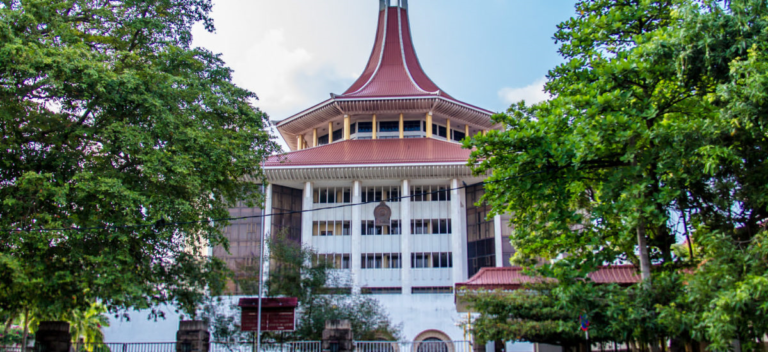
The Supreme Court of Sri Lanka in 2023 delivered a landmark determination, assuring that consensual same-sex conduct between adults do not violate the Constitution of Sri Lanka, and a bill to decriminalise such acts, therefore, can be made into law with a simple-majority in Parliament, in correspondence with a private member’s bill proposing decriminalisation tabled by SLPP MP Premnath Dolawatte being legally challenged by a group of political stalwarts, ironically of the same party in which Dolawatte serves.

Despite these pressures and promises, little progress has been made. Activists argue that deep-rooted societal prejudices, coupled with political reluctance, continue to hinder legislative change.

The bill will be subject to Parliament scrutiny in the first week of June this year, a prominent activist told LNW. Consequently, June is recognised worldwide as the PRIDE month, remembering the 55th anniversary of the Stonewall Riots, the most momentous event in documented history advocating for LGBTQIA+ rights.

The National Peoples Power (NPP) remains the sole political party which recognises LGBTQIA+ rights in its written policies, whilst the main Opposition Samagi Jana Balawegaya (SJB) categorically recognises LGBTQIA+ rights, despite having no confirmed report of possessing such policy in its manifestos.

The recent resurgence of conservative and nationalist sentiments in Sri Lankan politics further complicates efforts to advance queer rights.

The continued criminalisation of same-sex conduct has profound and damaging effects on the lives of LGBTQIA+ individuals in Sri Lanka.

It fosters a climate of fear and secrecy, leading to social exclusion, discrimination in employment and education, and limited access to healthcare.

Reports of police harassment and blackmail are not uncommon, further exacerbating the vulnerability of the queer community.

The path to decriminalisation and equality for LGBTQIA+ individuals in Sri Lanka requires a multifaceted approach.

A recent islandwide survey by the Westminster Foundation for Democracy asserted that about 72.5 per cent of the Sri Lankan population favour the idea of same-sex conduct being decriminalised.

Legislative reform is crucial, but it must be accompanied by broader societal changes to challenge and dismantle prejudices.

Current President Ranil Wickremesinghe commented that he poses no objection to the proposition that consensual same-sex activities between adults be decriminalised.

Advocacy groups continue to play a vital role in raising awareness, providing support to affected individuals, and lobbying for legal changes.

International solidarity and pressure remain essential in holding the Sri Lankan government accountable to its human rights commitments.

Sri Lanka’s failure to decriminalise same-sex conduct, despite repeated promises from lawmakers, highlights a significant human rights issue that needs urgent attention.

While the road to equality is fraught with challenges, continued advocacy, both domestically and internationally, is essential to achieving legislative reform and ensuring the protection and dignity of all individuals, regardless of their identity.

The government’s inaction not only contravenes its international obligations but also perpetuates a cycle of discrimination and injustice that affects countless lives.

It is imperative for Sri Lanka to move beyond empty promises and take concrete steps towards decriminalising same-sex conduct, fostering a more inclusive and equitable society.

President to attend 10th World Water Forum in Indonesia

0

May 16, Colombo (LNW): President Ranil Wickremesinghe is set to attend the 10th World Water Forum High-Level Meeting in Indonesia, following an invitation from his Indonesian counterpart, President Joko Widodo.

The Sri Lankan President will participate in the Forum from 18 to 20 May, according to the President’s Media Division (PMD).

On May 20, Wickremesinghe will deliver a statement at the High-Level Forum, themed “Water for Shared Prosperity.”

In addition to his participation in the Forum, the President will engage in several bilateral meetings, including a meeting with Indonesian President Joko Widodo.

US Embassy to host Indo-Pacific Business Forum on sustainable development in Ports Sector

0

May 16, Colombo (LNW): The U.S. Embassy in Colombo will host a satellite event of the Indo-Pacific Business Forum (IPBF) on May 21, themed “Driving Sustainable Development in the Ports Sector.”

This event will run concurrently with the Sixth Indo-Pacific Business Forum in Manila, Philippines, co-hosted by the U.S. Trade Development Agency and the Government of the Philippines, in partnership with the U.S. Department of State.

Businesses and stakeholders from across the Indo-Pacific region are invited to participate in this important event.

For those unable to attend in person, online registration is available through the main website: IPBF | Indo-Pacific Business Forum #IndoPacificBizForum.

The Sri Lanka Ports Authority, in collaboration with the Ministry of Ports, Shipping and Aviation, is committed to transforming the nation’s ports into efficient and sustainable facilities through a greening initiative.

This initiative aims to enhance energy efficiency, reduce waste and emissions, and promote environmentally responsible shipping and transportation practices.

Additionally, it seeks to develop renewable energy capabilities, including solar and wind energy production at the ports.

The private sector is expected to play a pivotal role in this transformation by providing services and equipment to support port operations and the greening initiative.

Aligned with these sustainability goals, the global shipping sector is adopting carbon emissions reduction strategies, including the use of advanced technologies such as green methanol-fuelled cargo ships and electric tugboats.

Moreover, electric gantry cranes, terminal tractors, and other container-moving equipment are set to replace high-emission diesel versions, thereby reducing the carbon footprint of port operations.

President condemns disinformation affecting stock market stability

0

May 16, Colombo (LNW): President Ranil Wickremesinghe has condemned individuals spreading disinformation that adversely affects the stock market, noting that speculation about the dissolution of Parliament is causing significant market instability.

Certain individuals claim that discussions on economic transformation are failing, while others predict the dissolution of Parliament, and such statements lead to a downturn in the stock market the following day, allowing these individuals to buy shares at lower prices, Wickremesinghe explained.

When the government reassures the public that no such developments will occur, the market rebounds, and they sell their stocks at a profit, he went on, adding that this is not a political issue.

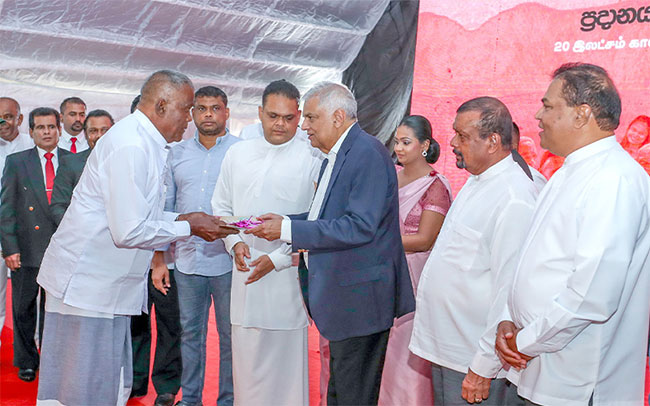
The President’s comments came during the opening of the new Court Complex in Theldeniya.

Sri Lanka’s economy is grappling with severe challenges, including a debilitating debt crisis, high inflation, and acute foreign exchange shortages.

The economic situation has been compounded by political instability and allegations of poor governance, resulting in widespread hardship amongst the population.

Critics argue that the government’s inability to implement effective economic policies and manage public resources has exacerbated the crisis.

Inflation rates have surged, eroding the purchasing power of ordinary citizens, whilst the potential depreciation of the Sri Lankan Rupee already predicted by economists has escalated the cost of imports, placing additional burdens on consumers.

The International Monetary Fund (IMF) has intervened with financial assistance, but structural reforms are imperative to stabilise the economy.

Many citizens are frustrated with the lack of tangible progress and transparency in the government’s efforts to address these economic issues.

President Wickremesinghe’s comments on market manipulation add another layer of concern, suggesting that certain individuals may be exploiting the current economic uncertainty for personal gain.

This situation, therefore, unveils the urgent need for robust regulatory measures to ensure market integrity and protect investors.

Harin says boycott of the Maldives boosts SL Travel Industry

0

May 16, Colombo (LNW): Calls for Indian travellers to boycott the Maldives are “absolutely” benefiting Sri Lanka’s travel industry, CNBC reported citing comments from Tourism Minister Harin Fernando.

“The Maldives issue is … helping us,” Fernando told CNBC, referring to a social media dispute in January that led to a significant drop in Indian visitors to the Maldives this year.

India was the Maldives’ largest source market in 2023 but has now fallen to sixth place, behind China, Russia, the United Kingdom, Italy, and Germany, according to Sri Lanka’s Ministry of Tourism.

In contrast, nearly 34,400 Indian travellers visited Sri Lanka in January, more than double the 13,759 who visited in January last year, according to the Sri Lanka Tourism Development Authority.

Arrivals in the first quarter of 2024 surpassed the same period in 2023, despite a temporary visa price increase in April.

Fernando also highlighted the strong relationship between Sri Lanka and India in both business and tourism.

“Sri Lanka is a significant market for Indian travellers,” he said, adding that his country offers more value when it comes to India.

He mentioned the country’s beaches, casinos, shopping, and the Ramayana Trail, a series of sites referenced in the ancient Hindu epic.

Additionally, the two countries are well connected, Fernando explained, further elaborating that the connectivity between the two nations is the trigger factor.

Previously, Fernando fell under public’s scrutiny for commenting at a conference that Sri Lanka is ‘a part of India’.

President orders immediate construction of Ashraf Memorial Museum in Kalmunai

0

May 16, Colombo (LNW): President Ranil Wickremesinghe has mandated the immediate construction of the “Ashraf Memorial Museum” in Kalmunai, in honour of the late M.H.M. Ashraf, founder of the Sri Lanka Muslim Congress (SLMC) and former Minister.

M.H.M. Ashraf, a distinguished politician celebrated for his dedicated service to the Muslim community, will be memorialised through this museum.

This initiative arises from a request made by H.M.M. Haris, Digamadulla District Member of Parliament, alongside the local Muslim community, marking the 24th anniversary of Mr. Ashraf’s death.

The President has allocated Rs. 25 million for the project and has instructed officials to begin construction without delay, the President’s Media Division (PMD) said.

Ashraf, remembered as an eloquent lawyer and legislator, significantly contributed to the welfare of the Muslim population in the Eastern Province.

He garnered respect across various ethnic communities, including Sinhala, Tamil, and Muslim groups in the country.

SL to establish small arms ammunition manufacturing unit

0

May 16, Colombo (LNW): Sri Lanka is in the process of establishing a small arms ammunition manufacturing unit within the country, Defence State Minister Premitha Bandara Tennakoon announced.

The announcement was made yesterday (16), addressing reporters at the President’s Media Centre (PMC), where the Minister revealed that discussions are ongoing with India to set up a small arms manufacturing unit.

The Indian defence manufacturing sector has seen significant growth over the last two decades, Tennakoon explained, adding that it is a model Sri Lanka can learn from, and there is nothing wrong with adopting their practices.

He expressed confidence that it is time for Sri Lanka to enter the manufacturing sector as well.

When queried about whether Sri Lanka intends to purchase military equipment from India, the Minister clarified that the government is not trying to procure anything at the moment.

The connectivity between the two nations’ military forces is excellent, and Indian and Sri Lankan military-to-military relations are very strong, and Sri Lanka, therefore, aim to maintain the ties, he explained.

However, this does not imply that Sri Lanka is planning on purchasing military equipment from anyone, Tennakoon concluded.

LKR projected to depreciate to Rs.310-320 against USD by year-end: FCR

0

May 16, Colombo (LNW): The Sri Lankan Rupee (LKR) is anticipated to depreciate to a range of Rs. 310 – 320 against the US Dollar by the end of the year, driven by increased import demand and the resumption of foreign loan repayments following the completion of the External Debt Restructuring (EDR), First Capital Research (FCR) disclosed.

In the first half of the year, the LKR is expected to appreciate to around Rs. 295, as higher taxes dampen rising consumer demand in the short term amidst escalating living costs.

The USD/LKR spot exchange rate was Rs. 300.83 as of yesterday.

Reduced consumer demand may lead to a decrease in imports, whilst the peak tourism season in the first quarter of 2024 and increased worker remittances could further strengthen the LKR, and subsequently, some stabilisation is anticipated as consumer demand improves and tourism income moderates,” according to a FCR report.

The Rupee’s appreciation is also supported by improving tourism earnings and higher remittance inflows.

FCR projects a 46.3 per cent year-on-year increase in tourism earnings to US $3 billion this year.

Similarly, worker remittance inflows are projected to rise to US $6.6 billion, up from US $6 billion last year.

The notable reduction in consumer-driven imports in the first quarter, due to front-loading of imports at the end of last year, also contributed to the Rupee’s appreciation.

Additionally, the efforts by the Central Bank of Sri Lanka (CBSL) to bolster foreign reserves through US Dollar purchases have played a significant role in the Rupee’s appreciation this year.

FCR expects Sri Lanka to conclude the year with US $6.3 billion in foreign reserves.

However, reserve accumulation is expected to moderate later this year as the government resumes loan repayments post-EDR.

Although bilateral and multilateral inflows are expected immediately after EDR completion, complemented by a potential sovereign credit upgrade, FCR noted that anticipated import relaxations and the resumption of loan repayments might partially offset the currency’s appreciation in the fourth quarter.

“We anticipate that the GDP turnaround, coupled with the relaxation of import restrictions, may slow the currency’s appreciation trend,” FCR remarked.

Sri Lanka faces an annual external debt repayment obligation of nearly US $6-7 billion until 2029, potentially declining to US $3-4 billion post-EDR.

Therefore, the CBSL is likely to build up its foreign reserve buffer in the coming months, which may exert downward pressure on the exchange rate.

In May, the CBSL relaxed cash margin deposit requirements on specific imports.

Continuing this initiative, the government is expected to gradually remove existing import restrictions, including those on vehicle imports, which may further impact the Rupee exchange rate.

JAAF highlights inaccuracy of Official Minimum Wage in reflecting true earnings of SL garment workers

0

May 16, Colombo (LNW): The Joint Apparel Association Forum (JAAF) has highlighted that the official minimum wage for garment workers does not accurately reflect their total earnings.

Responding to a recent article published on Just-Style, JAAF General Secretary Yohan Lawrence explained that the current two-tiered wage system includes a fixed basic wage supplemented by productivity-based payments and various non-cash benefits.

The Clean Clothes Campaign, an international alliance of labour unions and non-governmental organisations, has criticised Sri Lanka’s garment industry minimum wage, claiming it fails to meet workers’ family needs due to high inflation.

In March this year, the government increased the national living wage by 40 per cent, from Rs. 12,500 (US $42) to Rs. 17,500 (US $59) per month, along with a Rs. 3,500 budgetary relief allowance, bringing the total minimum monthly pay to Rs. 21,000 (US $70).

The apparel sector’s industry-agreed minimum wage, including the government allowance, stands at approximately Rs. 24,000 (US $80).

According to Lawrence, the article refers to the national minimum wage, which covers the fixed monthly component of employee earnings (the employee’s basic wage).

Whilst the national minimum wage was increased after a couple of years, companies will review the basic wage every year and, depending on their ability to pay, increase this basic wage annually, he clarified.

He pointed out that the article fails to mention the variable components of total earnings, which are paid in cash, or the non-cash benefits provided to employees.

Cash benefits include production bonuses, attendance allowances, annual bonuses, skill-based payments, and overtime.

The two-tiered system of a fixed basic wage, complemented by productivity-based payments, is standard in all manufacturing industries, both locally and globally, Lawrence emphasised.

In addition to cash payments, the industry provides non-cash benefits such as subsidised meals and transport.

Several companies also offer subsidised or free dry rations, a practice that began during the economic crisis and continues today, to help alleviate the cost of living for employees.

Lawrence argued that it is unfair to assess employees’ actual earnings based solely on the basic wage.

He also noted that inflation has decreased to single digits since early 2023, reducing its impact on real wages.

Despite these challenges, JAAF remains confident in achieving US $4.5 billion in apparel export earnings this year.