February 03, Colombo (LNW): Several spells of shower will occur in Northern, North-central, Eastern and Uva provinces and in Nuwara-Eliya and Matale districts, the Department of Meteorology said.
Showers or thundershowers are likely at several places in Western and Sabaragamuwa provinces and in Galle and Matara districts after 2.00 p.m. Fairly heavy falls above 50 mm are likely at some places in these areas.
Misty conditions can be expected at some places in Sabaragamuwa and Central provinces and in Galle, Matara and Badulla districts during the early hours of the morning.
The general public is kindly requested to take adequate precautions to minimise damages caused by temporary localised strong winds and lightning during thundershowers.
Marine Weather:
Condition of Rain:
Showers will occur at several places in the sea areas off the coasts extending from Pottuvil to Trincomalee via Batticaloa. Showers or thundershowers may occur at a few places in the other sea areas around the island in the evening or night.
Winds:
Winds will be north-easterly and wind speed will be (25-35) kmph. Wind speed can increase up to (45-50) kmph at times in the sea areas off the coast extending from Colombo to Mannar via Puttalam, and from Hambantota to Pottuvil.
State of Sea:
The sea areas off the coast extending from Colombo to Mannar via Puttalam, and from Hambantota to Pottuvil will be fairly rough at times. Other sea areas around the island will be moderate.
Temporarily strong gusty winds and very rough seas can be expected during thundershowers.
Showers, thundershowers expected in many districts (Feb 03)

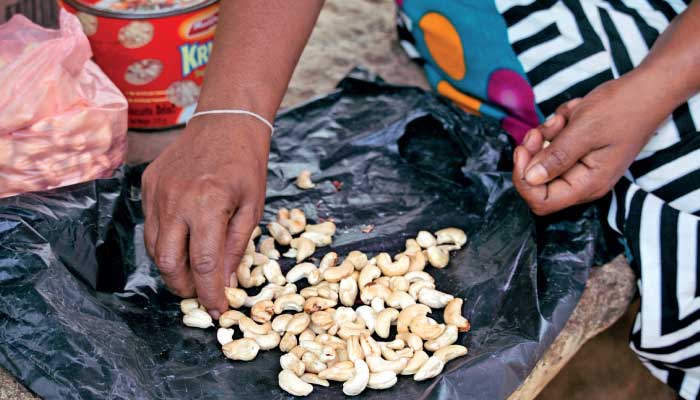
Cashew Shortage Sparks Job Loss Fears Across Processing Communities
By: Staff Writer
February 02, Colombo (LNW): Sri Lanka’s ongoing shortage of raw cashew nuts has evolved into a wider socio-economic crisis, threatening thousands of jobs across the island and placing immense pressure on an already fragile industry. While consumers face rising prices, workers in processing and shelling communities are confronting the loss of their primary source of income.
Cashew producers and importers attribute the shortage largely to delayed and restricted import licensing. Licenses issued during recent months were valid only until December 31, leaving importers unable to complete shipments due to logistical disruptions, natural disasters, and administrative delays. Requests to extend these licenses by two or three months until February or March remain unresolved.
Sri Lanka’s domestic cashew production is insufficient to meet year-round demand, making imports essential. In past years, imported raw cashews were shelled locally, providing employment to thousands of workers, particularly women, in regions such as Gampaha, Kurunegala, Kuliyapitiya, Chilaw, and Eravur. Today, many of these factories stand idle.
Workers say they have been pushed into severe financial hardship. Many invested in cashew-processing machinery through bank loans, only to see those machines lie unused due to lack of raw materials. With no alternative income sources, families are struggling to meet daily expenses, repay loans, and support their children’s education.
Traders warn that the situation could worsen as demand rises sharply during festive seasons and peak tourist periods. Cashews are widely favored by both local consumers and foreign visitors, and shortages are expected to intensify by April if imports do not resume soon. Industry representative’s stress that even limited imports before the festive season could help stabilize prices and revive processing activities.
It has also emerged that some small-scale traders who obtained licenses were unable to import adequate quantities, further deepening the supply gap. While the ministry’s decision to allow last-minute imports offered temporary relief, stakeholders say it was insufficient to address structural issues.
Appeals have been made to the President, relevant ministers, and regulatory authorities to take immediate action. Workers fear that losing an occupation sustained over decades would leave them without viable alternatives.
Without timely policy intervention, the cashew shortage threatens not only market stability but also the livelihoods of thousands who depend on one of Sri Lanka’s most labor-intensive agro-industries.
Sri Lanka Needs Bold Economic Reset to Secure Long-Term Growth

By: Staff Writer
February 02, Colombo (LNW): Sri Lanka must move beyond cautious, piecemeal policy changes and embrace sweeping economic reforms if it hopes to turn its fragile post-crisis recovery into sustained, investment-driven growth, ODI Senior Fellow Dr. Ganeshan Wignaraja said this week.
Delivering the keynote address at the Asia Securities Investor Conference 2026, Dr. Wignaraja cautioned that while the country has stabilised since its 2022 sovereign default, the recovery remains vulnerable to both domestic and external shocks.
He argued that Sri Lanka’s traditional approach of gradual reform has repeatedly failed to deliver lasting results. “Incremental change has been our default setting, but it often means moving backwards before making limited progress,” he said, calling instead for a “big bang” reform agenda that tackles structural weaknesses head-on.
Placing Sri Lanka’s experience in a broader global context, Dr. Wignaraja noted that debt crises in developing economies often leave long-lasting economic scars. He warned that climate-related disasters could deepen those impacts, making recovery more difficult and prolonging social and economic hardship.
Reflecting on the recent stabilisation phase, he credited the IMF-supported programme launched in March 2023, emergency financing from development partners, and firm monetary policy actions by the Central Bank for preventing a deeper financial collapse. According to him, investors are less concerned about how crises originate and more focused on how governments respond under pressure.
Dr. Wignaraja also highlighted the lessons from Cyclone Ditwah, which caused widespread destruction across the island. Unlike past natural disasters that were geographically limited, the cyclone affected large parts of the country, with damages estimated at around $4.1 billion, or nearly 4% of gross domestic product.
The disaster, he said, once again exposed gaps in disaster preparedness, coordination, and response capacity. He stressed that recovery efforts must be closely linked with reform, rather than treated as short-term relief exercises.
Drawing on joint research by ODI and the Centre for Poverty Analysis, Dr. Wignaraja outlined key priorities for post-disaster recovery. These include developing a credible reconstruction plan, improving domestic revenue mobilisation to complement foreign assistance, and engaging with the IMF to allow some fiscal flexibility to address rising poverty levels.
Beyond recovery, he argued that Sri Lanka urgently needs to dismantle bureaucratic obstacles, reduce high energy costs, raise labour productivity, and integrate more effectively into global supply chains. Long-standing issues such as excessive regulation, skills shortages, and high input costs continue to deter both domestic and foreign investors.
Without decisive reforms, Dr. Wignaraja warned, Sri Lanka risks slipping back into familiar cycles of debt distress. The durability of the current recovery, he concluded, depends on political resolve and a broad-based consensus that signals long-term policy stability to investors and markets.
Sri Lanka, UK Reaffirm Commitment to Deeper Trade Cooperation

By: Staff Writer
February 02, Colombo (LNW): The Sri Lanka–United Kingdom Chamber of Commerce in London (SLUKCC), in collaboration with the Sri Lanka High Commission in the United Kingdom, hosted a high-level panel discussion aimed at strengthening bilateral trade relations between the two countries. Titled “Building Stronger Trade Bridges between Sri Lanka and the United Kingdom,” the event was held at the Sri Lanka High Commission in London on 27 January 2026 and attracted more than 40 representatives from business, government and industry.
Opening the forum, SLUKCC President Eranga Pathirage highlighted the Chamber’s growing role in facilitating commercial engagement between Sri Lanka and the UK. He noted that SLUKCC continues to serve as a vital platform linking enterprises, institutions and communities, working closely with the High Commission and UK stakeholders to convert commercial interest into concrete trade, investment and service-sector partnerships.
Sri Lanka’s High Commissioner to the UK, Nimal Senadheera, emphasised the UK’s importance as Sri Lanka’s second-largest export destination and a long-standing economic partner. He reaffirmed Sri Lanka’s commitment to expanding economic cooperation with the UK, describing the relationship as one that extends beyond trade to long-term investment and innovation collaboration.
The High Commissioner encouraged Sri Lankan exporters, particularly small and medium-sized enterprises, to take full advantage of the UK’s Developing Countries Trading Scheme (DCTS). He pointed out that the scheme offers enhanced market access and noted the recent relaxation of Rules of Origin requirements for apparel exports, effective from January 2026, which is expected to significantly benefit Sri Lankan manufacturers.
Delivering the keynote address, the UK’s Trade Envoy to Sri Lanka, Lord John Hannett OBE of Everton, outlined emerging opportunities across trade, investment and modern value chains. He stressed the importance of close coordination between the public and private sectors to unlock sustainable, long-term commercial partnerships. Lord Hannett also urged businesses to leverage institutional platforms such as SLUKCC to explore new areas of cooperation and maximise the benefits of existing trade frameworks.
The discussion was moderated by SLUKCC Director Simon Culhane and featured a distinguished panel including Ambassador Senadheera, Lord Hannett, Board of Investment Chairman Arjuna Herath, Global Sourcing Association CEO Kerry Hallard, and Marks and Spencer UK PLC Head of Finance Suraj Wijendra.
Concluding the event, participants engaged in a lively question-and-answer and networking session. Key themes included Sri Lanka’s strategic position as a regional gateway to Asia, opportunities in tourism, IT and business process outsourcing, skilled labour availability, and prospects linked to the Colombo Port City project. The forum underscored renewed momentum to strengthen Sri Lanka–UK economic ties and expand collaboration across global value chains.
Auditor General’s Vacuum Paralyses State as Accountability Systems Collapse
By: Staff Writer
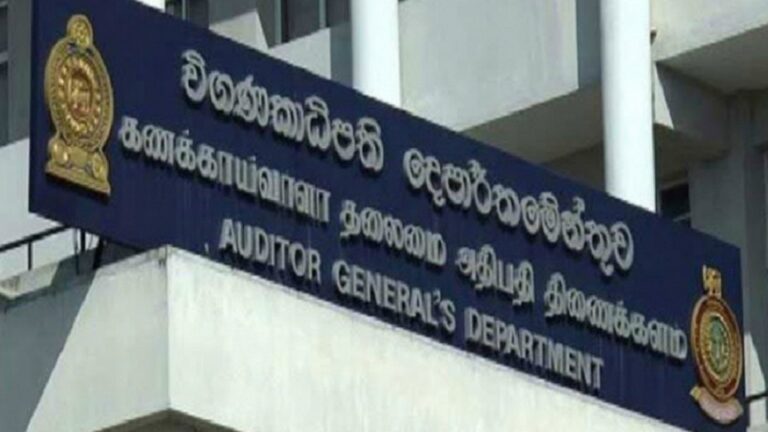
February 02, Colombo (LNW): Sri Lanka’s failure to appoint a permanent Auditor General since April 2025 has triggered a cascading institutional crisis that now threatens the credibility of public financial oversight, parliamentary accountability, and foreign-funded governance reforms. Nearly a year after the retirement of Auditor General Chulantha Wickramaratne on April 8, 2025, the country’s supreme audit institution remains leaderless, operating under a fragile acting arrangement that has steadily eroded its authority.
Despite repeated assurances from the Government, the appointment process has been mired in political deadlock. Health and Mass Media Minister and Cabinet spokesperson Dr. Nalinda Jayatissa recently told the Sunday Observer that the long-vacant post would be filled “within three days,” following deliberations by the newly constituted Constitutional Council. Yet, this promise follows months of deferrals. The Council’s first sitting on January 29, 2026, which included newly appointed civil society representatives, failed to reach a decision, with sources confirming that the matter was postponed to its next meeting.
At the heart of the impasse is a prolonged standoff between the Executive President and the Constitutional Council. At least four presidential nominees have reportedly been rejected for failing to secure the constitutionally required five-member majority. More controversially, the Council has not moved to appoint the most senior officer currently serving as Acting Auditor General, deepening perceptions of arbitrariness and institutional drift.
The consequences have been severe. The National Audit Office (NAO), stripped of a permanent head for over nine months, has seen routine audit operations grind to a near halt. Supervision, coordination with line ministries, and engagement with parliamentary oversight mechanisms have been critically disrupted. Without a fully empowered Auditor General, audit reports have stalled, creating a ripple effect across governance structures.
Parliamentary oversight bodies, including the Committee on Public Accounts (COPA) and the Committee on Public Enterprises (COPE), have been rendered virtually inactive. These committees depend on timely audit reports to scrutinize public expenditure and state-owned enterprises. Their suspension has effectively removed a key layer of democratic accountability at a time when fiscal discipline is essential.
Perhaps most alarming is the impact on foreign-funded governance reforms. The delay has directly affected oversight of World Bank and European Union–supported initiatives, particularly the Public Financial Management Strengthening Project (PFMSP), funded through a EUR 9.8 million grant (approximately US$11.74 million). The project is designed to modernize Sri Lanka’s public financial management systems, enhance transparency, and strengthen audit capacity within the NAO itself.
Any suspension or derailment of the PFMSP carries grave implications. The project underpins reforms in budget execution, procurement modernization, internal controls, and digital financial management systems. Without these reforms, procurement remains vulnerable to inefficiency and corruption, fiscal reporting weakens, and institutional transparency deteriorates. The project also supports capacity building for public officials training that is now at risk of being abandoned.
With a strict completion deadline at the end of 2026, delays could render the project unsustainable, wasting already committed funds and undermining donor confidence. More broadly, Sri Lanka risks jeopardizing its credibility with international partners at a time when the country is navigating an IMF-supported economic recovery.
Legal and civil society organizations have raised red flags. The Bar Association of Sri Lanka and Transparency International Sri Lanka warn that the prolonged vacuum undermines the constitutional independence of the supreme audit institution, creating a dangerous concentration of financial control. Reports that certain approval functions have been temporarily transferred to the Finance Ministry only deepen concerns over blurred institutional boundaries.
As of early 2026, the crisis remains unresolved. What began as a delayed appointment has evolved into a systemic governance failureone that continues to weaken public trust, stall reform, and expose Sri Lanka’s financial system to unacceptable risk.
Browns EV Unveils BAW M8 MPV, Bringing Long-Range Electric Mobility to Sri Lanka

February 02, Colombo (LNW): Browns EV, the electric mobility arm of Browns & Company under the LOLC Group, one of Sri Lanka’s foremost conglomerates, has expanded its local portfolio with the introduction of the BAW M8 multi-purpose vehicle.
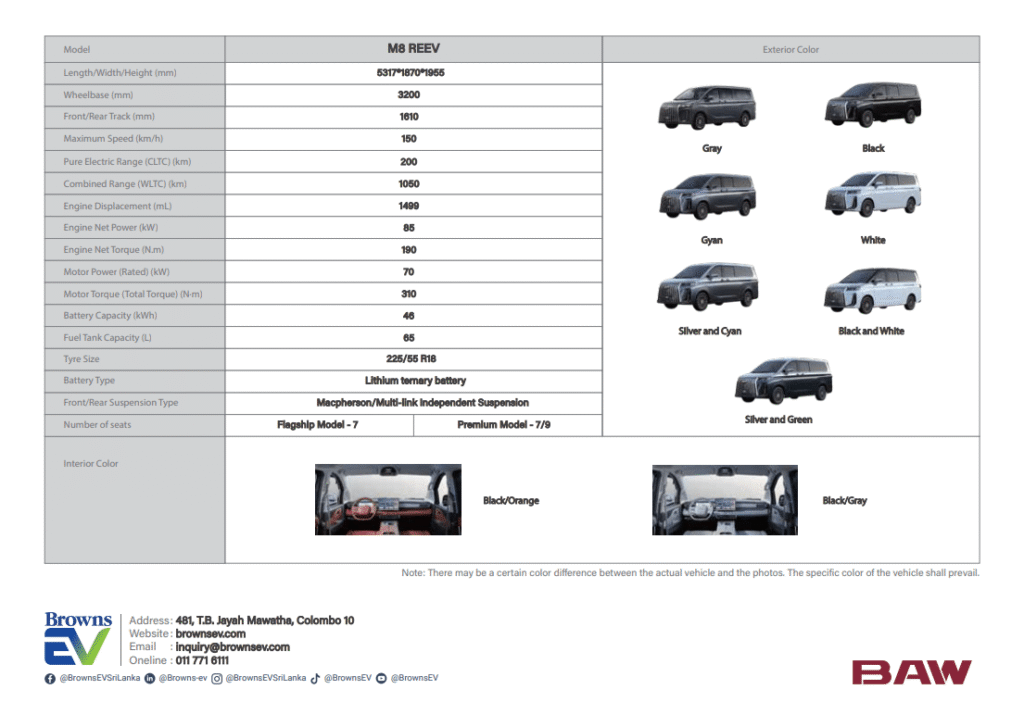
The newly launched M8 is produced by Beijing Automobile Works (BAW), an automotive manufacturer whose history stretches back to 1951. Configured as a seven-seater, the vehicle delivers a combined driving range exceeding 1,050 kilometres, positioning it as a flexible solution for family transport, executive travel and crew movement alike.
Designed with a generously proportioned interior, the M8 prioritises comfort, dependability and a refined driving experience. Its layout and performance characteristics have been tailored to suit Sri Lankan road and driving conditions, while buyers are offered a choice of seven distinctive exterior colours.
On the technology front, the M8 is equipped with an array of premium features, including a large floating touchscreen interface, dual power-operated sliding doors and electrically adjustable seats complete with leg rests. Added refinements such as seat heating, ventilation and massage functions, along with multi-zone climate control and an external power discharge facility, further enhance the cabin experience. Safety is addressed through the inclusion of multiple airbags, an electronic stability system and an upgraded braking system.
The model has been introduced at a special market entry price of Rs. 21 million. With this launch, Browns EV aims to redefine the local multi-purpose vehicle segment by offering advanced comfort and contemporary technology that sits between ultra-luxury offerings and more affordable options.
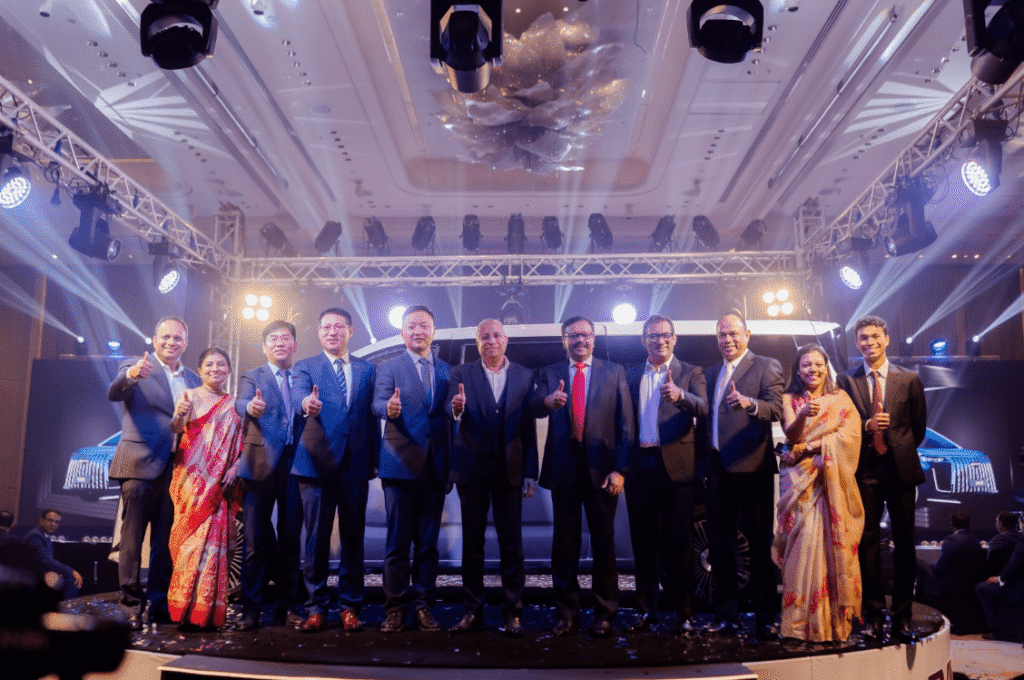
The official unveiling was attended by several senior figures, including LOLC Group Chairman Ishara Nanayakkara, LOLC Group Managing Director Kapila Jayawardena, Browns EV Executive Director Vijitha Bandara, Browns EV Chief Executive Officer Pavithra Jayasekara and BAW Vice President Zhihong Gu, along with other distinguished guests.
Further details on the BAW M8 can be obtained by contacting 011 771 6111.



Court Orders Analysis of Rs. 3bn Drug Cache Seized at Sea

February 02, Colombo (LNW): A massive haul of illicit drugs intercepted at sea has been sent for forensic examination following orders issued today by the Colombo Chief Magistrate’s Court.
The consignment, valued by investigators at more than Rs. 3 billion, was recovered by the Sri Lanka Navy during an operation late last month and later brought ashore at the Dikowita Fisheries Harbour. Eleven fishermen taken into custody in connection with the seizure were linked to the multi-day fishing vessel from which the narcotics were found.
Police Narcotics Bureau officers produced the cache before court amid heightened security, presenting the drugs packed in 15 sealed protective bags. After reviewing submissions made by the police, Chief Magistrate Asanga S. Bodaragama directed that the entire stock be forwarded to the Government Analyst and instructed officials to obtain a comprehensive analytical report.
According to investigators, the seizure includes more than 260 kilogrammes of narcotics, comprising large quantities of crystal methamphetamine, commonly known as “ice”, along with a substantial amount of heroin. The interception took place on January 25 during a naval patrol targeting suspected drug trafficking activities off the coast.
Following the court’s ruling, the exhibits were formally sealed and dispatched to the Government Analyst under the supervision of the Court Registrar, as authorities continue inquiries into what is believed to be one of the largest recent maritime drug busts.
Balangoda Kassapa Thero Remanded Over Disputed Buddha Statue Erected in Trincomalee Coastal Area
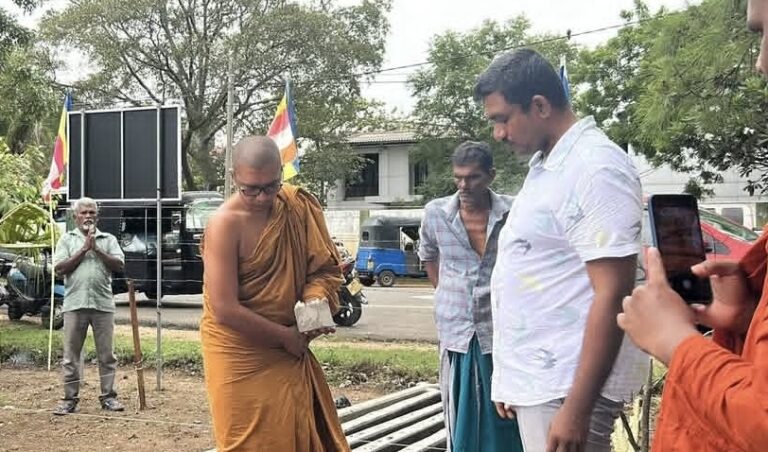
February 02, Colombo (LNW): The Trincomalee Magistrate’s Court has ordered that four Buddhist monks, including Ven. Balangoda Kassapa Thera, along with six other individuals, remain in remand custody until February 09, 2026.
The group was produced before court in connection with the alleged installation of a Buddha statue within a designated coastal zone in Trincomalee without the necessary legal clearance. Authorities contend that the placement violated regulations enforced under coastal conservation laws.
The matter traces back to an incident on November 16 last year, when tensions reportedly escalated after officials moved to remove the statue from the site. According to police, the Coast Conservation Department had previously raised objections, maintaining that the structure had been erected without formal approval from the relevant authorities.
Investigations into the circumstances surrounding the construction and subsequent unrest are continuing, while the court has directed that the suspects be held pending further proceedings.
US Embassy in Colombo Scales Back Social Media Updates Amid Federal Funding Impasse
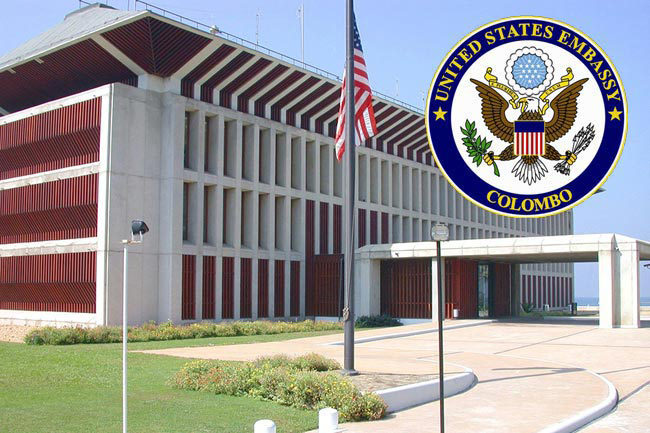
February 02, Colombo (LNW): The United States Embassy in Sri Lanka has announced a temporary reduction in its routine communications, citing a funding gap in Washington that has triggered a partial shutdown of the US federal government.
In a notice shared via social media, the embassy said it would limit Facebook updates to essential safety and security messages until normal government operations are restored. Non-urgent posts and regular informational content will be paused during this period.
The embassy sought to reassure the public that, despite the funding disruption, passport and visa services are expected to continue both within the United States and at overseas diplomatic missions, including Colombo, subject to operational conditions. Travellers and applicants have been encouraged to consult the official US State Department website for the most up-to-date information on consular services and office hours.
A lapse in appropriations occurs when the US Congress is unable to approve federal funding legislation in time, forcing certain government activities deemed non-essential to be curtailed. Diplomatic missions in several other countries have issued similar advisories as the funding stalemate affects US government operations worldwide.
No Child Should Miss Out on Education Due to Poverty: Prime Minister
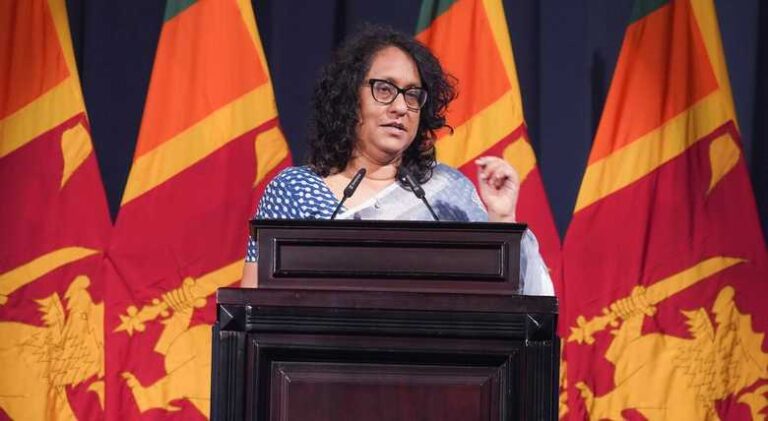
February 02, Colombo (LNW): Prime Minister Dr Harini Amarasuriya has underscored that every major government policy and long-term development strategy must be shaped around a simple principle: no child in Sri Lanka should be denied access to vocational or higher education because of financial hardship.
She made these observations while speaking at a workshop on budget planning and institutional strategy for the vocational education sector, attended by heads and senior representatives of nine state-affiliated institutions, including two universities. The event, held in Colombo, focused on strengthening coordination and long-term planning within the sector.
The Prime Minister stressed that the plans of vocational and technical institutions must be closely aligned with the country’s broader National Economic Development Plan. While recognising the sector’s role in producing a skilled workforce, she said education reform should go beyond technical competence, placing equal emphasis on values such as empathy, ethical conduct and social responsibility in order to develop professionals with a strong sense of humanity.
Dr Amarasuriya noted that expanding opportunities for children from economically vulnerable backgrounds was a core responsibility of the State, adding that vocational education could play a decisive role in helping young people build secure and dignified futures.
Turning to global trends, she pointed to the growing influence of artificial intelligence on education and employment, observing that even internationally there is no clear consensus on how AI will transform vocational fields and the world of work. This uncertainty, she said, made it all the more urgent for Sri Lanka to integrate vocational training more firmly into the mainstream education system through timely and well-planned reforms.
She also cautioned that technological revolutions often prioritise profit, warning that Sri Lanka must avoid being left behind as it was during earlier phases of industrial change. Although digital platforms have expanded access to learning, she noted that technology has clear limits in professions rooted in human care and interaction, such as childcare and elder care, where compassion and interpersonal skills remain irreplaceable.
The discussion further explored the need for more flexible education pathways, enabling students to advance through vocational training to the highest academic levels, including doctoral studies, while also allowing working individuals to enter or re-enter education at different stages. Participants agreed that such flexibility must be matched with rigorous standards to protect quality and maintain public confidence in the education system.