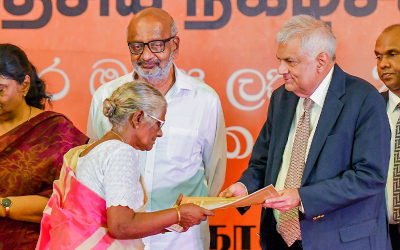
President Ranil Wickremesinghe symbolically awards 442 out of the allotted 5,000 land deeds to the people of Mannar district under the ‘Urumaya’ national programme, the President’ Media Division (PMD) said.
Water Supply and Estate Infrastructure Development Minister Jeevan Thondaman says the Ceylon Workers Congress (CWC) will extend its support to President Ranil Wickremesinghe in the upcoming Presidential Polls: asserts the decision comes in as Wickremesinghe is a leader who listens to the requirements of the people of the Plantation Community.
NPP Leader Anura Kumara Dissanayake says the Provincial Council system will remain unchanged under their government until a new system fostering harmony among Sinhala, Tamil, and Muslim communities is established: emphasises while the NPP views the Provincial Council system as inadequate for resolving national issues, it recognises its significance to Tamil and Muslim communities: affirms their policy to maintain the current Provincial Council system temporarily until a more permanent solution is determined.
Pivithuru Hela Urumaya Leader Udaya Gammanpila says President Ranil Wickremesinghe is currently in third place among presidential contenders and is actively working to improve his position: highlights efforts such as distributing lands, increasing wages, offering concessions, and attempting to gain support from opposition members while aiming to remove the Rajapaksas from government: mentions plans for a July survey to assess Wickremesinghe’s standing, indicating that if he remains in third place, Wickremesinghe may decide not to contest the presidency to avoid leaving office with the lowest vote percentage in history: also cautions that the race dynamics could shift if the current frontrunner, Sajith Premadasa, makes strategic errors, potentially altering the election landscape.
Recent whitefly infestations severely impact king coconut plantations across Sri Lanka, leading to a 36% drop in exports: In response to worsening conditions exacerbated by dry weather, a government initiative in 2023 invested Rs. 80 million in Margosa oil treatments, successfully curbing crop losses: Improved rainfall this year has aided in reducing whitefly populations, though a shortage of ripe king coconuts persists, affecting local farmers reliant on export revenue: Agriculture Minister Mahinda Amaraweera instructs collaboration between the Coconut Development Board and the Cultivation Board to establish district-based initiatives for cultivating king coconut seedlings, part of broader efforts to create 160 youth Agri-entrepreneurship villages nationwide.
The government forms two special committees to gradually ease vehicle imports and develop guidelines: The first committee, led by Bri Ponnambalam of Alliance Agencies PLC, formulated a new vehicle policy to consider foreign exchange outflow and demand for automobiles: This report guided a roadmap presented to the IMF: Recently, State Minister Ranjith Siyambalapitiya announced another committee to plan future vehicle import activities, focusing initially on public transport vehicles: The committees include stakeholders from finance, trade, motor traffic, and vehicle sectors: Plans include lifting restrictions on small cars first, with a broader policy expected soon.
Prominent fashion retailer Fashion Bug with 14 flagship stores nationwide, has been recognised among the Top 10 Most-Loved Brands in the Retail Lifestyle category by LMD readers in their 2024 Annual Ranking: This accolade underscores Fashion Bug’s dedication to delivering excellent customer experiences and staying ahead in fashion trends: Director Shabier Subain attributed the honour to their team’s commitment and vowed to continue offering high-quality, affordable fashion that resonates with Sri Lankan tastes.
458 recruits from the Sri Lanka Navy’s 254th intake complete training at SLNS Nipuna, Boossa. Rear Admiral Nalindra Jayasinghe oversaw the ceremony, honouring 355 Regular Force and 103 Volunteer Force recruits: Outstanding performers received awards, including Best Recruit EAMLS Jayasinghe and Highest Aggregate achiever Woman Recruit PAPM Peramuna: Recruit WMPKM Dissanayake was recognised as Best Marksman: The ‘Sagara’ Division was praised as the best. Rear Admiral Jayasinghe stressed discipline and national security in his address.
Severe recent floods in Sri Lanka, caused by monsoon rains, have affected over 253,500 people from 66,900 families, with 30 fatalities: Western, Sabaragamuwa, and North Western provinces, along with Galle and Matara districts, were worst hit: Major rivers overflowed, inundating villages and paddy fields: Annual flood-related losses total Rs. 32 bn, part of Sri Lanka’s Rs. 50 bn disaster loss yearly: Ex finance minister Ravi Karunanayake criticised past governments for inadequate infrastructure and urged sustainable flood management reforms.
Vidyartha College defeats St Joseph’s College 27-22 in a thrilling opening match of the Dialog ‘A’ Division Schools League Rugby Tournament at Havelock Park: The teams were tied 17-17 at halftime: Vidyartha scored three goals and two penalties, with Rusith Thamodya named Player of the Match.
June 16, Colombo (LNW): The World Bank has projected a notable upswing in Sri Lanka’s economic growth, forecasting a robust 3% expansion by 2026.
This optimistic outlook is contingent upon the successful execution of key initiatives, including debt restructuring negotiations and the implementation of structural reforms aimed at mitigating the adverse impacts of planned fiscal consolidation.
Based on the statement by the World Bank, it has been earlier reported that Sri Lanka is likely to witness a modest growth of 2.2 percent in 2024.
The 2.2 percent growth in 2024, marks a 0.5-percentage-point upward adjustment from January’s estimates.
Furthermore, the World Bank noted that the growth momentum in the South Asian Region surged to 6.6 percent in 2023, largely propelled by robust expansion in India.
Early 2024 continued to witness strong activity in India, albeit with private sector activity still subdued in several countries, including Pakistan and Sri Lanka.
In the case of Sri Lanka, following a contraction in 2023, economic activity has rebounded, supported by the recovery of tourism and remittances, albeit remaining below pre-pandemic levels.
Sri Lanka’s economy is projected to see moderate growth of 2.2 percent in 2024, showing signs of stabilization, following the severe economic downturn of 2022., the country still faces elevated poverty levels, income inequality, and labor market concerns, says the World Bank’s latest bi-annual update.
WB highlights that Sri Lanka saw declining inflation, higher revenues on the back of the implementation of new fiscal policies, and a current account surplus for the first time in nearly five decades, buoyed by increased remittances and a rebound in tourism.
However, poverty rates continued to rise for the fourth year in a row, with an estimated 25.9% of Sri Lankans living below the poverty line in 2023.
Labor force participation has also seen a decline, particularly among women and in urban areas, exacerbated by the closure of micro, small, and medium-sized enterprises (MSMEs).
Households are grappling with multiple pressures from high prices, income losses, and under employment. This has led to households taking on debt to meet food requirements and maintain spending on health and education.
“Sri Lanka’s economy is on the road to recovery, but sustained efforts to mitigate the impact of the economic crisis on the poor and vulnerable are critical, alongside a continuation of the path of robust and credible structural reforms,” emphasized Faris Hadad-Zervos, World Bank Country Director for Maldives, Nepal and Sri Lanka.
“This involves a two-pronged strategy: first, to maintain reforms that contribute to macroeconomic stability and second, to accelerate reforms to stimulate private investment and capital inflows, which are crucial for economic growth and poverty reduction.”
June 16, Colombo (LNW): President Ranil Wickremesinghe ceremonially distributed 442 land deeds to residents of Mannar district as part of the ‘Urumaya’ national programme.
This announcement was made by the President’s Media Division (PMD).
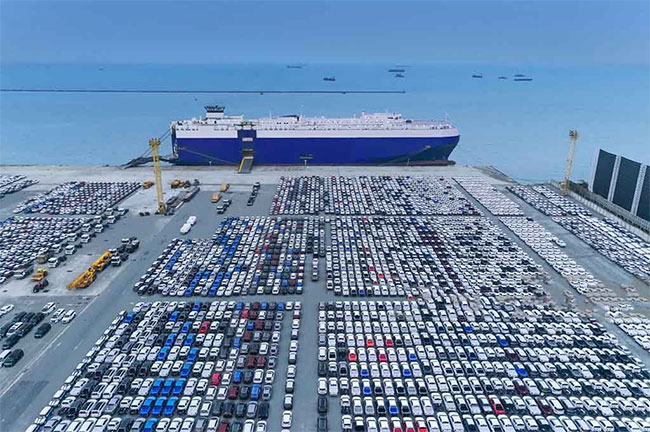
June 16, Colombo (LNW): The government has appointed two special committees to lift the importation of vehicles partially stage by stage and prepare necessary guidelines and devise a program towards this end.
The president appointed the first special committee headed by Bri Ponnambalam, the Chairman of Alliance Agencies PLC early this year to formulate the new vehicle policy and guidelines.
It will enable the lifting of the ban on private cars by considering the foreign exchange outflow as a percentage of other imported items, and the general demand for automobiles.
This report has already been presented to the president and the road map on relaxation of vehicle import ban submitted to the IMF had been devised on the recommendations of this report.
In a latest move, State Minister of Finance Ranjith Siyambalapitiya says that another committee was appointed on Friday (14) to devise a program on how to carry out vehicle importation activities in the future.
Speaking to the media yesterday (15), Siyambalapitiya highlighted ongoing discussions with the International Monetary Fund (IMF), which has been guiding the country’s financial strategies.
He mentioned that the government has submitted a roadmap to the IMF regarding the relaxation of vehicle import restrictions, recognizing the direct impact of such imports on the country’s foreign reserves.
The relaxation of restrictions will begin with vehicles used for public transport, following a specific method outlined in the roadmap, according to the State Minister.
The aforesaid committee comprises key stakeholders such as the Department of Trade and Investment Policies of the Ministry of Finance, Department of Motor Traffic, Central Bank of Sri Lanka, and representatives from the vehicle import sectors, the Associated Vehicle Assemblers, the Ministry of Industries and the Ministry of Environment in order to develop this program.
Siyambalapitiya emphasized that the initial focus will be on easing restrictions on vehicles used for public transportation, goods transportation, and common alternatives like motorcycles and cars used by the general public.
Subsequently, there will be a gradual easing of restrictions on luxury vehicle imports, with special consideration given to their economic implications, the State Minister said.
The government is to lift restrictions of vehicle imports partially allowing the motor traders to bring down small cars with engine capacity of 1000 CC and 1300 CC.
This decision will be taken in accordance with a comprehensive policy and guidelines in vehicle imports soon, a senior Finance Ministry official said.
Measures will be taken to allow motor traders to import all types of vehicles including private cars as the country was losing around Rs.300-Rs 450 billion in import tax revenue per year from March 2020, he said.
The new vehicle importation policy has been devised by a Special committee appointed by President Ranil Wickremasinghe.
The new vehicle policy and guidelines will enable to lift the ban on private cars by considering the foreign exchange outflow as a percentage of other imported items, and the general demand for automobiles.
Vehicle Importers’ Association said that they are ready to import motor cars following discussions with authorities to formulate new laws or regulations with regard to vehicle importation.
Meanwhile Sri Lanka vehicle spare parts traders complained that the prices of spare parts will be increased by Rs 300-600 due to VAT hike to 18 percent from 15 percent with effect from this month.
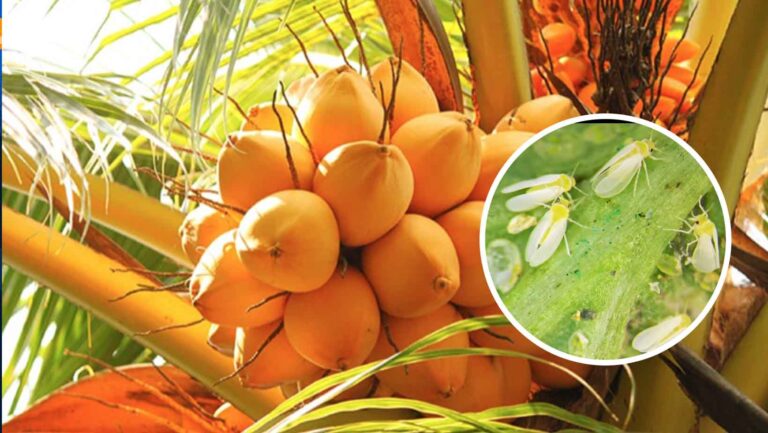
June 16, Colombo (LNW): The Coconut Development Board has reported a significant impact on king coconut plantations across the island due to recent infestations of whiteflies, which have shown a marked preference for the yellow-hued fruit over traditional coconut varieties.
Officials briefed Agriculture and Plantation Industries Minister Mahinda Amaraweera on the issue during a meeting at the ministry on the 14th, noting a 36 per cent decline in king coconut exports as a result of the pest’s damage.
The dry conditions of recent years exacerbated the spread of the whitefly, prompting a government initiative in 2023 to treat coconut and king coconut crops with Margosa oil extract, costing Rs. 80 million, successfully mitigating extensive crop losses.
This year’s improved rainfall has contributed to a reduction in whitefly populations, aiding the recovery of coconut and king coconut cultivation.
Despite progress, the shortage of ripe king coconuts persists, impacting the income of local farmers heavily reliant on export earnings.
In response, Amaraweera has directed the Coconut Development Board and the Cultivation Board to collaborate on a district-based initiative to cultivate king coconut seedlings, aligning with plans to establish 160 youth Agri-entrepreneurship villages nationwide.
Currently, Sri Lanka exports 200 containers annually, equating to 15 million king coconuts, each valued at Rs. 250.
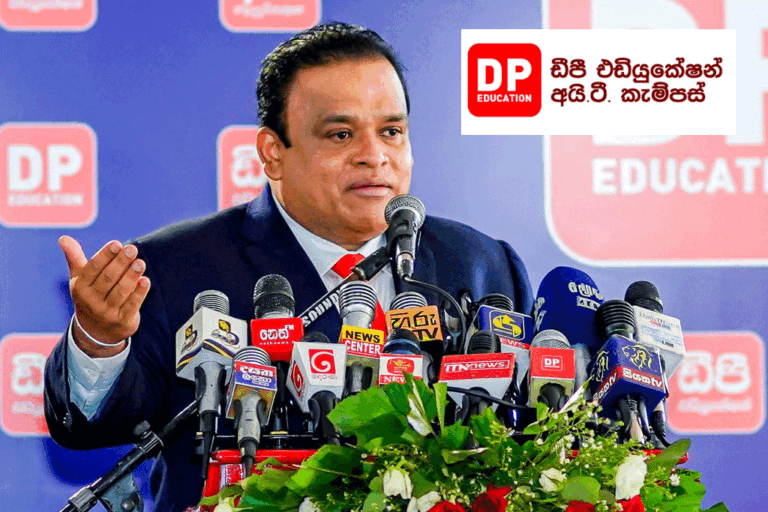
June 16, Colombo (LNW): The certificate award ceremony marking the culmination of the ‘DP Education IT Campus’ programme in Kandy district commenced today (16) with the participation of approximately ten thousand attendees, including the Maha Sangha, students, parents, and local residents.
Initiated by MP Dhammika Perera, founder of ‘DP Education’, the programme aims to contribute towards creating one million jobs in Sri Lanka’s information technology sector.
It focuses on providing free computer language courses across various IT campus branches in Kandy district.
Scheduled to take place at Gatambe Stadium from 08:30 am onwards, the ceremony underscores the significance of IT education in enhancing employment opportunities.
Certificates, with a total value amounting to Rs. 4 billion, will be awarded to students from eleven IT campus branches based on their course completion levels.
Each certificate represents an investment in the future capabilities of the recipients.
The event has drawn significant interest and support from the community, reflecting the importance placed on IT skills development and educational initiatives aimed at economic empowerment in Sri Lanka.
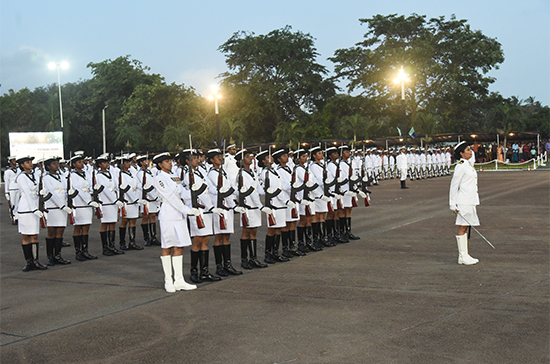
June 16, Colombo (LNW): In a lively event on 14th June 2024, a total of four hundred and fifty-eight recruits from the 254th intake of the Sri Lanka Navy’s Regular and Volunteer Forces completed their training at SLNS Nipuna, Boossa.
The ceremony, overseen by Rear Admiral Nalindra Jayasinghe, Commander Northwestern Naval Area, celebrated the achievements of 355 Regular Force recruits and 103 Volunteer Force members.
During the ceremony, outstanding recruits were honoured with awards presented by Rear Admiral Jayasinghe, highlighting their exceptional performance in basic training.
Among them, Recruit EAMLS Jayasinghe received the Best Recruit trophy, while Woman Recruit PAPM Peramuna excelled with the Highest Aggregate in All Subjects.
Recruit WMPKM Dissanayake was recognised as the Best Marksman, and awards for Best Sportsman/woman went to Recruit NHWK Dissanayake and Women Recruit WANA Weerapperuma.
The ‘Sagara’ Division was commended as the Best Division of the 254th intake.
Addressing the recruits, Rear Admiral Nalindra Jayasinghe congratulated them on their accomplishments and stressed the importance of upholding discipline and proficiency in their naval careers.
Their role in safeguarding national security and ensuring the future prosperity of the Sri Lanka is of vital importance, he emphasised.
The ceremony featured impressive drill displays by the recruits, complemented by vibrant performances from the Navy Band and Cultural Troupe, enhancing the event’s grandeur.
Dignitaries including senior naval officers, clergy members, and proud parents of the recruits attended the ceremony, expressing support for the new graduates as they embark on their careers in the Sri Lanka Navy.
It was late in the year 2000 when I first heard of Steve Jobs, through the words of my marketing teacher, Ravi Banuthevan. His passionate recounting of Apple’s ‘Think different’ campaign was spellbinding.
Have you ever felt that electric spark of inspiration when you learn about a visionary leader? Jobs was that spark for me, despite his many imperfections. What made him so remarkable? Was it his relentless drive, his daring to be different, or perhaps his ability to see the extraordinary in the ordinary?
Over the years, I realised that true greatness isn’t about being flawless; it’s about embracing our imperfections and learning to be better, and if possible, to change our circle of influence.
If Apple’s ‘1984’ campaign was a masterpiece, ‘Think different’ hit the notes of Mozart. ‘Think different’ was universal and timeless.
Round pegs in square holes
Brent Schlender and Rick Tetzeli, the two authors of ‘Becoming Steve Jobs’ captured the ‘Think different’ campaign’s inside story. I quote:
“When the time came for Clow to present his work, he and his team had ‘Think different’. Steve hesitated briefly when shown the first boards for the campaign, which paired the phrase with photos of noteworthy creative mavericks. His worry? That any campaign celebrating individual genius would suffer from the idea that Steve was simply out to celebrate his own creative genius. But he went with Chiat\Day anyway.
“‘His decisiveness was so different from the crew that had been there,’ Clow remembers. ‘No sending things off to some marketing exec somewhere for approval, no vetting by some committee. In the old regime, you never knew who was making the decision. With Steve, it was totally different. It was him and me. You don’t get that at any companies – no CEO gets involved the way he does.’
“The campaign went through several iterations over the course of a few anxious weeks, with Steve fretting the details right up until the final night. Clow pushed hard for Apple to go with a recording of Steve narrating the stirring free-verse essay that elaborated upon the campaign’s motto. He sent the studio that was to broadcast the ad during the network premiere of ‘Toy Story,’ both Steve’s version and another read by the actor Richard Dreyfuss. In the morning, Steve called Clow to tell him that they had to run Dreyfuss’ version. ‘If we go with mine,’ Steve said, ‘it will become about me. And this can’t be about me. It’s about the company.’
“It was not the decision of an egomaniac, of someone only put for himself. ‘Which is why,’ Clow remembers, ‘he is the real genius and I am just the ad guy.’ So on the day of the broadcast, it was Dreyfuss’ voice behind a slideshow of portraits of Albert Einstein, John Lennon, Pablo Picasso, Martha Graham, Miles Davis, Frank Lloyd Wright, Amelia Earhart, Charlie Chaplin, and Thomas Edison, among others.”
‘Think different,’ launched in 1997, was after Steve’s return to Apple, to save Apple from inevitable bankruptcy. Dreyfuss’ voice captured the soulful narrative:
“Here’s to the crazy ones. The misfits. The rebels. The troublemakers. The round peg in the square holes.
“The one who sees things differently. They are not fond of rules. And they have no respect for the status quo. You can quote them, disagree with them, glorify or vilify them.
“About the only thing you can’t do is ignore them. Because they change things. They invent. They imagine. They heal. They explore. They create. They inspire. They push the human race forward.
“Maybe they have to be crazy.
“How else can you stare at an empty canvas and see a work of art? Or sit in silence and hear a song that’s never been written? Or gaze at a red planet and see a laboratory on wheels?
“We make tools for these kinds of people.
“While some see them as crazy ones, we see genius. Because the people who are crazy enough to think they can change the world, are the ones who do.”
This is the most beautiful creative copy I have seen in my life. It touches the soul. It pierces through your heart. It’s universal. It’s for everyone. It’s for you and for me. Because there is a rebel in everyone. There is a side of all of us, never explored because of what others may think. If you are reading this, break free for once. Imperfections we all have; that should not deter you.
A student, a leader
‘Becoming Steve Jobs’ was written by Schlender and Tetzeli after countless stories and half-truths about Jobs. Just like everyone, he was imperfect. But after reading and watching him for years, I see a student in him. That’s probably why Laurene, his wife, said he was a “learning machine”.
Born on 24 February 1955 in San Francisco, Jobs was given up for adoption by his birth mother, Joanna Schieble. His biological father was Abdulfattah Jandali, a Syrian PhD candidate studying Political Science in 1954. However, a childless working couple, Paul and Clara Jobs, adopted him just a few days after his birth.
If you are a critic of Jobs, yes he was imperfect, just like you and me. However, this man moved forward, created Apple, got fired as he started from Apple (there are counterclaims for this), created NeXT, created Pixar, got back to Apple to save the company from bankruptcy, and battled with pancreatic cancer before his demise. He led the personal computer revolution and created multiple industries.
On a lighter note, if you are using the Apple brand, it was actually the brainchild of a half-Syrian, and distributed through a supply chain managed by millions of people in over 50 countries, with significant contributions from China, Vietnam, Taiwan, India, and Israel.
The successor of Jobs in 2011, Tim Cook, was a Baptist; his father was a shipyard worker and his mother was a pharmacist. Cook’s rise was attributed to his humility and ability to bring diverse stakeholders to a common objective.
Today, Apple is designed in California and made by millions of people world over with different religious beliefs, colours, shapes, sizes, genders, and sexual orientations. That’s the truth and leadership matters.
‘Effortless is a myth’
Why Steve Jobs now?
Perhaps the most watched commencement address in the world was given by Jobs at Stanford University. I watched it multiple times. Have you? I liked that speech, because the story was authentic and it showcased his vulnerability.
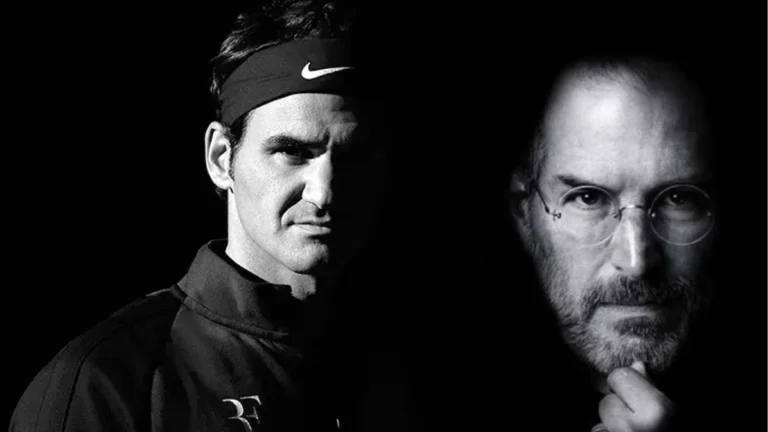
All records are meant to be broken. His speech was great, but Roger Federer gave an insanely great commencement address at Dartmouth University.
Since the age of nine, I have played team sports. Individual sports were not my cup of tea. However, how could you miss a Federer-Nadal final? Federer is legendary. A fantastic global icon. He was never an egoistic, megalomaniac celebrity. But at Dartmouth University, he revealed to the world why he was a legend. He was vulnerable, opened out, and it’s a speech worth watching, not once but many times.
Here are handpicked excerpts from his speech:
“Hello, Class of 2024!
“It’s an incredible feeling to be here with you.
“I am so excited to join you today.
‘Really, you have no idea how excited I am. Keep in mind, this is literally the second time I have ever set foot on a college campus. Second time ever.
“But for some reason, you are giving me a doctorate degree.
“I just came here to give a speech, but I get to go home as ‘Dr. Roger’. That’s a pretty nice bonus.
“‘Dr. Roger’. This has to be my most unexpected victory ever!
“President Beilock, the Board of Trustees, faculty members – thank you for this honour.
“President Beilock, I’m incredibly grateful. And I’ll try my best not to choke.
“I’m a little outside my comfort zone today. This is not my usual scene…
“And these are not my usual clothes.
“Do you dress like this every day at Dartmouth?
“The robe is hard to move in. Keep in mind, I’ve worn shorts almost every day for the last 35 years.
“I’m not a person who gives a lot of speeches like this. Maybe the worst… but an important speech… was when I started out on the Swiss national team. I was 17 years old, and I was so nervous that I couldn’t even say more than four words: ‘Happy… to… be… here.’
“Well, here we are, 25 years later. I still feel a little nervous, but I’ve got a lot more than four words to say to you. Starting with: I’m happy to be here! Happy to be with you, here on the Green.
“I’m even more impressed, because I left school at the age of 16 to play tennis full-time.
“So I never went to college… but I did graduate recently.
“I graduated tennis.
“No, in truth, I’m loving the life of a tennis graduate. I graduated tennis in 2022, and you are graduating college in 2024. So I have a head start in answering the question of what’s next.
“‘Effortless’… is a myth.
“I mean it.
“I say that as someone who has heard that word a lot. ‘Effortless’.
“People would say my play was effortless. Most of the time, they meant it as a compliment… But it used to frustrate me when they would say: ‘He barely broke a sweat!’
“Or ‘Is he even trying?’
“The truth is, I had to work very hard… to make it look easy.
“I spent years whining… swearing… throwing my racket… before I learnt to keep my cool.
“The wakeup call came early in my career, when an opponent at the Italian Open publicly questioned my mental discipline. He said: ‘Roger will be the favourite for the first two hours, and then I’ll be the favourite after that.’
“I was puzzled at first. But eventually, I realised what he was trying to say. Everybody can play well the first two hours. You’re fit, you’re fast, you’re clear… and after two hours, your legs get wobbly, your mind starts wandering, and your discipline starts to fade.
“It made me understand… I have so much work ahead of me, and I’m ready to go on this journey now. I get it.
“So, you know, I tried not to lose.
“But I did lose… sometimes big. For me, one of the biggest was the finals at Wimbledon in 2008. Me vs. Nadal. Some call it the greatest match of all time. Okay, all respect to Rafa, but I think it would have been way way better if I had won…
“Losing at Wimbledon was a big deal… because winning Wimbledon is everything.
“In tennis, perfection is impossible… In the 1,526 singles matches I played in my career, I won almost 80% of those matches… Now, I have a question for all of you… what percentage of the points do you think I won in those matches?
“Only 54%.
“In other words, even top-ranked tennis players win barely more than half of the points they play.”
SL needs a move forward story
Roger Federer’s speech at the University of Dartmouth is a must-watch for everyone. It’s not just a source of inspiration; it’s a masterclass in humility.
Imagine a man who has conquered the world of tennis, winning numerous Grand Slams and triumphing in 80% of the 1,526 singles he played, humbly stating that he “graduated from tennis” only upon his retirement in 2022.
In a world where education is often mistaken for intelligence, fame for brilliance, wealth for superiority, and bloodline for entitlement, Federer’s words are a powerful reminder of what it truly means to be a legend. His humility, despite towering achievements, teaches us that greatness is not just about victories but about the grace with which we handle them.
There is learning from Federer’s speech. You need to move forward. Moving forward can not be done effortlessly. As he correctly points out, effortlessness is a myth. Every champion is born out of hard work, commitment, and a lot of sweat. It applies to a person, a family, a village, a city, and a country.
It’s important to move forward. Especially Sri Lanka needs to move forward. Like any other country, Sri Lanka is imperfect. Having been born to a generation battled with terrorism, rebellions, chaos, recessions, corruption, nepotism, inequality, racism, threats, and harassment, the 65,000 square kilometre island – still it’s the best island in the world of its size.
Sri Lanka needs to have a move forward story which every Sri Lankan can be part of. A story every Sri Lankan can embrace. Sri Lanka’s perceived strengths are its geolocation and biodiversity. But the real strength is its 22 million people, irrespective of which corner of the world that they are living in. The power lies in diversity.
With Asia rising, Sri Lanka should be part of Asia’s move forward story. To move forward, it requires humility, self-confessions, and breaking the status quo. To move forward, it requires being open to learning and embracing the world.
In Sri Lanka, my friends in the corporate C-suite, entrepreneurs, and family business owners increasingly look to be part of the global supply chain. There is urgency, by necessity, even if it’s not the choice. Sri Lanka needs to move inch by inch, everyday – just like Al Pacino’s speech from ‘Any Given Sunday’.
I quote: “You know, when you get old in life, things get taken from you. I mean that’s… part of life. But you only learn that when you start losing stuff. You find out life’s this game of inches. So is football. Because in either game, life or football, the margin for error is so small – I mean one half a step too late, or too early, and you don’t quite make it. One half second too slow, too fast, you don’t quite catch it. The inches we need are everywhere around us. They’re in every break of the game, every minute, every second.”
Sri Lanka should not miss inches which are everywhere in a connected world. Instead of waiting for the world to come, Sri Lanka should move forward to meet the world.
The greater within the lesser
In a deeper Zoom conversation with Roberto Alvarez from Brazil, we ended the conversation with a question from him: “With all that’s going on in the world, are you positive, negative, or in the middle?” I said I was positive. He echoed the same view.
I cannot find in any literature that the world was free from terrorism, rebellions, chaos, recessions, corruption, nepotism, inequality, racism, threats, and harassment. Perhaps this is the problem with humankind and the human mind. Despite that, the world always moves forward. There are millions of things we can agree on that the world is broken. But in the same way, there are millions of things that we can agree on that the world is a much better place.
Friends like Roberto founded and invested in multiple startups including space tech and are moving the world forward. The more you learn from others, the more your achievements look insignificant. The more you listen to others, there is always a student in you.
Here’s to the ones who are not afraid to speak up. To the ones who want to shape the world. To the ones who can rise above adversity. To the ones who could see beyond religion, caste, creed, gender, ethnicity, age, and geography. To the ones who can celebrate failures. To the ones who can see their imperfections. To the ones who want to change themselves before changing others. To the ones who can say ‘us’ instead of ‘I’. To the ones who can lift others. This story is for you.
June 16, Colombo (LNW): Several spells of showers will occur in Western, Sabaragamuwa and North-western provinces and in Galle and Matara districts, the Department of Meteorology said in its weather forecast today (16).
Strong winds of about (40-50) kmph can be expected at times over the Western slopes of the central hills, Northern, North-central and North-western provinces and in Trincomalee, Hambantota and Monaragala districts.
Marine Weather:
Condition of Rain:
Showers may occur at several places in the sea areas off the coast extending from Puttalam to Matara via Colombo and Galle.
Winds:
Winds will be south-westerly in the sea areas around the island. Wind speed will be (35-45) kmph in the sea areas off the coasts extending from Trincomalee to Puttalam via Kankasanthurai, Mannar and from Hambantota to Pottuvil. Wind speed can be increased up to 60 kmph at times in these sea areas. Wind speed will be (25-35) kmph in the other sea areas of the island. Wind speed can be increased up to 50 kmph at times in the sea areas off the coasts extending from Puttalam to Hambantota via Colombo and Galle.
State of Sea:
The sea areas off the coasts extending from Trincomalee to Puttalam via Kankasanthurai, Mannar and from Hambantota to Pottuvil can be rough at times. The sea areas off the coasts extending from Puttalam to Hambantota via Colombo and Galle can be fairly rough at times. Naval and fishing communities are requested to be attentive in this regard.
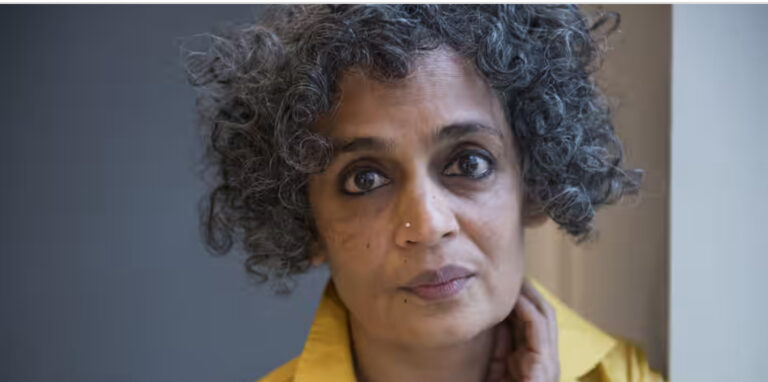
Indian authorities have granted permission for the prosecution of the Booker prize-winning Indian novelist Arundhati Roy over comments she made about Kashmir at an event in 2010.
The top official in the Delhi administration, VK Saxena, gave the go-ahead for legal action against Roy, whose novel The God of Small Things won the Booker prize in 1997, under anti-terrorism legislation, alongside a former university professor, Sheikh Showkat Hussain.
The action against Roy and Hussain, a former professor at the Central University of Kashmir, is over allegedly making provocative speeches, the Press Trust of India reports, citing officials from Saxena’s office.
Saxena, who is serving as the lieutenant governor, is a politician from prime minister Narendra Modi’s ruling BJP.
While Roy, 62, is one of India’s most famous living authors, her activism and outspoken criticism of Modi’s government, including over laws targeting minorities, have made her a polarising figure in India.
Friday’s development follows the news that Saxena had last October given approval for the case to proceed before the courts – more than a decade on from when a criminal complaint against Roy and several others was originally filed. The complaint concerned Roy’s comment that the disputed territory of Kashmir was not an “integral” part of India, and accused her and others of giving speeches advocating the secession of Kashmir from India.
Roy’s home in Delhi was besieged by protesters in 2010 when her comments from the panel discussion were published, when about 150 members of the BJP women’s organisation demanded that she retract her statement or leave the country.
The decision to prosecute was denounced by the Communist party of India (Marxist), which said in a statement: “Condemnable. The Delhi LG has granted permission to prosecute Arundhati Roy under the draconian UAPA [Unlawful Activities (Prevention) Act] for a speech reportedly made 14 years ago – in 2010. Defies logic except the fascist kind. Timing is suspect since courts are on vacation, as are lawyers.”
The UAPA – under which the prosecution has been granted – is unconstitutional and undemocratic, say critics. UAPA, ostensibly a terrorism prevention law, has been routinely used by the Modi government to try to silence government critics, including lawyers, activists, journalists, priests, poets, academics, civil society members, and Kashmiri civilians.
In recent years, Roy has stood out as one of the most high-profile critics of Modi’s government, which has been accused by rights groups and others of targeting activists and the suppression of free speech.