January 03, Colombo (LNW): The National Livestock Development Board has given the green light to allocate five acres of land from its Malsiripura farm to the Ibbagamuwa Pradeshiya Sabha for the construction of a public stadium. This decision was made in response to a request for land transfer, and the board of directors agreed to designate five acres from the Medamulla division of the farm.
Subsequently, the Cabinet has granted approval to the Proposal presented by the Minister of Agriculture and Plantations. This endorsement paves the way for the transfer of the specified land to the Ibbagamuwa Pradeshiya Sabha, facilitating the establishment of the envisaged public stadium.
January 03, Colombo (LNW): Dr. Bandula Gunawardhana, the Cabinet Spokesman Minister, emphasized the critical turning point reached by Sri Lanka’s economy in 2023 under the leadership of President Ranil Wickremesinghe’s government. However, looking ahead to 2024, he cautioned that the economic challenges persist and are expected to endure until 2027.
During a recent Cabinet press briefing, Dr. Gunawardhana stressed the importance of adhering to the International Monetary Fund (IMF) program until 2024 to mitigate the ongoing crisis. He highlighted that diverging from this plan could drastically limit any government’s lifespan to a mere two weeks, irrespective of the ruling party or the President.
The Minister underscored the nation’s reliance on international financial institutions like the IMF, World Bank, Asian Development Bank, and creditors for sustaining the economy. He elucidated that without agreements in place with these entities, Sri Lanka would struggle to function financially, unable to even secure necessary imports such as petroleum, fertilizers, pharmaceuticals, and essential consumer goods.
Dr. Gunawardhana emphasized that the country’s access to international loans in 2027 would be limited to a maximum of USD 1,500 million, emphasizing the necessity of adhering to international financial regulations.
In light of these challenges, the Minister urged for significant sacrifices in the coming year, calling for collective efforts to navigate through the existing economic crises and ensure the country’s stability.
January 03, Colombo (LNW): The Commissioner General of Examinations, Amith Jayasundara, has urged students preparing for the 2023 G.C.E. Advanced Level examination to take note of a minor alteration in the timetable. Mr. Jayasundara clarified that the Department of Examinations had made revisions due to the inclusion of Korean Language as a new subject.
Students were cautioned against using previous exam timetables, as certain websites might display outdated information. Emphasizing the importance of relying on the amended timetable provided in the examination admission card, he stressed that this document contains accurate and updated scheduling information for each subject, including date, time slots, subject number, and medium of instruction.
Highlighting the convenience of this information on the admission paper, Mr. Jayasundara reassured students that it suffices for their reference, eliminating the need to seek additional timetable details elsewhere.
Addressing concerns about students in disaster-prone areas, the Commissioner General assured the implementation of a special program to arrange alternative examination centers, with priority given to regions like Anuradhapura, Kekirawa, Polonnaruwa, Passara, Ampara, Batticaloa, and Hasalaka.
In light of inclement weather affecting travel to examination centers, students were advised to seek assistance from the nearest Zonal Education Office or Disaster Management Units to ensure timely arrival at the exam venues.
January 03, Colombo (LNW): Minister of Health Ramesh Pathirana reassured the public about the Ministry’s vigilant monitoring of the emerging JN.1 Covid variant reported from India. At a press conference held at the Presidential Media Center, he confirmed that no cases have been reported from conducted sample tests thus far. However, he urged the public to maintain the health protocols established during the previous Covid seasons.
Amid discussions on the new variant, Minister Pathirana highlighted that the World Health Organization hasn’t raised undue concerns, emphasizing ongoing surveillance and extensive testing by the Medical Research Institute.
Addressing the measles resurgence, the Minister announced the finalization of preparations for a nationwide vaccination program. This initiative, scheduled to begin the following week, will be administered through Medical Officer of Health (MOH) Offices across the country.
He underscored the Ministry’s commitment to providing advanced medicines under the free health service, acknowledging past shortages due to the pandemic’s economic impact. Efforts to expedite medicine procurement and digitize the procurement process were highlighted as key strategies for future transparency and efficiency.
Furthermore, Minister Pathirana revealed President Ranil Wickremesinghe’s allocation of funds in the current budget to enhance the quality control laboratory of the NMRA. Structural enhancements and capacity building are anticipated in the coming year.
Highlighting the need for collective action against dengue, he emphasized a community-driven environment-cleaning program involving security forces to control the disease.
Despite Sri Lanka’s recognition by the World Health Organization for measles eradication, Minister Pathirana acknowledged around 700 reported cases last year. To address this, plans have been made to provide measles immunization vaccines through all Medical Officers of Health offices nationwide, encouraging parents to ensure their children receive necessary immunization.
January 03, Colombo (LNW): In an effort to promote inclusivity and address challenges faced by people of diverse Sexual Orientations, Gender Identities, Gender Expressions, and Sex Characteristics (SOGIESC) in Sri Lanka, the Legal Aid Commission of Sri Lanka, under the Support to Justice Sector Project (JURE), organised a Round Table Dialogue.
This significant event, supported by the European Union (EU) and jointly executed by the United Nations Development Programme (UNDP) and the United Nations Children’s Fund (UNICEF) Sri Lanka, was conducted in collaboration with the Ministry of Justice.
The dialogue brought together key stakeholders, including representatives from the Attorney General’s Department, the Ministry of Justice, Women and Children’s Bureau, Sri Lanka Police, Prison’s Department, Human Rights Commission of Sri Lanka (HRCSL), Legal Aid Commission, and the Bar Association of Sri Lanka (BASL).
A crucial outcome of the dialogue was the unanimous agreement among participants on the importance of collaboration and communication between the government and the Lesbian, Gay, Bisexual, Questioning, Intersex, and Asexual (LGBTQIA+) community for meaningful progress.
In line with this commitment, it was decided that LGBTQIA+ organisations would compile a comprehensive list of requests and recommendations. These submissions are to be handed over to the Legal Aid Commission thereafter.
In recent developments, a circular released by the Sri Lanka Police outlining protocols for interacting with individuals of transgender identities within the country and offering recommendations for addressing their problems was subjected for review with the aim of extending protection to encompass the entire spectrum of SOGIESC.
A private member’s bill showcasing decriminalisation of consensual same-sex sexual relations between adults via a ‘Penal Code (Amendment) Bill’ was tabled by Ruling Party MP Premnath Dolawatta, a historical first move by a Sri Lankan lawmaker for the safeguarding of the rights of the LGBTQIA+ community.
Dolawatta’s bill was challenged before the Supreme Court of Sri Lanka accusing it to be violating fundamental rights (FR), but the arguments were dropped in a historic determination that consensual same-sex sexual relations between adults are in fact constitutional and any move for decriminalisation can be passed into law with a simple majority in Parliament.
January 03, Colombo (LNW): Sri Lanka government has improved the quality of the financial analytics supporting the development of the Medium-term Fiscal Framework (MTFF) establishing a new Macro Fiscal Unit (MFU), finance ministry sources revealed.
The new MFU will enhance technical capabilities and appropriate systems for revenue forecasting.
A change to fiscal rules could strengthen fiscal governance by avoiding an incentive to make unrealistic revenue forecasts and prevent changes to the size of the budget during the approval phase.
IMF has been working with the Government to review existing fiscal rules to better promote fiscal sustainability.
The fiscal rule should be applied in determining the MTFF with Parliamentary engagement regarding the fiscal envelope at the start of the budget process, thus limiting the need for adjustments at the end of the process.
There exists a range of funds outside of the Consolidated Fund which are not covered by the budget.
The risk of corruption is exacerbated as off-budget funds are typically not subject to standard internal control procedures, have limited transparency and do not receive the same level of external oversight as applied to budget entities.
New Macro Fiscal Unit (MFU) has made complete analytics on total revenue for the year 2023 and concluded its findings.
Amidst multiple taxes, the Government revealed that revenue in the just concluded 2023 had reached Rs. 3.1 trillion as against revised estimate of Rs. 2.85 trillion.
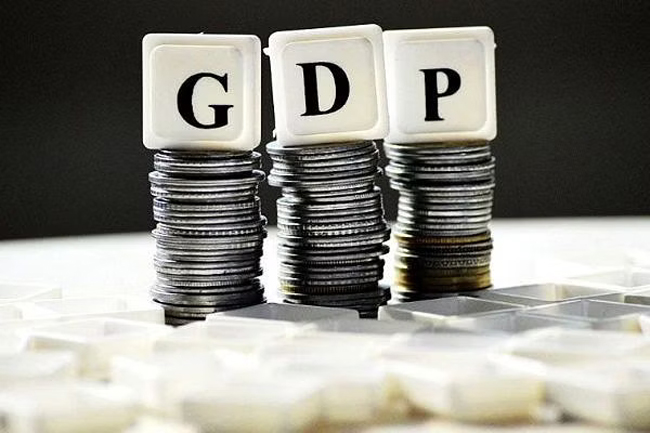
“Last year, the Government revenue reached Rs. 3.1 trillion, constituting 12% of our GDP. As part of our strategic vision, we aim to elevate the GDP to 15% by 2026.
In the year 2024, we have set a target of achieving Rs. 4.2 trillion in Government revenue, necessitating a revision of the Value Added Tax (VAT),” President Ranil Wickremesinghe said yesterday at the opening of the Sri Lanka Air Force Headquarters at Akuregoda.
The 2023 achievement was put in context by State Minister of Finance Shehan Semasinghe who told a media briefing that.
He said in terms of state income, it is anticipated to reach Rs. 3110 billion in 2023, surpassing the revised estimate of Rs. 2850 billion.
This would represent a state income of 11.2% compared to GDP. Ambitiously, there are plans to propel this figure to a 15% growth by 2026, he added.
Semasinghe also emphasised the country has witnessed a noteworthy upturn in the number of tax files, reflecting a positive trend in tax compliance.
According to him, in 2019, the total number of registered taxpayers stood at 1,705,233. However, owing to various policy decisions, this figure decreased to 677,613 in 2020 and further to 507,085 in 2021.
“Demonstrating a commendable success in policy implementation, the number of tax files rebounded from 437,547 in 2022 to a significant milestone of one million,” Semasinghe added.
January 03, Colombo (LNW): The Bank of Ceylon, Sri Lanka’s premier financial services entity has been named ‘The Bank of the Year – Sri Lanka’ by the prestigious Banker magazine UK.
The announcement was made to all stakeholders and loyal customers at an event held at the commencement of the New Year.
The award, which comes on the heels of a volatile year for the financial services industry and the economy, recognises the Bank’s stellar –performance across key indicators and highlights BOC’s resilience and standing, both as a state bank and as ‘Bankers to the Nation’.
Bank of Ceylon was also listed among the Top 1,000 Banks in the world by the magazine for the 12th consecutive year, and is the only Sri Lankan bank to be listed for 2023.
Significantly, the Bank posted an aggregate growth in its balance sheet further highlighting customer confidence.
The Bank’s sustained commitment to revolutionising banking and enhancing customer delight is also reflected in the results.
BOC General Manager Russel Fonseka commenting on this achievement said: “the strategic goals are aligned with the global Sustainable Development Goals (SDGs) as we believe in contributing to our national priorities and the community.
The conscious choices reflect the business model that has sustainability at its core, thus making a meaningful, positive impact on both society and the environment as a responsible corporate citizen.”
The awarding of the listing by The Banker, is the latest in a series of awards and acknowledgements of recognition of Bank of Ceylon’s performance in strategic and key areas including customer experience and delight as well as technology-led innovation and development of technologically-led products and services.
Bank of Ceylon’s holistic approach to environmental sustainability efforts and leadership in sustainable practices, in line with United Nations’ Sustainable Development Goals (SDGs), were recognised by the Green Building Council of Sri Lanka (GBCSL) with no less than three awards at the recent Green Building Awards.
BOC’s City Office in Fort, its oldest branch, which was recently renovated won the Silver award in recognition for optimising green efficiency, while the Bank retained its ”Green Business Leadership of the Year Award – Bank Section” for the second consecutive year, and also grabbed the award for ‘Green Commitment Excellence of the Year 2023’.
The Bank’s 2022 annual report, under the theme – ‘Resilient Resolve Revive’, was also recognised with the Gold Award at the recently concluded TAGS Awards 2023 by CA Sri Lanka.
January 03, Colombo (LNW): FACETS Sri Lanka 2024, Asia’s leading Gem and Jewellery Exhibition organised by the Sri Lanka Gem and Jewellery Association (SLGJA), will be unveiling the country’s first-ever Sustainability Pavilion.
This ground-breaking initiative is set to captivate and educate visitors from around the world, offering a unique glimpse into the rich history of the Sri Lankan gem industry and its modern commitment to ethical practices, responsible sourcing and community engagement.
At the heart of the Sustainability Pavilion, FACETS Sri Lanka 2024 presents a historical journey through the evolution of the Sri Lankan gem industry.
Interactive displays and state-of-the-art touchscreens will immerse visitors in the fascinating transformation that has taken place over generations, shedding light on the industry’s incredible past.
As Facets enters its 30th year, it continues to be a beacon for the gem and jewellery industry, showcasing the beauty, diversity, and sustainability of Sri Lanka’s precious treasures to the world.
The Sri Lanka Gem and Jewellery Association (SLGJA) in collaboration with the National Gem and Jewellery Authority (NGJA) and the Export Development Board announces the grand celebration of the 30th edition of Facets, Asia’s premier gem and jewellery exhibition.
Scheduled to take place at the esteemed Cinnamon Grand Colombo from 6 to 8 January 2024, this milestone event marks 30 years of successfully highlighting the splendour and glamour of Sri Lankan gems and jewellery in the global stage.
Facets Sri Lanka Chairman Altaf Iqbal expressed his enthusiasm for the upcoming event, stating, “Facets has always emphasised that this show is for Sri Lanka, showcasing our rich heritage of gems and jewels to the world.”
“We aim to bring in reputed buyers from all over the globe with participants, sharing our exquisite gems and jewellery.”
Facets 2024 promises to be a spectacular platform, featuring several Pavilions that will capture the essence of Sri Lanka’s gem and jewellery legacy.
The Gem Pavilion, Premier Jewellery Pavilion, Sustainable Pavilion, Sapphire Masterpiece Pavilion, NGJA SME Pavilion and the SLGJA Pavilion will be integral parts of this grand event.
A highlight of Facets 2024 is the Sapphire Masterpiece Pavilion, which is a first in Sri Lanka. This pavilion is meticulously designed to exhibit the diverse range of Sri Lankan sapphires, including mesmerising blue, pink, yellow, purple colours, alexandrite, cat’s eyes and many more varieties.
What sets this showcase apart is the unprecedented inclusion of both rough and cut and polished stones, all sourced from various regions across Sri Lanka.
This ground-breaking approach marks the first time in history that a gem and jewellery show will display stones in their raw, uncut state alongside their refined, cut, and polished forms.
January 03, Colombo (LNW): The Credit Information Bureau of Sri Lanka (CRIB), the first Credit Bureau in the South Asian region, is exploring the possibility of introducing credit rating classification in addition to presenting credit score reports under its financial information services.
The CRIB is developing a new state-of-the-art credit bureau system replacing the present computer system with the assistance of one of the best credit bureau services, finance ministry sources divulged.
Credit member institutions, banks, finance companies and leasing companies are used for this present system for a long period and all their data will have to be shifted to the new system without any inaccuracies, a senior ministry official said
In a significant move to elevate its customer services in obtaining your own credit report, the Credit Information Bureau of Sri Lanka (CRIB) is set to revamp its digital on boarding process.
CRIB, being the sole credit bureau in the country, empowers individuals and businesses by providing easy access to their credit reports through various channels, including online platforms and banking applications.
Under the legal mandate, all licensed banks and non-bank financial institutions are required to report newly granted credit facilities on a monthly basis.
This includes diverse financial transactions such as loans, credit cards, leases, factoring, margin trading, letters of credit, and more.
In order to further improve the ongoing digitalisation process, the bureau intends to introduce measures to digitally on board above two categories of customers who are presently not being captured in the system and thereby ensuring digital footprint of all users of CRIB services.
As CRIB ventures into this transformative phase, matching a robust customer verification with streamlined service delivery remains a top priority.
The bureau’s strategic digital on boarding initiative reflects its commitment to harnessing technology for the benefit of its users while upholding the highest standards of data integrity and security.
However, in the process of issuing iReports to the manual and unregistered online users, the bureau has to adopt a stringent customer verification process to ensure that the information is released to intended and legitimate users.
Recognising its significance, CRIB has incorporated multiple measures into the user verification process to guarantee the validity and accuracy of NIC information.
In this endeavour, CRIB recently signed a Memorandum of Understanding with the Department for Registration of Persons (DRP) to obtain an online facility offered by the department for verification of NIC details of individuals through an online service portal.
Integration of this service offering within the bureau’s customer service process is expected to help CRIB to carry out customer due diligence effectively and speedily. This step further elevates the ongoing digital on boarding process to its next level of digitalisation of the bureau services.
The Inland Revenue Department (IRD) has underscored the necessity of acquiring a Tax Identification Number (TIN), warning that failure to do so incurs a penalty of Rs. 50,000. Effective January 1, 2024, any individual aged 18 or above, or those reaching 18 after this date, are mandated to register with the IRD and obtain a TIN.
While the possession of a TIN doesn’t automatically indicate an obligation to pay income tax, individuals earning an annual income exceeding Rs. 1.2 million are required to pay income tax as per the stipulations.
The Ministry of Finance clarified that a TIN is now mandatory for several activities, including opening a current account, obtaining building plan approvals, registering a motor vehicle, renewing a license, and registering land title deeds.
To facilitate registration, the public can opt for various methods, as outlined by the IRD:
Online Registration: Individuals can visit the IRD website and navigate to e-Services, where they should click on “Access to e-Services” and select “Taxpayer Registration.” After filling and submitting the application form, a certificate containing the TIN and a one-time PIN will be emailed upon departmental review.
Registration by Post or In-person: Applicants can complete the Registration Application Form and submit it to the Primary Registration Unit at the IRD Head-office (2nd Floor) or any nearby Regional/Metropolitan Office.
For online registration, a PDF of the National Identity Card (both sides scanned) needs to be uploaded. In cases where the address on the NIC has changed, an appropriate document validating the new address must also be uploaded. The IRD encourages compliance with these requirements for smooth registration.