May 16, Colombo (LNW): The low-level atmospheric disturbance still persists in the vicinity of the island, and therefore, the prevailing showery condition is expected to be continue further, the Department of Meteorology said in its daily weather forecast today (16).
Showers or thundershowers will occur at several places in most provinces of the island after 1.00 p.m., with heavy showers about 100mm being likely to occur at some places in Western, Central, Sabaragamuwa and Uva provinces.
Showers may occur in Western, Southern and Eastern coastal areas during the morning as well, the statement added.
General public is kindly requested to take adequate precautions to minimise damages caused by temporary localised strong winds and lightning during thundershowers.
Marine Weather:
Condition of Rain:
Showers or thundershowers will occur atseveral places in the sea areas around the island.
Winds:
Winds will be south-westerly or variable and wind speed will be (20-30)kmph.
State of Sea:
The sea areas around the island will be slight. Temporarily strong gusty winds and very rough seas can be expected during thundershowers.
The 10th World Water Forum provides a unique platform where the water community and key decision makers can collaborate and make long term progress on global water challenges.
The preparation of the 10th World Water Forum has now entered its active phase. On February 15 and 16, nearly a thousand members of the world water community will meet in Jakarta at the initiative of the highest authorities of the Republic of Indonesia.
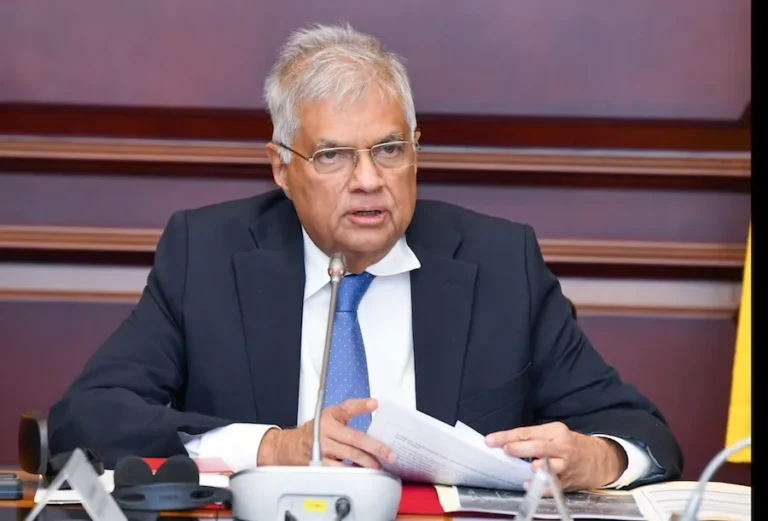
Sri Lankan President Ranil Wickremesinge is expected to head to Bali, Indonesia next week to attend the World Water Forum, said Minister Jeevan Thondaman on Monday (13).
The 10th World Water Forum will take place from the 18th to the 14th of May, and is hosted by the Government of Indonesia.
“On the 19th of this month, the President and myself, we will be attending the World Water Conference that’s to take place in Bali, Indonesia,” said Minister Thondaman.
He also said that President Ranil Wickremesinghe is expected to do bilateral discussions with the Indonesian President.
The Minister for Water Supply and State Infrastructure will take part in a panel discussion organized by the World Bank Group.
Dozens of Indonesian National Armed Forces (TNI) armored tactical vehicles (Rantis) and electric escort motorbikes arrived at Military Sealift Command Pier, Tanjung Priok, North Jakarta, on Saturday, 11 May to depart for Bali.
These vehicles were deployed to provide security for the 10th World Water Forum in Nusa Dua, Bali, from 18 to 25 May.
Dozens of Rantis and escort motorbikes were transported to the Island of the Gods using four Indonesian Navy ships, namely KRI Banjarmasin-592, KRI Makassar-590, KRI Banda Aceh-593, and KRI Teluk Bintuni-520. All Rantis were expected to arrive at the Port of Tanjung Benoa Bali on 14 May.
Head of the Indonesian Military Information Center who is also the Commander of Information Task Force of the 10th VVIP World Water Forum Joint Integrated Security Command, Major General Nugraha Gumilar, said that apart from preparing soldiers and support vehicles, his party was also preparing the Main Equipment and Weapon System (Alutsista).
Ten hotels in Nusa Dua area, Badung Regency, Bali will be the accommodation for VIP and VVIP state guests of the 10th World Water Forum slated to be held on 18–25 May in Bali.
“To date, there are seven hotels for VVIP guests and three hotels for VIP guests and delegates,” said the General Manager of PT Indonesian Tourism Development Corporation (ITDC), I Made Agus Dwiatmika, in Nusa Dua, Badung Regency, Bali, on Wednesday, 8 May.He continued that all confirmed hotels were improving their facilities and security systems, including X-ray scanners and security check portals
In the past 20 years of market leadership, Ceylinco Life insurencec omany has achieved the highest premium income every year since 2004. This is no mean feat by local or international standards., Ceylinfo Life Chairman R. Renganathan claimed.
However,the company believes that in determining the market leader in life insurance, there are other factors that must also be considered.
These are capital adequacy, profitability, and Life Fund and Reinsurance arrangements. It would also be good if factors like claim settlement, gender equality in employment and good citizenship are assessed.
Capital adequacy in life insurance refers to the sufficiency of an insurer’s capital to cover its risks and obligations effectively.
Life insurance companies hold capital to ensure they can pay policyholders’ claims, meet regulatory requirements, and remain solvent in adverse situations.
The capital adequacy ratio compares an insurer’s available capital to its required capital, based on the risks inherent in its business. The risks include market risk, credit risk, concentration risk, liability risk, operational risk and reinsurance risk.
The minimum capital adequacy required by the regulator is 120% while the regulator has the right to intervene when the capital adequacy is 160% or less.
Notably, Ceylinco Life’s Risk-based Capital Adequacy Ratio improved to 344% at the end of 2023, well above the minimum requirement of 120%.
The size of a life insurance company’s Life Fund combined with Capital Adequacy is an indicator of the ability of the company to meet future obligations. Ceylinco Life’s Life Fund stood at Rs 157.5 billion as at 31st December 2023, after a transfer of Rs 1.97 billion to the Shareholders Fund in respect of the year.
The profitability of a life insurance company is important because it is possible for companies to sell some products in their portfolios at breakeven levels or at a loss, to show premium growth.
Finally, any life insurance company should have reinsurance arrangements with a rated insurer. This is the process of sharing its risk and enables transfer of knowledge.
Success in life insurance can be equated with trust. Life insurance is a product that is far more intangible than a straightforward investment in an interest-earning bank deposit where the dynamic between the management of risk and return is clear, CEO of the company Thushara Ranasinghesaid The significance of our market leadership, in that context, is that it affirms that Ceylinco Life is the most trusted life insurance company in the country, and has been the most trusted company for the past 20 years, he added
In a bid to alleviate the ongoing challenges faced by micro, small and medium-scale entrepreneurs (MSMEs) and industrialists amid the economic turmoil triggered by the COVID-19 pandemic and the Easter Sunday attack, the Industries Ministry has announced a comprehensive plan.
To kick start the initiative, the Finance Ministry, upon the recommendations of the Industries Ministry, has devised a working capital loan scheme featuring a concessionary interest rate.
The scheme seeks to inject renewed vigour into entrepreneurs and industrialists burdened with non-performing bank loans.
Against this backdrop, the Industries Ministry aims to gather crucial information about entrepreneurs and industrialists to better understand and address their lingering issues, a top official said.
“For those grappling with non-performing loans (NPLs), the Industries Ministry has streamlined the application process for the working capital loan scheme. Interested parties can access the official website of the Ministry to download the application form,” he added.
Entrepreneurs and industrialists are urged to promptly submit information about their enterprises or industries to the Industries Ministry.
“This can be done conveniently through the provided QR code or Google Link,” the official said, adding that alternatively, individuals can fill out the form and provide the required details to National Enterprise Development Officials at their respective Divisional Secretariats, Vidatha Officers, or Small Enterprise Development Officers affiliated with nearby Divisional or District Secretaries.
Additionally, officials from the Ministry’s Regional Industrial Service Centre or Regional Industrial Development Board are available to assist in this process.
Submissions can be made via email to the Ministry or through the designated officials mentioned earlier.
“Entrepreneurs and industrialists are encouraged to take advantage of these resources to revive their businesses and contribute to economic recovery,” he added.
Successful MSMEs usually evolve into large organisations, and such organisations contribute to economic growth immensely.
MSMEs make an important contribution to the economy as a breeding ground for large firms, an employment provider, and a facilitator of innovation, thereby leading to inclusive and balanced growth.
Most successful economies comprise a healthy mix of both large and small firms. Large firms typically are more productive, have the capacity to invest in capital intensive projects, facilitate research and development on a larger scale, and in turn facilitate the creation of new knowledge contributing to yield growth episodes.
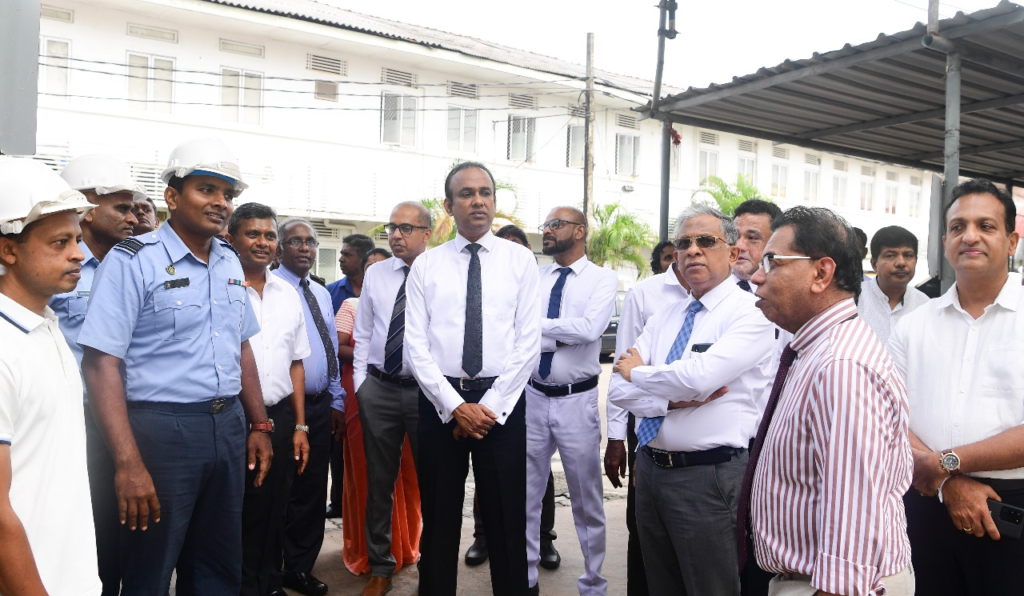
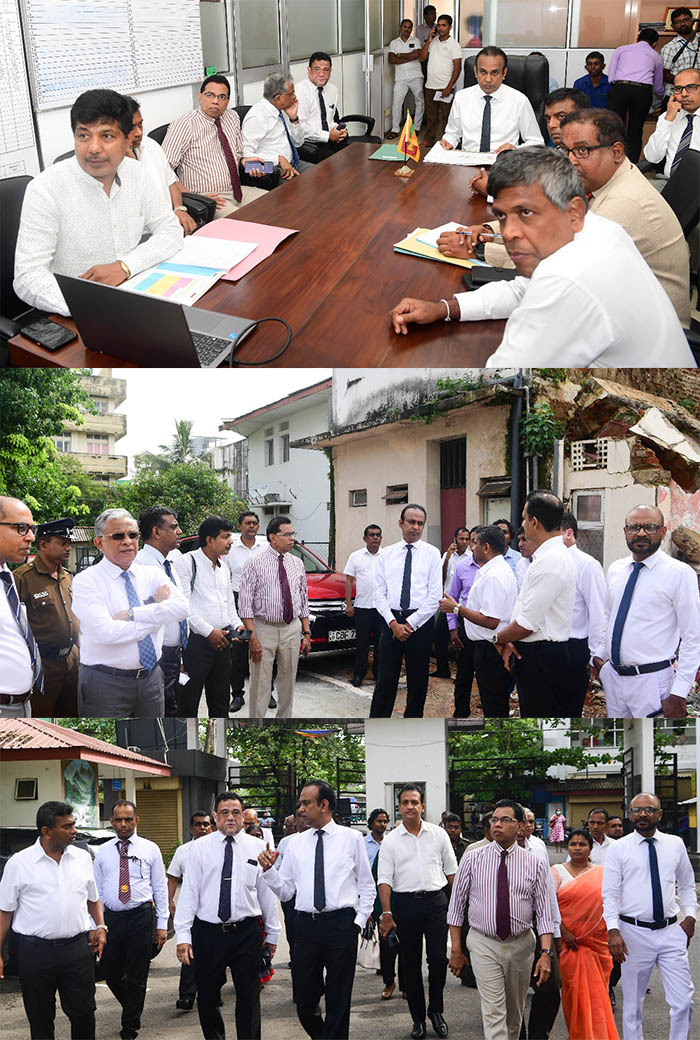
May 15, Colombo (LNW): Under the guidance of Health and Industry Minister Dr. Ramesh Pathirana, a significant discussion on the proposed development plans for Maharagama Apeksha Hospital until 2030 unfolded at the hospital premises on the morning of May 15th.
The discourse commenced by delving into ongoing and forthcoming development endeavors concerning the 10-acre hospital premises, addressing both immediate and long-term initiatives.
H.W.P. Chandrasiri, the authorized architect from the Central Consulting Bureau (CECB) specializing in Special Projects, elucidated the blueprint for future development works at the hospital. He outlined existing challenges in project implementation and detailed steps taken to mitigate these issues, providing comprehensive insights to Minister Pathirana and other pertinent officials.
Highlighting a significant milestone, it was announced that the construction of a four-story children’s ward complex, initiated on September 21st, 2023, through funding from Ruhunu Kataragama Maha Dewalaya, is slated for completion in July this year. With an estimated cost of 150 million rupees and an allocated project duration of eight months, the Sri Lanka Air Force is overseeing project management and construction.
Also, the officials were informed about the ward complex which is intended to be constructed with the fund of Ruhunu Kataragama Maha Dewalaya with a donation of about 500 beds and after the construction of the ward complex, it will be possible to provide optimal and quality treatment services to the people.
Minister Pathirana personally inspected the construction progress of the children’s ward complex, leveraging the occasion to assess the utilization of allocated budgetary resources and the contributions from Ruhunu Kataragama Maha Dewalaya for Maharagama Hospital’s future development.
Emphasizing the importance of methodical and formal execution, officials received directives to ensure streamlined implementation of future development projects.
In attendance were Health Secretary Specialist Dr. Palitha Mahipala, Director General of Health Services Dr. Asela Gunawardena, Ministry of Health officials, Deputy Director of Apksha Hospital Dr. Buddhika Kulakulasuriya, Basnayake Nilame of Ruhunu Kataragama Maha Dewalaya Dishan Gunasekara, and representatives from the Central Consultancy Bureau for Engineering.
President Ranil Wickremesinge is expected to head to Bali, Indonesia next week to attend the World Water Forum. The 10th World Water Forum will take place from the 18th to the 14th of May, and is hosted by the Government of Indonesia. Wickremesinghe is expected to do bilateral discussions with the Indonesian President.
Opposition Leader Sajith Premadasa alleged that 56 out of the 322 ambulances belonging to the ‘1990’ ‘Suwa Seriya’ free ambulance service are now out of service.Premadasa urged the government to take immediate action to safeguard the ‘Suwa Seriya’ Ambulance Service from collapse.
The Government of India on Tuesday (May 14) extended the ban imposed on the now-defunct Sri Lankan militant group, the Liberation Tigers of Tamil Eelam (LTTE), for five more years. According to Indian media, The Hindu, the ban has been extended as it continues to foster a separatist tendency amongst the masses and enhance the support base for it in India, particularly in Tamil Nadu.
A/L classes to begin immediately after O/L exams. The Cabinet of Ministers has approved a proposal to commence Advanced Level (A/L) education immediately after the completion of the GCE Ordinary Level examination. The Department of Government Information in a statement detailing cabinet decisions noted that the Department of Examination currently takes at least three months to release O/L examination results.
President Ranil Wickremesinghe has instructed Prime Minister Dinesh Gunawardena to look into the possibility of invalidating the nominations accepted for the postponed 2023 Local Government (LG) election. Joining the Cabinet press briefing, Cabinet Spokesman Minister Bandula Gunawardena stated that accordingly, President Wickremesinghe has called on the Prime Minister to seek legal advice from the Attorney General in this regard.
Colombo Magistrate’s Court instructed the Criminal Investigations Department to provide an update on the investigation into the death of businessman Dinesh Schaffter. The case was heard by Additional Magistrate Harshana Kekunawela. The CID reported ongoing investigations, while the victim’s lawyers requested access to mobile phones held by the police, citing sensitive family content.
Cabinet approval has been received to gazette the ‘Economic Transformation Bill’ and to present it to Parliament for approval, the Department of Government Information (DGI) reported.
The non-academic staff of state universities have decided to withdraw from the essential services of the university system including water and electricity services from 14th May. The strike action launched by the Joint Committee of University Trade Unions continued for the 13th consecutive day, citing wage issues.
The Court of Appeal ordered that the writ application filed by former Health Minister Keheliya Rambukwella, seeking an order to invalidate the decision taken by the Maligakanda Magistrate’s Court to remand him in custody until the conclusion of the trial related to the import of substandard immunoglobulin vials, will be taken up for consideration on May 31.
Sri Lanka opener Chamari Athapaththu has made notable progress in the ICC Women’s T20I Player Rankings after some fine performances over the past week. Nilakshi de Silva has moved up two places to 48th in the batting rankings, while Inoshi Fernando moved up five places to 19th and Udeshika Prabhodhani moved up five places to 30th.
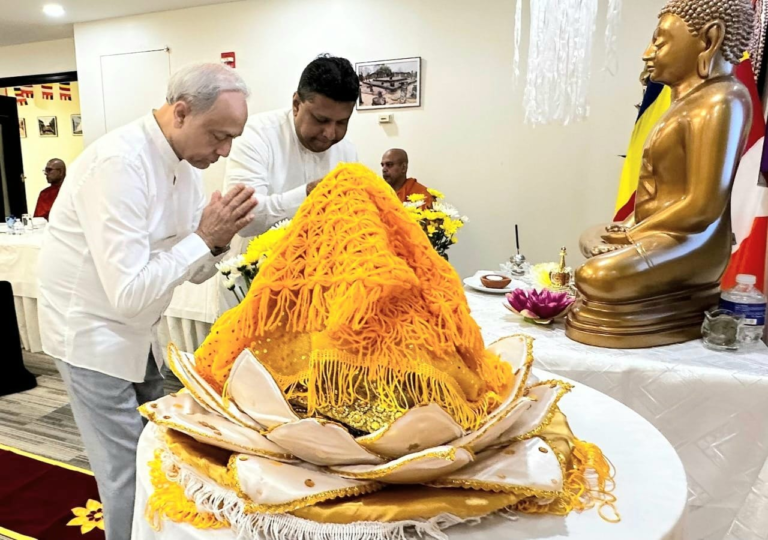
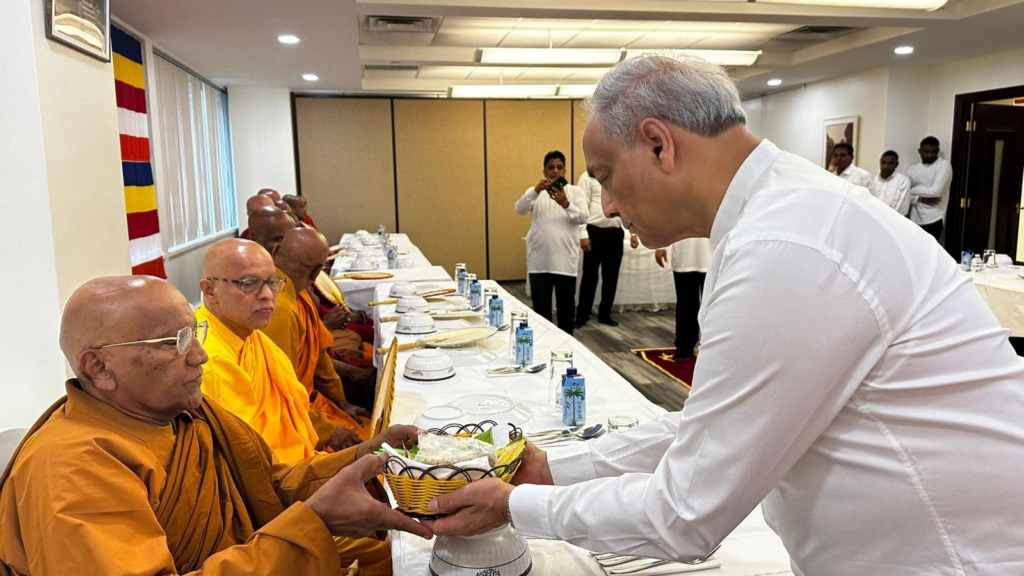
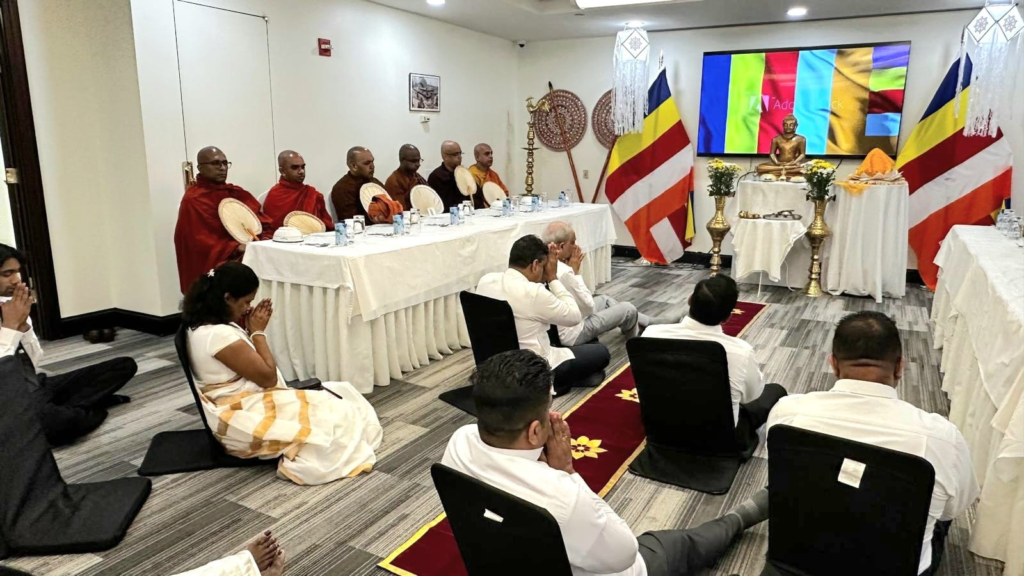
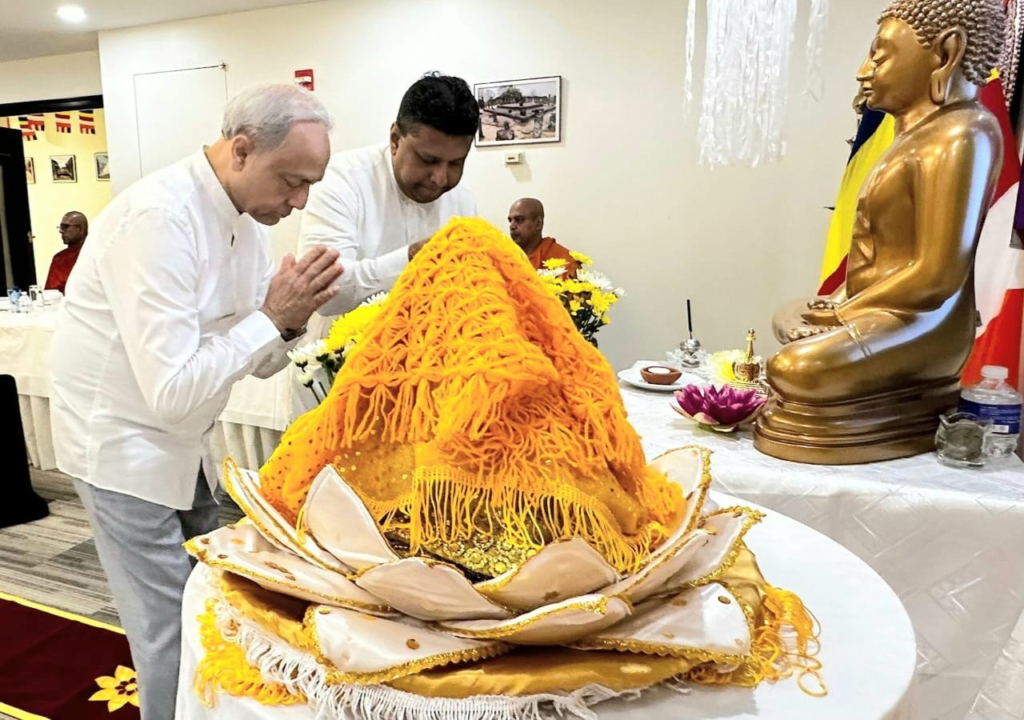
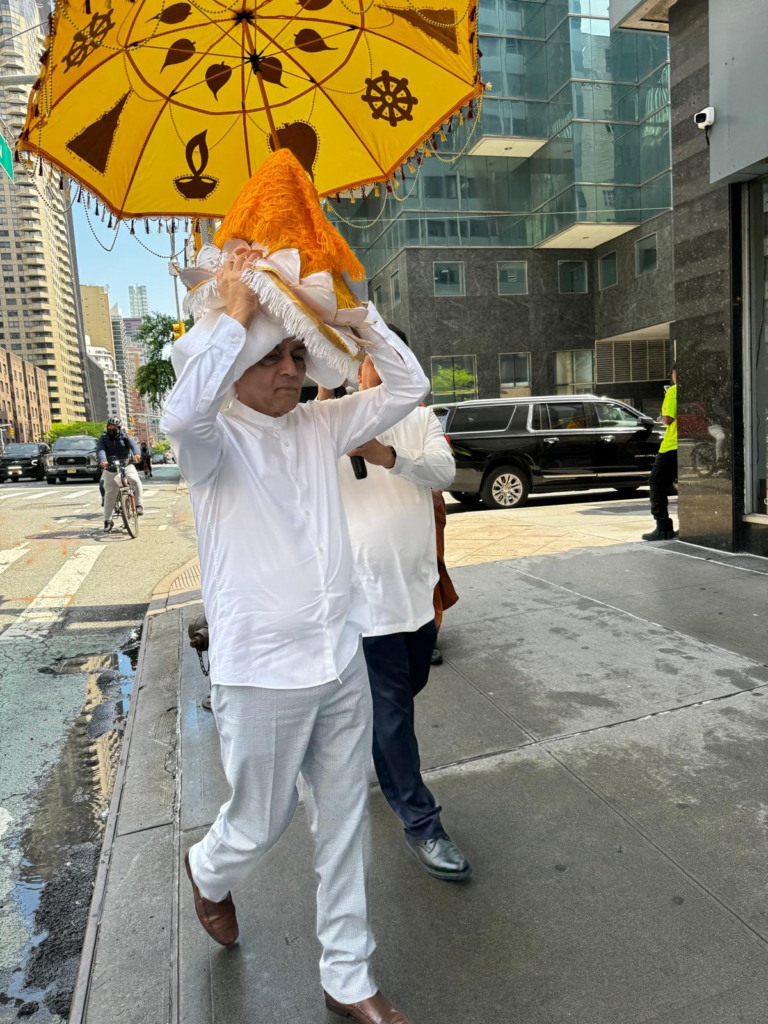
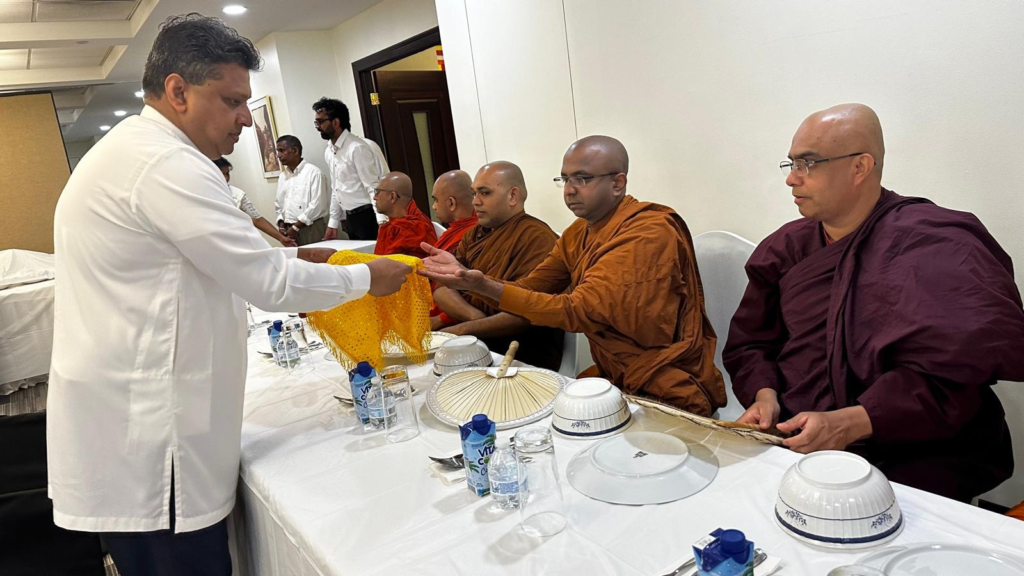
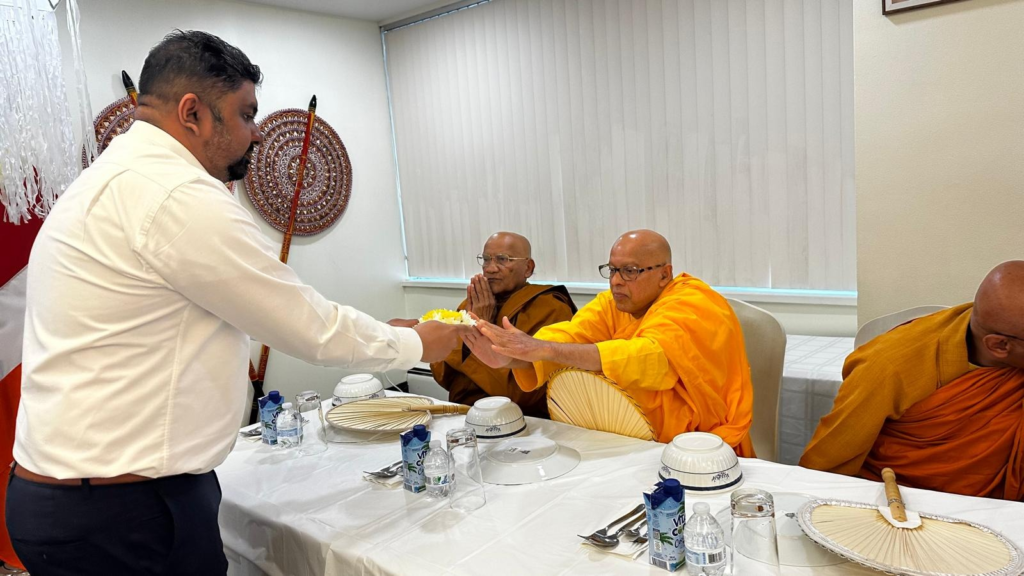
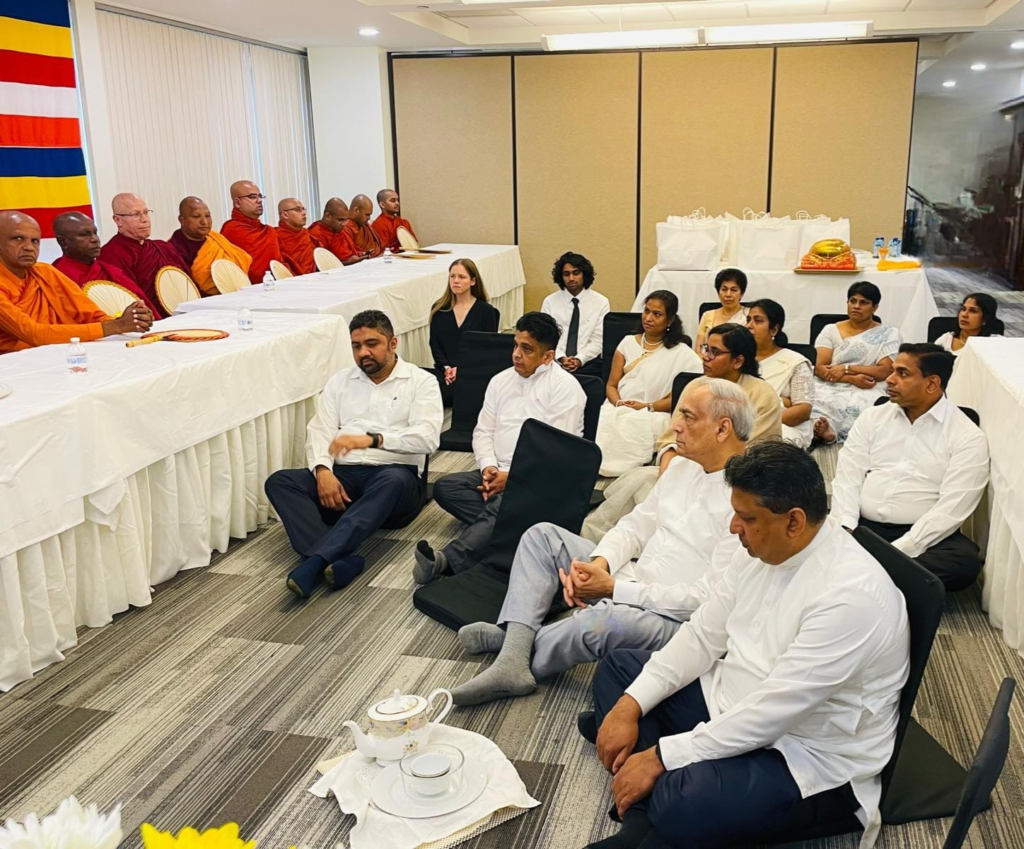
Celebrating the significance of Vesak week, the Permanent Mission of Sri Lanka in New York hosted an almsgiving to the Buddhist Monks in the Tri-State area on 14th May 2024. 20 monks representing Buddhist Viharas around New York, which included New York Buddhist Vihara, Staten Island Buddhist Vihara Meditation Center & Healing Garden, New Jersey Buddhist Vihara, Long Island Buddhist Meditation Centre, the New England Buddhist Vihara and Meditation Centre, Mahamevna Buddhist Meditation Centers of New York & New Jersey and Connecticut Meditation Center/Connecticut Buddhist Vihara graced the occasion and blessed the Ambassador and the mission team for their continued progress.
The Permanent Mission of Sri Lanka to the United Nations in New York is also organizing the International Day of Vesak 2024 in coordination with the Permanent Mission of Thailand in New York, in the ECOSOC Chamber of the United Nations on 20thMay 2024.
This year’s Vesak Day celebrations will be special as its marks the 25th Anniversary of the adoption of the historic Resolution 54/115 titled “International Recognition of the Day of Vesak.” The commemorations in the UN will consist of statements by high level dignitaries including the Secretary General of the United Nations, President of the General Assembly and Foreign Ministers of Sri Lanka and Thailand in addition to those of the Member States. A blessing and sermon representing Mahayana and Theravada traditions respectively will also be held during this event.
The International Day of Vesak celebrations will be live web-cast through UN Web TV for the general public.
FAO promotes Integrated Plant Nutrient Management in paddy farming for better yields.
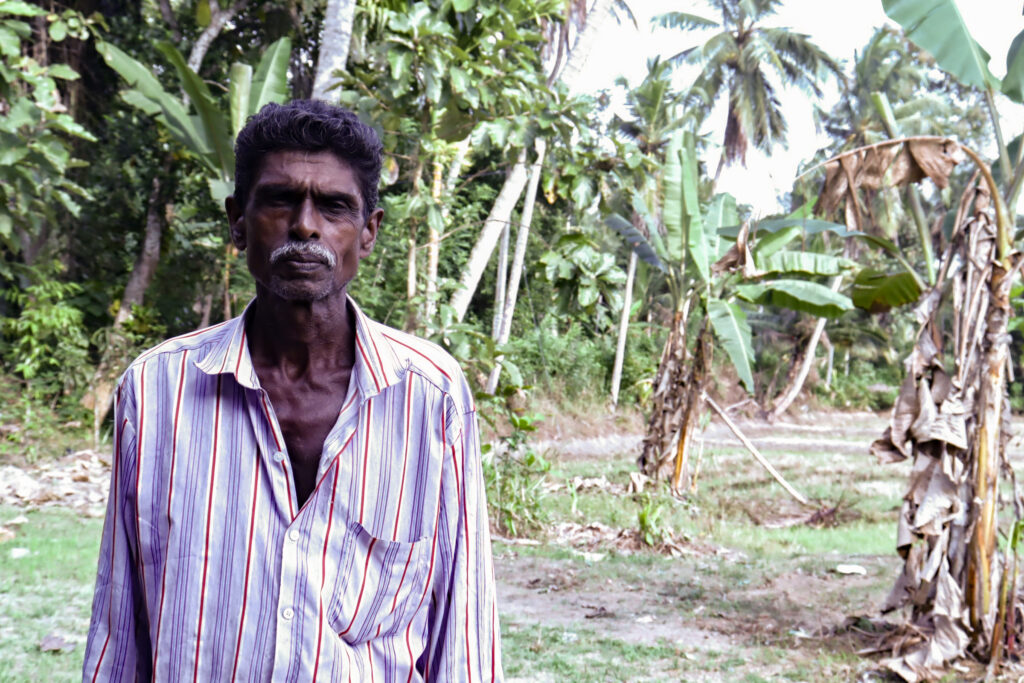
For four decades, Chandrasena, a seasoned paddy farmer in Ampara, has devoted himself to maximizing yields on the two-acre plot of paddy fields he inherited from his father. Despite facing myriad challenges he recently experienced a bountiful harvest thanks to Integrated Plant Nutrient Management (IPNM), part of the “RiceUP” project implemented by the Department of Agriculture and the Food and Agriculture Organization of the United Nations (FAO), with funding from the European Union (EU).
“Over the years I have witnessed how farmers face numerous difficulties trying to get better yields. We have faced drought, heavy rain, pests and diseases that destroyed our harvests. But this year has been a blessed year. This year’s harvest has been good. This Maha season we harvested 1800kg paddy per acre which is around 300kg more than the last season,” says Chandrasena.
Besides increased yields, IPNM’s guidance in fertilization and soil management significantly reduced Chandrasena’s urea usage from 100kg to 60kg per acre, saving costs. With the assistance of Agriculture Instructor E M Dhammika Bandara, Chandrasena and 28 fellow farmers in Uhana, Ampara, learned IPNM techniques through Farmer Field Schools, resulting in a remarkable increase in yield despite adverse weather conditions.
“This is one of the best programmes we have come across during my tenure working in the field. The application of the Farmer Field School methodology has been successful. These farmers have cultivated 60 seasons in their life, but they have not come across the IPNM technology,” says Dhammika. “Chandrasena’s plot was the control plot. We managed to see better harvest from his field as he applied the IPNM practices exactly as taught. We could see a clear difference to non-IPNM plots, IPNM plots had a higher yield even with bad weather.”
Chandrasena’s success story highlights the potential of IPNM to enhance yields and economic sustainability for smallholder farmers like himself. While he currently supplements his income with daily wage jobs, Chandrasena remains optimistic about the future of paddy farming, especially with his son’s support and potential continuation of the family tradition.
“My son is employed but supports my farming as much as possible, hopefully he will continue to cultivate paddy in the future.”
Paddy Farmers get better yield with Integrated Plant Nutrient Management promoted by FAO
FAO promotes Integrated Plant Nutrient Management in paddy farming for better yield
Being a paddy farmer for 40 years in Ampara is not just coincident. Chandrasena has poured his blood, sweat and tears to make sure his paddy field get better yield during these 40 years of time. Not a day has gone by without him tending to the paddy field to make sure he has enough income to look after his two children and his wife from the two acres of paddy field he inherited from his farther.
“Over the years I have witnessed how farmers face numerous difficulties trying to get better yield. We have faced drought, heavy rain and pests and diseases and our farmland destroyed without us getting any harvest. But this year has been blessed year. This year’s harvest has been good,” says Chandrasena referring to the sustainable farming practice called Integrated Plant Nutrient Management (IPNM) introduced by the Department of Agriculture under a project called “RiceUP” implemented by Food and Agriculture Organization (FAO) with the funding from European Union (EU).
Chandrasena says “IPNM practice has been successful because there is a proper way of guiding us on its application. We learned how to apply fertilizer on time and know our soil so well that we can better understand how to treat our paddy plants.”
He says that before learning IPNM, he used 100kg urea per acre of his paddy field. But this time he has applied only 60kg which saved more of his money spent on fertilizer. He says that this is because they applied compost fertilizer to the field thanks to IPNM practices.
E M Dhammika Bandara is the Agriculture Instructor from the Department of Agriculture who facilitated the IPNM Farmer Field School imparting knowledge on IPNM to 28 other farmers like Chandrasena to start practicing IPNM in their paddy fields in Uhana area in Ampara. “This is one of the best programmes we have come across during my tenure working in the field. The application of Farmer Field School methodology has been successful. These farmers have cultivated 60 seasons in their life, but they have not come across the IPNM technology,” says Dhammika. He thinks not only the farmers need to be made aware of this kind of practices, but they need to be guided how to become entrepreneurial using a practice like IPNM.
“Chandrasena’s plot was the controlled plot. We managed to see better harvest from his field as he applied IPNM practices exactly as taught. We could see in comparison to non-IPNM plots, IPNM plots have a higher yield even during impact of bad weather,” says Dhammika.
“This Maha season we have 1800kg paddy for an acre. It is about 300kg more than the last season,” says Chandrasena.
He is determined to continue the IPNM practices in the future making sure after four seasons doing a soil test as well.
However, still the smallholder paddy farmers in Sri Lanka do not get enough income to sustain their families through paddy cultivation as the sole livelihood. Chandrasena too does daily wage jobs when he has free time because the income from the paddy field is not enough. However, Chandrasena thinks the future is brighter than he thought before.
“My son does another job, but he is supporting my paddy farming as much as possible and hopefully he will continue to do paddy cultivation in the future.”
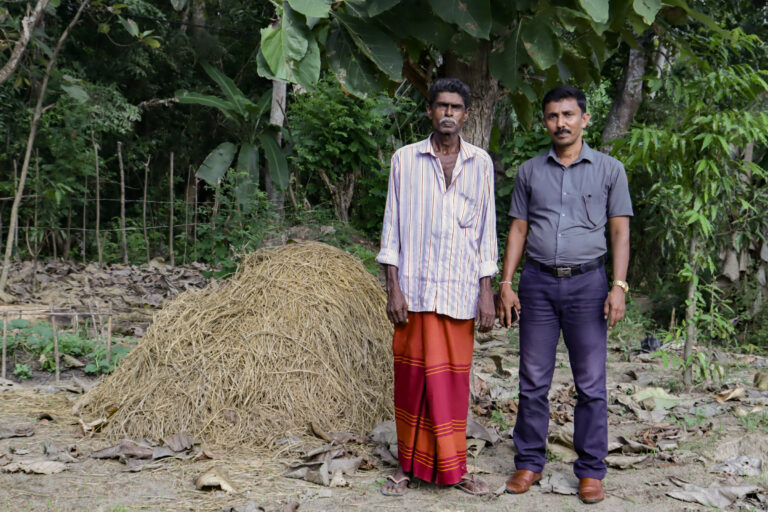
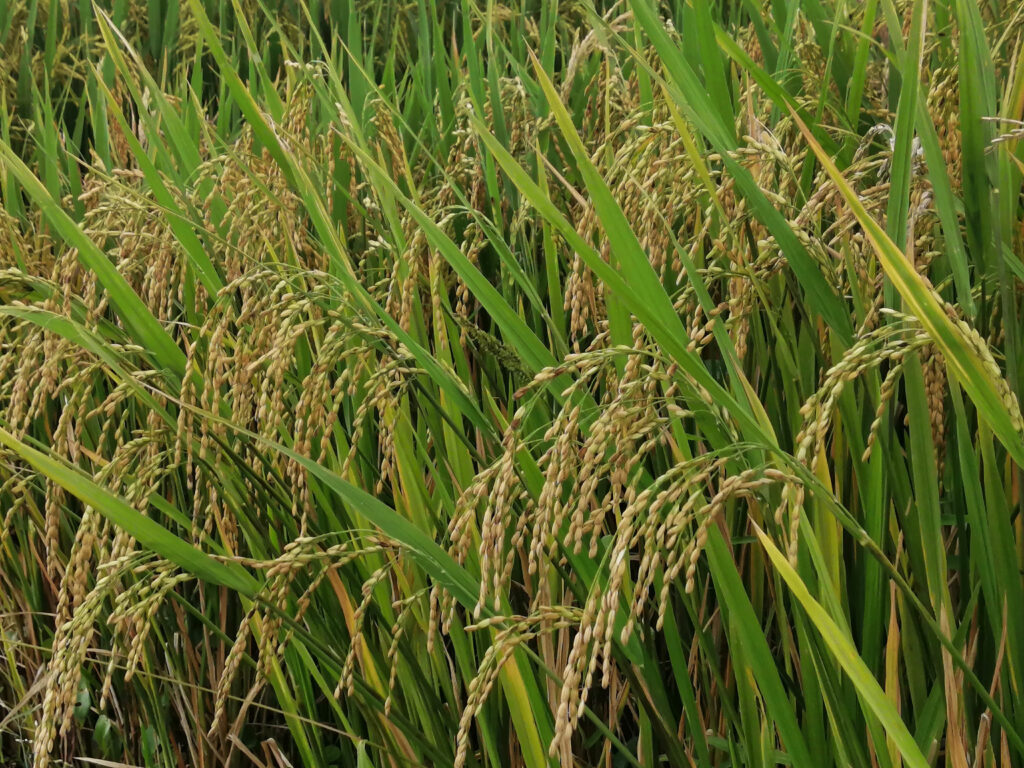
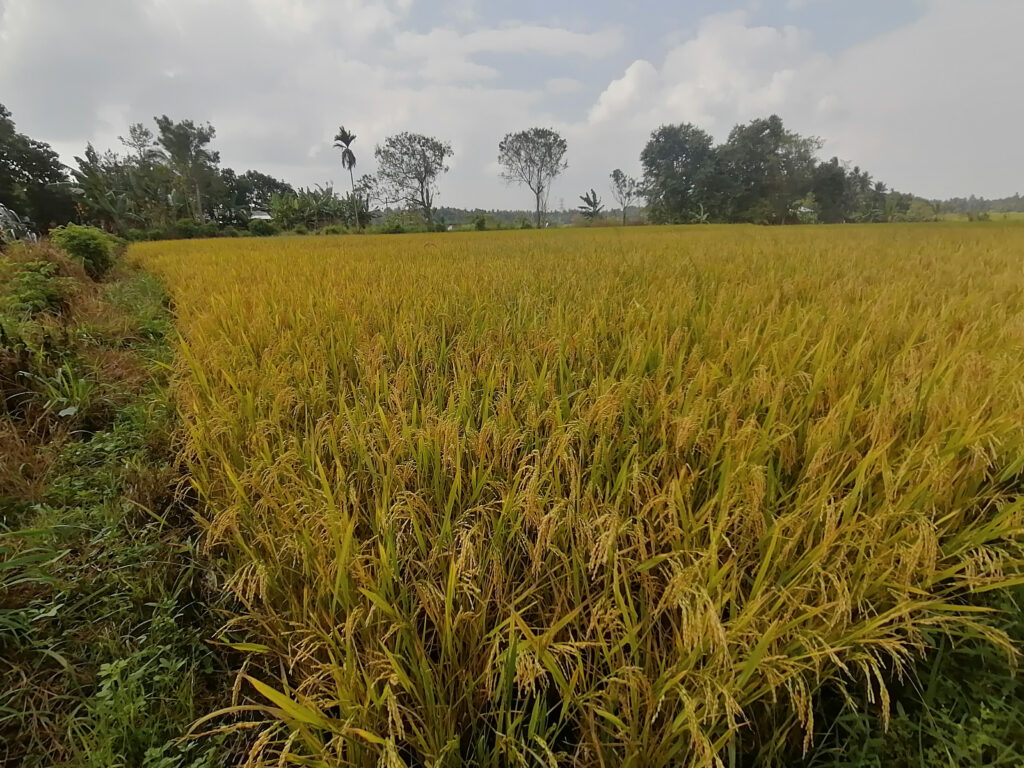
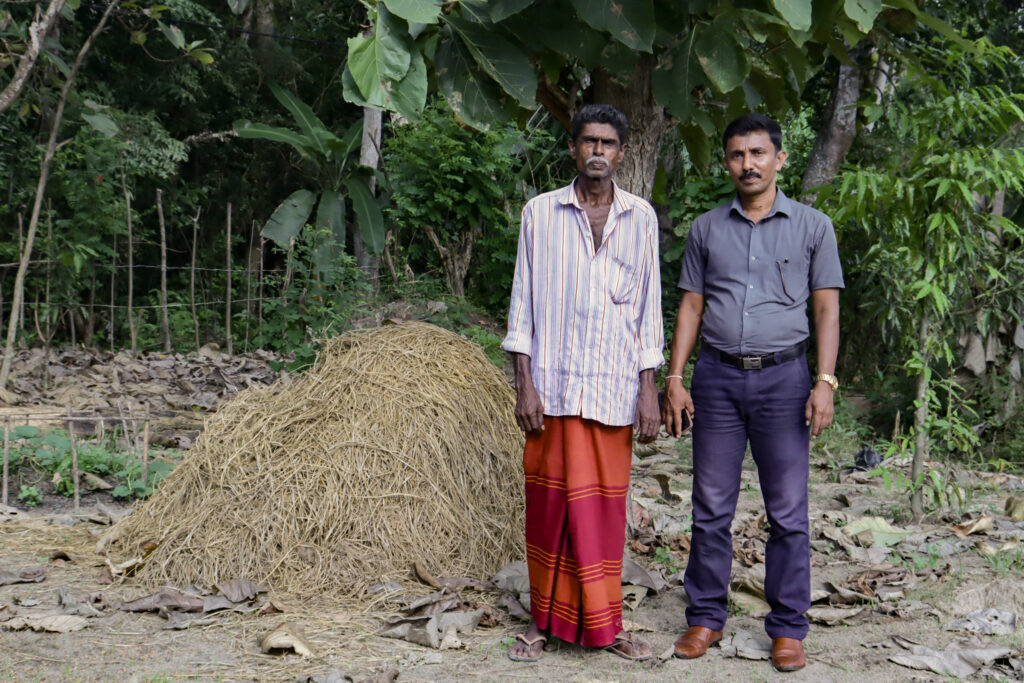
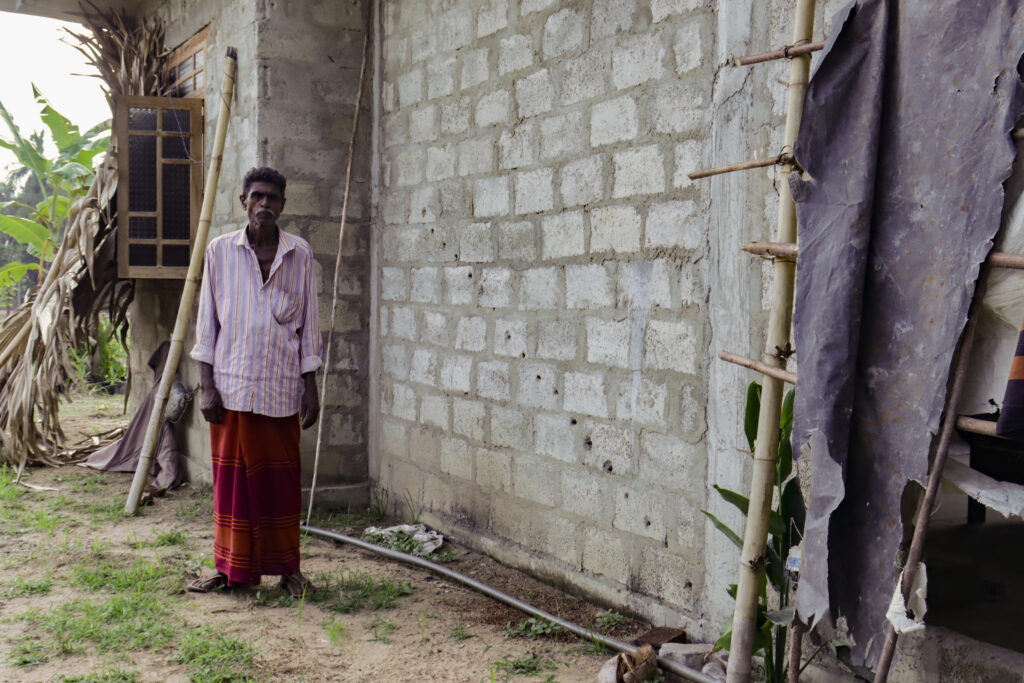
Bountiful Rice Paddy in the paddy fields maintained by the Rice Research and Development InstituteBountiful Paddy Fields after Integrated Plant Nutrient Management Practices were experimented on them under the RiceUP ProjectFarmer Chandrasena and Uhana Agriculture Instructor Dhammika who guided him to implement sustainable farming practicesFarmer Chandrasena in front of his house adjunct to his paddy fieldFarmer Chandrasena after telling his story of 40 years in paddy cultivation in Ampara
May 15, Colombo (LNW): The Sri Lanka Podujana Peramuna (SLPP) has asserted that President Ranil Wickremesinghe has yet to provide a definitive response to their request for a General Election preceding the Presidential Election.
According to the SLPP, Founder of the party Basil Rajapaksa engaged in discussions with the President on Monday (13), specifically addressing this issue. The dialogue marked the seventh round of talks aimed at resolving existing disputes between the two parties.
During these discussions, the SLPP reiterated its position on the nation’s development trajectory, emphasizing the need for clarity and alignment in political agendas.
In a bid to mobilize its electoral base, the SLPP announced plans to commence its election campaign on May 26th, starting from the Kala Wewa constituency in Anuradhapura. The campaign will subsequently extend to other constituencies across the country.
The SLPP’s stance reflects a persistent push for electoral transparency and timeliness, highlighting the ongoing dialogue between political entities amidst the evolving landscape of Sri Lankan politics.
May 15, Colombo (LNW): The Joint Committee of University Trade Unions has announced a further escalation of their strike action, citing prolonged delays in addressing their grievances.
Co-Chairman Dhammika S. Priyantha declared that the association has unanimously agreed to intensify their protest by withdrawing from all voluntary services within universities. This includes suspending the supply of water, electricity, and internet facilities, effectively disrupting various operations across the university system.
Priyantha emphasized the need for authorities to take accountability for the destruction of samples maintained in university laboratories, attributing such occurrences to governmental actions. He warned that unless the administration addresses their concerns, the committee will reassess their voluntary activities within universities.
In response, Senior Professor Sampath Amaratunge, chairman of the University Grants Commission, called upon all employees to prioritize their responsibilities and focus on educating students amidst the ongoing turmoil.
The decision to escalate the strike underscores the growing frustration among university trade unions over unresolved issues, signaling a potential impasse between academic staff and authorities.