May 12, Colombo (LNW): As the Olympic flame arrived in France from Greece, anticipation mounted for the relay featuring 10,000 torchbearers, each representing unique tales of accomplishment.
Among them stands Tharshan Selvarajah, a Paris-based baker originally from Sri Lanka, who arrived in France for the first time in 2006.
Renowned for his prize-winning baguettes, Selvarajah etches his name in Olympic history as the inaugural Sri Lankan torchbearer.
In 2023, Selvarajah clinched the prestigious “Grand Prize of the Traditional French Baguette,” organised by the Paris City Hall, solidifying his reputation.
Subsequently, he earned the esteemed opportunity to supply baguettes to France’s presidential palace.
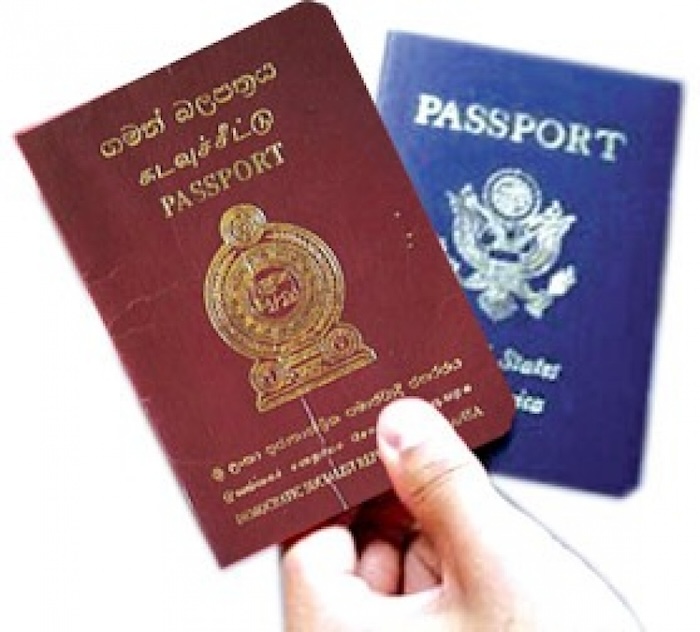
May 12, Colombo (LNW): There are currently more than 10 members serving in Parliament who possess dual citizenship, hence the necessity for the removal of such MPs from their positions prior to the elections, Ven. Omalpe Sobitha Thera disclosed.
Speaking to media, the Thera noted that in light of the recent Supreme Court ruling confirming former State Minister Diana Gamage’s ineligibility to serve as an MP in the Parliament of Sri Lanka due to her British citizenship, all party leaders are respectfully urged to disclose any members within their respective parties who hold dual citizenship.
MPs holding dual citizenship should voluntarily step down before the forthcoming elections, and the onus lies on the respective party leaders to take responsibility for their removal, the Thera emphasised.
He further remarked that such MPs demonstrate a lack of allegiance to the country, using their parliamentary roles solely for personal benefit.
It is imperative that they are given the chance to come forward before the impeding election, the Thera went on, adding that otherwise he has the means to reveal their identities.
“In any event of their failure to do so, we will be compelled to pursue legal recourse against them. However, engaging in litigation over these matters is both protracted and costly,” Sobhitha Thero added.
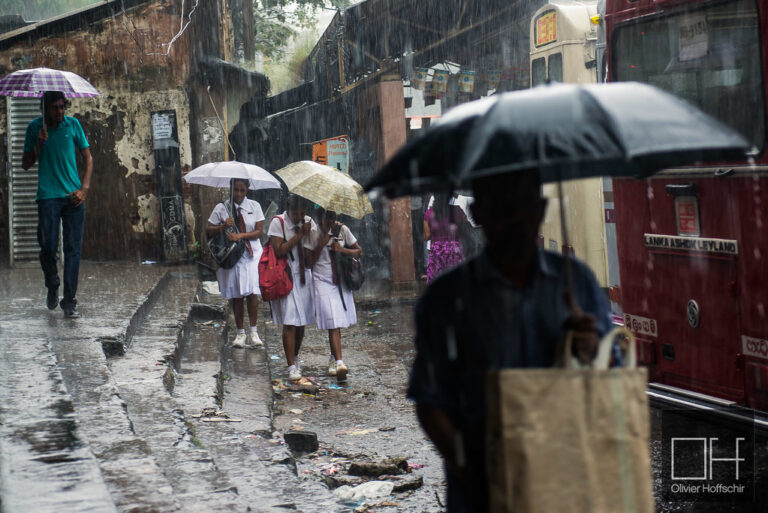
May 12, Colombo (LNW): Showers or thundershowers will occur at several places in most provinces of the island after 2.00 p.m., with heavy showers more than 100mm being expected to occur at some places in Western, Sabaragamuwa, Central and Eastern provinces and in Badulla, Galle and Matara districts, the Department of Meteorology said in its daily weather forecast today (12).
Showers may occur at a few places in the coastal areas of western and Southern provinces during the morning too.
Misty conditions can be expected at some places in Western, Sabaragamuwa and Central provinces and in Galle and Matara districts during the morning.
General public is kindly requested to take adequate precautions to minimise damages caused by temporary localised strong winds and lightning during thundershowers.
Marine Weather:
Condition of Rain:
Showers or thundershowers will occur atseveral places in the sea areas off the coast extending from Puttalam to Pottuvil via Colombo, Galle and Hambantota. Showers or thundershowers will occur at several places in the other sea areas around the island during the evening or night.
Winds:
Winds will be south-westerly or variable and wind speed will be (20-30)kmph.
State of Sea:
Sea areas around the island will be slight. Temporarily strong gusty winds and very rough seas can be expected during thundershowers.
May 11, Colombo (LNW):The Government is set to position Sri Lanka prominently on the international stage, providing a platform for the global community to explore investment opportunities within the country.
Through targeted programs, it aims to showcase the exceptional talents of our youth and provide them with unique avenues for growth.
This was disclosed by the Minister of State for Technology Kanaka Herath, when he outlined the importance of the DIGIECON Global Investment Summit – 2024 (DIGIECON Global Investment Summit) held alongside the DIGIECON-2023 project, under the leadership of President Ranil Wickremesinghe.
He highlighted its special significance for Sri Lankan youth involved in the IT sector, emphasizing its potential to attract foreign investments and strengthen the nation’s economy.
Speaking at the Presidential Media Centre yesterday (10), Mr. Herath emphasized the vital role of the conference, held in conjunction with the “DIGIECON 2023” initiative aimed at advancing a digital economy in Sri Lanka under the State Ministry of Technology’s leadership.
Arrangements have been finalized for the DIGIECON Global Investment Summit, slated to take place in conjunction with the “DIGIECON-2023” project, on June 25th, under the auspices of President Ranil Wickremesinghe in Colombo.
This summit aims to bolster the ongoing DIGIECON initiative, geared towards fostering a digital economy in Sri Lanka. The conference presents a significant opportunity for individuals engaged in the field of information technology, including students, to advance their expertise.
Under the leadership of President Wickremesinghe, Sri Lanka’s economy has witnessed stabilization, with a notable reduction in inflation rates.
This favourable economic climate lays a robust foundation for potential investments in the country. We anticipate that the summit will attract substantial foreign investments, thereby further fortifying the nation’s economy.
Addressing the media briefing Mr. Sachindra Samararatne, Assistant Chief Digital Economy Officer of the Sri Lanka Information and Communication Technology Agency said;
The objective behind convening such an international conference is to catalyse the development of a robust digital economy within our nation.
With over 850 IT organizations operating nationwide, several young entrepreneurs have already secured investments from prestigious international institutions, highlighting the potential of our local talent pool.
It’s imperative to further nurture this collaboration with global entities and foster the growth of our IT sector, given its significant presence in the global market.
Encouragingly, our country boasts innovative enterprises capable of attracting investors, both domestically and internationally. To capitalize on this potential, it’s essential to establish a comprehensive framework for IT centres across the country.
The government has already pledged its support towards this initiative, with various ministries and embassies extending their assistance. Moreover, there’s a willingness among private entities to contribute towards this endeavour, underscoring the collective effort required to propel our IT industry forward.
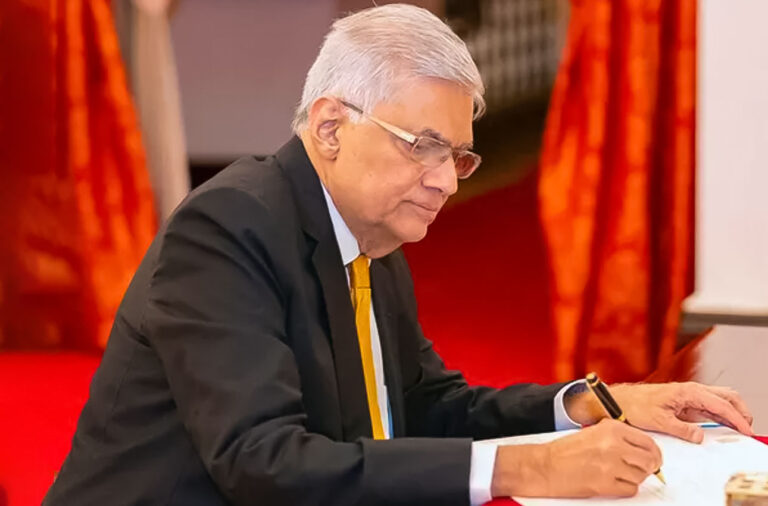
May 11, Colombo (LNW):President Ranil Wickremesinghe emphasized his recognition of the challenges women face in safeguarding their families amidst the economic crisis.
He highlighted the government’s swift action by presenting two bills to the Parliament aimed at empowering women during this initial phase of economic recovery.
The President indicated that these bills are anticipated to be ratified by the Parliament in June, thereby enforcing a national policy on gender equality and women’s empowerment, the President’s Media Division said.
This includes the establishment of a National Commission on Women and mechanisms to protect women’s rights and prevent violations thereof, including legal recourse.
President Ranil Wickremesinghe made these remarks during his keynote address at the unveiling of three “Anti-Violence Global Gestures” handprints against sexual violence targeting women and girls in public spaces, organized by DP Education at the Nelum Pokuna Theater in Colombo today (10), the PMD reported.
Addressing the gathering President Ranil Wickremesinghe said:“Mr. Dhammika Perera has initiated a transformative movement.
His initiative against violence towards women deserves recognition. Enterprises such as DP Education should play a pivotal role in shaping future education. Historically, education was conducted outdoors under trees, using stone slabs as tools.
Over time, buildings and books became integral to the educational process. However, the advent of mobile phones has introduced new dynamics.
Education has evolved from traditional temple-based learning to modern classroom settings. Today, technology such as smart classrooms is revolutionizing education.
Mr. Dhammika Perera’s introduction of DP Education represents a new paradigm in education. This foundation has provided resources to 600 schools, reshaping tuition classes as well.
With the integration of artificial intelligence (AI), education stands poised for further revolution. It is imperative that children benefit from these advancements and efforts should be made to ensure universal access to quality education.
While addressing violence against women, today’s event introduced techniques for prevention. Legislation against such violence is being introduced in parliament.
These hand signals serve as practical tools to combat violence against women, signalling our commitment to safeguarding women’s rights. Action must accompany words and through these signals, society can become more vigilant against violence towards women, fostering a culture of resistance.
In the wake of the introduction of the payment and settlement act, the evolution of the national digital payment ecosystem and many innovations have been facilitating digital transactions. LankaPay’s Channa de Silva, Chief Executive Officer, and Dinuka Perera, Deputy Chief Executive Officer, claimed.
One of the key payment modes, JustPay addresses the needs of both individuals and corporate entities by offering versatile solutions such as on-delivery payments and streamlined bill payments.
The introduction of PayMe further enhances convenience by enabling a secure messaging platform for payment requests, benefiting both businesses and individuals.
Additionally, initiatives like Government Payments, digital signatures and the National Card Scheme underscore LankaPay’s commitment to providing reliable, secure, and efficient payment solutions for all.
De Silva said : At the end of 2015, approximately eight years ago, LankaPay primarily focused on tasks like cheque clearance and managing the common ATM switch.
These activities mainly dealt with cheque and cash transactions. Additionally, we were handling slips for bulk payments, as CEFTS or Realtime Payments had just started rolling out.
The premise was clear: to encourage people to transition from cash to digital transactions, the process had to be simpler than using cash and achieving this required behavioural change, which we pursued through innovative solutions aimed at enhancing convenience and user experience.
Most of our innovations and solutions have been developed to address various gaps in the market, aiming to streamline the entire ecosystem and ensure that people find digital transactions more convenient than cash, he said..
This involved linking all key participants in the ecosystem and prioritizing convenience for everyone involved.
One of the most significant tasks at hand is to enhance the convenience of payment networks for everyone, particularly in the corporate sector aiming to streamline the ease of doing business, especially for exporters and importers.
The LankaPay faced several challenges, notably conducting transactions, particularly for large payments such as customs and tax payments, which were predominantly done using cash or pay orders requiring physical visits to banks.
In enhancing the ease of doing business and making transactions seamless,the company explored various solutions, extending beyond tax payments to other financial transactions.
May 11, Colombo (LNW):The government has planned to set up an environmentally friendly industrial zone adjacent to the Kankesanthurai cement factory.
The current landmark investments include the Kankesanthurai cement factory site which is being converted into an industrial zone and information Technology University will be set up in partnership with the Sri Lanka Institute of Information Technology (SLIIT) and a foreign private investment.
Sri Lanka is in talks with Canada-based entrepreneurs of Sri Lanka origin to build a 500 million dollar industrial park in Kankesanthurai in the Jaffna peninsula, State Minister for Investment Promotion Dilum Amunugama said.
The industrial park will be built on 700 acres by a defunct state-run cement factory.The investors will invest 500 million dollars to build infrastructure in the land given by the Board of Investment under a private public partnership model.
The Canadian entrepreneurs will build roads and other infrastructure and will attract investors into the zone to recover their costs.
The zone operators have the choice of also constructing buildings and offering plug-and-play factories.“It is entirely up to them,” Minister Amunugama said. “They can build factories or offer bare land.”
The defunct cement factory only has limestone in about 100 acres which will not be sufficient to sustain a cement factory for a long time, he said.
There was at one time about 500 acres of limestone but now settlements have come up and it was not practical to move people out of the area.
However, if an investor was willing to revive the factory with a smaller extent of limestone, the choice was left to them, Minister Amunugama said.
The Lanka Cement factory at Kankesanthurai (‘KKS Factory’) was a pioneering northern industrial development project in the post-independent era.
The KKS Factory commenced in 1950 under the Department of Industries and was converted to a public corporation in 1956, named Kankesan Cement Works.
The KKS factory closed its production in 1991 due to the then raging northern war. At the time of its closure, its production capacity was 115,000 MT and around 400 factory employees lost their livelihoods when it ceased operations.
Existence of limestone deposits in Kankesanthurai for cement production was a major incentive in establishing the factory in KKS.
It is reported that the huge limestone deposits exceeding 80 million MT in the area is sufficient for the manufacturing of cement for another 100 years – even if they are extracted at a rate of 3,500 MT a day.
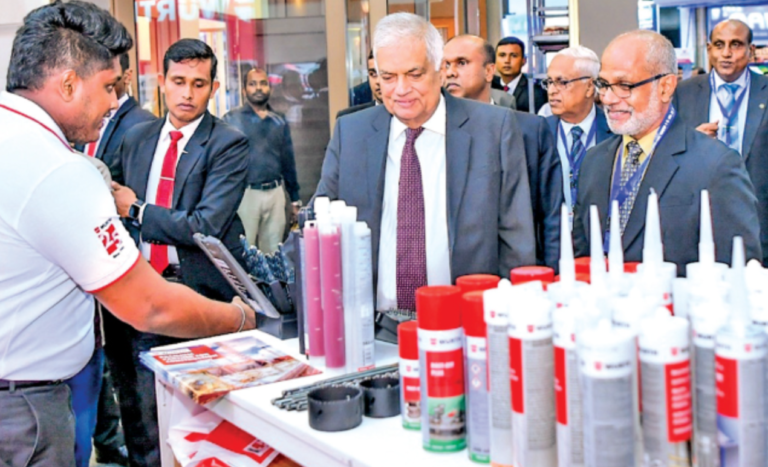
May 11, Colombo (LNW): President Ranil Wickremesinghe made an appearance yesterday at the Housing and Construction International Expo 2024, organized by the Chamber of Construction Industry of Sri Lanka (CCISL) at the BMICH. Accompanied by CCISL Chairman Jayantha Perera and General Secretary/Chief Executive Officer Nishanka N. Wijeratne, the President visited various stalls during the event.
The Expo, showcasing advancements and innovations in housing and construction, will continue until Sunday, providing a platform for industry stakeholders to network and explore opportunities for collaboration and growth.
May 11, Colombo (LNW): Tragically, another individual from the Punnalaikattuwan area in Jaffna succumbed to excessive heat exposure on Thursday (9).
Sivagnanam Jayakumar, aged 45, had been consuming alcohol with friends in the afternoon before returning home. Police reports indicate that he was later discovered fallen in his garden.
Upon finding her father unconscious, the victim’s daughter rushed him to Thelippalai Hospital. Despite efforts, Jayakumar passed away shortly after admission. A post-mortem conducted at Jaffna Teaching Hospital revealed dehydration as the cause of death, attributable to the extreme heat.
Authorities handed the body over to the family for funeral arrangements, with Thelippalai Police overseeing proceedings. This unfortunate incident adds to a tally of six heat-related fatalities in the Jaffna district, reflecting the severity of the ongoing heatwave in the area.
May 11, Colombo (LNW): According to the Sri Lanka Tourism Development Authority, a staggering 806,698 foreign tourists have graced Sri Lanka’s shores from January 1 to May 5 this year, indicating a remarkable increase compared to the corresponding period last year.
In the initial five days of May alone, 22,047 foreign tourists have arrived in the country. The majority of these visitors hail from India, constituting 4,351 arrivals, followed closely by 2,489 tourists from the Maldives.
Interestingly, during the first five days of May, 20 percent of the total tourist arrivals were from India. Noteworthy figures include 1,508 visitors from the United Kingdom and 1,460 from Russia. Notably, the Maldives ranks second among the countries contributing to tourist arrivals in Sri Lanka.