By Adolf
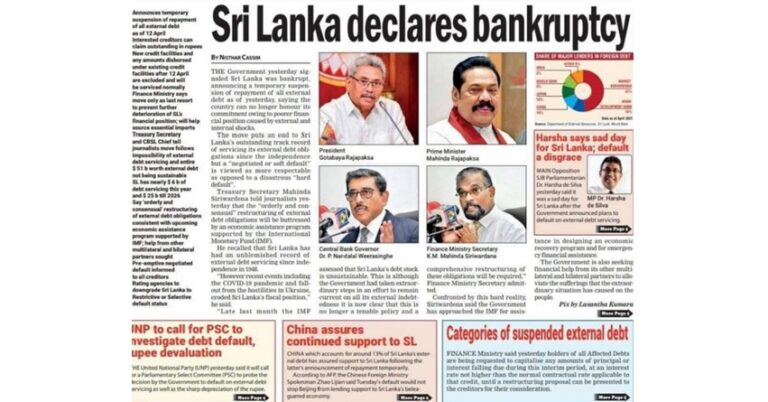
On April 12-13th 2022, the Government of Sri Lanka signaled to the world that the country was effectively bankrupt. The announcement came through a declaration that the Government would temporarily suspend repayment of all external debt obligations, stating that the nation could no longer honour its commitments due to severe economic pressures arising from both external and internal shocks.
A Proud History wasted
This decision marked the end of a proud national record. Since independence in 1948, Sri Lanka had maintained an unblemished record of servicing its external debt. Even during periods of civil conflict, political instability, and global economic turbulence, successive governments ensured that the country honoured its international financial obligations. The abrupt declaration of a debt suspension therefore represented not only a financial rupture but also a profound institutional and constitutional question.
Key Officials
At the time, key officials involved in the announcement included President Gotabaya Rajapaksa, Prime Minister Mahinda Rajapaksa, Central Bank Governor P. Nandalal Weerasinghe, and Treasury Secretary K. M. Mahinda Siriwardana. Then Treasury Secretary Siriwardana explained that the Government would pursue an “orderly and consensual” restructuring of external debt with support from the International Monetary Fund. He argued that the country’s fiscal position had been severely weakened by the COVID-19 pandemic and the global fallout from the war in Ukraine.
Premature Decision
However, while these external shocks were real, the decision to suspend payments was widely viewed as premature and poorly conceived. Economic crises do not automatically justify sovereign default. Countries facing severe liquidity shortages often pursue alternative strategies—bridge financing, temporary bilateral support, asset monetisation, or targeted fiscal adjustments—before resorting to the drastic step of halting debt payments. More importantly, the manner in which the decision was taken raised serious constitutional concerns. A declaration that effectively places a sovereign nation in default has profound implications for the economy, the financial system, and the citizens of the country. Such a decision should have been debated transparently in Parliament and subjected to a broader national consensus. Instead, the announcement appeared to be an executive decision taken by a small group of policymakers, without adequate legislative scrutiny or public consultation.
Consequences
The consequences were immediate and severe. Investor confidence collapsed, international credit markets closed almost overnight, and the reputation painstakingly built by Sri Lanka over decades suffered lasting damage. The default also triggered a complex and lengthy debt restructuring process involving bilateral lenders, private bondholders, and multilateral institutions.
Condemnations
Opposition voices were quick to condemn the decision. Parliamentarian Harsha de Silva described it as a sad and humiliating moment for the country, arguing that the default reflected a failure of economic management and strategic decision-making. History will likely judge the bankruptcy declaration not merely as a financial necessity but as a policy choice—one that may have been avoidable with stronger leadership, better preparation, and more transparent governance.
Gota’s costly Default
Three years on, the lesson is clear: economic sovereignty must be protected not only through sound fiscal management but also through constitutional discipline and institutional accountability. When decisions of such magnitude are taken hastily or without due process, the cost is ultimately borne not by governments, but by the nation and its people. The decision taken three years ago by Gotabaya Rajapaksa and his team will remain a defining moment in Sri Lanka’s economic history—one that cannot be erased and whose lessons must not be forgotten.
Sri Lanka’s Bankruptcy Decision Was Ill-Conceived and Unconstitutional
Transport Services Adjusted to Meet Post-New Year Travel Demand
April 14, Colombo (LNW): The Sri Lanka Transport Board (SLTB) has announced that bus operations today will be flexible, with services adjusted in line with passenger demand following the festive period.
In many parts of the country, buses are expected to run largely according to their regular timetables, ensuring minimal disruption for daily commuters.
However, recognising the surge in travel after the Sinhala and Tamil New Year, transport authorities have put additional measures in place. Special bus services are scheduled to run from April 16 to 21, aimed at assisting those returning to Colombo after spending the holidays in their hometowns.
Rail services are also being strengthened during this busy period. The supplementary train operations introduced for the festive season will remain in effect until April 19, providing added capacity for passengers journeying back from various regions across the island.
Officials noted that these arrangements are intended to ease congestion and provide a smoother travel experience as normal routines gradually resume.
Opposition Leader Urges Protection of New Year Traditions Amid Public Concerns
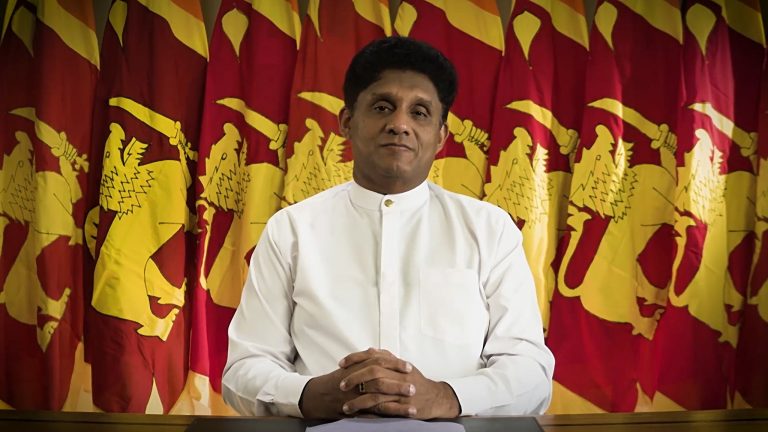
April 14, Colombo (LNW): Opposition Leader Sajith Premadasa has marked the Sinhala and Tamil New Year by underscoring its importance as a unifying national celebration rooted in centuries-old spiritual, cultural and social customs.
He described the festival as a treasured inheritance that reflects the identity of the people, stressing that it must be carefully safeguarded for generations to come.
In his message, he cautioned that any actions by those in authority which generate confusion or mishandle culturally sensitive matters risk undermining these long-standing traditions. He expressed particular unease over recent controversies surrounding the official auspicious times, noting that such issues should be addressed with greater responsibility and respect.
Premadasa also reflected on the deeper meaning of the New Year, portraying it as a moment for renewal and reflection. He acknowledged the difficulties endured by many citizens over the past year, especially amid ongoing economic pressures that have taken a toll on both livelihoods and mental well-being.
Looking ahead, he called for practical and lasting measures to uplift the public, emphasising that genuine progress requires sustainable solutions rather than short-term fixes. He reaffirmed his commitment to pursuing policies aimed at meaningful empowerment and improved stability in the year to come.
Full Message:
“The Sinhala and Tamil New Year is the most significant cultural festival we share as a nation. Its foundation is built upon rich spiritual, moral, cultural, and recreational traditions. Through these elements, the New Year has bestowed upon us a proud and enduring heritage. It is our collective responsibility to protect and preserve this heritage for future generations.
In the process of safeguarding this legacy, any action by the government that creates uncertainty within society or fails to responsibly manage sensitive matters amounts to a neglect of its duty to protect our cultural traditions. The manner in which the government intervened in the recent dispute regarding the New Year auspicious time table (Nakath Pathraya) raises serious concerns about its regard for our cultural values.
The dawn of a New Year symbolizes an opportunity to move forward by learning from past shortcomings. It is no secret that the people of our country have faced numerous challenges over the past year. Under significant economic strain, many across all segments of society continue to struggle, often at the cost of their mental well-being. In such circumstances, what is required is not temporary relief but meaningful empowerment through sustainable, long-term solutions. I reaffirm my commitment to working tirelessly towards such a program in the year ahead.
Let us embrace the spirit of unity and harmony that the Sinhala and Tamil New Year so quietly yet powerfully teaches us.”
Prime Minister Calls for Hope and Togetherness at New Year
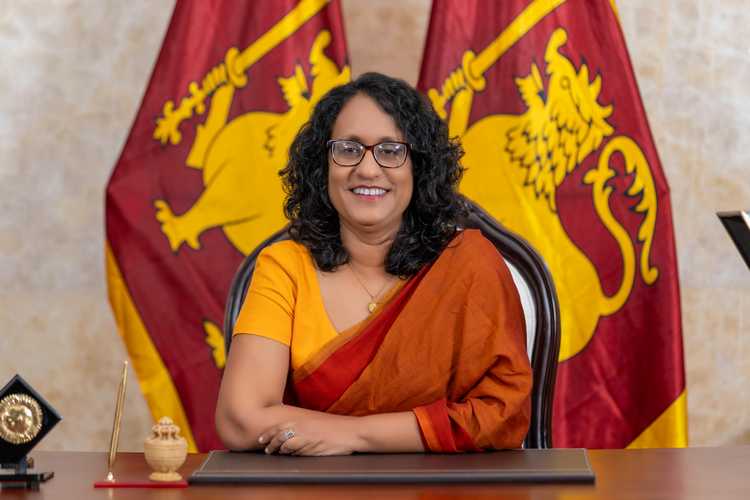
April 14, Colombo (LNW): In her Sinhala and Tamil New Year message, Prime Minister Dr Harini Amarasuriya reflected on the deeper meaning of the festival, describing it as a moment that signals both a celestial transition and the gentle arrival of spring, bringing with it themes of renewal, prosperity and harmony.
She noted that the occasion remains one of the few times when people across the island unite through shared traditions, setting aside daily routines to celebrate as families and communities.
Highlighting the need for unity, the Prime Minister urged citizens to move beyond divisions and nurture a spirit of goodwill and cooperation. She commended the public for their strength in navigating recent hardships, adding that such resilience should serve as a foundation for future progress.
Amarasuriya also acknowledged Sri Lankans living and working abroad, recognising their continued ties to home and their contribution to the nation. She encouraged all citizens to step into the New Year with renewed purpose and determination, working together towards a more stable and prosperous future.
Full Message:
“Marking the auspicious transition of the sun from one planet to another, and the arrival of the spring season following the harvest, the Sinhala and Tamil New Year celebrated by the people of Sri Lanka since ancient times, has dawned once again.
The New Year is not merely a festive occasion; it symbolizes a renewal of prosperity, unity, coexistence, and the strengthening of mutual relationships embedded within our cultural values.
On this occasion, I extend my wishes for a peaceful and prosperous Sinhala and Tamil New Year to all Sri Lankans who celebrate this occasion with their families and loved ones, observing customs at the auspicious time.
A unique feature of Sinhala and Tamil New Year is the way an entire nation comes together through a shared set of customs. Despite the demands and challenges of daily life, this season offers a valuable opportunity to move forward with renewed hope as families, communities and a nation.
The true blessing of the New Year lies in setting aside differences and grievances, and embracing a fresh beginning in a spirit of solidarity and goodwill. Especially in the face of ongoing global challenges, the courage, compassion and resilience shown by our people in facing various natural and economic hardships in recent times stand as an example to the world. It is our responsibility to carry forward that collective strength.
At this auspicious moment, I extend my greetings to our fellow Sri Lankans working overseas, who dedicate themselves to securing a better future for their families and for the country. In particular, I extend my thoughts for the safety and well-being of those living in the Middle East during these tumultuous times.
Let us resolve, with renewed determination to overcome obstacles and build a better and more prosperous nation. As we undertake in a significant social and political transformations, we remain committed to striving tirelessly towards a better future.
May this Sinhala and Tamil New Year be blessed with happiness and prosperity!”
President Urges Unity and Renewal in New Year Message
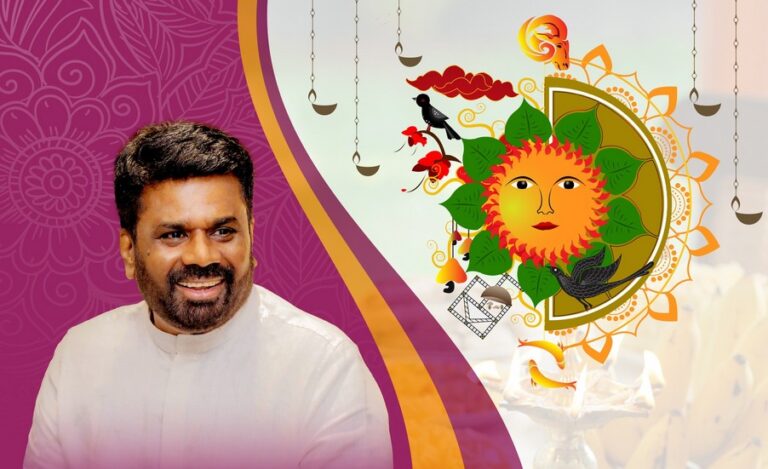
April 14, Colombo (LNW): In a message marking the Sinhala and Tamil New Year, President Anura Kumara Dissanayake has called on the nation to embrace both personal renewal and collective progress, describing the festival as the most significant cultural observance in Sri Lanka.
He reflected on the enduring importance of New Year traditions, noting that families and communities continue to follow time-honoured rituals and religious practices in unison, guided by auspicious timings. According to the President, these shared customs not only preserve heritage but also present a distinct cultural identity to the wider world.
Emphasising the link between tradition and progress, he stated that the country’s path to development should remain rooted in its historical and cultural foundations. He suggested that sustainable growth can only be achieved by respecting long-standing values while adapting to modern challenges.
The President further observed that New Year practices encourage kindness, mutual respect, and a spirit of togetherness, as well as a closer relationship with the natural environment. He urged citizens to carry these principles beyond the festive season and incorporate them into everyday life.
Addressing recent hardships, he acknowledged the resilience shown by the public in overcoming natural disasters and external pressures, including ongoing global uncertainties. He assured that the Government is taking steps to manage these challenges and safeguard the country’s stability.
Concluding his message, President Dissanayake appealed for greater unity and cooperation among all Sri Lankans, encouraging the nation to move forward with purpose towards a future he described as “a thriving nation and a better quality of life for all,” while extending his heartfelt New Year greetings.
Full Message:
‘‘The Sinhala and Tamil New Year, which symbolises the aspiration for renewal both physically and spiritually, is the foremost cultural festival of the people of this country.
During the Sinhala and Tamil New Year, traditional customs are upheld, with priority accorded to rituals and religious observances, and activities undertaken collectively at a common auspicious time. This shared cultural practice vividly reflects our nation’s identity before the world, as well as the strong socio-cultural bonds that exist among our communities.
We firmly believe that the future path of national development can only be shaped in harmony with this invaluable culture and our distinguished historical heritage. Accordingly, it must be recalled that all our future development plans have been formulated upon the firm foundation of these precious traditions and cultural values.
Moreover, the common aspiration embodied in the customs and rituals associated with the solar transition is the nurturing of a compassionate individual who values togetherness, respects others, and lives in harmony with nature. I believe that the virtues and values of unity reflected in these New Year traditions should not be confined to these few days alone, but should instead be demonstrated throughout the year in our daily conduct.
In the face of the most significant recent natural disaster challenge encountered in the past year, we demonstrated to the world our resilience and capacity to withstand internal shocks. At the same time, in responding to the external challenges arising from the conflict in the Middle East, the Government has already set in motion a well-planned and effectively managed programme to overcome these difficulties.
As a nation, in overcoming these challenges together, I call upon all of you to further dedicate yourselves to enriching your lives through the values of togetherness, sharing, and solidarity exemplified during the Sinhala and Tamil New Year season.
As we strengthen the achievements we have secured and move forward with unwavering resolve in the face of emerging challenges, I invite everyone to join hands in unity to realise the vision of ‘‘A Thriving Nation – A Beautiful Life’’ for all.
I extend my heartfelt wishes to all Sri Lankans for a peaceful and joyous Sinhala and Tamil New Year!’’
New Year Celebrated Across Sri Lanka with Auspicious Rituals
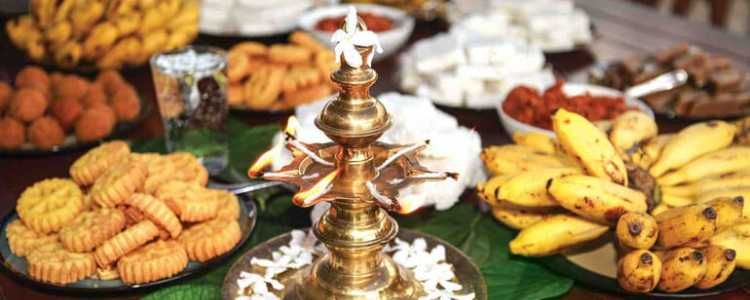
April 14, Colombo (LNW) Sri Lanka today welcomed the Sinhala and Tamil New Year at precisely 9.32 a.m., ushering in one of the island’s most cherished cultural festivities. Families across the country marked the moment with age-old customs that blend spirituality, astrology, and community spirit.
Following the traditional schedule of auspicious times, households are set to begin preparing their first New Year meals at 10.51 a.m. In keeping with custom, people are encouraged to wear red garments, face south, and ceremonially light the hearth before cooking, symbolising prosperity and renewal.
The designated time for commencing daily activities, engaging in financial transactions, and sharing the first meal of the year falls at 12.06 p.m., reinforcing the importance of beginning the year on a harmonious note.
Rituals will continue into the following day, with the ceremonial oil anointing planned for 6.55 a.m. on April 15. Participants are to dress in green, face east, and observe traditional practices involving medicinal leaves and herbal oils, believed to promote health and well-being for the year ahead.
Further observances include setting out for important duties on April 17 at 5.38 a.m., while the resumption of regular work is advised on 20 April during two favourable times in the early morning.
Looking ahead, the planting of tree saplings has been designated for April 23 at 9.01 a.m., encouraging a connection with nature and symbolising growth and continuity in the new year.
World reacts as Peter Magyar defeats Viktor Orbán, ending his long tenure as Hungary’s prime minister
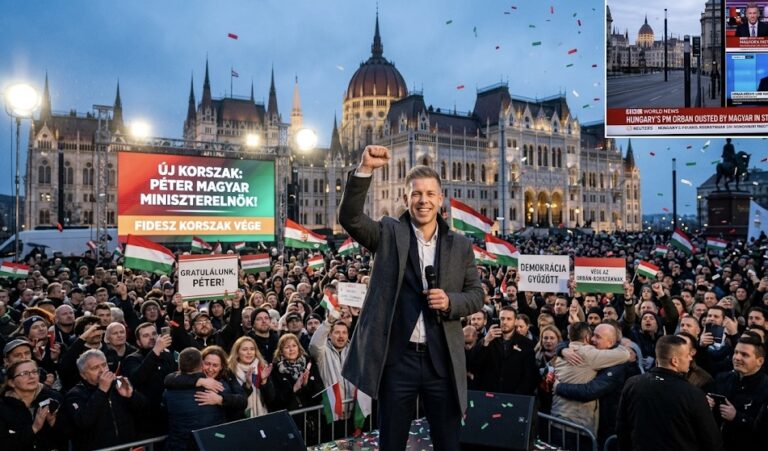
April 13,LNW (Colombo): Peter Magyar is poised to become Hungary’s next prime minister after his Tisza party secured a sweeping two-thirds majority in a parliamentary election, unseating the Fidesz party led by longtime leader Viktor Orbán.
With 97.35% of precincts counted from Sunday’s vote, Magyar’s centre-right party won 138 of the 199 seats, earning 53.6% of the vote. Orbán’s nationalist Fidesz party trailed with 55 seats and 37.8%, according to official results.
Magyar vowed to bring the country together, calling the high turnout – nearly 80% – a powerful sign of public support. “Tonight, truth prevailed over lies,” he told his supporters.
Acknowledging defeat, Orbán – who has governed Hungary for 16 years – said the outcome was “painful for us, but clear.”
Estonia
Prime Minister Kristen Michal said Hungarians had made a “historic choice for a free and strong Hungary in a united Europe, rejecting forces that ignore their interests”.
“Congratulations to Peter Magyar on winning the election! I look forward to working together on what unites Estonia, Hungary and Europe,” Michal said.
European Union
European Commission President Ursula von der Leyen hailed Magyar’s victory, saying, “Hungary has chosen Europe.”
“A country reclaims its European path. The Union grows stronger. Hungary has chosen Europe. Europe has always chosen Hungary. Together we are stronger,” von der Leyen said on X.
Finland
Prime Minister Petteri Orpo said Hungarians “demonstrated their strong will to be an active member of European Union and NATO.
France
President Emmanuel Macron said he spoke to Magyar to congratulate him on his victory.
“France welcomes the victory of democratic participation, the Hungarian people’s commitment to the values of the European Union, and Hungary’s commitment to Europe,” he wrote on X.
Germany
Chancellor Friedrich Merz congratulated Magyar on his victory and said, “The Hungarian people have decided.”
“I am looking forward to working with you. Let’s join forces for a strong, secure and, above all, united Europe,” he wrote on X.
Lithuania
President Gitanas Nauseda called the result a “Big win for Hungary! Big win for Europe!”
“Congratulations to @magyarpeterMP. There are a lot of things we could and should do for the sake of democracy, justice and peace,” Nauseda wrote on X.
Norway
Prime Minister Jonas Gahr Store said Magyar’s success was of “great importance” to Europe.
“I look forward to close and constructive cooperation in pursuing peace and stability, democracy and the rule of law on our continent,” he said.
Poland
Prime Minister Donald Tusk also welcomed Magyar’s victory, with a dig at Orban’s relations with Russia.
“Back together! Glorious victory, dear friends!” he posted on X, adding in Hungarian: “Russians, go home!”
Ukraine
In a statement, President Volodymyr Zelenskyy said: “Ukraine has always sought good-neighbourly relations with everyone in Europe and we are ready to advance our cooperation with Hungary.
“Europe and every European nation must get stronger, and millions of Europeans seek cooperation and stability. We are ready for meetings and joint constructive work for the benefit of both nations, as well as peace, security, and stability in Europe.”
United Kingdom
Prime Minister Keir Starmer said Magyar’s win was “an historic moment, not only for Hungary, but for European democracy”.
He added he was looking forward to working with him “for the security and prosperity” of both countries.
United States
There was no immediate comment from President Donald Trump, a Republican who backed Orban, but top Democrat Hakeem Jeffries, the House of Representatives minority leader, said: “Far-right authoritarian Viktor Orban has lost the election. Trump sycophants and MAGA extremists in Congress are up next in November. Winter is coming.”
The US is due to hold midterm elections in November that will decide control of the country’s Congress.
NDB Financial Scam: Interpol Experts Deployed into Probe

April 13, Colombo (LNW): Authorities have turned to international support as investigations intensify into a sophisticated financial scam involving more than 13 billion rupees, allegedly carried out through unauthorised access to the digital systems of the National Development Bank (NDB).
Law enforcement officials confirmed that assistance has been sought from Interpol, with a specialised team of cybercrime analysts—particularly those experienced in tracking virtual currency transactions—expected to arrive in the country shortly.
The request for collaboration was initiated by the Criminal Investigation Department (CID) and formally submitted to Interpol’s headquarters in Lyon.
Investigators believe the fraud may have involved a coordinated effort exploiting internal system vulnerabilities, with digital assets potentially used to obscure the movement of funds. So far, four individuals have been taken into custody and remain on remand pending further inquiries. Among those detained are a senior employee attached to the bank’s payments division and a close relative, raising suspicions of insider involvement.
Despite the scale of the breach, the bank has reassured customers that their personal accounts remain secure and unaffected. Operations continue without disruption, according to officials, who insist that safeguards have contained the impact of the incident.
In a separate statement, the Central Bank of Sri Lanka (CBSL) noted that the institution’s financial health remains stable, with capital and liquidity levels comfortably exceeding regulatory thresholds.
Island-Wide Traffic Crackdown as Festive Season Peaks
By: Isuru Parakrama
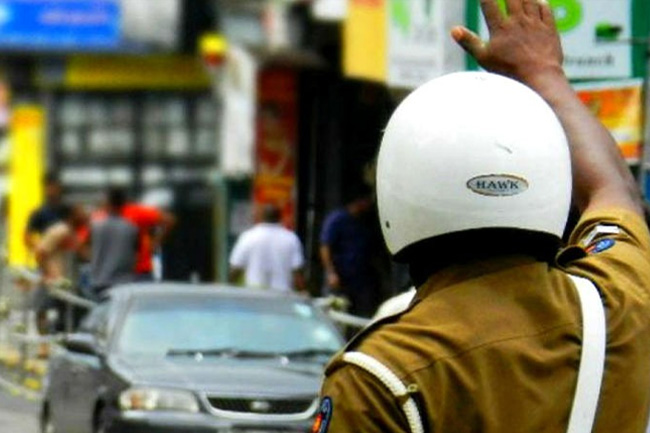
April 13, Colombo (LNW): As the New Year celebrations gather momentum, senior police officials have announced an extensive deployment of more than 8,000 officers to manage traffic and ensure public safety across the country.
The large-scale operation is aimed at reducing congestion and minimising accidents during one of the busiest travel periods of the year.
Authorities have issued a firm warning to motorists, urging them to avoid getting behind the wheel after consuming alcohol or any intoxicating substances. Officials stressed that strict enforcement measures will be in place, with increased roadside checks and patrols expected throughout the holiday period.
In addition, drivers have been reminded to adhere closely to established safety practices, particularly when travelling on expressways, where high traffic volumes are anticipated.
Police emphasised that responsible driving and compliance with regulations are crucial to preventing mishaps and ensuring a safe and smooth journey for all road users during the festive season.
Islandwide Food Safety Checks Intensified Amid Festive Rush
By: Isuru Parakrama
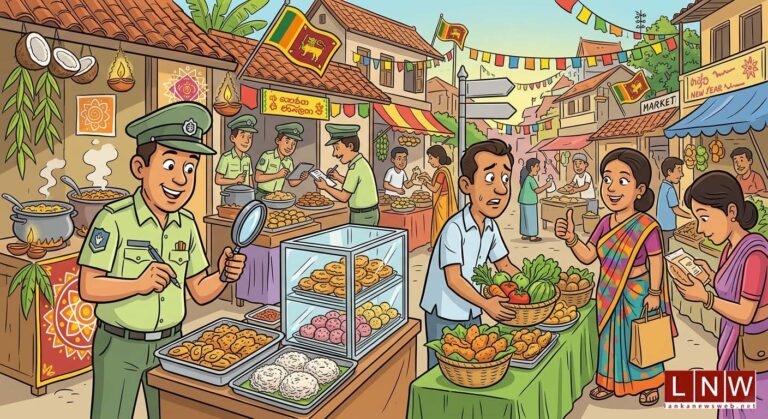
April 13, Colombo (LNW): Health authorities have stepped up inspections of eateries and food outlets across Sri Lanka as part of a nationwide effort to safeguard public health during the busy Sinhala and Tamil New Year season.
The Public Health Inspectors’ Association of Sri Lanka confirmed that ongoing checks have been carried out extensively in recent days, with thousands of establishments already coming under scrutiny.
According to its Secretary, Chamil Muthukuda, nearly 4,000 premises have been inspected within a span of less than two weeks.
He cautioned that the festive period often sees an increase in attempts by certain traders to distribute substandard or unsafe food products, taking advantage of heightened consumer demand.
As a result, authorities are maintaining heightened vigilance and have pledged to take firm action against those found violating health regulations.
Officials are also urging the public to exercise caution when purchasing food, advising consumers to check for proper hygiene standards and avoid items that appear suspicious.