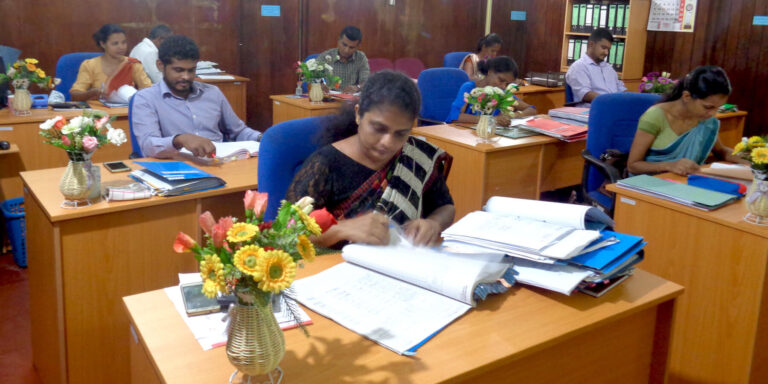
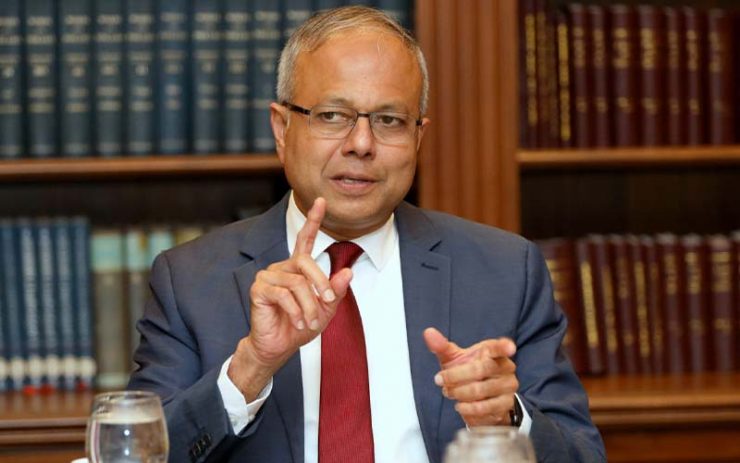
April 08, Colombo (LNW): The remaining Rs. 5,000 of the increased allowance of Rs. 10,000 for government employees will be disbursed to the relevant institutions today, along with their monthly salary, Finance State Minister Ranjith Siyambalapitiya asserted.
Previously, the government had released the initial portion of Rs. 10,000 to government employees, with the total festival advance amounting to nearly Rs. 6 billion for the New Year season, already distributed.
Traditionally, government employee salaries commence on the 16th of each month, prioritising teachers’ salaries, followed by tri-forces salaries and Provincial Council employee salaries.
However, in light of the New Year, salaries for April will be issued on April 10, deviating from the usual payment date of the 25th of the month.
“The government has decided to disburse the salaries of government employees, including the remaining Rs. 5,000, totaling Rs. 107 billion, to the relevant institutions starting today. An additional Rs. 13 billion has been allocated for this month, apart from regular salaries,” Siyambalapitiya said.
Pensioners have already received nearly Rs. 28 billion.
The Finance State Minister further assured that other welfare allowances related to April will be provided without delay.
April 08, Colombo (LNW): The military administration in Myanmar has indicated the difficulty of rescuing 48 Sri Lankans held captive by cybercrime operatives in the Myawaddy area, as it is controlled by ethnic armed groups, a report by Daily Mirror disclosed.
Among the 56 Sri Lankan victims of cybercrimes, eight have been successfully rescued, according to report.
Presently, arrangements are being made to repatriate them to Sri Lanka via Thailand due to the challenges of transporting them by road from Myawaddy to Yangon, where they would board flights back home.
However, the transit route remains obstructed.
Despite efforts, the rescue operation for the remaining 48 Sri Lankans has encountered obstacles, conveyed the military government of Myanmar.
The complexities involved suggest that a rescue attempt might necessitate a military operation, potentially endangering the lives of the captives.
In response, the military government has requested additional time to devise a strategic plan for their rescue.
The Sri Lankan government has exhausted diplomatic channels to engage with Myanmar authorities, including a direct appeal from President Ranil Wickremesinghe to Prime Minister Senior General Min Aung Hlaing for prompt assistance in securing their release.
Furthermore, numerous other Sri Lankans engaged in illicit activities within the cybercrime region have shown reluctance to return to Sri Lanka.
However, the exact number of such individuals remains uncertain at present, the report further added.
April 08, Colombo (LNW): The Cabinet of Ministers will deliberate on the possibility of designating April 15 (Monday) as a public holiday due to the auspicious timing of certain events related to the 2024 Sinhala and Tamil New Year on April 14.
The discussion is slated to take place during today’s Cabinet meeting, scheduled for April 8.
This year, April 13 and 14 mark significant dates for the Sinhala and Tamil New Year, while April 15 falls on a typical working day, being a Monday.
Requests have been made by various parties to declare April 15 as a public holiday, but a conclusive decision has yet to be reached on the matter.
Home Affairs State Minister Ashoka Priyantha has highlighted the necessity for a Cabinet resolution to formalise April 15 as a public holiday.
Consequently, the issue is set to be addressed during the Cabinet session scheduled for this afternoon.
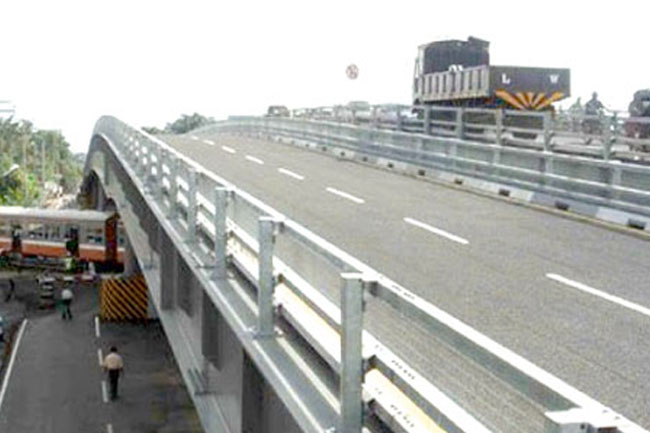
April 08, Colombo (LNW): President Ranil Wickremesinghe officially unveiled the newly constructed flyover, which extends over the railway line connecting Kompannavidiya (Slave Island) with Justice Akbar Mawatha and Uttarankanda Mawatha, confirmed the President’s Media Division (PMD).
The inauguration marks a significant milestone in the urban infrastructure development of the region, providing enhanced connectivity and alleviating traffic congestion in the bustling area.
The flyover’s strategic location is expected to streamline transportation routes and improve accessibility for commuters and motorists navigating through the area.
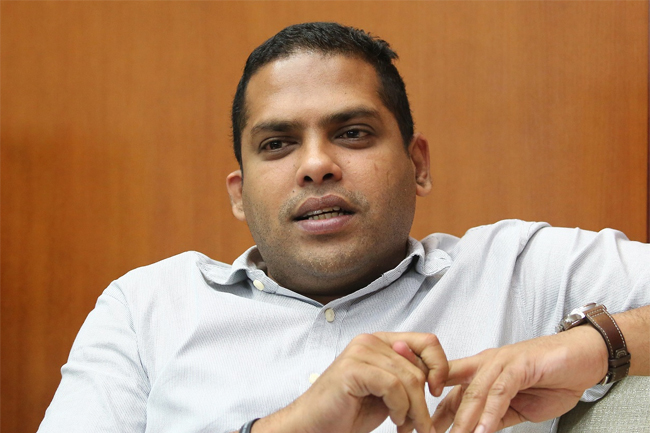
April 08, Colombo (LNW): Sri Lanka’s tourism sector has exhibited promising growth in the first quarter of the year, with total tourist arrivals reaching 635,784. Tourism Minister Harin Fernando announced.
Additionally, he reported that the revenue generated from tourism during this period amounted to US$ 1,025 million.
These figures indicate a positive trend for Sri Lanka’s tourism industry, reflecting increased visitor interest and spending in the country’s attractions and hospitality services.
Fernando expressed optimism about the sector’s prospects for the remainder of the year, highlighting the importance of continued efforts to promote Sri Lanka as a premier tourist destination.
The Minister’s remarks underscore the significance of tourism as a key driver of economic growth and foreign exchange earnings for Sri Lanka.
He emphasised the government’s commitment to supporting and further developing the tourism sector to maximise its potential contributions to the country’s economy.
April 08, Colombo (LNW): Showers or thundershowers may occur at several places inWestern, Sabaragamuwa, Southern and Northwestern provinces and in Monaragala, Mannar and Anuradhapura districts after 2.00 p.m., the Department of Meteorology said in its daily weather forecast today (08).
Misty conditions can be expected at some places in Western, Central and Sabaragamuwa provinces and in Galle and Matara districts during the morning.
General public is kindly requested to take adequate precautions to minimise damages caused by temporary localised strong winds and lightning during thundershowers.
On the apparent northward relative motion of the sun, it is going to be directly over the latitudes of Sri Lanka during 05th to 15th of April in this year. The nearest areas of Sri Lanka over which the sun is overhead today (08th) are Marawila, Pothuhara, Gurukete, Kalmunai, Garthalawela and Warapitiya at about 12:12 noon.
Marine Weather:
Condition of Rain:
Showers or thundershowers may occur at a few places in the sea areas off the coast extending from Mannar to Matara via Colombo and Galle during the afternoon or night.
Winds:
Winds will be variable in direction and wind speed will be (15-25)kmph.
State of Sea:
Sea areas around the island will be slight. Temporarily strong gusty winds and very rough seas can be expected during thundershowers.
Meanwhile, heat index, the temperature felt on human body is expected to increase up to ‘Caution level’ at some places in Northern, North-Central, Eastern, Western, Sabaragamuwa, North-western and Southern, provinces and Matale, Monaragala districts.
The public is urged to stay hydrated and take breaks in the shade as often as possible, check up on the elderly and the sick, never leave children unattended, limit strenuous outdoor activities, find shade and stay hydrated, wear lightweight and white or light-coloured clothing.
April 07, Colombo (LNW): The Sectoral Oversight Committee on Alleviating the Impact of the Economic Crisis, this week requested a comprehensive report containing recommendations to address illegal fishing issues be submitted to Parliament promptly.
The meeting Chaired by Gamini Waleboda, convened recently at Parliament, delved into addressing the pressing concerns within the fishing community.
Representatives from the Fisheries Ministry, State institutions under the purview of the Ministry and members of the North East fishing community were in attendance.
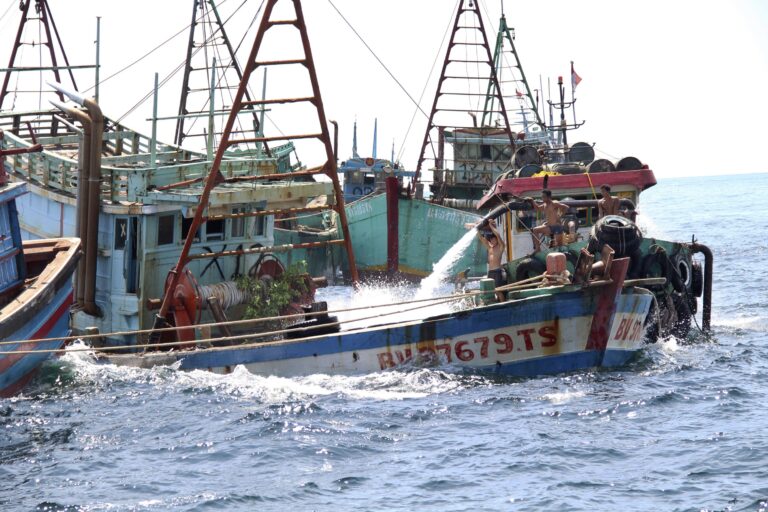
During the meeting, fishermen from the North raised concerns about the detrimental effects of illegal encroachment by Indian fishermen along the Northern coast.
They highlighted how this activity has severely impacted their livelihoods and emphasized the urgent need to assess the damage caused to marine resources due to trawling methods employed by Indian fishermen.
Expressing dissatisfaction with the lack of surveys conducted on marine resources in the north, Committee Chair Waleboda instructed the Fisheries Ministry Secretary to collaborate with relevant stakeholders to prevent illegal fishing activities in the region.
Additionally, discussions centered on the import of fish for re-export, with concerns raised about the potential negative consequences for the local fishing industry.
Committee members highlighted the risk of imported fish affecting the reputation of Sri Lankan fish in the international market and stressed the loss of tax revenue resulting from such imports. Of particular concern was the importation of prawns known to carry diseases, which has had a detrimental impact on local shrimp production.
In response, the Committee instructed the Fisheries Ministry to convene discussions with relevant stakeholders immediately to address this issue and make informed decisions regarding fish imports.
The fishermen issue is a contentious one in the ties between India and Sri Lanka, with Lankan Navy personnel even firing at Indian fishermen in the Palk Strait and seizing their boats in several alleged incidents of illegally entering Sri Lankan territorial waters.
The Palk Strait, a narrow strip of water separating Tamil Nadu from Sri Lanka, is a rich fishing ground for fishermen from both countries.
Fishermen from both countries are arrested frequently for inadvertently trespassing into each other’s waters.
In 2023, the island nation’s Navy arrested 240 Indian fishermen along with 35 trawlers for allegedly poaching in Sri Lankan waters.
April 07, Colombo (LNW): Next week’s celebration of the Sinhala and Tamil New Year will be more joyous than it had been in the three preceding years. There were distinct signs that the country had passed through its darkest and hardest times and was looking forward to happier days, several economic experts predicted.
This year’s celebration of the New Year with lesser scarcities of essentials than in the preceding three years, and the decrease in some prices, have evoked hopes of achieving a Subha Aluth Avuruddak (prosperous New Year).
However, for this to be realised, these wishes must be followed by a new work ethic that enhances the production of goods and services, they added.
The improvement in the external finances and the prospect of further improvement during the course of the year (discussed in my previous column) lend hope of increased employment, incomes, and lesser poverty, hunger and malnutrition.
The current economic recovery is merely an easing in the availability of essential items and not one brought about by economic growth.
The World Bank raised its forecast for Sri Lanka’s economy on Tuesday, projecting growth of 2.2% for 2024 as the crisis-hit nation makes a faster-than-expected recovery from its worst financial crisis in decades.
The improved economic conditions have been brought about by exogenous factors: increased remit-tances from abroad and increased tourist earnings. These two sources are expected to contribute about US$ 8 to 9 billion and wipe out the trade deficit.
In addition, the International Monetary Fund’s (IMFs) Extended Finance Facility (EFF) is expected to bring in project assistance to boost the reserves, although the IMF’ssecond tranche of US$ 333 million is not of much significance.
The cost of preparing a traditional “kevili” (sweetmeats) table for the Sinhala and Tamil New Year has decreased by 2% in 2024 compared to 2023, according to an analysis published on PublicFinance.lk, Sri Lanka’s leading economic insights platform managed by Verité Research.
The data reveals that ingredient costs in 2024 are 2.2 times higher than in 2019, down from a 2.3 times increase in 2023 compared to 2019.
A “kevili” table features an array of traditional Sri Lankan sweetmeats symbolising prosperity and happiness. Despite variations between households, the typical elements of a “kevili” table include milk rice, kokis, banana, aluwa, kevum, dodol, mun kevum, and butter cake.
The analysis, based on recipes from the popular YouTube channel “Ape Amma” for a household of 4-5 people, focused only on main ingredients, excluding utilities (electricity/gas) and spices.
Price data was sourced from the Department of Census and Statistics, including Open Market Weekly Average Retail Prices in the Colombo District for 2019 (April Week 1), 2023 (April Week 1), and 2024.
April 07, Colombo (LNW): Sri Lanka and a group of its creditors are in final negotiations to suspend debt repayments until 2028, as country creditors including Japan seek to prevent China’s influence from expanding in the debt-ridden island.
Sri Lanka’s national security adviser to the president, Sagala Ratnayaka, told Nikkei in a recent interview, “Negotiations with the creditor nations have concluded. We are hoping that it [a detailed announcement] will take place in the next few weeks.”
The repayment period will be 15 years, from 2028 to 2042, with the interest rate newly set at around 2%. He said that there will be no further debt reduction, despite a request by the island nation.
Sri Lanka in April 2022 announced a temporary suspension of public external debt payments, in effect putting the country into default.
A meeting of creditor nations was set up in April 2023.Japan, which is the largest creditor country after China, is serving as the chair in the talks along with India and France.
Sri Lanka and the creditor nations have reached a basic agreement on a repayment moratorium and a reduction in interest.
The provision of financial assistance from the International Monetary Fund, which was conditional on debt restructuring agreements being struck with major creditor countries, has also begun.
China, the biggest creditor, has only joined the meeting as an observer. However, the restructuring of debt from China via loans of the Export-Import Bank of China would be “similar,” Ratnayaka said. “We have a saying which means ‘everyone will be treated equally’,” implying that the terms of debt repayment to China would be similar to those agreed at the creditors’ meeting.
As of the end of 2023, Sri Lanka’s outstanding debt was $37.3 billion, of which China accounted for $4.7 billion.
Sri Lanka handed over control of its southern Hambantota Port to China in 2017. This was seen as a typical example of a “debt trap,” where infrastructure rights are taken away amid delayed debt repayments. Some creditors, including Japan and India, are wary of China expanding its influence into the Indo-Pacific, with Sri Lanka as its base.
Ratnayaka explained that “this is all purely commercial. There is nothing military [about the port agreement]. Sri Lanka is open to investment and we don’t pick and choose on the basis of what country, unless it affects national security.” He added, “But in the north and areas which would affect the security of India, we are conscious.
April 07, Colombo (LNW): Sri Lanka has initiated arrangements for the export of various types of seeds for the first time ever, marking a significant milestone for the country’s agricultural sector.
The Department of Agriculture has confirmed the successful testing of several species of seeds, including chillies, eggplant, green chillies, ladies fingers, and maize, which are set to be exported soon.
It is also reported that there is a significant surge in demand for these seed varieties from many foreign countries.
The required research on seeds has been carried out by experts of the Department of Agriculture, while the development and processing activities of the seeds have been undertaken by the private sector, with the highest technology and expert support with te aim of exporting excess seeds, said the Department of Agriculture.
The Ministry of Agriculture is implementing new seed production programme named Community Based Seed Production Village Programme with the objective of providing quality seeds to farmers on time.
This programme has been initiated utilizing the limited resources available at the Department of Agriculture through which it will be possible to provide quality seeds and planting materials in sufficient quantities to meet the country’s seed requirement locally.
Ministry of Agriculture, Ministry of Agrarian Services and Wildlife, Ministry of Minor Export Promotion, Provincial Departments of Agriculture and all affiliated institution and sub units collectively contribute its share in the establishment of those villages.
Every unit should select at least one village by organizing farmers for this purpose as a group.Type of seed to be produced is selected by considering factors such as climate suitability and demand etc.
Provision of seeds, issuing instructions and supervision of the programme will be the responsibility of the respective institutions involved in setting up of those villages while the certification of seed is done by the Department of Agriculture.
If the production is in excess of the requirement, such villages are facilitated exchange same with other seed producing villages or sell them in the private sector for exports . Accordingly this programme is used as profit earning agri-business for farmers.
Rs. 30 Million allocation already made to the Ministry for this purpose will be distributed among all provincial Ministries of Agriculture, HADABIMA Authority of Sri Lanka and the National food promotion Board.
Accordingly the number of seed producing villages due to be established by the above institutions is 299. In addition an allocation of Rs. 20 Mn has been provided to the department of Agriculture for establishing 200 such villages. Accordingly the total number of seed producing villages to be established under this programme will be 499.
Sri Lanka has initiated arrangements for the export of various types of seeds for the first time ever, marking a significant milestone for the country’s agricultural sector.
The Department of Agriculture has confirmed the successful testing of several species of seeds, including chillies, eggplant, green chillies, ladies fingers, and maize, which are set to be exported soon.
It is also reported that there is a significant surge in demand for these seed varieties from many foreign countries.
The required research on seeds has been carried out by experts of the Department of Agriculture, while the development and processing activities of the seeds have been undertaken by the private sector, with the highest technology and expert support with te aim of exporting excess seeds, said the Department of Agriculture.
The Ministry of Agriculture is implementing new seed production programme named Community Based Seed Production Village Programme with the objective of providing quality seeds to farmers on time.
This programme has been initiated utilizing the limited resources available at the Department of Agriculture through which it will be possible to provide quality seeds and planting materials in sufficient quantities to meet the country’s seed requirement locally.
Ministry of Agriculture, Ministry of Agrarian Services and Wildlife, Ministry of Minor Export Promotion, Provincial Departments of Agriculture and all affiliated institution and sub units collectively contribute its share in the establishment of those villages.
Every unit should select at least one village by organizing farmers for this purpose as a group.Type of seed to be produced is selected by considering factors such as climate suitability and demand etc.
Provision of seeds, issuing instructions and supervision of the programme will be the responsibility of the respective institutions involved in setting up of those villages while the certification of seed is done by the Department of Agriculture.
If the production is in excess of the requirement, such villages are facilitated exchange same with other seed producing villages or sell them in the private sector for exports . Accordingly this programme is used as profit earning agri-business for farmers.
Rs. 30 Million allocation already made to the Ministry for this purpose will be distributed among all provincial Ministries of Agriculture, HADABIMA Authority of Sri Lanka and the National food promotion Board.
Accordingly the number of seed producing villages due to be established by the above institutions is 299. In addition an allocation of Rs. 20 Mn has been provided to the department of Agriculture for establishing 200 such villages. Accordingly the total number of seed producing villages to be established under this programme will be 499.