April 12, Colombo (LNW): The Ceylon Petroleum Corporation (CPC) has announced a series of measures to ensure that there is no disruption in fuel supply during the Sinhala and Tamil New Year festivities. Recognizing the increased demand typical of this season, the CPC has proactively increased its fuel imports to secure ample stocks.
Filling station owners have been instructed on these provisions to guarantee smooth operations at Ceypetco stations across the country. Moreover, to streamline the process for distributors and alleviate any potential financial constraints during this peak period, the CPC has enabled transactions through cheques until April 15.
To support these efforts, the Ceylon Petroleum Storage Terminals Ltd. will be deploying additional tankers to facilitate efficient fuel distribution, ensuring that both local residents and holidaymakers can enjoy uninterrupted travel during the festive season.
April 12, Colombo (LNW): The Transport and Highways Ministry is calling for public cooperation to curb the increasing number of road accidents as the Sinhala and Tamil New Year approaches. A comprehensive transport plan involving the Sri Lanka Transport Board, Sri Lanka Railway Department, and the National Transport Commission has been implemented to ensure smooth travel during the festive season. Special arrangements at the Makumbura and Kadawatha multimodal transport centers are also set to facilitate the anticipated surge in travelers.
To further assist the public, a hotline, ‘1968’, has been established, providing necessary information and support. The urgency of these measures comes in response to a spike in road accidents, largely attributed to traffic law violations, reckless driving, and the influence of alcohol and mobile phone usage while driving. The Ministry highlights the necessity of community and driver cooperation in tackling these issues effectively.
In response, the Ministry has issued a series of recommendations for drivers: maintaining a speed limit of under 100 kilometers per hour on expressways, avoiding mobile phone use, wearing seatbelts, maintaining a safe driving distance, and adhering to sobriety behind the wheel. Drivers are also advised to drive on the left except when overtaking, comply with traffic signals, check vehicle tires regularly, and be cautious in areas where wild animals are present.
April 12, Colombo (LNW): The Wildlife Conservation Department of Sri Lanka has announced that the national parks have generated a staggering income exceeding Rs. 2,000 million in the first three months of this year. This record-breaking revenue comes from the influx of both local and international tourists visiting these biodiversity hotspots.
During this period, over 200,000 foreign tourists explored the national parks, with Yala National Park attracting the highest attendance, recording over 100,000 visitors. Other popular destinations included Wasgamuwa, Kumana, Wilpattuwa, Bundala, Minneriya, Udawalawa, and Kaudulla. These parks are renowned for their rich wildlife and unique ecosystems, making them prime spots for wildlife enthusiasts and nature lovers.
Chandana Suriyabandara, the Director General of the Wildlife Conservation Department, commented on the financial success, noting that the income for January through March set a new record for the department. He also expressed optimism about surpassing this year’s revenue figures compared to the previous year, attributing the positive trend to the growing popularity of wildlife tourism and effective park management strategies.
This financial achievement underscores the importance of sustainable tourism practices and conservation efforts in promoting wildlife protection while simultaneously boosting the local economy.
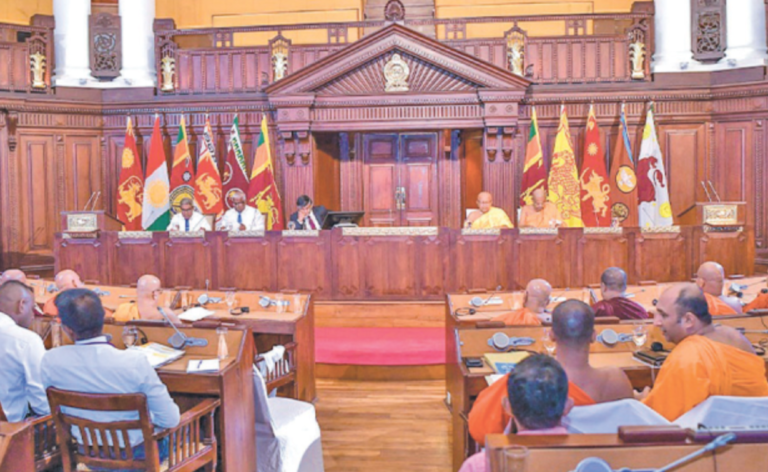
April 12, Colombo (LNW): The All Ceylon Shasanarakshaka Bala Mandalaya (ACSBM) submitted a series of proposals aimed at nurturing a virtuous society to Saman Ekanayake, the Secretary to the President, during a meeting at the Presidential Secretariat on Tuesday (09).
The ACSBM emphasized the link between the decline in religious education and the rise in societal crimes, advocating for President Ranil Wickremesinghe to prioritize their proposals. They lauded the President’s initiatives, including the creation of Piriven and the appointment of teacher assistants who succeeded in the Bauddha Dharmacharya Examination.
The key proposals presented focus on improving Dhamma school education, recruiting qualified teachers, protecting temple lands, and reinforcing the preservation of Theravada Buddhism both nationally and internationally.
The Secretary to the Ministry of Buddha Shasana Religious and Cultural Affairs confirmed that the proposals are in line with current legislation and promised to forward them to President Wickremesinghe. Additionally, Secretary Ekanayake discussed existing national programs such as ‘Urumaya’ for land ownership, as well as initiatives aimed at agricultural modernization and the Kandukara Dashakaya development program.
A specialized committee will be established to further examine these issues, with a detailed report expected to be presented to the President shortly.
April 12, Colombo (LNW): The Asian Development Bank (ADB) released its Asian Development Outlook (ADO) for April 2024, projecting that Sri Lanka will experience moderate economic growth of 1.9 percent in 2024 and 2.5 percent in 2025 after enduring two consecutive years of economic downturn.
According to the ADB report, Sri Lanka is beginning to see the early signs of economic recovery. “In the latter half of 2023, the economy showed green shoots of recovery. Inflation has slowed to single digits, foreign exchange reserves are being replenished, and the national currency has appreciated,” stated the ADO.
The report highlights strong rebounds in tourism and remittances as key factors supporting the recovery. The outlook for continued economic growth is dependent on Sri Lanka’s adherence to ongoing reforms and improved sentiment among consumers and businesses. Effective completion of external debt restructuring is also vital to enhance the country’s debt sustainability.
ADB Deputy Country Director for Sri Lanka, Utsav Kumar, remarked on the nation’s progress: “Sri Lanka has achieved notable success in implementing challenging policy reforms and stabilizing its economy throughout 2023. We are encouraged by the emerging signs of recovery. However, it remains crucial for the country to mitigate the socioeconomic impacts on its poorest and most vulnerable populations and to persist with reforms that tackle the root causes of the crisis to support a sustainable recovery and growth.”
The ADO also underscores the challenges of addressing poverty and inequality exacerbated by the COVID-19 pandemic and subsequent economic issues. As the economy gains stability, Sri Lanka is tasked with supporting the most impacted and vulnerable communities, thereby reducing high poverty rates and income disparities. This necessitates the establishment of effective social protection systems with better targeting, alongside efforts to create job opportunities and promote sustainable livelihoods to alleviate poverty.
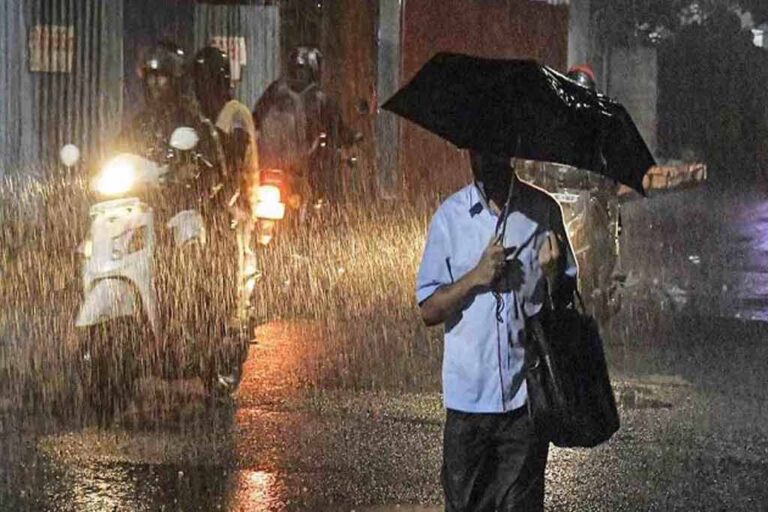
April 12, Colombo (LNW): Showers or thundershowers will occur at times in Eastern and Uva provinces and in Hambantota district. Showers or thundershowers will occur at most places elsewhere over the island after 1.00 p.m.
Heavy showers above 100 mm are likely at some places in Western and Sabaragamuwa provinces and in Galle and Matara districts.
Misty conditions can be expected at some places in Western, Central, Sabaragamuwa and Uva provinces and in Galle and Matara districts during the morning.
General public is kindly requested to take adequate precautions to minimize damages caused by temporary localized strong winds and lightning during thundershowers.
On the apparent northward relative motion of the sun, it is going to be directly over the latitudes of Sri Lanka during 05th to 15th of April in this year. The nearest areas of Sri Lanka over which the sun is overhead today (12th) are Vanchiyankulam, Omanthai,Eramadu and Thiriyai at about 12:11 noon.
April 11, Colombo (LNW): The government’s plan to lease vehicles on five year contracts instead of purchasing vehicles outright for use by state agencies and state enterprises has become a headache for the presidential secretariat following the defaulting of leases of over 60 super luxury vehicles used by three former presidents.
According to this plan, the state institutions including the Presidential secretariat had obtained vehicles on ‘operating leases’ to support leasing companies and the system was expected to be more efficient and cost-effective than maintaining a large state vehicle fleet.
The vehicles were to be returned after 60-months and leasing companies had to bear the cost of insurance and maintenance.
Lease payment of over Rs 2 billion for 60 super luxury vehicles procured on lease basis for the use of three former presidents had been defaulted up to now, Convenor of the Voice Against Corruption Wasantha Samarasinghe disclosed.
He noted that two of these vehicles gone missing and some of the vehicles valued at over Rs 80 million
Former secretaries of the president were responsible for these vehicles as chief accounting officers and the presidential secretariat had filed a case in courts relating to this matter, he said.
Therese over 60 super luxary vehicles had been used by three former presidents since 2006, he revealed adding that names of these persons and details of vehicles will be divulged in the near future
The relevant motor trading companies have already taken measures to recover the total dues for these vehicles including the accumulated interest of 3-4 percent per month as surcharges, he added.
More than 50 state-owned vehicles were not returned after former President Mahinda Rajapaksa was toppled in elections
The 53 vehicles, said to include bullet-proof limousines recovered by the police , are thought to be among 128 missing vehicles.
Among the vehicles was an armour-plated BMW destroyed in a mine attack in Colombo in 2006. Inside was the then defence secretary Gotabhaya Rajapaksa, the president’s younger brother, but he escaped without injury.
Although Gotabaya Rajapaksa as the then Defence Secretary used a fleet of Defence Ministry vehicles, he was allegedly allocated five Defender Jeeps and a High-Security vehicle from the Presidential Secretariat.
The former Defence Secretary was given a Range Rover High – Security Jeep bearing registration number KC-8511 and five Defender Jeeps bearing registration numbers WPKX-2439, WPKX-2352, WPKX- 2440, WPKX- 2415 and WPKX- 2454, news reports and information in the pubic domain revealed.
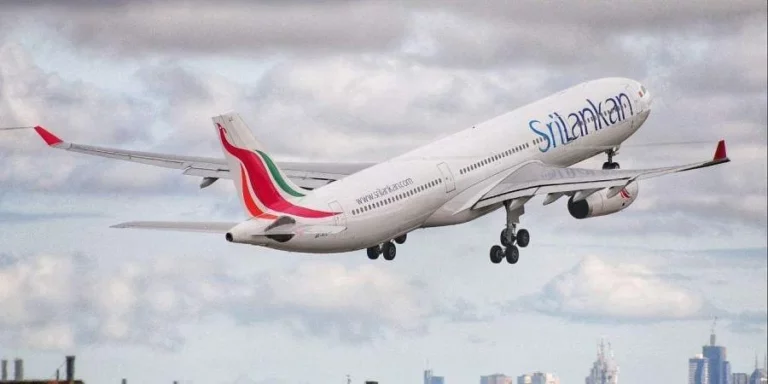
April 11, Colombo (LNW): SriLankan Airlines, the exclusive ground operator at Bandaranaike International Airport (BIA), has initiated a phased upgrade of airport ground support equipment to accommodate the rising influx of flights and travellers transiting through the airport.
SLA is authorized by Airport and Aviation Services Sri Lanka Pvt Ltd (AASL) for ‘ground handling’ is a profitable going concern.
Although SLA has made profits through catering and ground handling, SLA has incurred severe losses.
Despite the losses incurred, Sri Lankan Airlines made an operating profit for the year ending 31st March 2023
Recently, the airline acquired three state-of-the-art passenger apron coaches, ensuring optimal comfort for passengers during transfers between the terminal and remote stands.
With airport traffic steadily increasing and nearing pre-pandemic levels, acquiring modern ground support equipment has become an urgent priority for SriLankan Airlines. This investment aims to ensure a seamless end-to-end travel experience for customers.
“It is an exciting time for Sri Lanka’s tourism industry; the number of visitors has doubled over the past year. We are delighted to introduce these modern apron coaches, along with other new ground support equipment, to our services at Colombo airport during this pivotal point.
SLA’s commitment to providing our passengers and the passengers of our customer airlines with a reliable and effortless travel experience remains steadfast, as does our dedication to supporting the national tourism strategy.
With these incremental advancements, we anticipate substantial transformation in our operations,” stated Senior Manager Airport and Ground Services of SriLankan Airlines, Deepal Pallegangoda.
The passenger apron coaches, and ground support equipment were procured following a comprehensive and transparent competitive bidding procedure, consistent with all procurement exercises of the airline.
The coaches, sourced from China International Marine Containers, represent the latest in comfort and technology. These operational enhancements will empower SriLankan Airlines to elevate both the standard of ground support services and the comfort of passengers at the airport.
The International Air Transport Association (IATA) urged Sri Lanka to develop an aviation blueprint so as to generate greater economic growth and prosperity through having a stronger aviation industry.
“Aviation connectivity can play a much bigger role in Sri Lanka’s economic development and social advancement. But this will not happen by chance. Government support will be critical to growing a strong airline sector and developing Colombo as an aviation hub.
IATA urged the government and all industry stakeholders to collaborate on developing an aviation blueprint to strengthen the aviation industry’s competitiveness and bring greater prosperity to Sri Lanka.
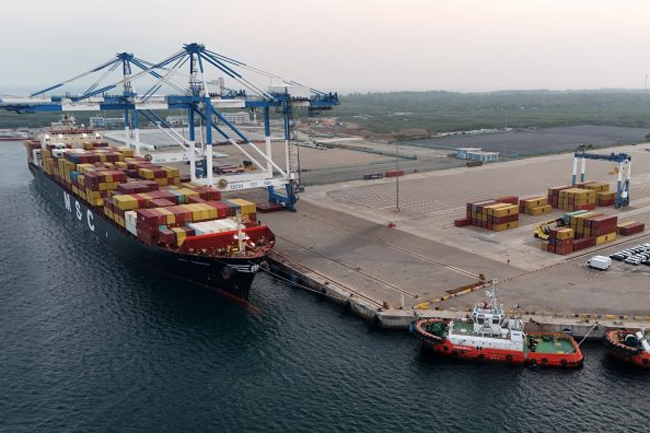
April 11, Colombo (LNW): In a landmark move, the Hambantota International Port (HIP) commenced its inaugural container transshipment service operated by the Mediterranean Shipping Company (MSC).
MV ‘MSC Ingrid’ made her maiden call at HIP on 9th April, discharging a total of 500 plus TEUs of transshipment containers to be connected to a second carrier, ‘MSC Sky 11’ expected to call at the port on 16th April.
The first shipment of containers consigned to the regional multipurpose port on the east west shipping route, originated from the Rotterdam Port and will reach its final destination, Dubai via the second carrier.
Commenting on the port’s historic milestone, Johnson Liu, Chief Representative of China Merchants Group in Sri Lanka and CEO of Hambantota International Port Group (HIPG) said
“We are happy to announce the beginning of Hambantota International Port’s inaugural Container Transshipment service. Launching this new business platform together with MSC is an important breakthrough in the port’s business portfolio, and we are proud to have the world’s largest container carrier as our partner, he said. .
We are confident our container transshipment service will enhance Sri Lanka’s position in the marine connectivity index for the South Asian region, he added. .
With MSC’s collaborative partnership, HIPG will now look at expanding our investment in equipment and other infra-structure facilities, enabling us to service larger vessels on the east west shipping route.
He discosed that they plan to make optimal use of HIP’s strategic location, capacity and expertise, to deliver the full potential the port is capable of, doing our part to enhance Sri Lanka’s regional hub status.”
The CEO thanked the Minister of Ports, Shipping and Aviation, Nimal Siripala de Silva for the support and cooperation extended to HIP in granting the required approval and giving necessary direction to his officials to facilitate the shipping connectivity between HIP and the Port of Colombo (POC).
Through this approval, local importers and exporters would be able to make direct shipments and/or transshipment of cargo to and from HIP to POC and vice-versa. Given the climate change environmental concerns in the logistics and supply chain industry, the shipping connectivity between the two Ports will make a significant impact in reducing green-house gas emissions as opposed to road transport.
COO of HIPG Tissa Wickremasinghe says container handling is the last cog in the port ‘machinery’ and it falling into place will complete HIP’s big picture.
“The introduction of Container services through HIP will be a major boost to Investors in the Port Industrial Zone, who will now benefit from directly importing their raw material requirements for production and the export of their finished products directly through HIP – thus making HIP a gateway and transshipment port.”
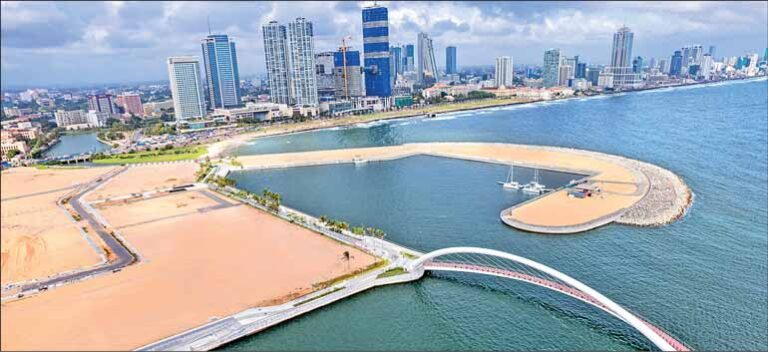
April 11, Colombo (LNW): The Colombo Port City Economic Commission has achieved a significant milestone in its journey, to transform the Colombo Port City into a globally competitive special economic zone (SEZ).
The parliament of Sri Lanka recently approved a comprehensive incentives programme proposed by the Commission in consultation with the Minister of Investment Promotion, in relation to the guidelines for granting exemptions or incentives to businesses designated as Businesses of Strategic Importance (BSI).
The Cabinet of Ministers approved designating several companies as Secondary Businesses of Strategic Importance under the Colombo Port City Economic Commission Act.
The decision aims to provide exemption or incentives to the designated companies from specific Acts outlined in Schedule II of the aforementioned Act.
Additionally, the Cabinet has authorised the publication of orders for the same through gazette notifications.
The companies approved for designation include; Port City – To carry out business as a service provider of Outsourcing of business processes for the overseas entertainment industry.
Iviva Pte – For running a business as an Information Technology service provider that creates products and solutions powered by Smart City Information Technology to support the various tasks of global clients in transitioning to a low carbon economy
Echelon Trade – Running a trading business in textiles, apparel, luxury watches, gold and gems, electrical appliances and cosmetics across multiple global markets
99x Technology As – To run a service providing business to global independent software businesses for crafting digital solutions for real user issues by production, engineering and innovation as well as website development, and by improving mobile applications.
“By providing exemption or incentives from specific regulatory Acts, the Government aims to create a conducive environment for these businesses to thrive and contribute to the development of key sectors such as information technology, trade, and outsourcing services,” Cabinet Co-Spokesman and Minister Bandula Gunawardena said.
‘To offer a competitive value proposition to potential investors, the Commission engaged with top international advisory firms such as PricewaterhouseCoopers, Ernst & Young, KPMG, and Boston Consulting Group for international benchmarking of selected factors.
These collaborations resulted in a proposed framework that establishes Colombo Port City as a globally competitive SEZ with transparent regulations and good governance principles, along with proposed sector incentives.
‘Businesses of Strategic Importance in Colombo Port City are classified into two groups: “Primary Businesses of Strategic Importance” and “Secondary Businesses of Strategic Importance”. Primary businesses involve the development of physical infrastructure of USD 100 million per land plot or USD 25 million in the Marina or Social Infrastructure.
Secondary businesses encompass sectors such as international trade, shipping logistics, banking and financial services, information technology, and tourism, among others.