Colombo (LNW): Sri Lanka’s 101 parliamentarians who received housing units from the Viyathpura government housing complex in Pannipitiya have defaulted their housing rents causing massive loss of millions of rupees to the national housing development authority.
According to Cabinet Decision No. 22/0970/502/019 dated 16 July 2022, 101 housing units had been given on an annual rent of Rs.69 million to the Members of Parliament from the housing project of 500 houses located in Weeramawata, Pannipitiya on an one year rental basis.
But the national housing development authority had not received the rent for these housing units even as at July 2023 Auditor General’s latest report revealed.
A sum of Rs.10 million had to be received by the authority for the maintenance costs to be paid by each house owner and the electricity, gas and water charges to be paid for the housing units by August 2023, it added.
Former President Gotabhaya Rajapaksa had advised the Urban Development Authority (UDA) to take over the Madiwela land for development purposes and instead allocate housing units to parliamentarians at housing schemes owned by the UDA that is closest to the parliament.
Moreover, the document states that the closest land to the parliament after the Madiwela housing complex is the Viyathpura housing complex and the value of these housing units has been estimated at a staggering Rs. 1795 million in 2022.
The Madiwela housing complex, owned by the parliament, has 120 housing units and is situated in the suburbs of Sri Jayawardenapura. This housing complex facilitates usage for outstation parliamentarians.
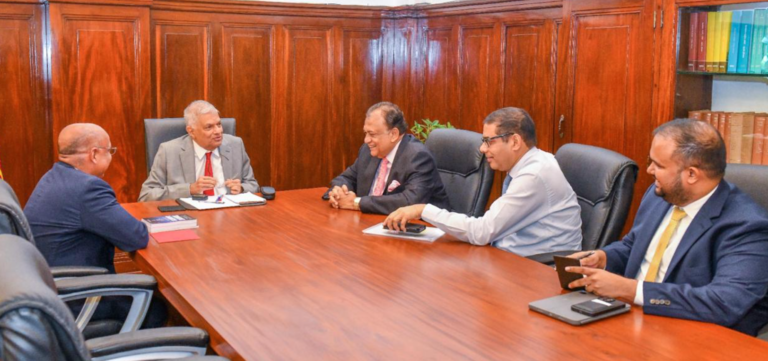
Sri Lanka’s housing minister Prasanna Ranatunga told Parliament that 76 MPs who lost their houses and property to arson following the unrest that broke out since May have been given temporary housing at the Viyathpura Housing Scheme in Kalalgoda.
He noted that these houses were given for a period of one year, with a monthly rental charged from the occupant MP.
“Not a single MP was given a house free of charge,” he told the house in response to a claim made by an opposition lawmaker.
The Minister said the complex comprises 106 houses for MPs, and 76 of them have been given on rent to MPs, and if any other MP has a requirement a vacant house can be provided on rent.
He also said that these houses can be purchased by MPs as well to be used as their permanent residences.
The document says that those Members of Parliament (MPs) whose houses were burnt down during the May 9 attacks were given priority at this housing scheme
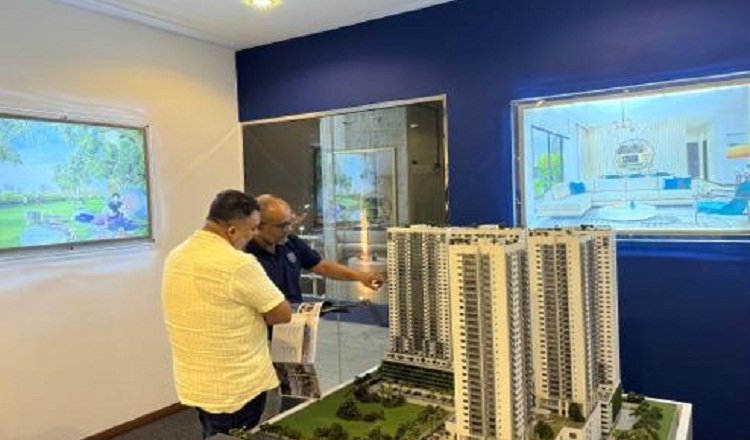
The Urban Development Authority says it has also earned US$ 500,000 by selling eleven middle-class housing units at the Viyathpura Scheme under the government’s programme to sell the UDA-built apartments for foreign currency to Sri Lankan migrant workers.
The UDA added that Sri Lankans living in the United Arab Emirates, Oman, Qatar, the United States, Canada, the United Kingdom and Fiji have purchased housing units.
Colombo (LNW): Commissioner General of Examinations Amith Jayasundara has announced that the final examinations for Buddhist Dhamma Schools, as well as Catholic, Hindu, and Islamic Sunday Schools, are scheduled for 28 and 29 December 2023.
A total of 669 examination centres across the island, as designated by the Department of Examinations, will host these examinations.
Student admissions for the examinations have already been dispatched to the respective schools through postal channels, Jayasundara noted.
Students anticipating participation in the examination but who have yet to receive their admissions can access the official website of the Department of Examinations, he added.
Colombo (LNW): In anticipation of the upcoming National Olympic Committee election, significant organisational changes and amendments are underway. These alterations involve modifications to key positions and realignments of groups to strategically position individuals for positions of influence and leadership.
This matter initially garnered attention as reports emerged concerning the Director General of the Asian Olympic Committee and the Chairman of the National Olympic Committee. Subsequent investigations revealed a range of allegations, including assertions that the Chairman was entitled to 100 air tickets for the Asian Games, extending to considerations at the highest levels of the country’s leadership, the President. The initially promised allowance during a meeting with the President has purportedly evolved into the mere extension of aid or grant, taking into account the prevailing economic conditions of the nation.
Additional accusations have been directed at the Chairman, including an undisclosed transaction amounting to Rs. 450,000. Termed as spending without prior consent or knowledge, the subsequent reimbursement occurred with knowledge. Given the context of the transaction and prevailing economic conditions, it is unlikely to be deemed a deliberate financial impropriety.
This situation also involves Maxwell de Silva, who faces charges. Allegations encompass non-payment of funds owed to the Sri Lanka Olympics and the misplacement of certain movable properties owned by the organisation.
Furthermore, Maxwell de Silva has accused Suresh Subramaniam of inappropriate conduct during an attempt to address the Asian Council. Allegedly, Subramaniam prevented him from speaking and physically pushed him to relinquish the microphone, further contributing to the complex dynamics surrounding these developments.
“The Secretary of the Olympic assembly reported that the individual presiding over the meeting did not afford any participant the opportunity to address the assembly. The Secretary further contends that upon attempting to speak, the Chairman of the National Olympic Committee instructed him to remain seated, asserting that the matter was not applicable to Sri Lanka. Such statements have been characterised as discourteous. The nature of the allegation raises concerns, suggesting that the Chairman may have sought to impede the speaker due to the perceived lack of direct relevance to Sri Lanka. The intricacies of this situation contribute to its complexity.“
The above response coming from a place off the official Olympic panel, which is now being divided, catering to a discussion about the crisis also resembles the allegations levelled against Maxwell, he said.
“Currently, the Olympic Secretary is facing allegations related to disappearances in Birmingham, and summons have been sent to facilitate questioning on this matter. These accusations have been put forth by specific sports administrations, adding a layer of complexity to the situation. The verification of such claims necessitates precise and substantiated evidence. It is imperative to carefully consider both the accusations and the information presented, taking into account the nature of statements made by the Secretary. While there appears to be a gravity to the situation warranting parliamentary attention, it is crucial to emphasise that thorough investigation is essential, as mere statements may not suffice for conclusive proof.“
Allegations between the secretary and the chairman are apparent, suggesting that the current group of officials will not present a unified front in the upcoming election. Maxwell de Silva, who has held the secretary position for an extended period, may perceive challenges in seeking re-election for that role. Consequently, there is speculation that he may be contemplating a transition to an Olympic position through a potential candidacy for the presidency, marking a departure from his previous role.
The prevailing circumstances suggest a scenario in which the international community may deem it necessary to summon the pertinent parties for inquiry in response to the allegations made by Maxwell. Such external scrutiny could potentially quell internal tensions, preventing further escalation of accusations and criticisms emanating from official entities. This, in turn, has the potential to cast a shadow over the overall sports landscape in Sri Lanka.
“At times, individuals facing such circumstances may find themselves without readily available assistance. The prospect of undergoing investigations, particularly if they are construed as involving bribery, could pose challenges to those offering support. Similarly, if funds designated for Olympic purposes are perceived to be diverted for personal gain, endeavours to assist the country in such a predicament may encounter obstacles.“
Even in the face of potential global repercussions, the pursuit of these pivotal positions may persist. Commencing such internal conflicts two years prior could potentially give rise to challenges in the effective management of significant events, such as the Olympic competition scheduled for the year 2024. Its indirect impact on diligent Olympic officials, involving travel and participation in various international events, may not be light, were the power struggle not the foremost concern to date.
Nonetheless, there remains a two-year timeframe. It is pertinent to conclude by invoking the wisdom inherent in the teachings of Jesus, aligning it with the warmth and spirit of Christmas.
‘Let anyone among you who is without sin be the first to throw a stone at her.’
It is challenging to fathom whether the phrase that rendered those who sought to throw stones at Mary Magdalene speechless would find acceptance in the contemporary political climate. Presently, individuals tend to metaphorically “throw stones” at others to deflect attention from their own missteps. Furthermore, it is apparent within this cultural context that individuals of integrity are unfairly targeted, potentially leading to interventions that may inadvertently contribute to the fabrication of evidence, resulting in the wrongful imprisonment of the innocent. Consequently, a meticulous and discerning observation of these dynamics is imperative. It is evident that this marks the initiation of a competition leading up to the impending election, scheduled to take place after two years.
It is prudent to conduct a thorough examination of issues related to loss and repayment, claims, and abductions individually rather than conflating them. It is evident that an increasing number of individuals will participate in the chair game, surpassing the available number of chairs. Those who typically contribute music to the chair game will align themselves with specific participants. However, the entire nation will be witness to the efficacy of participants in playing the game correctly. The scrutiny will be widespread, and citizens’ enthusiasm to witness a fair game devoid of racial or religious discrimination will be particularly heightened.
Colombo (LNW): Emergency response personnel have mobilised multiple fire trucks to combat a fire incident at a building located on Armour Street in Colombo.
The Colombo Fire Brigade has confirmed the deployment of a minimum of six fire trucks to address the ongoing blaze.
As of now, the precise cause of the fire remains under investigation, and efforts are underway to determine the origin and nature of the incident.
Authorities are actively engaged in managing and extinguishing the fire, with further updates expected as the situation develops.
Colombo (LNW): The Colombo Lotus Tower Management Company (Private) Limited announced yesterday (25) that a notable influx of visitors was observed at the Lotus Tower on the preceding day, with a total of 7,522 individuals partaking in the experience on the 24th.
Among these visitors, a substantial number comprised 7,285 local attendees, reflecting the keen interest and patronage from the domestic populace.
Additionally, the tower attracted 237 foreign visitors, indicating its appeal as a tourist attraction for individuals beyond national borders.
This recent surge in visitors adds to the cumulative numbers since September 15, 2022.
Over this period, an impressive 1.4 million (1,400,444) local visitors have explored the Lotus Tower, attesting to its popularity among residents.
Furthermore, 42,297 foreign visitors have contributed to the diverse and international appeal of this iconic landmark.
The consistent flow of visitors underscores the significance of the Lotus Tower as a noteworthy destination, symbolising its cultural and touristic significance in the region.
SL commemorates the 19th anniversary of the terrible Tsunami that occured on 26th December 2004, with 2 minutes silence across the country from 9.25am to 9.27am: more than 40,000 persons are estimated to have lost their lives on that day in Sri Lanka.
Former Peradeniya University Professor Desmond Mallikarachchi says the IMF is one of the global loan sharks of international finance, the other being the World Bank: laments 95% of Sri Lankan MP’s are ignorant about what the IMF is & think it is a “sympathetic benefactor of poor countries”, although it is actually a “predator”: asserts there is no country that has taken loans from the IMF that has achieved any development & a number of countries are consequently in a ‘zombie’ state.
Road Development Authority Director General L V S Weerakoon says the RDA has recorded a more than 40% revenue increase from users of expressways since 22nd Dec’23: Rs.46,457,600 collected from 140,791 total exits between 22 & 23 December.
State Minister of Women & Child Affairs Geetha Kumarasinghe says the Ministry will present a proposal to the concerned parties to set aside one day per week for the hearing of cases related to females & children in every court: asserts a large number of cases relating to incidents involving females & children such as domestic violence, sexual abuse & child abuse, are pending before courts.
SriLankan Airlines extends apologies to customers affected by recent travel disruptions involving a series of cancellations & delays.
Health Ministry says the threat of the new COVID-19 Sub-variant ‘JN-1’ leading to a pandemic situation within the country is minimal; also says the spread of influenza & other respiratory diseases can be mitigated by wearing masks, social distancing etc.
Govt likely to pass the Online Safety Bill which provoked controversy & a wide debate few months ago due to its apparent crude repressive nature, next month.
Sri Pada pilgrim season 2023/24 to commence today (Unduwap full moon Poya day): caskets of sacred relics & statues of the God & regalia to be taken from Galpottawala Sri Pada Rajamaha Vihara in Pelmadulla in 3 processions through – (a) Ratnapura, Palabathgala & Erathna route, (b) Ratnapura, Avissawella & Hatton route, and (c) Balangoda, Bogawanthalwa route.
Colombo Lotus Tower Management Company says the Lotus Tower had recorded the arrival of 1,400,444 local visitors & 42,297 foreigners since the opening of the Tower on 15th Sept’23.
Sports Minister Harin Fernando dissolves 5 National sports bodies with immediate effect: action to be taken to hold the respective sports bodies’ elections as soon as possible: the sports bodies are Archery, Bridge, Kabbadi, Roller Skating & Wrestling.
Colombo (LNW): An advertisement, characterised by a conspiratorial tone, recently surfaced in a prominent English weekend newspaper, ostensibly with the intent of besmirching the reputation of Ruling Party MP Dhammika Perera.
Perera’s name features among the candidates vying for the presidential election nomination under the Sri Lanka Podujana Peramuna (SLPP).
An advertisement featured in a Sunday newspaper encourages the public to actively participate in the campaign to encourage “President Dhammika Perera” to consider a presidential candidacy.
The advertisement purportedly originated from a private company, yet upon investigation, no such entity could be identified.
Consequently, the source responsible for disseminating this spurious advertisement remains elusive.
This incident underscores the intensification of the presidential election contest, signalling a heightened political atmosphere even prior to the onset of 2024.
National People’s Power (NPP) Leader Anura Kumara Dissanayake (AKD) is at present intensely focused on the need for a national liberation movement. According to him, when looking at the social, political, and economic realities of Sri Lanka, it is clear that what is needed today is social change; what is needed for the system change that people yearn for is not a political party, but a national liberation movement.
He explains that the Janatha Vimukthi Peramuna (JVP) is this party and that the NPP is the national movement.
Judging by the views expressed by Dissanayake at a recent interview with Meera Srinivasan, Colombo correspondent for Chennai-based influential English daily The Hindu, it is understandable that he is trying to say that the NPP – which was formed few years back under JVP leadership in alliance with more than 25 other parties, groups, women and youth rights organisations, and trade unions – will carry forward the national liberation struggle he envisions.
“Looking at developed countries, their progress was largely linked to the national liberation struggle. India had a great national liberation movement. Sri Lanka never had such a movement. When the British ruled the country, there was an opportunity to build a national liberation movement. After they left, there was another opportunity to build such a movement. Our leaders at the time missed both those historic opportunities.
“Now we have a third opportunity which should be used without fail to defeat the corrupt ruling political class. For this purpose, all communities – in the north, east, and south – should be united. The aim of this national liberation struggle is to free the country from a corrupt political culture. Our first priority is to free the country from the corrupt political elite that has been ruining the country for decades,” he explained.
Minorities and the NPP movement
Admitting in the interview that the NPP’s political work has been mainly among the Sinhalese people, Dissanayake appeals to the people of the north to join the national movement as an organic part.
The correspondent, pointing out that a political solution was yet to be found even after nearly 15 years since the end of the civil war, asked Dissanayake what message he would like to give to the Tamil people.
He replied that his party accepted that there were issues in relation to the Tamil and Muslim communities regarding their linguistic rights, cultural affairs, and participation in governance, adding that these problems should be solved.
However, he said nothing about devolution of power or the 13th Amendment, which has become highly controversial in recent times despite being part of the country’s Constitution for 36 years.
Dissanayake, who is widely seen as a potential frontline candidate at the next Presidential Election, should have made clear his movement’s current position on those issues, since many people might expect it.
It seems that the NPP ideal is to bring about social change in the country through a national liberation movement that will defeat the corrupt political elite, thereby finding solutions to all problems facing the country, including the ethnic problem.
Historical antecedents
The idea of finding solutions to problems through a national struggle that can bring together all communities is not a new approach. It was the approach that the traditional leftist parties put forth from the early part of the last century. History has taught us that the primary cause of their failure was communal politics.
There was also a time when old leftist leaders said that ethnic problems of minorities would disappear in a socialist society that could be brought about by a working-class revolution encompassing all communities.
Those leaders who started their political journey with the ideal of transforming society eventually fell into a communal quagmire in order to survive in parliamentary politics and miserably failed in the end.
In the political history of the world, we have seen that the leftist movements have been the natural and strong allies of the oppressed ethnic minorities. However, in Sri Lanka, the leftist parties did not play that progressive role after the first half of the last century, wherein communal politics came to the fore.
Even the JVP, which has taken on a new avatar as the NPP, is no exception in this regard. The JVP has a negative history of having thus far resisted all attempts towards finding a political solution to the ethnic problem.
The Rajapaksa regime was supported by JVPers due to carrying out the civil war. They also masterminded the severing of the north-east merger.
Even in recent times, they have not changed their longstanding position regarding the ethnic problem. Therefore, it is inevitable for the Tamil people to consider Dissanayake’s call to be a part of his national liberation movement based on how his party approached the ethnic question and their legitimate political aspirations and grievances throughout history.
Contemporary changes
Even after the experiences of a brutal war, the JVP has not been inclined to change its policy on the ethnic problem. NPP leaders often say that they should not be judged now based on their past politics. Upon realising that it is not enough to mobilise people locally in order to come to power and that the support of the international community, especially its superpowers, is also necessary, they have made major changes in their positions.
They justify their contemporary changes by saying that it is natural to change strategies to suit the changing international situation without compromising on fundamental principles.
In a recent interview, Dissanayake said that the NPP had changed to suit the new age and that there was a difference between theory and reality.
The NPP, which previously rejected international financial institutions such as the International Monetary Fund, the World Bank, and the Asian Development Bank as being controlled by the US and Western imperialist countries, is now ready to work with them and has come forward to cooperate with the private sector, which it described as capitalist forces, and to welcome foreign investments.
Its leaders, who have changed most of their positions, are yet to make any change regarding their stance on the ethnic problem. They cannot progress even an inch in winning the confidence of the Tamil people simply by asking them to join the national movement.
Missed opportunities
Everyone is aware how the NPP behaved amid protests in the south earlier this year, following President Wickremesinghe’s declaration of his willingness to fully implement the 13th Amendment.
If the NPP had at least shown its willingness to support the President’s efforts to implement the 13th Amendment, it could have sent a positive signal to the Tamil people that it was ready to change its stance in relation to the ethnic problem.
The party also did not participate in the conferences of the parliamentary parties convened by the President thrice earlier this year.
It is well remembered that Dissanayake said at a seminar at the Sri Lanka Foundation Institute last year that if the Tamils accepted the 13th Amendment as a solution to their problem, the NPP would have no problem in supporting it.
However, seeing the opposition to the President’s announcement, he changed his stance, feeling that any comments he might make in favour of the amendment would be a setback to his party’s growing support among the Sinhalese people.
The NPP leaders’ talks of a future NPP regime finding a solution to the ethnic problem that would be acceptable to people of all communities through a new constitution is simply a ploy to sidestep the problem at hand.
The policies and stances adopted by the JVP/NPP so far on the ethnic issue have only helped strengthen the hardline Sinhalese nationalist forces that refuse to accept even the minimal legitimate political aspirations of minority communities.
Dissanayake should desist from behaving like previous Sinhalese political leaders who ruined the country by lagging behind the people’s wrongful thinking for opportunist political advantages. Instead, he should explain to those people the political mistakes of the past and the adverse consequences that may arise from them. He should lead the people forward in a manner that is freed from the past.
Dissanayake should present himself as a leader who can bring considerable understanding among the Sinhalese people regarding the problems of minority communities. The national liberation movement he envisages will never be complete unless the support that is said to be growing in the south for the NPP today is wisely used to bring about such an understanding. Without such a move, it may end up simply being a movement intended for electoral purposes.
(The writer is a senior journalist based in Colombo)
Colombo (LNW): On this solemn day, December 26, we reflect upon the 19th anniversary of the devastating Tsunami disaster that struck Sri Lanka in 2004.
The indelible impact of this natural catastrophe lingers in our collective memory, serving as a somber reminder of the fragility of life and the profound challenges faced by our nation.
The Tsunami, triggered by a powerful undersea earthquake off the coast of Sumatra, Indonesia, unleashed unprecedented waves that ravaged the shores of Sri Lanka and other countries in the Indian Ocean.
The catastrophic event claimed the lives of over 230,000 people, leaving behind immeasurable destruction and sorrow.
In Sri Lanka, more than 40,000 lives were lost, and countless families were displaced as waves pushed debris several kilometers inland, reducing buildings to rubble.
The aftermath was a testament to the resilience of a nation grappling with grief, loss, and the Herculean task of rebuilding.
Since that fateful day, December 26 has been declared “National Safety Day,” a poignant occasion when we join together to remember the lives lost not only in the Tsunami but also in various natural disasters.
As we observe a two-minute silence from 9:25 a.m. to 9:27 a.m., let us honour the memory of those who perished and express our solidarity with the survivors.
May the lessons learned from the Tsunami tragedy inspire us to prioritise safety, preparedness, and unity in the face of adversity.
As we commemorate this solemn anniversary, let us stand together in resilience and remembrance, fostering a spirit of compassion and support for those whose lives were forever altered by the relentless waves of 2004.
Colombo (LNW): The Human Trafficking, Human Smuggling, and Maritime Crimes Division of the Criminal Investigation Department (CID) have initiated two special probes into the disturbing incident of cyber slavery involving a group of Sri Lankans in Myanmar, Police said.
Ongoing investigations are focusing on four suspects, including three Sri Lankans and a Chinese national, based on four complaints received by the police, Police Spokesman SSP Nihal Thalduwa noted.
The victims of the event, primarily Sri Lankan youths, have reportedly been facing this tragic circumstance since 2022.
The Ministry of Foreign Affairs had previously rescued 32 such Sri Lankans on multiple occasions.
In response to the dire situation, the Ministry has sought the assistance of the Sri Lankan Embassy in Yangon to rescue those currently enslaved in Myanmar.
Amidst these developments, the Police are urging the public to exercise caution when considering overseas employment on tourist visas.
Meanwhile, the CID revealed that three individuals engaged in the trafficking of Sri Lankans to Myanmar have been identified through ongoing investigations. These individuals, residents of Aralaganwila, Wathuregama, and Dorathiyawa areas, are reported to have fled their locations. The investigations into these cases continue to unfold as authorities work to address the human trafficking network and ensure the welfare of the victims.