April 07, Colombo (LNW): Commission to Investigate Allegations of Bribery or Corruption (CIABOC) has formally instructed former President Mahinda Rajapaksa to submit a comprehensive declaration of his assets, expenditure, and income sources through a duly completed affidavit.
The commission noted that its initial request for this information dates back to December 14, 2015, meaning nearly a decade has elapsed without the required documentation being furnished. Officials confirmed that the affidavit remains outstanding despite the passage of time.
The request forms part of an ongoing inquiry launched in 2015 into the former president’s financial disclosures. Authorities have reiterated that the information sought is essential to advance the investigation and ensure compliance with legal requirements.
In its latest communication issued today, the commission has set a firm deadline of April 10, 2026 for the submission of the affidavit. It stressed that the document must be properly prepared and include full and accurate details relating to assets, spending, and sources of income.
The directive has been issued under the provisions of the Anti-Corruption Act No. 9 of 2023. Emphasising the prolonged delay, the commission made it clear that no further extensions will be entertained, signalling a more stringent approach to enforcement in this long-running case.
CIABOC Orders Ex-President to Declare Assets After Decade-Long Delay

Over 2,700 Children Await Surgery at LRH, Parliament Told
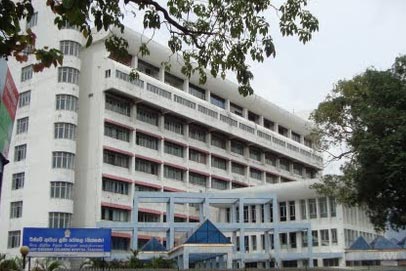
April 07, Colombo (LNW): A significant backlog in paediatric surgical care has come to light, with Lady Ridgeway Children’s Hospital currently carrying a waiting list of 2,712 young patients, according to Deputy Health Minister Hansaka Wijemuni.
The figures were disclosed in Parliament in response to a query raised by Opposition MP Rohini Wijerathne, prompting renewed concern over access to timely treatment for children.
Breaking down the numbers, the Deputy Minister stated that 1,025 children are awaiting cardiothoracic procedures, marking the largest category. A further 593 patients are in need of general surgery, while 388 are lined up for eye-related operations. In addition, 266 children are awaiting ear, nose and throat procedures, and 240 require plastic or reconstructive surgery.
He also noted that 133 children are pending spinal operations, 48 are scheduled for orthopaedic interventions, and 19 are awaiting neurosurgical procedures.
Health officials acknowledged that the scale of the backlog reflects ongoing challenges within the system, including limited surgical capacity and high demand for specialised care. The total number of children currently waiting for surgery remains at 2,712, underscoring the urgency of addressing delays in treatment.
Amber Alert Issued as Severe Lightning Threat Looms Across Several Regions
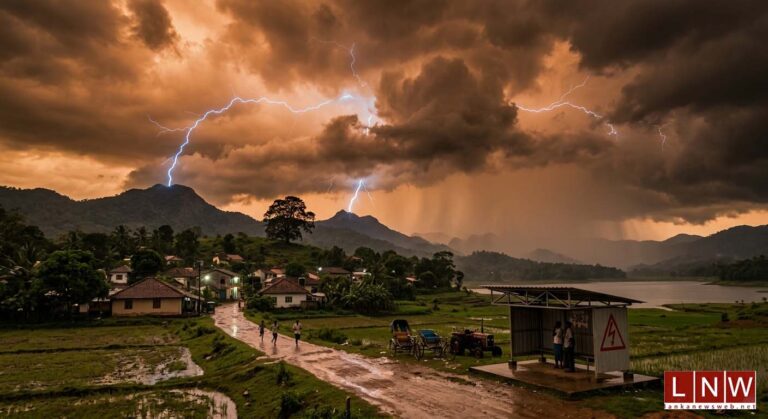
April 07, Colombo (LNW): The Department of Meteorology has released an Amber-level warning highlighting the risk of intense lightning activity in multiple parts of the island, with the advisory remaining in force until 11.00 p.m. today (07).
According to the Natural Hazards Early Warning Centre, thunderstorms accompanied by frequent and powerful lightning strikes are expected to develop after 2.00 p.m., particularly over the Sabaragamuwa Province and Central Province. Similar conditions are also likely in several districts, including Kurunegala District, Anuradhapura District, Mannar District, Vavuniya District and Mullaitivu District.
Forecasters have also cautioned that these storms may bring short bursts of strong, gusty winds in isolated areas, potentially leading to minor disruptions.
Residents in affected locations have been strongly encouraged to take safety precautions. Officials advise remaining indoors during thunderstorms and avoiding exposure in open environments such as paddy fields, tea estates and near bodies of water. Standing beneath trees has also been discouraged due to the heightened risk of lightning strikes.
In addition, the public has been urged to refrain from using wired electrical devices, including landline telephones, and to avoid travelling in open or unprotected vehicles such as bicycles, tractors and boats while storms are active. Authorities also warned of hazards such as falling trees and downed power lines.
The Amber alert signifies a moderate but potentially dangerous situation, with officials calling on the public to remain vigilant and prepared. Emergency support, if required, can be accessed through local disaster management agencies.
Rising Road Deaths Spark Fresh Safety Concerns, Police Warn
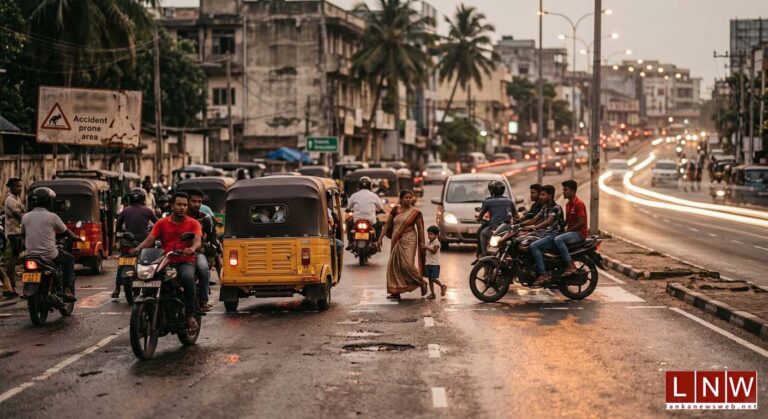
April 07, Colombo (LNW): Sri Lanka Police have reported a steady and worrying rise in road accidents across the country, with fatalities continuing to climb year after year.
Speaking at a media briefing in Colombo focused on improving road safety awareness, Senior Superintendent of Police Manoj Ranagala, who heads the Traffic Control and Road Safety Division, revealed that 676 fatal crashes have already been recorded so far this year.
He noted that the situation has deteriorated compared to previous periods, with fatal incidents increasing by 74 and the overall death toll rising by 80. According to him, the trend reflects a deepening public safety issue that requires urgent attention.
Among the leading causes identified were deteriorating road infrastructure, dangerous driving practices, excessive speed, and motorists operating vehicles under the influence of alcohol. He further pointed out that pedestrians remain the most vulnerable group on the roads. As of April 05, 230 pedestrians and 247 motorcyclists had lost their lives in traffic-related incidents.
Also addressing the briefing, Manilka Sumanatilleke, President of the Sri Lanka Medical Association, stressed that a significant proportion of those affected are young people, underlining the broader social and economic impact of the growing number of accidents.
Officials indicated that increased enforcement, public education campaigns, and infrastructure improvements may be necessary to curb the escalating trend.
President Announces Broad Relief Drive with Fuel, Farming and Welfare Support Measures
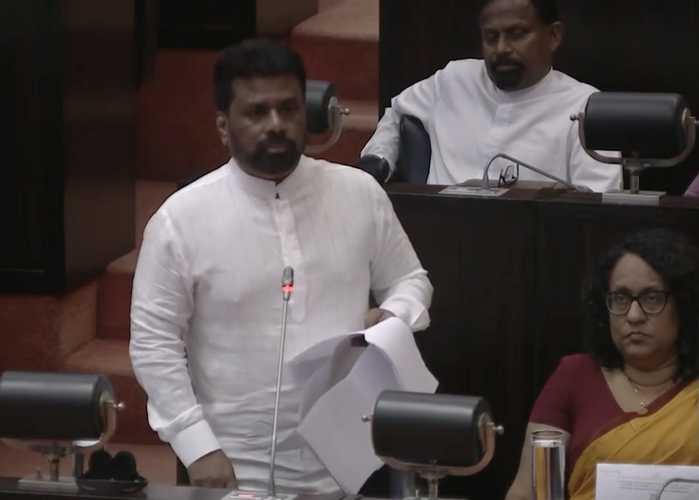
April 07, Colombo (LNW): President Anura Kumara Dissanayake appeared in Parliament today (07) to present a wide-ranging economic relief proposal intended to assist communities affected by the ongoing crisis in the Middle East.
He is presently addressing the House, outlining the government’s response to mounting global and domestic pressures.
During his speech, the President detailed plans to expand agricultural support, stating that the fertiliser subsidy for the forthcoming Yala season will be increased to Rs. 30,000 per hectare. Subsidies for other crops are also set to rise, moving from Rs. 15,000 to Rs. 18,000 per hectare, in a bid to ease the burden on farmers and sustain production.
He also confirmed revisions to the Aswesuma allowance scheme. Under the updated structure, the Rs. 17,500 payment will be raised to Rs. 25,000, while beneficiaries currently receiving Rs. 10,000 will see their allowance increased to Rs. 15,000. Additionally, the transition allowance provided to those exiting the programme will be enhanced by Rs. 2,500.
The President went on to highlight that multiple sectors of the economy have been negatively affected by prevailing global wartime conditions, noting that the government has been closely monitoring developments and acting with caution. Particular concern has been directed towards the fuel and energy sectors, where price volatility continues to have a direct impact on everyday life. He observed that, based on current market trends, the cost of a litre of diesel has surpassed Rs. 600.
Looking ahead, he announced plans to reintroduce a fuel pricing mechanism that reflects actual costs, expected to take effect on or around 1 May. Prices will be determined using data from the previous month. As part of the next revision, the government intends to offer a subsidy of up to Rs. 100 per litre of diesel and up to Rs. 20 per litre of petrol.
The President stated that this initiative is projected to require approximately Rs. 20 billion per month and has been designed as a three-month measure, with benefits targeted towards identified groups. However, he clarified that due to limitations in data availability, prices of Super Diesel and Super Petrol will remain aligned with prevailing market rates.
He further explained that the state will absorb a cost of Rs. 100 per litre specifically for regular diesel, bringing the estimated total expenditure for the three-month period to Rs. 60 billion.
Addressing the needs of the fisheries sector, the President announced a dedicated relief component. One-day fishing vessels will receive a fuel subsidy of Rs. 50 per litre over a three-month period, calculated on a usage of 25 litres per day for up to 25 days each month. In addition, multi-day fishing vessels will be granted a one-off allowance of Rs. 150,000 during the same three-month timeframe, as part of efforts to support livelihoods within the industry.
Expanded Transport Services Announced Ahead of New Year Travel Rush

April 07, Colombo (LNW): Authorities have unveiled a series of enhanced public transport arrangements to accommodate the surge in passengers expected during the upcoming Sinhala and Tamil New Year period.
The Sri Lanka Transport Board has confirmed that a network of special bus services will begin operating from 9 April 2026, aimed at assisting travellers journeying to their hometowns. Around 250 extra buses are set to be deployed each day on long-distance routes, with the flexibility to increase capacity further if passenger numbers exceed expectations.
These additional services will continue until 13 April, after which a separate phase will focus on return travel. Buses catering to those heading back to Colombo are expected to run from 17 to 21 April, ensuring smoother mobility following the festive break.
Parallel arrangements have been organised by the National Transport Commission, which will also introduce supplementary bus operations from 9 April. Officials noted that fleet expansion will be adjusted dynamically in response to commuter demand.
Rail transport is likewise being strengthened, with Sri Lanka Railways planning to roll out special train services starting 10 April. These will operate alongside regular schedules, particularly on key routes such as the Coastal, Northern, and Main lines, offering passengers additional travel options during one of the busiest periods of the year.
Transport officials emphasised that these coordinated efforts are intended to minimise congestion, improve safety, and provide a more reliable travel experience during the holiday season.
Government Approves Fuel Relief Scheme for Fishing Sector
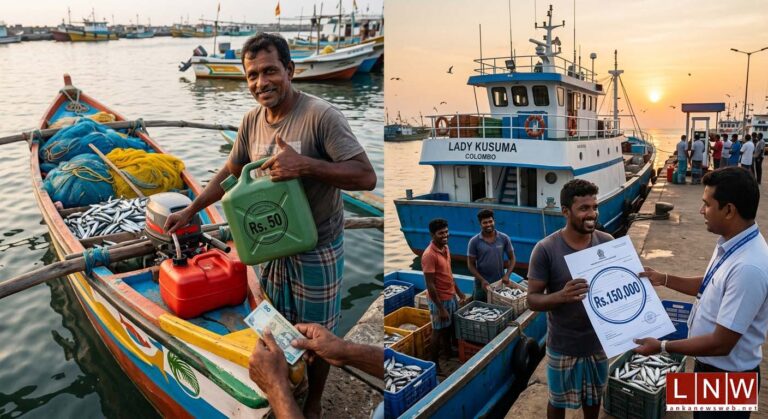
April 07, Colombo (LNW): The government has sanctioned a new support measure aimed at easing the financial strain on the country’s fishing community, according to the Ministry of Fisheries.
As part of the initiative, operators of smaller fishing craft will benefit from a fuel allowance of Rs. 50 per litre, while owners of larger, multi-day vessels are set to receive a fixed grant of Rs. 150,000 for each voyage undertaken.
Officials indicated that the programme is intended to stabilise the industry amid rising operational costs and to ensure continuity in fish supply. The scheme is scheduled to come into force on 20 April 2026, with further monitoring expected to assess its effectiveness and possible expansion.
NDB 13 B Fraud: Total Failure of Directors, the Central Bank and Auditors. Should be sued?
LISTEN TO STORY
WATCH STORY
By Adolf
Recent developments surrounding the Rs. 13.2 billion fraud at National Development Bank PLC (NDB), together with the earlier governance controversy involving Hatton National Bank PLC (HNB), should serve as a serious wake-up call for the entire financial ecosystem—banks, auditors, and the regulator. In particular, the role of the Central Bank of Sri Lanka (CBSL) and the responsibilities of external auditors such as Ernst & Young must now come under sharper public scrutiny. Despite public concerns raised regarding governance issues linked to the appointment of Suresh Shah, the regulator allowed the appointment to proceed at HNB. The governance arrangements that followed enabled a small group of directors—including Suresh Shah and Reganathan Samarasinghe—who reportedly held no meaningful shareholding in the bank, to influence the removal of a sitting chairman, Nihal Jayawardena PC (ugly and disgraceful), widely regarded as a strong governance advocate. Such developments triggered widespread debate within corporate and banking circles about the strength of governance safeguards in systemically important banks.
Failure by CBSL
More recently, public allegations have surfaced relating to customer complaints and possible irregularities involving Hatton National Bank PLC (https://slguardian.org/sri-lankas-hnb-in-fraud-storm-as-customers-allege-funds-quietly-taken/). Whether these allegations are ultimately proven or not, the reputational impact on a major financial institution is significant. When governance concerns persist within a leading bank, questions inevitably arise about the role of the regulator responsible for supervising the sector.
Inexperienced Directors
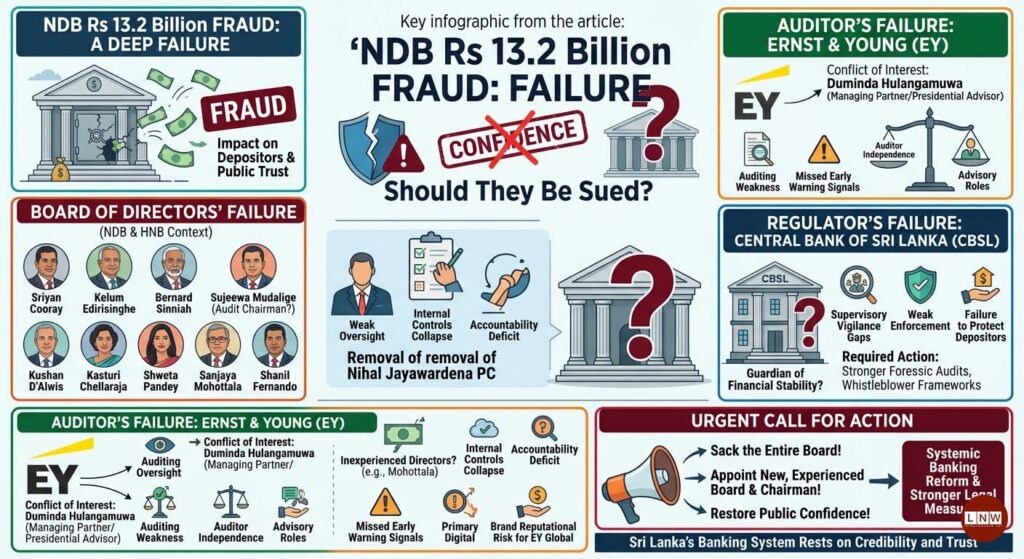
At the same time, the alleged fraud of approximately Rs. 13.2 billion at National Development Bank PLC raises deeper questions about oversight and internal controls. The board of NDB includes several experienced professionals such as Sriyan Cooray, Kelum Edirisinghe, Bernard Sinniah, Sujeewa Mudalige, Kushan D’Alwis, Kasturi Chellaraja, Shweta Pandey, Sanjaya Mohottala and Shanil Fernando. With such a high-profile board, stakeholders would have expected reasonably strong governance oversight and robust risk controls. Kasturi is the female god of business, Mohottala a failed BOI Chairman, Sujeewa Mudalige the master craftsman for accounts (did CBSL check why he left HNB? But cleared him for NDB Audit Chairman ). Particularly noteworthy is the role of the audit committee, which is central to safeguarding financial integrity within a bank. The effectiveness of audit oversight becomes even more critical when large financial exposures or irregularities emerge. If such a significant fraud could develop within a regulated institution, it inevitably raises questions about whether internal risk monitoring, audit review processes, and board oversight mechanisms were sufficiently rigorous.
Failure of Ernst & Young
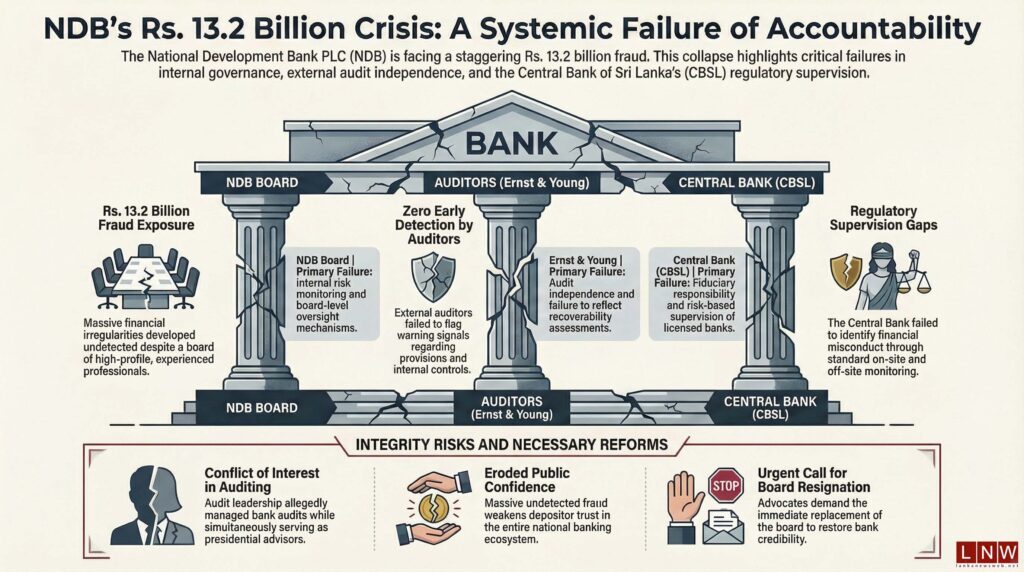
External auditors also carry significant responsibility in protecting stakeholders. Firms such as Ernst & Young are entrusted with reviewing financial statements and assessing whether adequate provisions, recoverability assessments, and internal controls are properly reflected in financial reporting. When substantial financial irregularities later surface, the natural question is whether audit procedures were sufficiently robust to detect early warning signals. The potential conflicts of the managing partner of Ernst & Young Sri Lanka, Duminda Hulangamuwa, deserve special attention. Sources indicate that he is simultaneously engaged in advisory work for the President while also managing the audit firm. Such dual roles create an inherent conflict of interest, compromising independence and raising doubts about the effectiveness of audit oversight at NDB. Stakeholders must ask whether these conflicts may have contributed to the failure to identify recoverable or irregular transactions before the fraud surfaced. Independence is the cornerstone of auditing credibility, and any compromise erodes public trust. Ernst & Young global needs to wake up to protect its brand name in Sri Lanka.
Confidence
Sri Lanka’s banking system rests fundamentally on confidence. Depositors place their savings in banks believing that institutions are governed prudently, managed responsibly, and supervised rigorously by the regulator. When a fraud of Rs. 13.2 billion occurs within a licensed bank, the public quite reasonably asks how such a large exposure could have developed without early detection through internal audits, external audits, and regulatory supervision. For God’s sake, 13 billion and no one knew it was happening?
Role of CBSL
Banks are among the most closely supervised institutions in any economy. Through on-site examinations, off-site surveillance, risk-based supervision, and compliance monitoring, regulators are expected to identify warning signals well before financial misconduct reaches systemic levels. If a fraud of this magnitude occurs, it inevitably suggests potential gaps in internal controls, governance, or supervisory vigilance. Regulators carry a heavy fiduciary responsibility. The mandate of the Central Bank of Sri Lanka goes beyond enforcing technical compliance. It includes protecting depositors, preserving financial stability, and ensuring that boards of financial institutions adhere to the highest governance standards. When governance lapses appear to go unchecked or financial irregularities surface on a large scale, public confidence in the regulatory framework is inevitably weakened. Globally, regulators have strengthened oversight following similar episodes. Enhanced forensic audit capabilities, stronger whistleblower frameworks, and real-time monitoring of large financial exposures are increasingly standard practices. Sri Lanka cannot afford to fall behind in strengthening these supervisory mechanisms. Equally important is the need for banks themselves to reinforce governance standards. Independent boards, empowered audit committees, transparent leadership appointments, and strong risk management cultures remain the foundation of a resilient financial system. Sri Lanka’s banking sector has historically been viewed as one of the more stable pillars of the economy. Protecting that reputation requires decisive action whenever governance concerns or financial irregularities arise.
Sack the Board
The alleged fraud at National Development Bank PLC and the governance controversies surrounding Hatton National Bank PLC should therefore serve as a wake-up call for banks, auditors, and the Central Bank of Sri Lanka. Stronger oversight, stricter accountability, and uncompromising governance standards are essential if trust in the financial system is to be preserved. Ultimately, financial stability rests not only on capital and liquidity but on credibility, transparency, and vigilant supervision. When those pillars weaken, the consequences extend far beyond any single institution. The time for serious regulatory introspection is now. CBSL should immediately ask the entire board to resign given the stench and depth of the fraud, ( they will not resign) and appoint a new board of experienced directors and a chairman to win back the confidence of the public. They should not fail again.

Afternoon showers, thundershowers expected across many provinces (April 07)

April 07, Colombo (LNW): Showers or thundershowers will occur at several places in Northern, North-central, Central, Sabaragamuwa, Uva and Southern provinces after 1.00 p.m.
Showers may occur in Hambanthota and Ampara districts in the morning.
Misty conditions can be expected at some places in Central, Sabaragamuwa and Uva provinces and in Ampara and Polonnaruwa districts during the early hours of the morning.
The general public is kindly requested to take adequate precautions to minimise damages caused by temporary localised strong winds and lightning during thundershowers.
On the apparent northward relative motion of the sun, it is going to be directly over the latitudes of Sri Lanka during April 05 to 15 this year. The nearest areas of Sri Lanka over which the sun is overhead today (07) are Dehiwala, Maharagama, Pannipitiya, Padukka, Eheliyagoda, Maskeliya, Siyambalanduwa and Pottuvil at about 12:13 noon.
Marine Weather:
Condition of Rain:
Showers or thundershowers are likely at a few places in the sea areas off the coast extending from Kankasanthurai to Pottuvil via Mannar, Puttalam, Colombo, Galle and Hambantota.
Winds:
Winds will be South-westerly or Westerly. Wind speed will be (25-35) kmph. Wind speed can increase up to (40-45) kmph at times in the sea areas off the coast extending from Puttalam to Pottuvil via Colombo, Galle and Hambantota.
State of Sea:
The sea areas off the coast extending from Puttalam to Pottuvil via Colombo, Galle and Hambantota may be fairly rough at times. The other sea areas around the island may be slight or Moderate.
Temporarily strong gusty winds and very rough seas can be expected during thundershowers.
Rs. 13.2 Billion Shock: Inside the Massive Fraud That Rocked Sri Lanka’s Banking Sector
LISTEN TO STORY
WATCH STORY
By: Isuru Parakrama
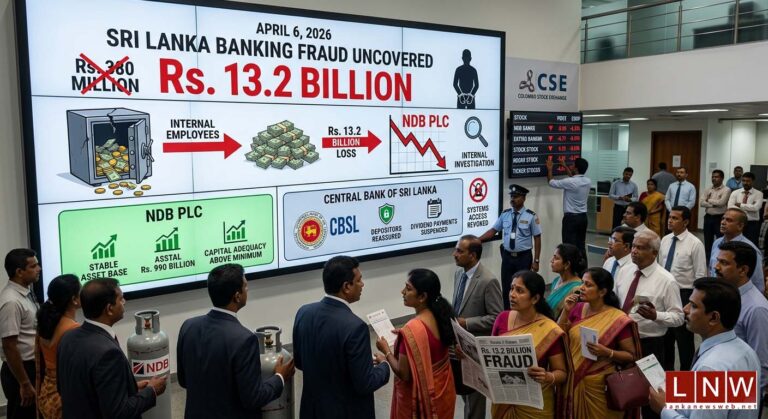
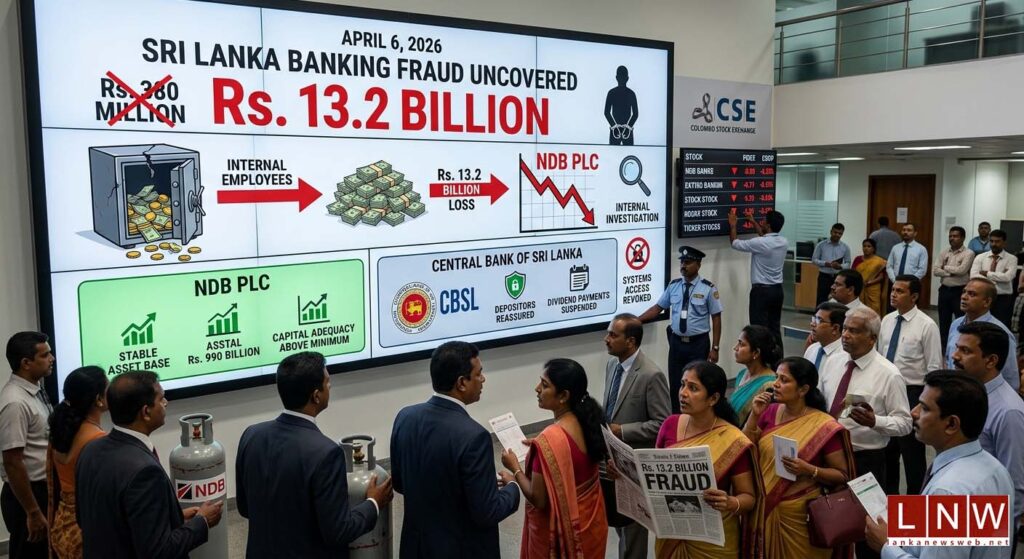
April 06, Colombo (LNW): Sri Lanka’s financial sector has been jolted by the revelation of a staggering Rs. 13.2 billion internal fraud at National Development Bank PLC (NDB), marking one of the most significant banking scandals in the country’s recent history.
Disclosed between April 05 and 06, 2026, the incident has raised serious concerns over internal controls, even as authorities and the bank move swiftly to contain the fallout.
A Fraud Uncovered in Stages
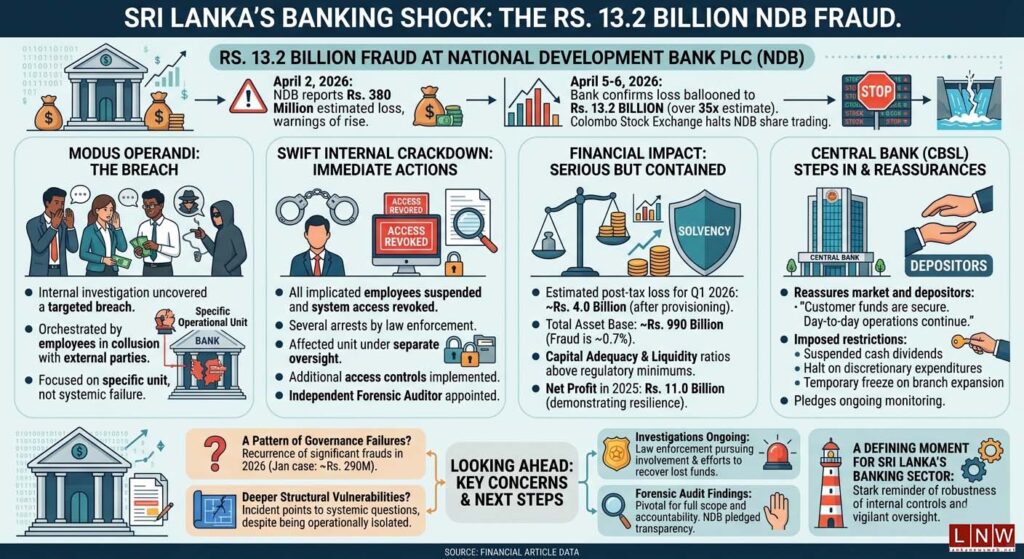
The scale of the fraud became apparent only gradually. On April 02, NDB initially reported a relatively modest loss estimate of Rs. 380 million, cautioning that the figure could rise substantially. Within days, that warning proved prescient. By April 05, the bank confirmed in a market filing that the loss had ballooned to Rs. 13.2 billion—over 35 times the original estimate.
The disclosure prompted immediate action at the Colombo Stock Exchange (CSE), where trading in NDB shares was halted. The broader market reacted nervously, with banking stocks declining and key indices dipping modestly.
How the Fraud Was Carried Out
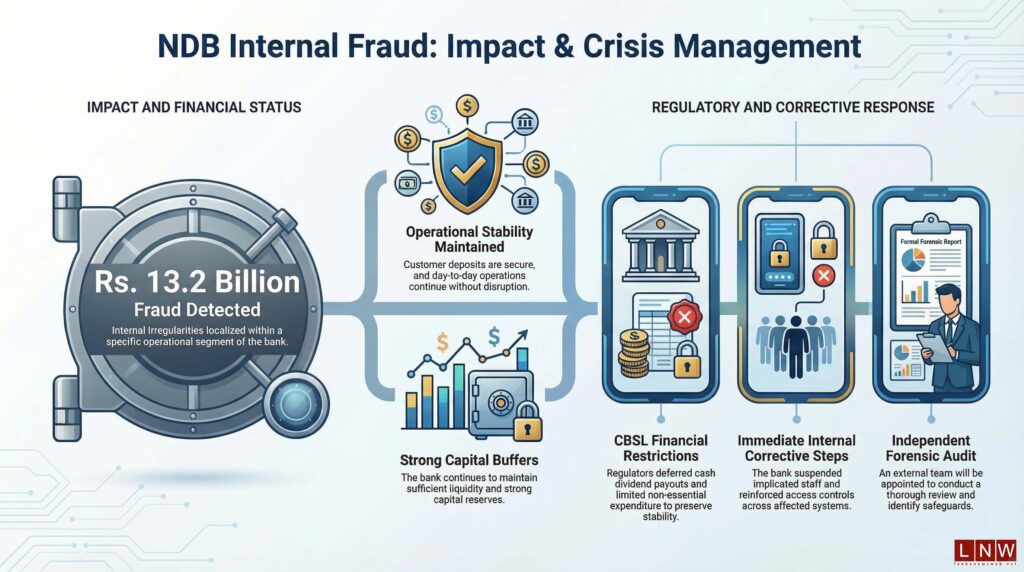
According to the bank’s internal findings, the fraud was orchestrated by employees working in collusion with external parties. The misconduct was confined to a specific operational unit, suggesting a targeted breach rather than a systemic failure across the institution.
The scheme came to light through an internal investigation, underscoring the role of internal oversight mechanisms—albeit after significant financial damage had already occurred. The bank has not yet disclosed the precise methods used in the fraud, pending further forensic analysis.
Swift Internal Crackdown
In response, NDB has taken a series of decisive steps. All employees implicated in the fraud have been suspended, with their system access immediately revoked. Several individuals connected to the scheme have already been arrested by law enforcement authorities.
The affected operational unit has been placed under separate oversight, with new personnel and revised reporting lines introduced. Additional access controls have been implemented across the bank’s systems, while all relevant transaction records and evidence have been secured for investigation.
An independent forensic auditor is also set to be appointed to conduct a comprehensive review, the findings of which are expected to shed further light on the lapses that enabled the fraud.
Financial Impact: Serious but Contained
Despite the headline figure, the financial impact on NDB appears manageable in relative terms. The bank estimates a post-tax loss of around Rs. 4.0 billion for the first quarter of 2026 after provisioning.
With a total asset base of approximately Rs. 990 billion, the fraud represents about 0.7 per cent of its assets. For context, NDB reported a net profit of Rs. 11.0 billion in 2025, highlighting that while the loss is substantial, it does not threaten the bank’s overall solvency.
Crucially, capital adequacy ratios—including Common Equity Tier 1 and Total Capital Adequacy—remain above regulatory minimums, and liquidity levels have not been affected.
Central Bank Steps In
The Central Bank of Sri Lanka (CBSL) has moved quickly to reassure markets and depositors. In a statement issued on April 06, the regulator confirmed that NDB remains well-capitalised and liquid, with no immediate systemic risk.
However, the CBSL has imposed several restrictions to safeguard financial stability. These include the suspension of cash dividend payments, a halt on discretionary expenditures, and a temporary freeze on branch expansion. The regulator has also pledged ongoing monitoring and stands ready to provide liquidity support if required.
Depositors Reassured
Amid public concern, both the bank and the regulator have emphasised that customer funds remain entirely secure. No customer accounts or deposits have been affected, and day-to-day banking operations continue without disruption.
This reassurance is critical in maintaining confidence in the banking system, particularly given the scale of the fraud.
A Pattern of Governance Failures?
The incident is especially troubling in light of a previous fraud at NDB earlier this year. In January 2026, a separate case involving approximately Rs. 290 million came to light, reportedly implicating senior management figures.
The recurrence of such incidents within a short span raises pressing questions about governance standards and internal controls at the bank. Analysts suggest that while the current fraud may be operationally isolated, it points to deeper structural vulnerabilities that must be urgently addressed.
What Happens Next?
Investigations are ongoing, with law enforcement agencies pursuing those involved and efforts underway to recover lost funds. The forthcoming forensic audit will be pivotal in determining the full scope of the fraud and identifying accountability.
NDB has pledged transparency, indicating that further disclosures will be made as material information becomes available. Meanwhile, the CBSL’s continued oversight will be crucial in ensuring stability and restoring public confidence.
A Defining Moment for the Banking Sector
While the immediate systemic risk appears low, the Rs. 13.2 billion fraud stands as a stark reminder of the importance of robust internal controls and vigilant oversight. For Sri Lanka’s banking sector, it is a moment of reckoning—one that could shape regulatory reforms and corporate governance practices in the years ahead.