By: Isuru Parakrama
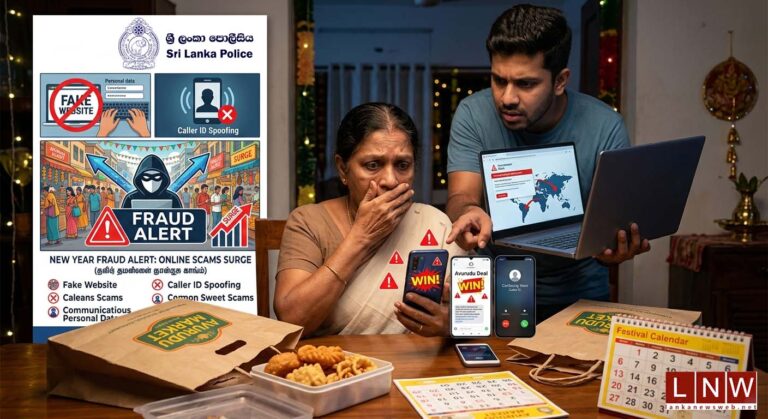
April 06, Colombo (LNW): Sri Lanka Police have cautioned the public to be on heightened alert for online scams during the upcoming Sinhala and Tamil New Year period, warning that festive spending habits are increasingly being targeted by cybercriminals.
With more people turning to digital platforms for shopping, bill payments and money transfers during the season, authorities say fraudsters are taking advantage of the surge in online activity to deceive unsuspecting users. Officials noted that the number of reported incidents tends to rise sharply around April each year.
Among the most common tactics identified are fake promotional campaigns advertising “Avurudu deals”, counterfeit retail websites, and misleading social media posts offering prizes or discounts. In addition, phishing emails and text messages, fraudulent bank notifications, and manipulated QR codes are being widely used to extract sensitive personal and financial information.
Police also highlighted the growing use of caller ID spoofing, where scammers disguise their phone numbers to appear as legitimate institutions. In some cases, images and names of prominent figures, including national leaders, are misused to lend credibility to these schemes.
Investigators say previous cases reveal that individuals facing financial pressure, or those tempted by seemingly lucrative offers, are particularly vulnerable. Once personal data is obtained, it can be exploited for identity theft, unauthorised transactions, and further targeted scams.
Authorities are urging the public to exercise caution when clicking on unfamiliar links, sharing personal details, or responding to unsolicited offers. They also recommend verifying the authenticity of websites and promotions before making any payments, especially during the busy festive period.
Police Issue New Year Fraud Alert as Online Scams Surge
Parliament Sets Three-Day Sitting with Key Bills and Energy Minister Showdown
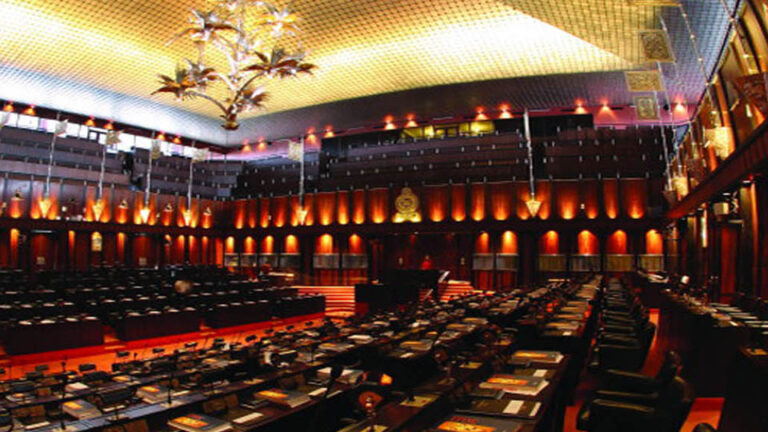
April 06, Colombo (LNW): Sri Lanka’s legislature is set to meet on 7, 9 and 10 April for a series of sittings expected to address major legislative business as well as a high-profile no-confidence motion against Energy Minister Kumara Jayakody.
The schedule was finalised by the Committee on Parliamentary Business during a recent session chaired by Speaker Jagath Wickramaratne. Parliamentary officials indicated that the upcoming sittings could prove pivotal, given the range of policy matters and political debates lined up.
Each sitting day will begin with routine parliamentary proceedings, including time allocated for formal business and questions to ministers, before moving into the main agenda.
On 7 April, lawmakers are expected to debate a series of regulatory measures, including provisions linked to anti-doping in sport, investment-related frameworks and central banking rules. Two finance-related amendment bills—covering taxation and social security contributions—are also due for further consideration, subject to any legal challenges. The day’s proceedings will conclude with discussions on proposed changes to parliamentary procedures, followed by the adoption of an annual institutional report without debate.
Parliament will not meet on 8 April due to a government-declared holiday.
When sittings resume on 9 April, attention will shift to defence-related regulations under the armed forces’ governing laws. There is also provision to debate any emergency proclamations, should they be issued under relevant legislation. Later in the day, the Opposition is scheduled to lead an adjournment debate revisiting the 2019 Easter Sunday attacks, a topic that continues to generate political and public interest.
The final sitting on 10 April is expected to be dominated by the Opposition-led no-confidence motion against Minister Jayakody, with a full-day debate anticipated. Political observers suggest the discussion could test alliances within Parliament and place the government under significant scrutiny.
With a packed agenda spanning economic policy, national security and political accountability, the three-day session is likely to be closely watched both within and outside the chamber.
Doctors Urge Healthier New Year Celebrations with New Public Awareness Drive
April 06, Colombo (LNW): The Sri Lanka Medical Association (SLMA) has launched a nationwide health awareness initiative ahead of the Sinhala and Tamil New Year, encouraging the public to adopt more balanced eating habits and remain physically active during the festive season.
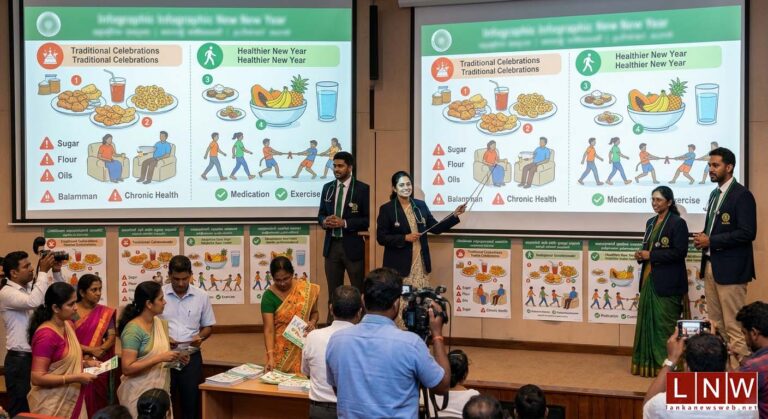
As part of the campaign, the association is set to unveil a specially designed infographic at its auditorium in Colombo today (06). The material, developed by the SLMA’s Non-Communicable Diseases Committee, is intended to educate both the public and media on maintaining wellbeing while enjoying traditional celebrations.
Medical experts noted that beloved festive treats such as kavum, mung kavum and kokis, though culturally significant, tend to be rich in sugar, refined flour and oils. Overindulgence—particularly among those with chronic conditions—can lead to serious health complications.
The association highlighted that individuals living with illnesses such as diabetes, hypertension and heart disease often abandon their usual routines during April festivities, increasing their vulnerability to health risks.
In its statement, the SLMA stressed that while the New Year is a time for sharing and celebration, it should not come at the expense of long-term wellbeing. Increased consumption of sugary, salty and oily foods, combined with reduced physical activity, can elevate blood pressure and glucose levels, potentially triggering serious events such as heart attacks.
To help mitigate these risks, the programme promotes simple but practical measures. These include enjoying traditional sweets in moderation rather than as full meals, offering healthier alternatives like fresh fruit and water to guests, adhering strictly to prescribed medication schedules, and incorporating daily exercise such as walking or participating in traditional games.
The SLMA also confirmed that its educational material will be distributed across the island in Sinhala, Tamil and English, aiming to reach a broad audience and promote a healthier approach to celebrating the New Year without losing sight of cultural traditions.
NDB Uncovers Major Internal Fraud as Regulators Step In to Safeguard Stability
LISTEN TO STORY
WATCH STORY
By: Isuru Parakrama
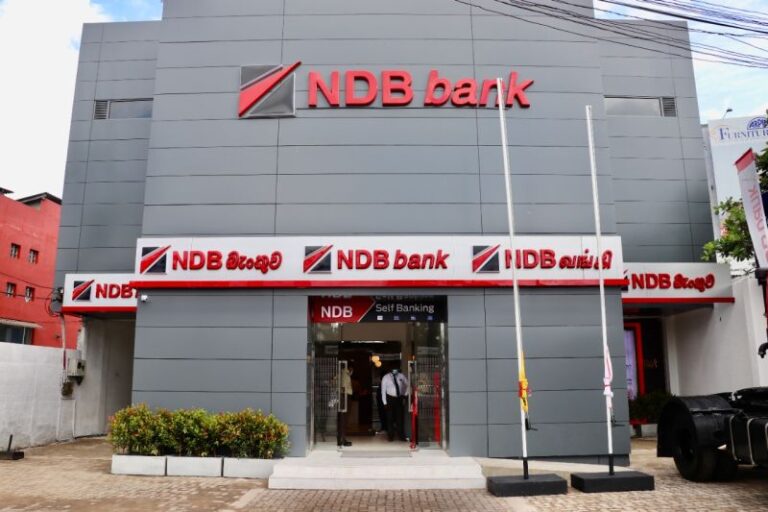
April 06, Colombo (LNW): National Development Bank PLC (NDB) has revealed that a significant internal fraud within the institution has now been assessed at approximately Rs. 13.2 billion, marking a substantial increase from earlier preliminary estimates.
In a formal disclosure to the Colombo Stock Exchange (CSE), the bank clarified that the irregularities were confined to a specific operational segment rather than being widespread across its entire network. Investigations are currently ongoing, with law enforcement authorities assisting in efforts to trace and recover the misappropriated funds.
Despite the scale of the incident, NDB reassured customers that their deposits and account balances remain fully secure. The bank also emphasised that day-to-day operations have not been disrupted and that it continues to maintain strong capital reserves and sufficient liquidity.
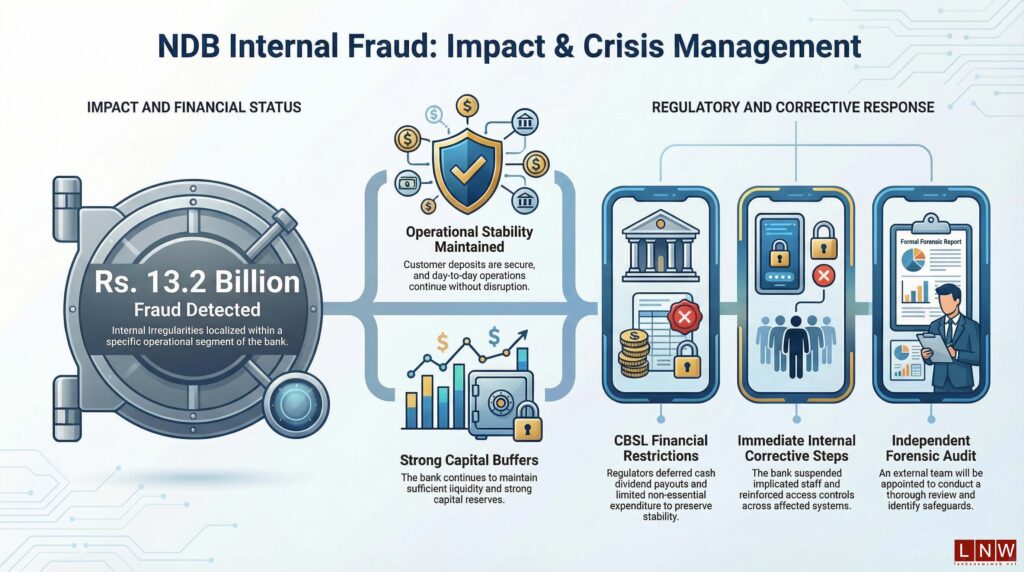
In response, the Central Bank of Sri Lanka (CBSL) has taken precautionary measures to preserve financial stability. These include instructing the bank to defer a planned cash dividend payout and to limit non-essential expenditure, such as expansion projects. However, shareholders will still be eligible for a scrip dividend under the revised arrangement.
The bank has already initiated internal corrective steps, including suspending staff believed to be connected to the fraud, securing sensitive documentation, and reinforcing access controls across affected systems. Management oversight of the implicated division has also been restructured.
Looking ahead, NDB has announced plans to appoint an independent forensic audit team to conduct a thorough review of the incident. The objective will be not only to establish accountability but also to identify weaknesses and introduce stronger safeguards to prevent similar occurrences in the future.
Financial analysts note that while the situation is serious, the swift response by both the bank and regulators may help restore confidence, provided transparency and accountability are maintained throughout the investigation.

Sri Lanka Marks Democratic Gains Despite Continued Global Decline in Freedom
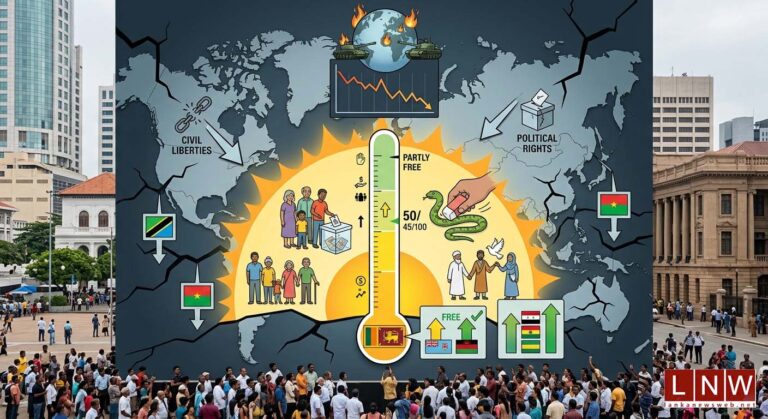
April 06, Colombo (LNW): Sri Lanka has been identified as one of a small group of nations making headway in political rights and civil liberties, according to the latest Freedom in the World 2026 assessment by Freedom House.
This comes against the backdrop of a continued global downturn in democratic freedoms, now extending into its twentieth consecutive year.
The report highlights a measurable improvement in Sri Lanka’s standing, with the country recording a five-point increase. Analysts attribute this progress to developments following the 2024 presidential election, alongside renewed government efforts to address corruption and foster greater religious harmony.
While the overall global picture remains concerning—with more than 50 countries experiencing declines in freedom—only a limited number showed improvement. Sri Lanka was singled out among those demonstrating notable advancement, alongside countries such as Syria, Bolivia and Gabon.
Despite these gains, Sri Lanka continues to be classified as “Partly Free”, reflecting the fact that, although progress has been made, challenges remain in strengthening democratic institutions and safeguarding civil liberties.
The report paints a broader picture of mounting global pressures on democracy, citing armed conflicts, political instability, institutional erosion and the rise of authoritarian governance as key contributing factors. Several nations—including Tanzania and Burkina Faso—were noted for significant declines during the year.
Encouragingly, a handful of countries managed to improve their status classifications, with Fiji and Malawi among those moving into the “Free” category.
Observers note that Sri Lanka’s upward trajectory signals a gradual recovery from the political and economic turbulence of recent years. However, the report cautions that sustaining this momentum will require continued commitment to democratic reforms, particularly at a time when global trends point in the opposite direction.
Doctors Suspend Nationwide Strike Pending Talks with Health Minister
April 06, Colombo (LNW): The island-wide industrial action initiated by the Government Medical Officers’ Association (GMOA) has been put on hold with effect from 8.00 a.m. today (06), offering temporary relief to the public health sector.
The strike, which drew significant attention in recent days, had been launched over a series of grievances, most notably concerns surrounding what the association described as undue political interference in the transfer and placement of medical professionals.
Announcing the decision, GMOA Secretary Dr Prabath Sugathadasa stated that the temporary suspension was agreed upon in light of fresh discussions scheduled with Minister of Health, Dr Nalinda Jayatissa. The meeting is expected to take place on April 09, shortly after the Minister’s return to the country from an overseas visit.
Medical trade union representatives indicated that while services will resume for the time being, the situation remains under close observation. They cautioned that further trade union action could be reconsidered if the forthcoming discussions fail to produce satisfactory outcomes.
Hospital sources reported that contingency measures had been in place during the strike period, with emergency services continuing to operate, though routine care faced disruptions in several regions.
The GMOA expressed hope that the upcoming dialogue would pave the way for constructive solutions, particularly regarding transparency and fairness in administrative procedures affecting doctors nationwide.
Government Signals Easing of Fuel Restrictions as Supplies Stabilise
By: Isuru Parakrama
April 06, Colombo (LNW): Sri Lanka’s Minister of Foreign Affairs Vijitha Herath has announced that a steady inflow of fuel shipments is expected throughout April, with nine tankers scheduled to reach the island in the coming weeks.
He made the remarks while addressing a commemorative gathering in Matara, marking the Janatha Vimukthi Peramuna’s (JVP) “Apreil Viru Samaruma.”
During his speech, the Minister expressed confidence that the country has largely overcome the energy shortages that intensified in the wake of tensions in the Middle East.
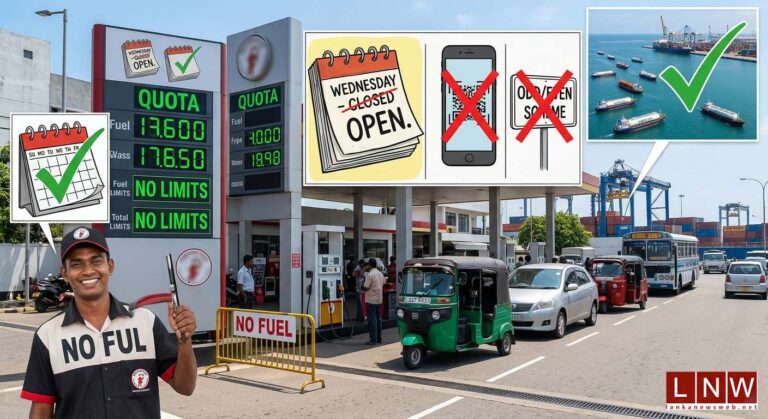
According to Herath, the government is now in a position to gradually roll back several emergency measures introduced at the height of the crisis. Among these is the possibility of restoring Wednesdays as a normal working day, reversing the temporary weekly holiday that had been implemented to curb fuel consumption.
He also suggested that the QR-based fuel distribution system, along with the odd-even vehicle registration scheme, may soon be withdrawn if current improvements continue. These systems were initially introduced to manage demand and prevent long queues at filling stations.
Reflecting on the recent past, the Minister acknowledged that the first phase of the crisis had been marked by significant public inconvenience, including extended waiting times for fuel. However, he noted that swift policy responses helped stabilise the situation and restore order.
Herath further explained that earlier supply disruptions were largely due to delays in the arrival of multiple fuel consignments that had been expected simultaneously. With improved coordination and a more predictable delivery schedule now in place, he assured the public that such issues are unlikely to recur.
He added that the government remains cautious but optimistic, stressing that any decision to lift restrictions will depend on maintaining a consistent and adequate fuel supply in the weeks ahead.
Domestic Gas Prices Rise Amid Global Pressures and Festive Demand
By: Isuru Parakrama
April 06, Colombo (LNW): State LP Gas distributor Litro Gas Lanka Ltd has confirmed an upward revision in the cost of household LP gas cylinders, which came into effect from midnight on April 05.
The adjustment follows a sharp escalation in international gas prices, largely attributed to ongoing geopolitical tensions that have driven up import expenses.
Despite these pressures, the company indicated that it had exercised restraint in revising prices, particularly in view of the approaching Sinhala and Tamil New Year and the mounting financial strain on households. Officials stressed that only a partial increase has been passed on to consumers in an effort to cushion the impact.
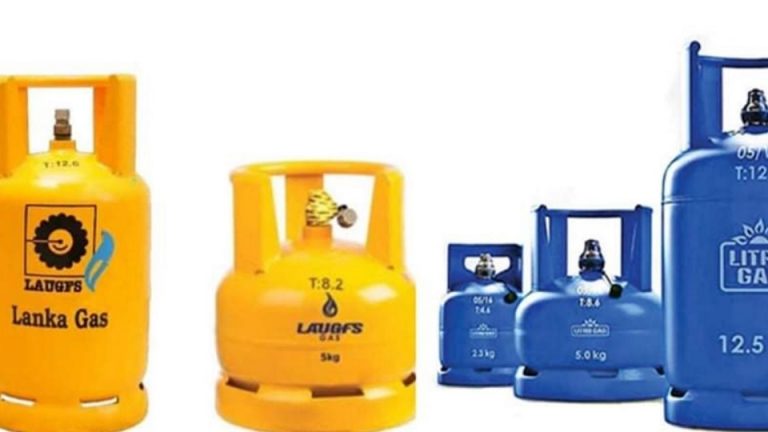
Under the new pricing structure in the Colombo District, a 12.5 kg cylinder now costs Rs. 4,765, reflecting an increase of Rs. 775. Meanwhile, a 5 kg cylinder has risen by Rs. 308 to Rs. 1,910, and a 2.3 kg cylinder is now priced at Rs. 890 after a Rs. 140 increment.
Litro also moved to reassure the public regarding supply stability. The company revealed that approximately 38,000 metric tonnes of LP gas allocated for April remain in offshore storage near the Maldives, ready for distribution. Additional shipments are on the way, including a consignment of 20,000 metric tonnes aboard the vessel Luigi Galvani, currently travelling via South Africa, and another 20,000 metric tonnes being transported from South America by the vessel Freycinet.
With these deliveries in place, Litro expressed confidence in maintaining uninterrupted distribution not only throughout April but into May as well.
In a parallel development, LAUGFS Gas PLC has also raised its domestic cylinder prices, with the changes likewise taking effect from midnight on 5 April. The company cited prevailing global market conditions as the primary reason for the revision.
In Colombo, a 12.5 kg LAUGFS cylinder now retails at Rs. 5,700, marking a substantial increase of Rs. 1,070. The price of a 5 kg cylinder has climbed by Rs. 418 to Rs. 2,280.
LAUGFS stated that it had attempted to absorb as much of the cost increase as possible before revising prices. It further noted that it would continue to monitor international trends closely and adjust prices downward should favourable conditions emerge.
Showers persist across provinces: Sun overhead in SL (April 06)

By: Isuru Parakrama
April 06, Colombo (LNW): Showers or thundershowers will occur at several places in Northern, Eastern, North-central, Central and Sabaragamuwa provinces and in Puttalam, Galle and Matara districts after 2.00 p.m., the Department of Meteorology said in its daily weather forecast today (06).
Showers may occur in coastal areas of Western province and in the Puttalam and Jaffna districts in the morning.
Misty conditions can be expected at some places in Central, Sabaragamuwa and Uva provinces and in Ampara district during the early hours of the morning.
The general public is kindly requested to take adequate precautions to minimise damages caused by temporary localised strong winds and lightning during thundershowers.
On the apparent northward relative motion of the sun, it is going to be directly over the latitudes of Sri Lanka during April 05 to 15 this year. The nearest areas of Sri Lanka over which the sun is overhead today (06) are Beruwala, Gurulubadda, Rakwana, Godakawela, Udawalawe and Thanamalwila at about 12:13 noon.
Marine Weather:
Condition of Rain:
Showers or thundershowers are likely at a few places in the sea areas off the coast extending from Kankasanthurai to Pottuvil via Mannar, Puttalam, Colombo, Galle and Hambantota.
Winds:
Winds will be South-westerly or Westerly in direction.
Wind speed will be (25-35) kmph.
Wind speed can increase up to (40-45) kmph at times in the sea areas off the coast extending from Galle to Pottuvil via Matara and Hambantota.
State of Sea:
The sea areas off the coast extending from Galle to Pottuvil via Matara and Hambantota may be fairly rough at times.
The other sea areas around the island may be slight or Moderate.
Temporarily strong gusty winds and very rough seas can be expected during thundershowers.
Sri Lanka’s Fuel Crisis Deepens amid Diplomatic Balancing Failures
By: Staff Writer
April 05, Colombo (LNW): Sri Lanka is facing an escalating fuel emergency that exposes deep flaws in its foreign policy positioning and energy security strategy. With the Sapugaskanda oil refinery on the brink of shutdown, the government is scrambling to secure crude oil supplies in an increasingly volatile global environment.
President Anura Kumara Dissanayake has acknowledged the severity of the situation, warning that unless urgent solutions are found, refinery operations may cease within days. Although tenders have been placed for shipments expected months later, the country is now forced to rely on costly and uncertain spot purchases. Even these are proving difficult, with authorities exploring unconventional options such as acquiring cargo already at sea.
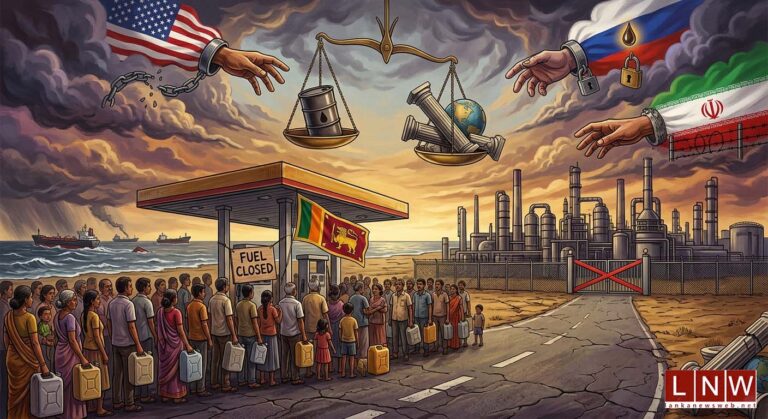
At the heart of the crisis lies Sri Lanka’s dependence on Iranian crude oil, which is particularly suited for refining at Sapugaskanda oil refinery. However, ongoing geopolitical tensions and sanctions linked to the US-led alliance have effectively cut off access to Iranian supplies. This has left Sri Lanka in a vulnerable position, despite assurances of support from Iran’s diplomatic representatives.
The government’s attempt to maintain a nonaligned foreign policy is increasingly being questioned. Critics argue that Sri Lanka’s perceived tilt toward the United States has undermined its ability to maintain stable energy partnerships with countries like Iran and Russia. This inconsistency has created uncertainty among potential suppliers at a time when reliability is critical.
Russia has emerged as a possible alternative, offering two initial fuel shipments. However, this proposal comes with conditions, including a requirement for Sri Lanka to commit to a five-year import agreement. Such a deal carries significant risks, particularly given the temporary nature of US sanctions relief on Russian oil.
The 30-day sanctions waiver granted by Washington is set to expire soon, raising concerns about the legality and feasibility of any long-term agreement with Moscow. If sanctions are reinstated, Sri Lanka could once again find itself cut off from a crucial energy source, triggering further diplomatic complications.
Meanwhile, global supply disruptions exacerbated by conflict in the Middle East and the closure of key shipping routes have intensified competition for fuel. Sri Lanka’s limited refinery capacity of 50,000 barrels per day further constrains its flexibility in sourcing alternative crude types.
The situation highlights a broader structural issue: Sri Lanka’s lack of a coherent, long-term energy strategy aligned with its foreign policy. As the country navigates competing global powers, its inability to secure stable fuel supplies underscores the risks of an inconsistent diplomatic approach.
Unless decisive action is taken to stabilize both energy procurement and foreign relations, Sri Lanka may face not only a prolonged fuel shortage but also deeper economic and political consequences.