By: Staff Writer
April 05, Colombo (LNW): Sri Lanka’s ongoing partnership with the International Monetary Fund has entered a pivotal phase, as recent review discussions reveal both encouraging progress and persistent structural weaknesses. The latest engagement, led by IMF Mission Chief Evan Papageorgiou, provides a nuanced assessment of the Government’s efforts to stabilise the economy under the Extended Fund Facility (EFF).
At the centre of the discussions was the delayed Fifth Review and the upcoming Sixth Review, both of which are essential for unlocking approximately $700 million in financial support. Originally scheduled for completion in late 2025, the Fifth Review was postponed following the economic fallout from Cyclone Ditwah. The Government instead turned to the IMF’s Rapid Financing Instrument, securing $206 million in emergency funding to address immediate recovery needs.
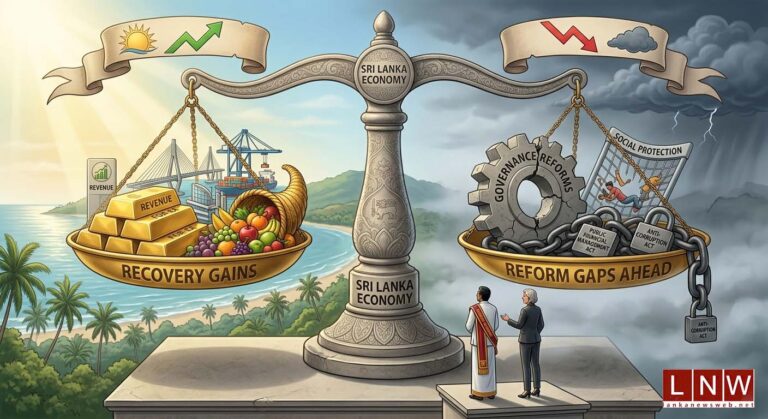
Despite these setbacks, the IMF has recognised significant progress under the administration of President Anura Kumara Dissanayake. Improvements in fiscal discipline, revenue generation, and foreign reserve management indicate a more stable macroeconomic environment compared to previous years. These gains reflect a degree of policy consistency that has been critical in restoring confidence among international stakeholders.
However, the IMF’s assessment goes beyond short-term indicators, drawing attention to deeper, unresolved challenges. Discussions with parliamentary leaders, including Speaker Jagath Wickramaratne, highlighted the importance of legislative reforms such as the Public Financial Management Act and the Anti-Corruption Act. While these measures represent progress on paper, their effectiveness will depend on implementation and institutional accountability.
A key concern raised during the review process is the likelihood that Sri Lanka may fall short of certain EFF targets, particularly in governance reforms and social protection mechanisms. These areas are crucial for ensuring that economic recovery is not only sustained but also inclusive. Without stronger safety nets, vulnerable populations may continue to bear the brunt of adjustment policies.
External risks further complicate the outlook. Global economic uncertainties, including inflationary pressures and geopolitical tensions, continue to pose challenges for Sri Lanka’s external sector. The Government’s efforts to manage tariffs, stabilise prices, and maintain currency stability will be tested in this volatile environment.
The IMF’s latest review ultimately presents a balanced verdict: Sri Lanka has made meaningful strides toward recovery, but the foundation remains incomplete. As the EFF program approaches its 2027 deadline, the focus must shift from stabilisation to transformation. Accelerating structural reforms, strengthening governance, and expanding social protections will be essential to ensuring that recent gains are not only preserved but built upon in the years ahead.
IMF Review Highlights Recovery Gains but Flags Reform Gaps Ahead
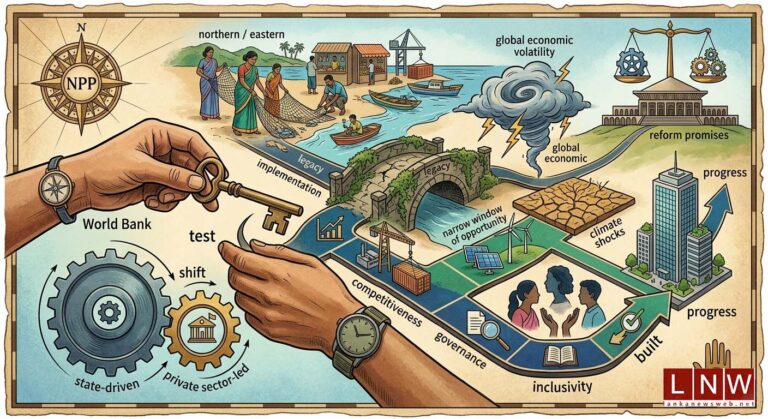
New World Bank Plan Tests NPP Government’s Reform Promises
By: Staff Writer
April 05, Colombo (LNW): Sri Lanka’s new partnership with the World Bank Group presents a defining test for the reform agenda of the National People’s Power (NPP) government, led by President Anura Kumara Dissanayake. At stake is not just economic recovery, but whether a new political leadership can fundamentally change how foreign assistance is deployed.
The Country Partnership Framework (CPF) outlines a comprehensive strategy to drive growth, create jobs, and strengthen resilience. With commitments of up to $1 billion in concessional financing from the World Bank and an additional $1 billion in investments mobilised through the International Finance Corporation (IFC), the initiative aims to leverage both public and private sector resources.
Unlike previous governments, which often relied heavily on state-driven development models, the NPP administration has signalled a pivot toward private sector-led growth. IFC Vice President Sarvesh Suri emphasised that Sri Lanka’s future growth will depend on a competitive and innovative private secto —a message that aligns closely with the Government’s stated priorities.
This shift is evident in the CPF’s four strategic pillars. Efforts to simplify regulations and digitise government services are designed to improve the ease of doing business, a long-standing bottleneck for investors. Similarly, planned investments in the Port of Colombo and renewable energy aim to enhance competitiveness while reducing operational costs for businesses.
However, the real test lies in implementation. The NPP government has inherited a legacy of uneven aid utilisation, where funds were frequently diverted toward politically motivated projects or delayed due to bureaucratic inefficiencies. To break from this pattern, the current administration must ensure that projects are selected based on economic viability and social impact rather than short-term political gains.
The launch of the REVIVE project a $100 million initiative targeting the Northern and Eastern Provinces offers an early indication of this new approach. By focusing on tourism, fisheries, and small business development in historically underserved regions, the project aims to create 3,000 jobs and benefit over 260,000 people. This targeted, region-specific strategy contrasts with past approaches that often concentrated investment in already developed areas.
Another notable aspect of the CPF is its emphasis on inclusivity. Women, youth, and marginalised communities are explicitly identified as beneficiaries, reflecting a broader shift toward equitable growth. This is particularly significant given criticism that previous aid programs failed to distribute benefits evenly across society.
Yet challenges remain. Achieving a 7 percent growth rate will require not only effective use of World Bank funds but also broader structural reforms, including improvements in governance, institutional capacity, and policy consistency. External risks from global economic volatility to climate shocks continue to pose additional uncertainties.
The NPP government now faces a narrow window of opportunity. If it can translate this ambitious partnership into measurable outcomes, it could redefine Sri Lanka’s development trajectory. Failure, however, would reinforce longstanding doubts about the country’s ability to convert international support into sustainable progress.
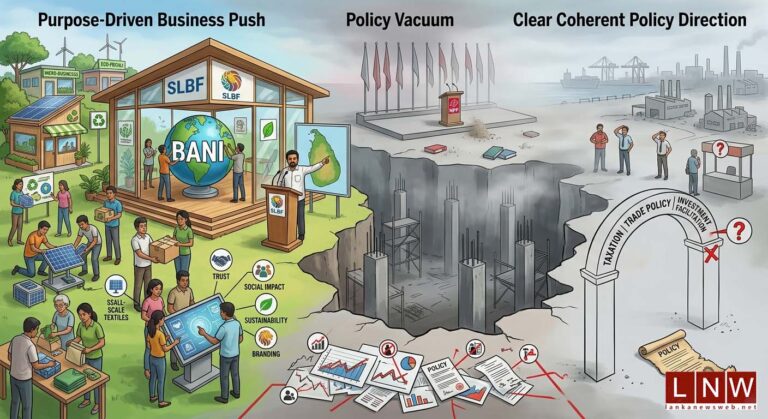
Purpose-Driven Business Push Exposes Policy Vacuum under NPP Rule
By: Staff Writer
April 05, Colombo (LNW): Sri Lanka’s latest push toward a “purpose-driven” business model, highlighted by the launch of the Sri Lanka Brand Forum (SLBF), is being framed as a forward-looking response to global economic disruption. Yet beneath the rhetoric lies a more uncomfortable reality: the absence of a clear, coherent policy direction for the private sector under the current administration.
The SLBF, an extension of the Bangladesh-based initiative led by Shariful Islam, positions itself as a platform to reshape how businesses operate in an increasingly volatile global environment. Describing today’s landscape as a “BANI world” brittle, anxious, nonlinear, and incomprehensible Islam argued that traditional business models are no longer sufficient. Companies, he said, must integrate sustainability, trust, and social impact into their core strategies.
However, this vision raises a critical question: who is setting the national economic direction? While the forum promotes purpose-driven capitalism, the Government led by President Anura Kumara Dissanayake has yet to articulate a detailed roadmap for private sector development. The emphasis on values such as sustainability and inclusivity, though important, risks becoming abstract without corresponding regulatory clarity and investment incentives.
SLBF Co-Founder Rohan Somawansa acknowledged that Sri Lanka’s challenge goes beyond recovery, calling for a redefinition of the country’s economic future. Yet such a transformation typically requires strong state guidance something analysts argue is currently lacking.
Historically, Sri Lanka’s private sector has operated within a framework shaped by shifting policy priorities, inconsistent regulations, and political uncertainty. The transition to a purpose-driven model would require not only corporate adaptation but also structural reforms in taxation, trade policy, and investment facilitation. So far, these elements remain under the National People’s Power (NPP) government.
The SLBF’s focus on leadership, innovation, sustainability, and branding reflects global trends, particularly the growing importance of national identity and credibility in attracting investment. But critics note that branding alone cannot compensate for policy gaps. Without a stable and predictable business environment, efforts to position Sri Lanka as a competitive global player may struggle to gain traction.
The initiative’s emphasis on youth engagement and evolving consumer expectations particularly among Gen Z adds another layer of complexity. While empowering younger voices is vital, it also underscores the urgency of creating real economic opportunities, something that requires concrete policy action rather than conceptual frameworks.
Ultimately, the SLBF represents both an opportunity and a warning. It highlights the private sector’s willingness to adapt and innovate, but also exposes the lack of a unified national strategy to guide that transformation. In the absence of clear direction, Sri Lanka’s journey toward a purpose-driven business future risks becoming fragmenteddriven more by individual initiatives than by a cohesive economic vision.
Tight Traffic Enforcement Planned as Festive Rush Builds
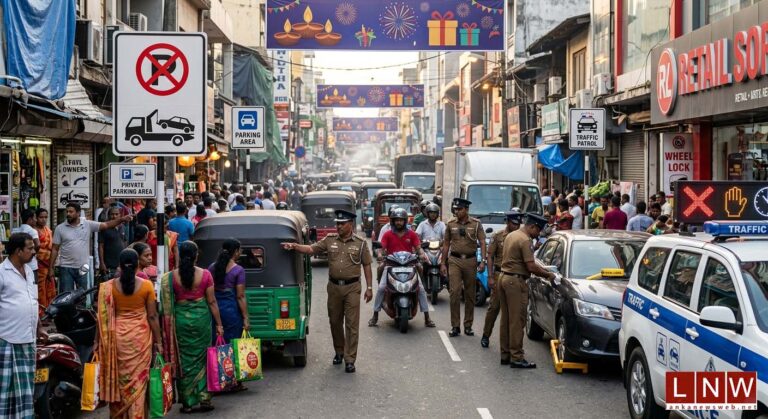
April 05, Colombo (LNW): Sri Lanka Police have announced a heightened enforcement drive during the upcoming festive period, warning motorists and businesses alike to comply strictly with road regulations.
Deputy Inspector General of Traffic Control and Road Safety, W. P. J. Senadheera, stated that dedicated teams have been deployed across commercial zones to manage increased vehicle movement and prevent violations.
With shopping areas expected to draw large crowds, authorities are particularly concerned about congestion caused by haphazard parking. Officials noted that roadside obstructions near retail outlets and busy streets have been a recurring issue in previous festive seasons.
Business owners have been urged to take responsibility by ensuring adequate parking facilities for their customers or arranging suitable alternatives to minimise disruption. Police have cautioned that failure to do so could result in stricter enforcement of law.
Law enforcement officers have also been instructed to take firm action against motorists who disregard parking rules or contribute to traffic build-up, with an emphasis on maintaining smooth flow and public safety.
Missing US Service Member Rescued After Jet Shot Down in Iran, Trump Says

By: Puli
April 05, LNW (Colombo): A missing U.S. service member has been successfully rescued by American forces after his fighter jet was shot down over Iran, according to an announcement by Donald Trump early Sunday.
In a post shared on Truth Social, Trump revealed that the high-risk operation was carried out over several hours and described it as one of the most daring search and rescue missions in U.S. military history. He confirmed that the rescued officer, a highly respected colonel, is now safe despite sustaining some injuries.
The rescue effort was launched after an F-15E Strike Eagle was shot down in the region earlier this week. According to reports, another crew member from the same aircraft had already been rescued shortly after the crash and was receiving medical treatment.
Trump stated that multiple aircraft, equipped with advanced weaponry, were deployed to carry out the mission. He also highlighted that this marks a rare instance where two U.S. pilots were rescued separately from deep within hostile territory.
The successful operation underscores the military’s commitment to ensuring that no American service member is left behind, even under the most dangerous circumstances.
Government Moves to Regulate Fertiliser Supply Ahead of Yala Season
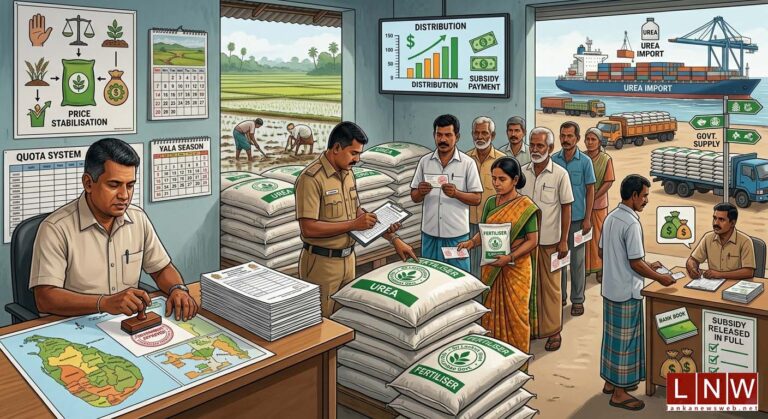
April 05, Colombo (LNW): Sri Lankan authorities have unveiled a plan to distribute fertiliser under a controlled quota system, aiming to ensure affordability and prevent price manipulation as the cultivation season approaches.
Deputy Minister of Agriculture Namal Karunaratne stated that the measure is intended to stabilise the market, following concerns over fluctuating prices and limited availability faced by farmers in recent months.
As part of the initiative, a consignment of 25,000 metric tonnes of urea is due to reach the country, providing an immediate boost to national stocks. Officials indicated that further orders have already been placed to avoid potential shortages during peak demand.
The government estimates that approximately 80,000 tonnes of urea will be required to support paddy cultivation during the upcoming Yala season, making timely distribution a key priority.
Karunaratne also noted that efforts are underway to streamline subsidy payments, with plans to release financial assistance to farmers in full at the start of the season. This, he said, is expected to ease the burden on growers and encourage timely planting.
Authorities maintain that the combined approach of controlled distribution and financial support will help safeguard agricultural output while protecting farmers from rising input costs.
Pope Calls for Peace and Unity During Easter Vigil at Vatican

April 05, Colombo (LNW): At a solemn Easter vigil held in St Peter’s Basilica, Pope Leo XIV urged Christians around the world not to lose hope amid escalating global tensions, calling instead for renewed efforts towards peace and reconciliation.
Leading the traditional Saturday night service marking one of the most sacred moments in the Christian calendar, the Pope reflected on the strain that ongoing conflicts have placed on humanity. He warned that fear and suspicion are increasingly dividing societies, weakening the bonds that unite nations and communities.
In a passionate address, he encouraged the faithful to resist despair, reminding them that the message of Easter symbolises renewal, resilience, and the triumph of hope over darkness. He stressed that even in uncertain times, individuals have a responsibility to foster understanding and compassion.
Although he refrained from naming specific conflicts during the ceremony, the pontiff has in recent weeks become more vocal regarding the ongoing Iran war, expressing concern over its human cost and wider global implications. His remarks have drawn international attention, particularly as he has called for restraint and dialogue.
Earlier in the week, Pope Leo made a rare direct appeal to Donald Trump, urging him to help chart a path towards de-escalation and bring an end to hostilities.
The vigil, attended by thousands of worshippers and broadcast worldwide, concluded with prayers for peace, as the Pope called on leaders and citizens alike to reject violence and work towards a more just and united world.
Widespread Market Inspections Lead to Heavy Fines Amid Price Control Push
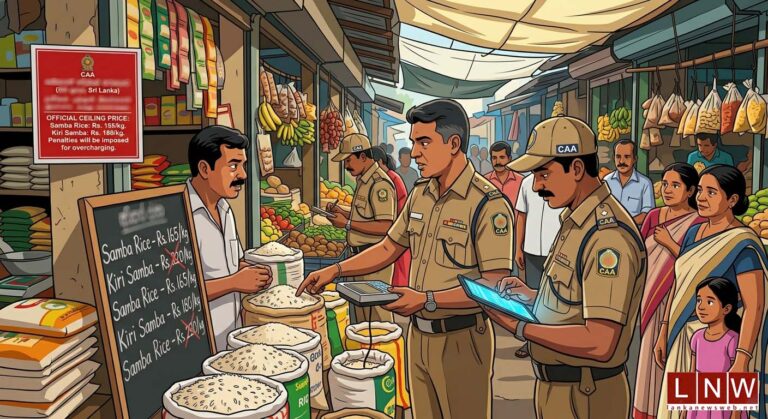
April 05, Colombo (LNW): Sri Lanka’s consumer watchdog has reported a surge in enforcement activity at the start of the year, with thousands of inspections carried out to curb unfair trade practices and protect shoppers.
The Consumer Affairs Authority (CAA) confirmed that nearly Rs. 49.9 million in penalties had been imposed following over 5,000 raids conducted during January and February 2026. The intensified drive comes as authorities seek to stabilise prices of essential goods and clamp down on profiteering.
According to Acting Director General Samantha Karunaratne, a notable number of violations were linked to the sale of rice, including incidents of stockpiling and traders charging above the government-mandated ceiling prices. Several traders are now facing legal proceedings as a result.
To strengthen monitoring efforts, around 450 officers have been deployed across the country, with inspections taking place in both urban markets and rural торгов hubs. Officials say the expanded presence is intended to deter malpractice and reassure consumers amid ongoing economic pressures.
The authority has also emphasised that price movements of essential commodities are being closely tracked on a daily basis, with further action expected against repeat offenders.
Members of the public are encouraged to report suspected irregularities, including overpricing and hoarding, through the dedicated hotline 1977, as part of a broader effort to ensure fair access to basic goods.
Detained Sri Lankan Fishermen Return Home After Months in Bangladesh Custody
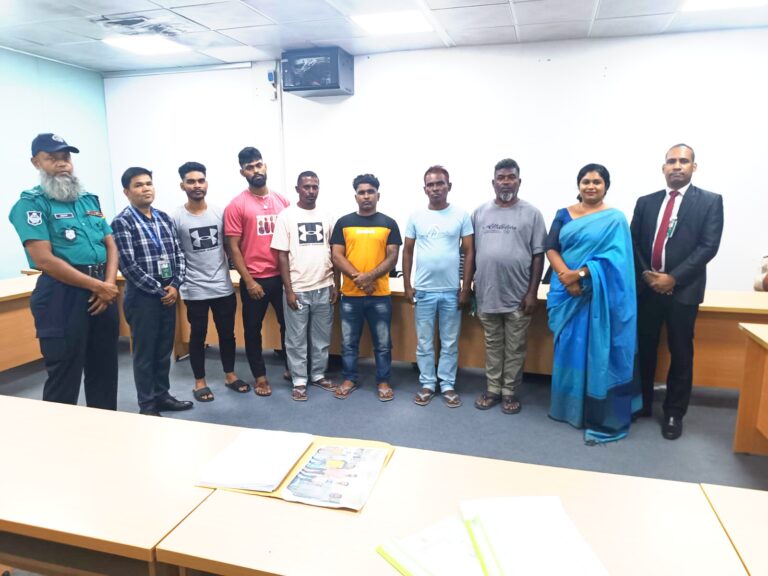
April 05, Colombo (LNW): Six Sri Lankan fishermen who had been held in Bangladesh for several months have now returned home, following sustained diplomatic efforts between the two countries.
The group, who had been in custody since July last year after their vessel reportedly strayed into foreign waters, arrived in Sri Lanka in the early hours of 2 April. They landed at Bandaranaike International Airport aboard a flight operated by FitsAir.
Officials stated that their release was secured through continuous engagement by Sri Lanka’s diplomatic mission in Dhaka, working closely with Bangladeshi authorities. The move has been described as a reflection of the cordial ties and mutual understanding shared between the two nations.
The fishermen had been travelling on a multi-day fishing expedition when they were intercepted. Their prolonged detention had raised concerns among families and local fishing communities back home, prompting appeals for government intervention.
Authorities confirmed that the repatriation process involved coordination between several state institutions, including consular officials, fisheries authorities, and diplomatic representatives stationed in Bangladesh.
Sri Lanka has since conveyed its gratitude to the Bangladeshi government for facilitating the release, noting that such cooperation underscores the importance of regional goodwill, particularly in resolving issues affecting livelihoods at sea.
Diplomatic Row Erupts Over Sri Lankan Official’s Visit to Puducherry
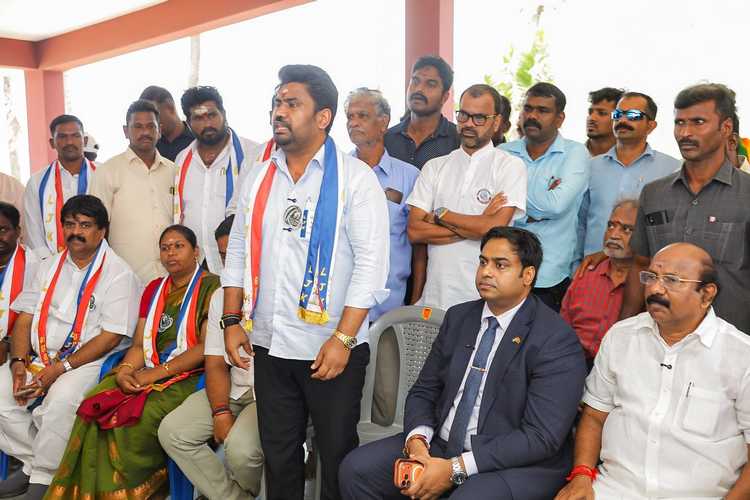
April 05, Colombo (LNW): Tensions have surfaced following allegations that Sri Lanka’s Deputy Consul General in South India, Ganesanathan Ketheeswaran, overstepped diplomatic boundaries during a recent visit to Puducherry.
The criticism was voiced by Pawan Khera, a senior figure within the All India Congress Committee, who accused the diplomat of engaging in activities that could be construed as interference in domestic matters.
According to reports, Ketheeswaran attended a gathering in the coastal locality of Vaithikuppam at the invitation of Jose Charles Martin, head of a regional political outfit. The meeting focused on hearing concerns raised by local fishing communities. Also present was V. P. Ramalingam, a prominent political figure in the region.
Khera argued that the diplomat’s participation in such an event may contravene the principles outlined in the Vienna Convention on Diplomatic Relations, which obliges foreign envoys to refrain from involvement in the host country’s internal affairs. Both India and Sri Lanka are signatories to the convention.
Raising the issue publicly, Khera called on the Election Commission of India to examine the circumstances surrounding the meeting. He also urged Subrahmanyam Jaishankar to clarify New Delhi’s diplomatic stance on the matter.
The incident has sparked debate over the limits of diplomatic engagement, particularly in politically sensitive settings, with observers noting that even informal interactions can carry wider implications.
The Deputy Consul General of Sri Lanka for South India, Mr. Ganesanathan Ketheeswaran, was invited by Latchiya Jananayaga Katchi (LJK) chief Jose Charles Martin to meet fishermen in the Vaithikuppam area of Puducherry and hear their grievances.
— Pawan Khera 🇮🇳 (@Pawankhera) April 4, 2026
The BJP’s Puducherry President and… https://t.co/DX68amOxVo