January 30, Colombo (LNW): The University of Colombo’s Institute of Biochemistry, Molecular Biology, and Biotechnology is set to introduce an anti-aging nutraceutical capsule, a first for Sri Lanka, Daily Mirror reported.
Headed by Prof. Sameera R. Samarakoon, the team developed the capsule from natural ingredients, the specifics of which are currently undisclosed.
The anti-aging drug is in its final launch stage, with an expected introduction within the next four months.
Speaking to Daily Mirror, Prof. Samarakoon noted the popularity of such drugs globally and the high prices of imported options in Sri Lanka.
“These type of anti-aging drugs are quite popular in the world market and some imported products are also available in Sri Lanka; however, they are sold at exorbitant prices,” he told Daily Mirror.
“The product has been produced in collaboration with the University Business Linkage, where Universities share knowledge, research, innovation, and cutting-edge technology,” Prof. Samarakoon emphasised.
The traditional formulation requires approval from the Department of Ayurveda.
In addition, the institute previously launched ‘Vernolac,’ a nutraceutical drug targeting 25 types of cancer, and ‘Satiny’ hair oil to address hair loss, both available in the market.
January 30, Colombo (LNW): The National Consumer Front (NCF) has called upon Trade Minister Nalin Fernando to promptly investigate the unexpected surge in vegetable prices in the market, ahead of the upcoming Presidential election.
Expressing concern over the price hikes, particularly in Dambulla and Nuwara Eliya, the NCF emphasised that the burden of increased prices should not be borne by consumers, making it challenging to sell vegetables in the local market.
Reportedly, as per the prices observed at the New Manning Market in Peliyagoda, the cost of a kilogram of carrots has risen to Rs. 2,000. Green chillies, previously priced at Rs. 800 per kilogram, have surged to Rs. 1,200, while Kekiri and pumpkin have seen increases to Rs. 300 per kilogram.
Chairman of the National Consumer Front, Asela Sampath, has formally requested Trade Minister Bandula Gunawardena to investigate the sudden escalation of vegetable prices in the local market and seek immediate solutions to regulate prices.
Sampath urged consumers to refrain from purchasing vegetables at higher prices and called upon traders to cease bringing vegetables at elevated prices for at least a week to break this perceived manipulation.
Additionally, he appealed to the Minister to take swift legal action against traders engaging in inappropriate price hikes.
January 30, Colombo (LNW): A significant public demonstration organised by the Samagi Jana Balawegaya (SJB) is scheduled to take place in Colombo today (30), protesting against various government measures impacting the public, notably the tax burden.
The rally, themed “A Change-Making Year,” is set to commence at 01:30 pm and will be held under the auspices of Opposition Leader Sajith Premadasa.
The event aims to address concerns related to government policies and advocate for change.
For those unable to attend in person, the rally will be accessible through a live stream on the LNW Facebook page.
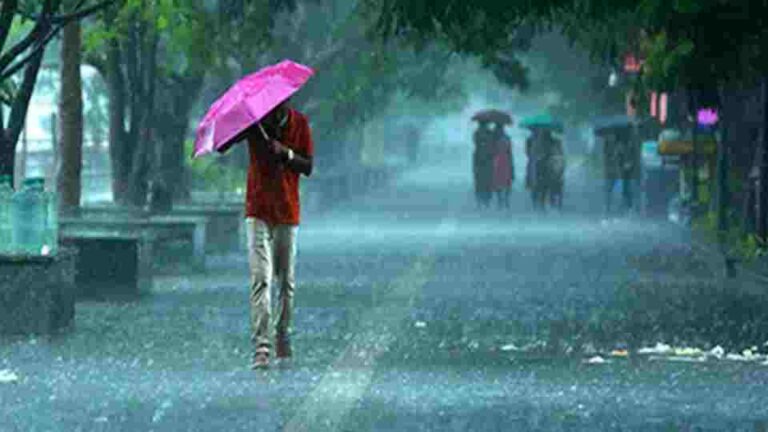
January 30, Colombo (LNW): Showers will occur at times in Eastern and Uva provinces and in Polonnaruwa, Mullaitivu, Matale and Nuwara-Eliya districts, and several spells of showers may occur in Anuradhapuraand Hambantota districts, the Department of Meteorology said in its daily weather forecast today (30).
Showers or thundershowers will occur atseveral places in Western, Sabaragamuwa and North-western provinces and in Galle, Matara and Kandy districts after 2.00 p.m.
Fairly heavy showers about 75 mm are likely at some places in Western, Sabaragamuwa and Central provinces.
The public is kindly requested to take adequate precautions to minimise damages caused by temporary localised strong winds and lightning during thundershowers.
Marine Weather:
Condition of Rain:
Showers or thundershowers will occur at several places in the sea areas off the coast extending from Mullaitivu to Hambantota via Trincomalee and Batticaloa. Showers or thundershowers may occur at few places in the sea areas off the coast extending from Chilaw to Galle via Colombo during the evening or night.
Winds:
Winds will be north-easterly and wind speed will be (20-30) kmph. Wind speed may increase up to (45-50) kmph at times in the sea areas off the coasts extending from Colombo to Mannar via Puttalam.
State of Sea:
The sea areas off the coasts extending from Colombo to Mannar via Puttalam can be fairly rough at times
The fourth edition of the program invites applications from growth-stage startups to solve payments and commerce challenges of tomorrow
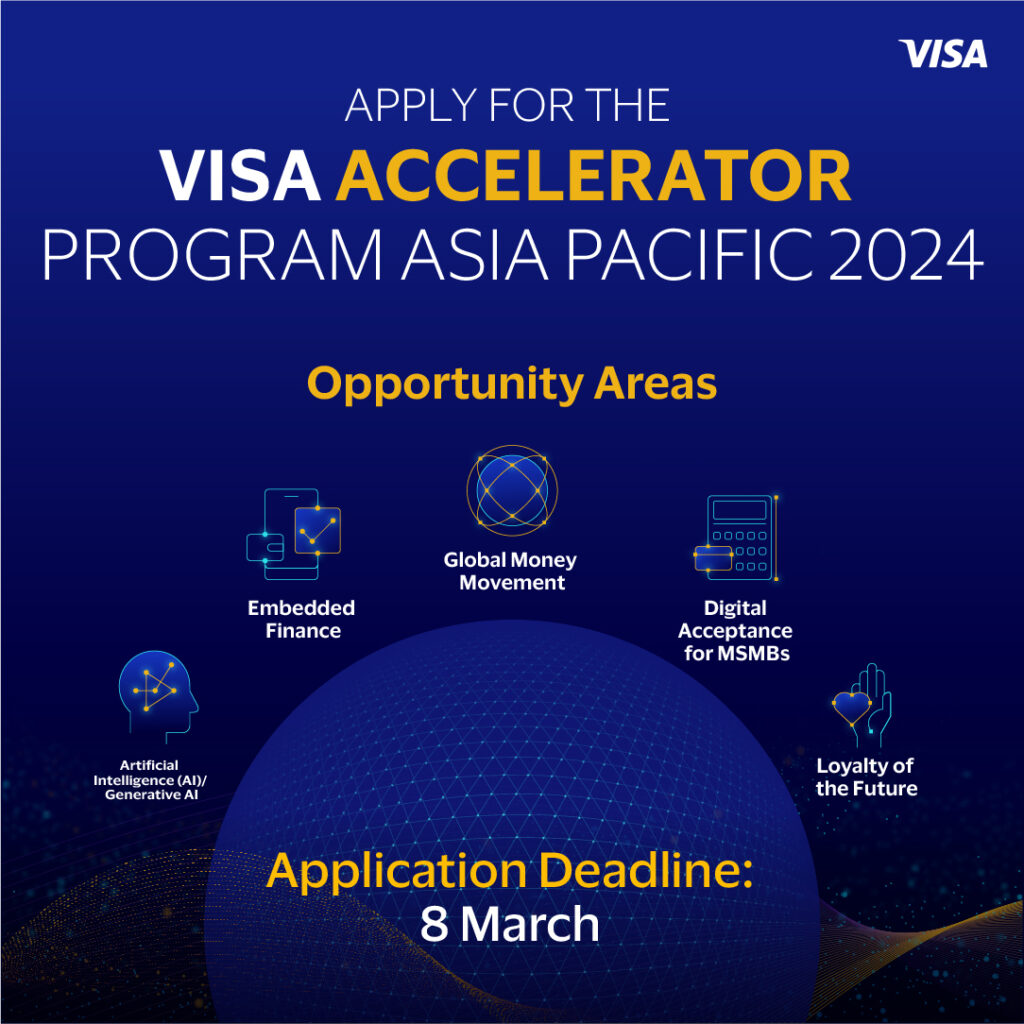
Colombo, January 29, 2024: Visa (NYSE: V), the global leader in digital payments, today announced the launch of the fourth edition of Visa Accelerator Program with an open call for applications. The initiative aims to enable startups in Sri Lanka to unlock growth potential by collaborating with Visa’s payments experts. The 2024 edition focuses on new opportunity areas – Artificial Intelligence (AI), Global Money Movement and Loyalty of the Future, with an emphasis on areas like Digital Acceptance for Micro, Small and Medium Businesses (MSMBs) and Embedded Finance.
Speaking on the launch of the program, Avanthi Colombage, Country Manager, Visa Sri Lanka and Maldives said, “We are delighted to invite up-and-coming payment innovations of the country to the Visa Accelerator Program and power their solutions with Visa. The Program offers startups a unique opportunity to work with our subject matter experts to enhance and test their solutions with real-world opportunities, building a runway for growth. We aim to drive the next wave of momentum for global payments by enabling seamless, safe money movement through positive payments experiences.”
Tailored for companies in the pivotal expansion stage, the program will emphasise on development of proof of concept, product solutioning and fast-tracked commercialisation, arming startups with potential collaboration and accelerated growth. A select group of startups from across the Asia-Pacific region will, through the program, address evolving challenges of the payment ecosystem. They will also co-develop, test, and iterate new solutions and leverage Visa’s extensive network of financial institutions, merchants and digital partners to pursue tangible go-to-market opportunities.
Applications for this edition of the Program opened on January 8, 2024, and will close on March 8, 2024. The selected startups will engage in the program from May to November 2024, culminating with a Demo Day later. Launched in 2020, the Visa Accelerator Program has consistently supported advanced stage startups with experienced mentors, cutting-edge technology, and opened doors to investment opportunities.
Visa (NYSE: V) is a world leader in digital payments, facilitating transactions between consumers, merchants, financial institutions, and government entities across more than 200 countries and territories. Our mission is to connect the world through the most innovative, convenient, reliable and secure payments network, enabling individuals, businesses and economies to thrive. We believe that economies that include everyone everywhere, uplift everyone everywhere and see access as foundational to the future of money movement. Learn more at Visa.com.
January 29, Colombo (LNW): According to independent analysis from Verité Research Sri Lanka has met most of its initial commitments under its International Monetary Fund (IMF) bailout program, but concerns remain over delays in governance and transparency reforms.
The island nation, grappling with its worst economic crisis in decades, secured a crucial $2.9 billion loan from the IMF in March 2023.
Verité Research, which tracks Sri Lanka’s progress under the Extended Fund Facility (EFF) program via its online platform “IMF Tracker,” reports that of the 73 commitments due by end-November 2023, 60 have been met, albeit with some delays.
However, 13 commitments remain unfulfilled, raising concerns about Sri Lanka’s commitment to crucial reforms.
Five of these were irreversibly missed and cannot be carried forward, while eight have been deferred to the second phase of the program leading up to the next IMF review.
Adding to the complexity, the IMF has modified due dates for an additional 27 commitments initially set for after November, categorizing them as “pending” alongside the eight carried-forward obligations. Moreover, Sri Lanka and the IMF have added 75 new commitments to the program.
Consequently, the second phase of the EFF kicks off with a staggering 110 commitments hanging in the balance. Notably, four specific governance and transparency-related commitments remain unfulfilled, including the launch of an online transparency platform for public procurement and tax exemptions, and the establishment of a merit-based selection process for directors of the anti-corruption commission.
he second review of Sri Lanka’s $2.9 billion bailout with the IMF could be completed in the first half of 2024, provided it manages to meet debt restructuring and revenue targets set under the programme, an official said on Wednesday.
The International Monetary Fund (IMF) said its executive board cleared the first review of Sri Lanka’s $2.9 billion bailout on Tuesday, providing about $337 million in funds to help tackle the fallout from the country’s worst financial crisis in decades.
The South Asian island nation is recovering from its worst financial crisis since its independence in 1948 that sent the economy into freefall last year with soaring inflation, currency depreciation and low foreign reserves.
The total amount sent so far to Sri Lanka now stands at about $670 million, according to the IMF.
An IMF delegation will travel to Sri Lanka in March and the second review could be finalised about two months afterwards, Peter Breuer, senior mission chief for Sri Lanka, told an online press briefing in Washington.
January 29, Colombo (LNW): The ‘Lorenzo Putha 04’ vessel previously reported to have been captured by Somalian pirates has been released by the Seychelles Navy.
The Sri Lankan vessel was freed during an operation launched by the Seychelles Navy, and three pirates have been taken into custody, Navy Spokesman Captain Gayan Wickramasuriya said.
The vessel was taken into custody by the Seychelles Navy and the six Sri Lankan fishermen have been rescued.
The said vessel is currently being sent to the island’s capital Victoria, according to report.
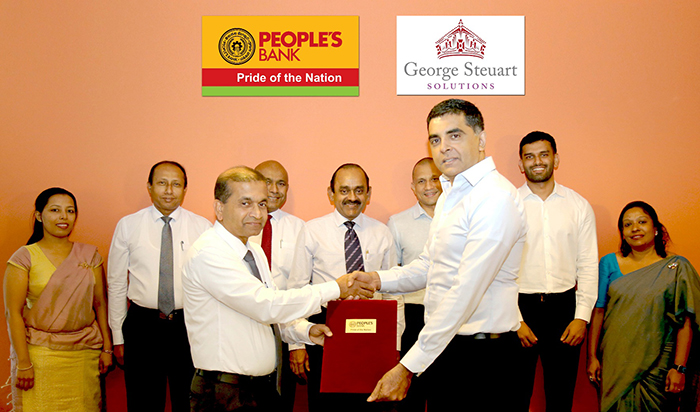
January 29, Colombo (LNW): In a strategic move towards sustainable energy solutions, People’s Bank and George Steuart Solutions Ltd. (GSS) entered into a Memorandum of Understanding (MoU) to collaborate on a pioneering initiative for solar solutions in Sri Lanka.
To encourage more investment in the renewable energy sector, the government is to support investors through various incentives, such as tax waivers and import tax exemptions.
By providing a conducive environment for investors, Sri Lanka can attract more capital and expedite the growth of renewable projects
This groundbreaking partnership aims to make solar energy more affordable to customers by offering a comprehensive package that combines financial support and incentives. People’s Bank, a leading commercial bank in Sri Lanka, will provide tailored loans for customers who are seeking to invest in solar systems.
The financial patronage will enable the adoption of solar energy solutions by making them accessible to a broader segment of the public.
Partnering in this collaboration, GSS, a prominent solar systems provider in Sri Lanka, will play a pivotal role by offering exclusive discounts on their wide range of solar products.
This synergy between banking and solar technology demonstrates a commitment to foster sustainable practices and encourage the drive towards renewable energy.
This collaboration is a vibrant example of how the banking and renewable energy sectors could collaborate to create impactful initiatives. As this initiative gains momentum, it holds the promise to transform the renewable energy landscape and contribute to a brighter and greener future for Sri Lanka.
The power and energy ministry is exploring the potential of solar power generation by identifying 31 reservoirs suitable for floating solar panels.
This effort, involving both the Sri Lanka Mahaweli Authority and the Irrigation Department, could harness 2524 MW of power from 14 Mahaweli Authority reservoirs and 553 MW from 17 Irrigation Department reservoirs.
These initiatives, all implemented in collaboration with the Ministry of Power and Energy, hold great promise for enhancing water security and sustainable energy production in Sri Lanka, a senior official of the ministry said.
The aim is to generate 3,376 GWh of renewable energy, accounting for 20% of the overall electricity requirement.
Ground-mounted solar projects offer a promising opportunity to expand renewable energy capacity in Sri Lanka.
However, the selection of suitable land for these projects must be carefully done, as many lands are irrigated and can be utilized for agriculture or other purposes. Implementing ground-mounted solar projects on idle lands can help the country achieve its renewable energy targets without compromising other vital sectors.
The renewable energy sector in Sri Lanka faces challenges due to inconsistent government policies. Investors require long-term stability to recoup their investments, but economic downturns, currency devaluation, and restrictions on expatriation of profits have adversely affected entrepreneurs’ willingness to invest in renewable projects.
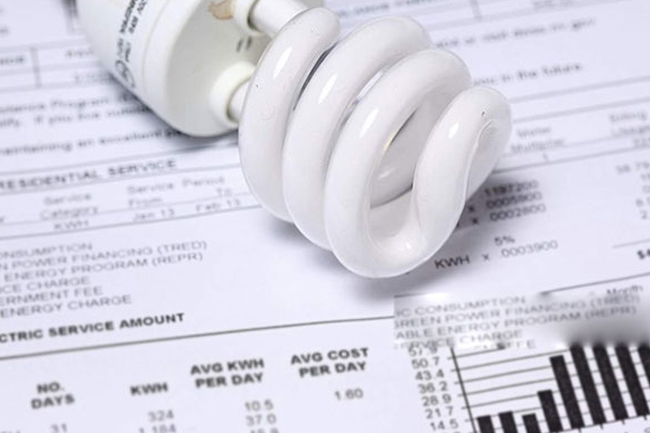
January 29, Colombo (LNW): The Public Utilities Commission of Sri Lanka (PUCSL) is on track to complete its electricity tariff revision review process by mid-February, with plans to unveil the new tariffs by the end of the month.
It is learnt that the anticipated changes come as a response to favourable hydro storage as well as profits earned by the Ceylon Electricity Board (CEB) for the year ending 31 December 2023.
As part of the process, a public consultation on the proposed tariff revision is scheduled for 15 February, providing stakeholders an opportunity to weigh in on CEB’s tariff proposal for January to March 2024.
The proposed structure includes a 3.34% reduction, already approved by the board and set to be implemented from 1 February.
The Ceylon Electricity Board (CEB) says it has submitted the necessary data supporting the proposal seeking electricity tariffs revision to the Public Utilities Commission of Sri Lanka (PUCSL).
Based on CEB’s analysis, a surplus of Rs. 23,730.9 million is estimated. The CEB says the surplus can be used for the reduction of average tariff by 3.34%.
Electricity tariffs in the domestic category for consumers using less than 30 units is thus proposed to be reduced by Rs. 1, to Rs. 11 per unit. Meanwhile, the fixed charge for the first 30 units consumed is proposed to be reduced to Rs. 165 from Rs. 180.
Furthermore, the tariff charged per unit for the units consumed between 31-60, which currently stands at Rs. 30, is proposed to be reduced to Rs. 27. The fixed charge for this category is suggested to be brought down to Rs. 360 from Rs. 330.
Comments on the proposed forecast costs and tariff structure are invited from stakeholders until 12 February through written submissions via email, fax, or post. An oral consultation session is scheduled for 15 February in Colombo.
When contacted, PUCSL Corporate Communications Director Jayanat Herat said the PUCSL expected the review process to conclude by the end of next month.
Meanwhile, CEB Spokesman Deputy General Manager Noel Priyantha revealed that the tariff proposals were currently with the PUCSL, pending the commission’s approval.
The proposed tariff reduction follows Sri Lanka’s third electricity tariff revision for 2023 on 21 October which saw an 18% increase.
This was preceded by a 66% rise in electricity tariffs from 15 February 2023 and an additional 14% increase effective 1 July 2023. Notably, the CEB was granted a substantial tariff revision of 75% in August 2022.
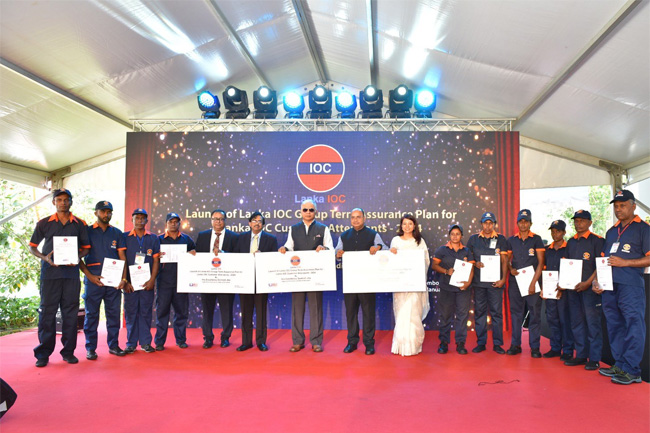
January 29, Colombo (LNW): Subsequent to Petroleum Product License in Sri Lanka for another 20 years from January 22, 2024 Lanka IOC (Indian Oil Corporation), on Saturday to extend the ‘Group term assurance plan’ through LIC Lanka, official sources of the company revealed.
The government in 2023, also gave petroleum distribution licenses to China’s Sinopec and two other companies.
Both Lanka IOC and Sinope was to have been given a third share of the fuel business in the 2001 to 2003 privatization drive but it was halted after then Prime Minister Ranil Wickremesinghe was ousted.
The Indian High Commissioner to Sri Lanka, Santosh Jha, attended an event of Indian Oil’s subsidiary in Sri Lanka, Lanka IOC (Indian Oil Corporation), on Saturday to extend the ‘Group term assurance plan’ through LIC Lanka.
He lauded LIOC’s contribution to the economy and its service to society through various CSR activities. “extending the ‘Group term assurance plan’ through LIC Lanka to its 1500 customer attendants across the island.”
Lanka IOC is the only private oil company that operates retail petrol and diesel stations in Sri Lanka.
The economic crisis in Sri Lanka has adversely affected food security, agriculture, livelihoods, and access to health services.
Ahead of Sri Lanka’s presidential and parliamentary elections scheduled this year, Eastern Province Governor Senthil Thondaman affirmed support for sitting premier Ranil Wickremesinghe and backed him to be re-elected, saying that he stabilised the country and lifted the economy from dire straits.
On the ongoing negotiations with the International Monetary Fund (IMF) for securing the third tranche of loans for the economic bailout and recovery, the Lankan leader said the President was working with the world body to obtain the necessary funding and support and the country was well and truly on the road to recovery.
Sri Lanka has been reeling under a severe economic crisis in the recent past, with COVID-induced lockdowns wrecking the country’s economic backbone–tourism.
Mounting bad loans also added to the nation’s woes, putting the economy under severe stress and on the verge of bankruptcy.
In addition, a foreign exchange crisis, heavy Chinese debts, and a failed move to shift the country’s agriculture to 100 per cent organic had intensified the country’s troubles.
However, at a time when the country, also known as the Emerald Isle, was staring at an economic abyss, with riots breaking out and the previous Rajapaksa government collapsing in the face of mounting public anger, India came out in its support and extended a helping hand to its southern neighbour. New Delhi not only opened a line of credit for the embattled nation but also extended timely assistance on various fronts to help the island nation recover from the crippling economic crisis.