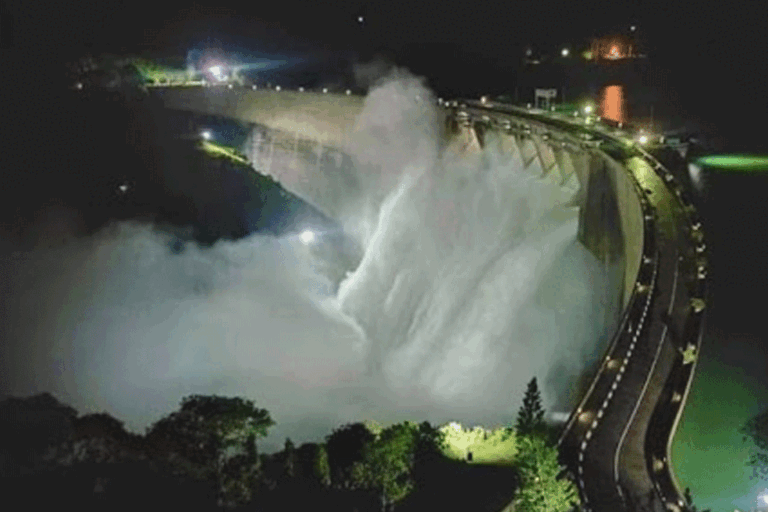
Colombo (LNW): An event has occurred wherein all sluice gates of the Victoria Reservoir automatically opened last night (30) in response to heavy rainfall.
Similarly, the sluice gates of the Randenigala and Rantambe reservoirs have been in operation since yesterday evening.
Consequently, a substantial volume of water is being discharged into the Mahaweli River, leading to the potential for a rapid rise in the river’s water level.
In light of this situation, the Mahiyangana Divisional Secretariat has issued a precautionary advisory to residents residing in low-lying areas around the Mahiyangana Divisional Secretariat, urging them to be vigilant regarding the risk of flooding.
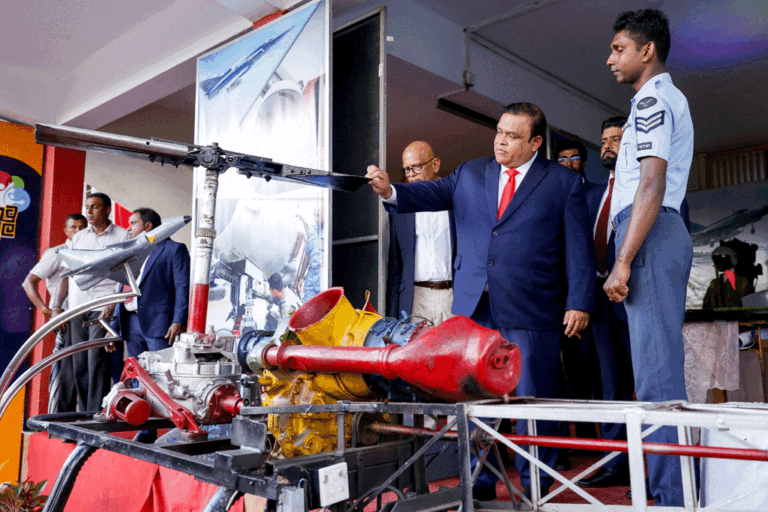
Colombo (LNW): Sri Lanka Podujana Peramuna (SLPP) MP Dhammika Perera speaking to reporters during his participation in the “Sathutu Pawula” (Happy Family) educational and trade exhibition at Kirindiwela Madhya Maha Vidyalaya has outlined that the Party has established what he described as “ten conditions” for the selection of its presidential candidate.
Responding to queries from journalists, the ex-business giant asserted that he is actively engaged in formulating strategies to meet these ten stipulations.
Expressing his aspiration to become a presidential candidate in 2024, Perera highlighted the significance of the SLPP as a prominent political entity in Sri Lanka. The party has set forth ten directives, including the imperative to generate one million jobs, a prohibition on the sale of government institutions, and the reduction of Value Added Tax (VAT) due to its perceived burden on the populace, he emphasised.
“I am working to become a 2024 presidential candidate. Sri Lanka Podujana Peramuna is a huge party in Sri Lanka. Coming from that party, we have been told to meet 10 conditions. These include the creation of one million jobs for the people, a condition prohibiting the sale of government institutions, and another for the slashing of the VAT because the burden it imposes on people is too much. I have been given 10 conditions as such. So, I need to fulfill them,” Perera told the reporters.
He acknowledged the substantial responsibility of fulfilling these conditions within the five-year timeframe, equating to 9600 hours of diligent effort.
“Five years means 9600 hours of work. Then it should be completed within 9600 hours. Now I am making plans on achieving that goal. The last day for the 2024 presidential election is October 12. There are still 286 days left. So let’s see how we prepare for it in the next 286 days.“
Perera stressed the importance of meticulous planning and disclosed an ongoing process to meet the outlined criteria before the 2024 presidential election deadline on October 12, and asserted that the official announcement of the candidate who satisfies these conditions rests with the SLPP.
Addressing concerns about the country’s recovery, MP Perera dismissed financial constraints as the primary obstacle, promising that impactful initiatives can be undertaken even in the absence of substantial funds.
“You don’t have to worry about whether this country can be recovered. Because recovering it without money is the only difficulty now. But even without money, you can do many things up to a certain level. So it’s not really about money, people have realised that even the things that can be done without money have failed accomplishment. That is why people got angry at that point,” he noted.
He suggested that the crux of the matter lies in recognising and addressing the unfulfilled potential of endeavours achievable without financial resources.
This sentiment arises from a public realisation that certain initiatives, despite being financially unencumbered, have not been actualised, thereby fueling public discontent, he noted.
Bakery Owners’ Assn President N K Jayawardena says the sale of cakes has decreased by a staggering 75% during this festive season: also says there is a difficulty in procuring ingredients required for the production of cakes including eggs, at reasonable prices and therefore it’s not possible to provide cake products to the customers at a low prices.
Major Telephone Services Provider Dialog GSM says total taxes applicable on Telecommunications Services will be increased from 1st Jan’24: explains that total tax on Local Calls, SMS, VAS and PayTV services will be 42.0%, while total tax on Data, Wi-Fi Services and IDD Calls will be 23.5%: further says in the case of Prepaid Data Cards, the data quota will be reduced proportionately while the “tax inclusive price” of the Card will remain unchanged.
Dramatic spike of a further 10% expected in fuel prices from 1st Jan’24 with the introduction of the new VAT on petroleum products: petrol projected to rise to approximately Rs.372 per lotre: diesel to rise to approximately Rs.359 per litre: massive “ripple effect” increase in prices anticipated across all services and goods, as a result: in March’22, petrol was at Rs.177 per litre, while diesel was Rs.121 per litre, with consumption of fuel being 50% higher than at present.
UNP Colombo District Manager and Working Committee Member Lasantha Gunawardena says the UNP had “saved the country” every time it collapsed: asserts President Ranil Wickremesinghe would save the bankrupt country, this time too.
CB Governor Nandalal Weerasinghe summarily dismisses Anti-“Parate” activists: says the banking sector has recovered less than 0.5% of total loans with the help of “Parate” executions: also says a new ruling by the Supreme Court now enables properties mortgaged to a bank not only by an actual borrower but also by a 3rd party for the loan granted to the actual borrower, could be “sold” by a bank, in case of non-payment of the loan.
Tourism Minister Harin Fernando says Tourist arrivals have passed 200,000 in Dec’23, the highest monthly arrival in the last 4 years: asserts the total arrivals will be almost 1.5mn this year, which was the original target set in Jan’23.
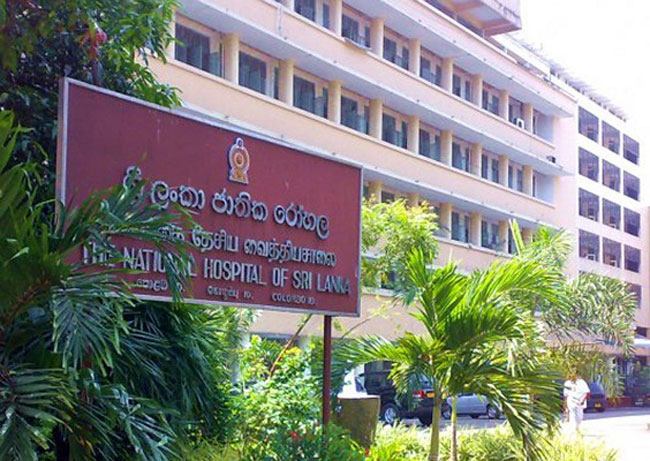
Health Minister Ramesh Pathirana requests a report from Colombo National Hospital in response to the death of a woman, 61, from an alleged intake of carbon dioxide during the administration of oxygen.
SL born Dr Sabesan Sithamparanathan, founder of Cambridge company PervasID, honoured in UK for his “exceptional contribution” to his community through the “real-time location tracking system” devised by him: in hospitals, his system uses electromagnetic fields to track surgical instruments, while retailers adopt the technology to track stocks and enhance “click-and-collect” services.
New Indian High Commissioner to SL, Santosh Jha, affirms the Indian Govt’s “unwavering support” for the advancement of the maritime and aviation sectors, and the development of the “Northern Region” of SL.
SL Cricket announces the squad for the ODI’s and T20’s against Zimbabwe: Kusal Mendis appointed as ODI Captain & Wanidu Hasaranga as T20 Captain.
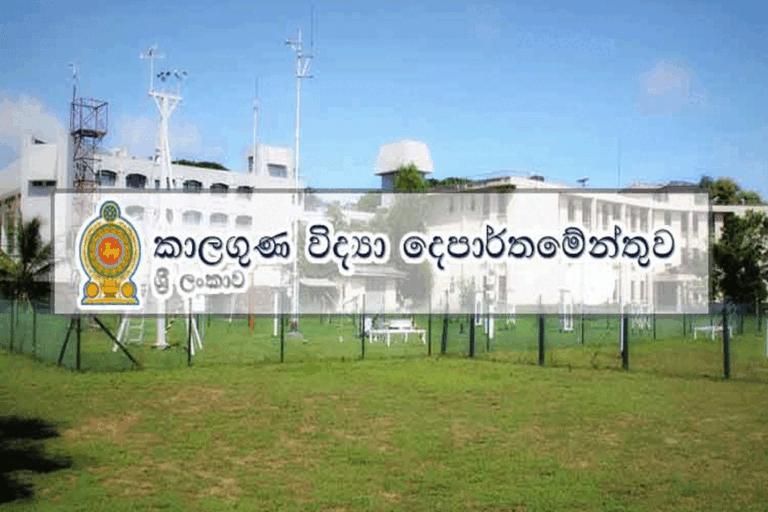
Colombo (LNW): Showers or thundershowers will occur at times in Eastern and Uva provinces and in Polonnaruwa, Matale, Nuwara-Eliya and Hambantota districts with several spells of showers being expected in Northern province and in Anuradhapura and Kandy districts, the Department of Meteorology said in its year-end weather forecast today (31).
Showers or thundershowers may occur at several places elsewhere of the island after 2.00 p.m, and fairly heavy showers above 75 mm are likely at some places in Western, Sabaragamuwa, Southern and Uva provinces and in Ampara and Batticaloa districts, the statement added.
Fairly strong winds about (30-40) kmph can be expected at times in Eastern slopes of the Central hills and in Northern, North-Central, North-western, Eastern,Uva and Southern provinces.
Misty conditions can be expected at some places in Western, Sabaragamuwa and Central provinces during the morning.
The public is kindly requested to take adequate precautions to minimise damages caused by temporary localised strong winds and lightning during thundershowers.
Marine Weather:
Condition of Rain:
Showers or thundershowers will occur at times in the sea areas off the coast extending from Trincomalee to Galle via Batticaloa, Pottuvil and Hambantota. Showers or thundershowers may occur at several places in other sea areas around the island during the afternoon or night.
Winds:
Winds will be north-easterly and wind speed will be (25-35) kmph. Wind speed may increase up to (50-55) kmph at times in the sea areas off the coast extending from Colombo to Kankasanthurai via Puttalam and Mannar and from Pottuvil to Galle via Hambantota. Wind speed may increase up to (40-50) kmph in the sea areas off the coast extending from Kankasanthurai to Pottuvil via Trincomalee and Batticaloa.
State of Sea:
The sea areas off the coast extending from Colombo to Kankasanthurai via Puttalam and Mannar and also from Pottuvil to Galle via Hambantota will be rough at times. The sea areas off the coast extending Kankasanthurai to Pottuvil via Trincomalee and Batticaloa will be fairly rough at times. Temporarily strong gusty winds and very rough seas can be expected during thundershowers.
Colombo (LNW): Health Minister Ramesh Pathirana has formally requested a comprehensive report from Colombo National Hospital in response to the unforeseen death resulting from a substantial intake of carbon dioxide during the administration of oxygen at the facility.
This directive has been communicated to the Director of the National Hospital, with a specific emphasis on conducting a thorough investigation into the procedural aspects of the care service provided to the deceased patient.
The individual in question had undergone successful breast surgery and was in the process of receiving oxygen for post-surgical recovery when the unexpected fatality occurred.
Reports indicate a significant ingestion of carbon dioxide during the oxygen administration, leading to the unfortunate demise of the patient.
As a result, internal sources have confirmed that the hospital is actively investigating whether there was a substitution of carbon dioxide for oxygen, any inadvertent mixing of these gases, or potential contamination of the oxygen supply.
The deceased, a sixty-one-year-old unmarried woman residing in the Nugegoda area, passed away under circumstances prompting a comprehensive inquiry into the events leading to this tragic outcome.
The Health Minister’s call for a detailed report underscores the gravity of the situation and the need for a transparent investigation to determine the precise causes of the incident.
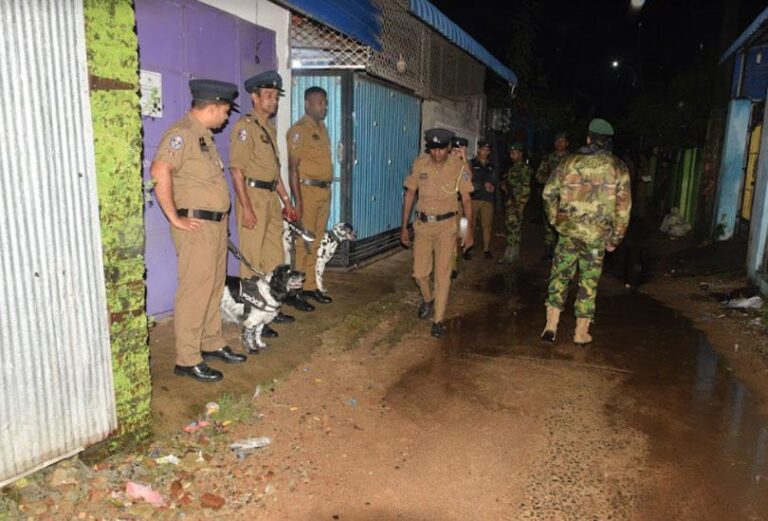
Colombo (LNW): In a remarkable shift in the fight against narcotics, Sri Lanka’s ‘Yukthiya’ program has emerged as a formidable force, driving the once rampant drug mafia into seclusion. This success, a beacon of hope for the nation, is attributed to the collaborative efforts led by the current Acting Inspector General of Police (IGP) and the minister at the helm of this initiative. People across the country sit glued to their TV sets to watch the program with amazing interest.
What makes ‘Yukthiya’ particularly noteworthy is its transcendence beyond the confines of political and personal identities. Regardless of who holds the offices it is important for our future generations to be free of this menace to society and the underworld that comes with it. It’s a national imperative, not a political one.
Our country, still reeling from an economic crisis, faces a critical juncture. The widespread drug problem, which alarmingly extends its grip to the youth, threatens the fabric of our society. The ‘Yukthiya’ initiative, therefore, is not just a law enforcement campaign; it’s a societal rejuvenation project.
While the program has garnered widespread praise, there are concerning efforts by certain elements to undermine this progress. These attempts, possibly motivated by narrow political agendas or hidden interests, pose a significant threat to the nation’s collective wellbeing.
Moreover, the financial underpinnings of the drug trade demand scrutiny. It’s imperative to investigate and expose those who benefit financially from the narcotics trade. Such revelations are crucial in dismantling the entire ecosystem that sustains this illegal industry.
Sri Lanka, at this critical juncture, needs a unified stance against the drug menace. The ‘Yukthiya’ program’s continued vigor and impartiality are essential. It’s not just about law enforcement; it’s about securing a future where our youth are free from the clutches of narcotics, and our society can thrive in health and prosperity.
Colombo (LNW): An unforeseen fatality has been reported at Colombo National Hospital, involving a patient who had undergone successful breast surgery.
Subsequent to the surgical procedure, customary practice includes the administration of oxygen to facilitate recovery. Regrettably, the demise occurred, ostensibly linked to an elevated intake of carbon dioxide during the oxygen administration process, internal sources within the hospital disclosed.
The investigation currently underway at the National Hospital aims to ascertain whether the incident resulted from the inadvertent administration of carbon dioxide instead of oxygen, or a potential mixing of these gases leading to the contamination of the oxygen supply, according to sources.
The hospital is committed to a thorough examination of the circumstances surrounding this incident.
In addressing the media concerning this unexpected event, Ravi Kumudesh, President of the Health Professionals’ Association, clarified that the reported fatality is not attributed to the surgical procedure but rather reflects a lapse in the hospital’s care services.
He underscored the importance of transparency in handling such incidents, urging that the details be fully disclosed without coverup to prevent similar errors in the future.
The deceased, a sixty-one-year-old unmarried woman residing in the Nugegoda area, passed away under circumstances that have prompted a comprehensive inquiry into the events leading to this tragic outcome.
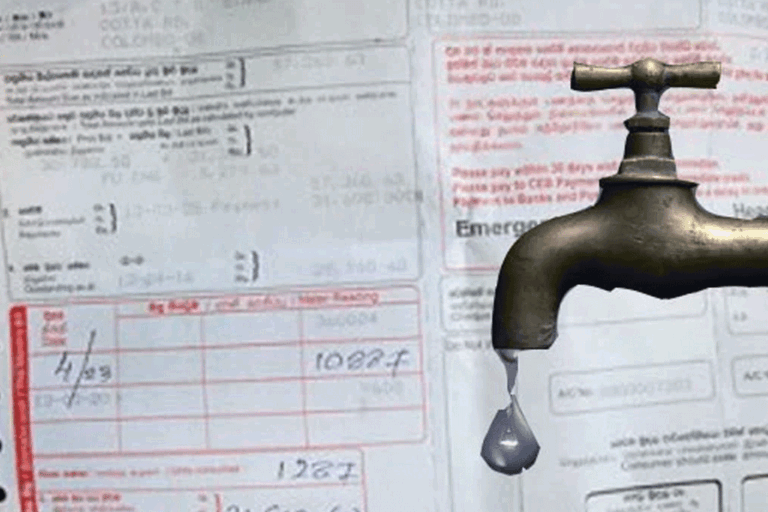
Colombo (LNW): In a move that is likely to impact consumers, the National Water Supply & Drainage Board (NWSDB) has unveiled plans to implement a 3 per cent increase in water tariffs effective January 2024, coinciding with the simultaneous Value Added Tax (VAT) hike.
This decision by the government has raised eyebrows, as citizens are already grappling with the economic challenges posed by multiple price hikes.
The timing of this tariff increase, coupled with the parallel VAT adjustment, has sparked concerns among the public about the cumulative financial burden being imposed on households.
Critics argue that such measures disproportionately affect the ordinary citizens who are already facing the brunt of economic uncertainties.
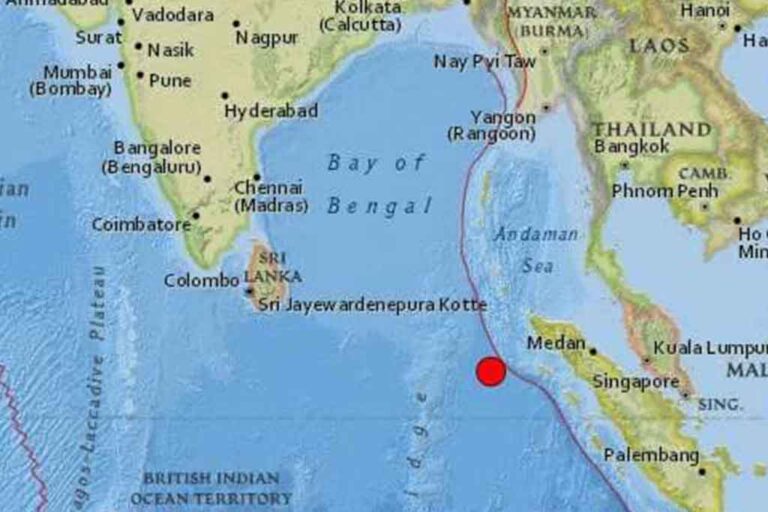
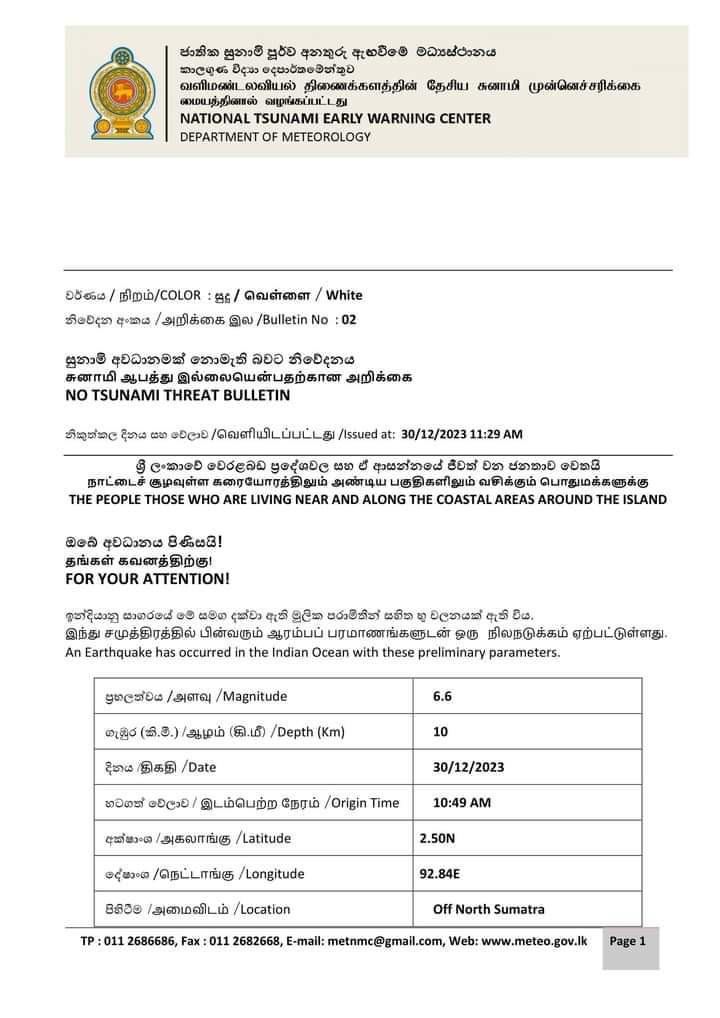
Colombo (LNW): An earthquake has occurred in the Indian Ocean with a 6.6 magnitude, but there will be no threat of the occurrence of a tsunami, the National Tsunami Early Warning Centre of the Department of Meteorology said in a statement.
People living near and along the coastal areas around the island are informed that there is no threat of a tsunami.
Colombo (LNW): The deficit in the merchandise trade account narrowed to US dollars 390 million in November 2023, compared to the deficit of US dollars 449 million recorded in November 2022 as well as US dollars 683million recorded in October 2023.
In the meantime, the cumulative deficit in the trade account during January to November 2023 narrowed to US dollars 4,414 million from US dollars 4,827 million recorded over the same period in 2022.
Earnings from merchandise exports recorded a year-on-year marginal increase in November 2023 for the first time since September 2022.
Accordingly, earnings improved by 0.4 per cent to US dollars 999 million in November 2023, over November 2022 as well as over US dollars 928 million in October 2023.
An increase in earnings was observed in agricultural exports and mineral exports, while a decline was recorded in industrial exports.
Cumulative export earnings recorded a decline of 9.4 per cent during January to November 2023 to US dollars 10,909 million, over the same period in the last year.
Earnings from the exports of industrial goods declined in November 2023, with a significant share of the decline being contributed by garments. Accordingly, exports of garments to most of the major markets (the USA, the EU, and the UK) recorded declines.
However, earnings from garment exports improved notably in November 2023, compared to October 2023.
Earnings from the exports of agricultural goods improved in November 2023, compared to a year ago, led by tea (mainly, instant tea) exports.
An increase of earnings from overall tea exports resulted from the higher export volumes although the unit price of tea exportsin November 2023 was lower than a year earlier. Further, export earnings from coconut related products (mainly, fibres and coconut oil) and spices (mainly, cinnamon) increased due to higher export volumes.
Meanwhile, there was a decline in export earnings from minor agricultural products (primarily, areca nuts), natural rubber, and vegetables.
Expenditure on merchandise imports declined by 3.9 per cent (year-on-year) to USdollars 1,389 million in November 2023, compared to US dollars 1,445 million in November 2022and US dollars 1,610 million in October 2023. A decline in import expenditure was observed in intermediate goods, mainly resulting from lower expenditure on fuel imports.
However, an increase was recorded in imports of investment goods and consumer goods partly due to relaxation of import restrictions. Meanwhile, cumulative import expenditure during January to November 2023 declined by 9.1 per cent to US dollars 15,323 million over the corresponding period in the last year.
Expenditure on the importation of consumer goods increased in November 2023, compared to a year ago, mainly due to the increase in expenditure on non-food consumer goods.