Home Blog Page 1291

PUCSL seeks stakeholder inputs for third electricity tariff revision

0

By: Staff Writer

Colombo (LNW): The Public Utilities Commission of Sri Lanka (PUCSL) has opened channels for stakeholders to provide input and recommendations regarding the third electricity tariff revision slated for implementation in October 2023, as put forth by the Ceylon Electricity Board (CEB).

The move aims to provide stakeholders with an opportunity to review and offer their insights on the proposed changes. All stakeholders, including the public, are encouraged to participate in this crucial process by sharing their views and insights, contributing to the formulation of a well-informed decision that will impact the country’s electricity landscape.

PUCSL Chairman Prof. Manjula Fernando revealed that the CEB has presented two distinct proposals for the third tariff revision of the year.

In an unconventional move, the CEB has expedited its submission, bypassing the usual January cycle, aligning with a Cabinet decision, he said.

 “As per the Government’s policy advice on electricity tariffs, CEB can submit proposals for the revision of electricity tariffs in January and July of the year.

The next tariff revision is also scheduled to come into effect from January next year. However, the Cabinet of Ministers has decided to move forward with the tariff revision scheduled for the month of January 2024 to this year according to the information presented by CEB on the differences in financial, electricity generation and electricity demand from the forecasted conditions.

Accordingly, no tariff revision again next January. The CEB has estimated that there will be a loss of Rs. 31 billion this year,” he said.

As per the CEB’s proposal, Prof. Fernando outlined adjustments due to unforeseen circumstances affecting power generation.

“Hydropower generation is anticipated to be limited to 3,750 GWh hours, a reduction from the expected 4,500 GWh.

The Norochcholai coal power plant is also projected to generate less power due to unexpected malfunctions. This necessitated the acquisition of emergency power, impacting the tariff revision Prof. Fernando emphasised that the CEB has presented two options for consideration.”

 “One involves a 22% increase in charges as a fuel surcharge for all consumers, while the other proposes an increase of Rs. 8 per electricity unit.

The PUCSL’s role is to thoroughly scrutinise these proposals, ensuring they align with the established tariff methodology. The final decision will be reached after an exhaustive review, taking into account public comments and suggestions,” he added.

The Chairman emphasised that the decision regarding the tariff revision will be made in accordance with the provisions of the Sri Lanka Public Utilities Commission Act and the Sri Lanka Electricity Act. 

IMF initiates Transparency portal monitored by RTI Commission

0

By: Staff Writer

Colombo (LNW): The International Monetary Fund’s Governance Diagnostic Assessment (GDA) on Sri Lanka has proposed a “Transparency portal” at the Finance Ministry to be monitored by the Right to Information Commission.

An online transparency platform will be established to enhance transparency of debt, public procurement contracts, and tax exemptions.

The recommendation, ideally in place from March next year, should publish all procurement contracts above Rs. 1 billion along with comprehensive information in a searchable format on contract award winners.

The GDA also mandates the publication of a list of all firms receiving tax exemptions through the Board of Investment (BOI) and the Strategic Development Projects (SDP) initiative, an estimation of the value of the tax exemptions as well as a list of firms receiving tax exemptions on luxury vehicle imports.

The information proactively disclosed is recommended to be updated every six months.

The GDA also recommends that the Government shouldn’t enact future laws that will limit the reach of the RTI Commission and that relevant policies and rules concerning new anti-corruption, anti-terrorism and privacy legislation should reflect this.

The GDA acknowledges that Sri Lanka has taken important steps in establishing the right to information and creating an institutional framework for protecting those rights.

The Right to Information Commission (‘RTIC’) was created by the Right to Information Act, No. 12 of 2016 (‘RTI Act’), to hear complaints of non-compliance by public authorities of their disclosure obligations, and to recommend disciplinary actions against offending officials. It also has the power to prosecute those who commit offences defined in the RTI Act.

Given this mandate, it plays an important role in championing the right to information and fostering an (embryonic) culture of transparency among public authorities.

It builds upon the information infrastructure established by the Ministry of Media and works closely with the Ministry on outreach.

Experience to date has demonstrated the Commission’s ability to require Government agencies to disclose a wide variety of information requested by individuals.

Recently, it was involved in a landmark case adjudicated by the Court of Appeal which upheld a directive by the Commission to the Sri Lanka Parliament to release information on MPs who have submitted their Declarations of Assets.

The Court agreed with the Commission on all points and upheld that the RTI Act of Sri Lanka supersedes the 1970s Declarations of Assets and Liabilities Act of Sri Lanka. 

The work of the RTIC is particularly consequential for anticorruption efforts since many of the requests for intervention come from groups that are traditionally most exposed to corruption and the abuse of public power, including women and minority groups.

The extent to which the RTI is relied upon as an effective means of seeking redress demonstrates the effectiveness of its outreach and the value associated with the information obtained based on its interventions.

BOI to launch investor retention and expansion program

0

By: Staff Writer

Colombo (LNW): The Board of Investment (BOI) will be launching a new program for investor retention and expansion as well as a special “100 IT/ITES Companies” initiative.

The Investment promotion agency is looking at attracting 100 technology services companies with a new product.

Further the targeted program is to get 50 existing BOI companies to reinvest, setting up industry advisory councils for the four thrust sectors for leads, policy tweaking and promotion.

It has ben planned towards digitalisation of key investor services, aggressive promotion of the destination, key account management and modernisation of existing zones to meet with international green standards

BOI Chairman Dinesh Weerakkody said the investor retention program is targeted to encourage existing investors to retain their profits and reinvest/expand their business operations within the country.

Under this initiative, existing BOI registered companies, with over 5 years in operation will be eligible to import an Electric Rechargeable Vehicle subject to the exemption of application of custom tariff up to an amount not exceeding $ 30,000, on the Cost, Insurance and Freight (CIF) value.

This facility will be eligible for investors upon fulfilling the qualifying criteria of investing an additional $ 3 million and generating a minimum of 50 employment opportunities through the expansion project.

This is an addition to the duty-free imports of Raw materials, visa concessions and prevailing Enhanced Capital Allowances under the IR Act, including fast-track approvals.

Furthermore, BOI is hoping to commence a promotion campaign to attract 100 IT/ITES Companies with the assistance of the Private Sector.

This project is to encourage existing ICT companies to expand and to attract new enterprises engaged in Information Technology (IT), Business Process Outsourcing (BPO) and Knowledge Process Outsourcing (KPO), Business Process Management (BPM), Data Analytics and AI/ML, and E-commerce set up in the country.

Under this initiative, an ICT company that invests a minimum of $250,000 and generates 50 new local employment opportunities out of which 15 employees should be technically qualified will be granted a permit for the importation of one Electric Rechargeable Vehicle subject to the exemption of the application of custom tariff up to an amount not exceeding $ 30,000, on the Cost, Insurance and Freight (CIF) value.

This will be in addition to the regular incentives offered by the BOI and under the IR Act. Deepening of the talent pool will be tied up to the campaign, Weerakkody added.

He said a new Public Private Partner initiative is expected to drive exports, create new job opportunities, technology transfer and knowledge transfer, and enhance the country’s digital infrastructure and position Sri Lanka as a competitive player in the global ICT industry.

Sri Lanka Original Narrative Summary: 02/10

0

  1. All fuel suppliers increase prices: Ceypetco says Petrol 92 up by Rs.4 per litre to Rs.365, Octane 95 up Rs.3 to Rs.420, Auto Diesel up Rs.10 to Rs.351, Super Diesel up Rs.62 to Rs.321, & Kerosene up Rs.11 to Rs.242.
  2. Renowned energy expert Dr Thilak Siyambalapitiya warns SL will become the country with the most expensive electricity tariff in South Asia: urges the development of a new strategy to slash electricity prices.
  3. The International Commission of Jurists raises concerns about the new Online Safety Bill: warns that, if adopted in its present form, the legislation would serve “to crush free expression and further contract an already shrinking civic space” in the country.
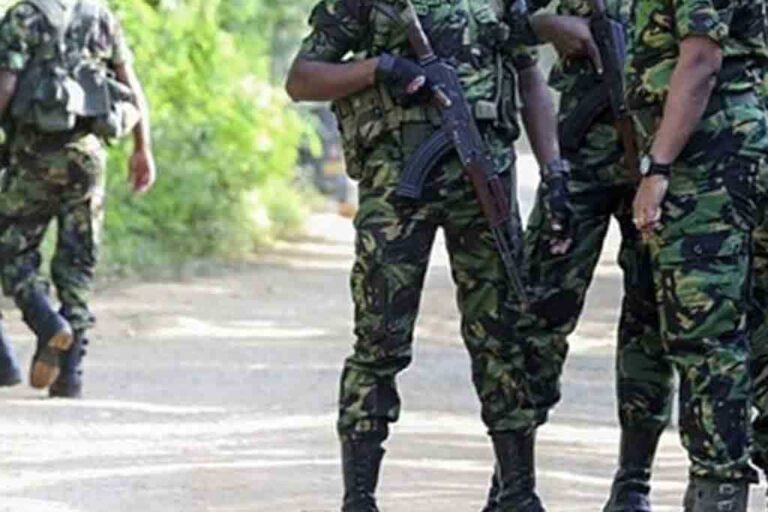
  4. Acting Defence Minister Pramitha Bandara Tennakoon says the Govt has taken a policy decision to reduce the number of army personnel to around 100,000 by 2030, from the present cadre of over 200,000, and to “make the army a technical & tactical army”: similar reduction to be done in the case of Navy & Air Force personnel as well.
  5. Former member of the WHO’s Technical Advisory Committee on Covid-19 Professor Neelika Malavige says the bat-borne Nipah virus is at a low risk of spreading: also says that does not rule out the necessity to be vigilant about it.
  6. NPP MP Vijitha Herath says SL has not received anything from the IMF programme so far other than the unbearable tax burden on the people: also says SL sought IMF assistance with the hope of restructuring international loans but has not been able to restructure or get a haircut on a single Dollar even after 17 months.
  7. Former Chairman of the Public Utilities Commission Janaka Ratnayake asserts the proposed electricity tariff revision is illegal & also in violation of the Constitution: points out the proposed tariff increases electricity prices by a staggering 250% since August 2022, thereby sending shockwaves through the nation.
  8. Ceylon Motor Traders Assn Chairman Charaka Perera says the Assn has sought a meeting with President Ranil Wickremesinghe to raise concerns on a proposal to permit a zero customs tariff on import of electric vehicles with power up to 500 kW, or plug-in hybrid electric vehicles up to 3000 CC in semi-knockdown form for local assembly.
  9. President Ranil Wickremesinghe congratulates Dr Mohamed Muizzu, the newly elected President of the Maldives.
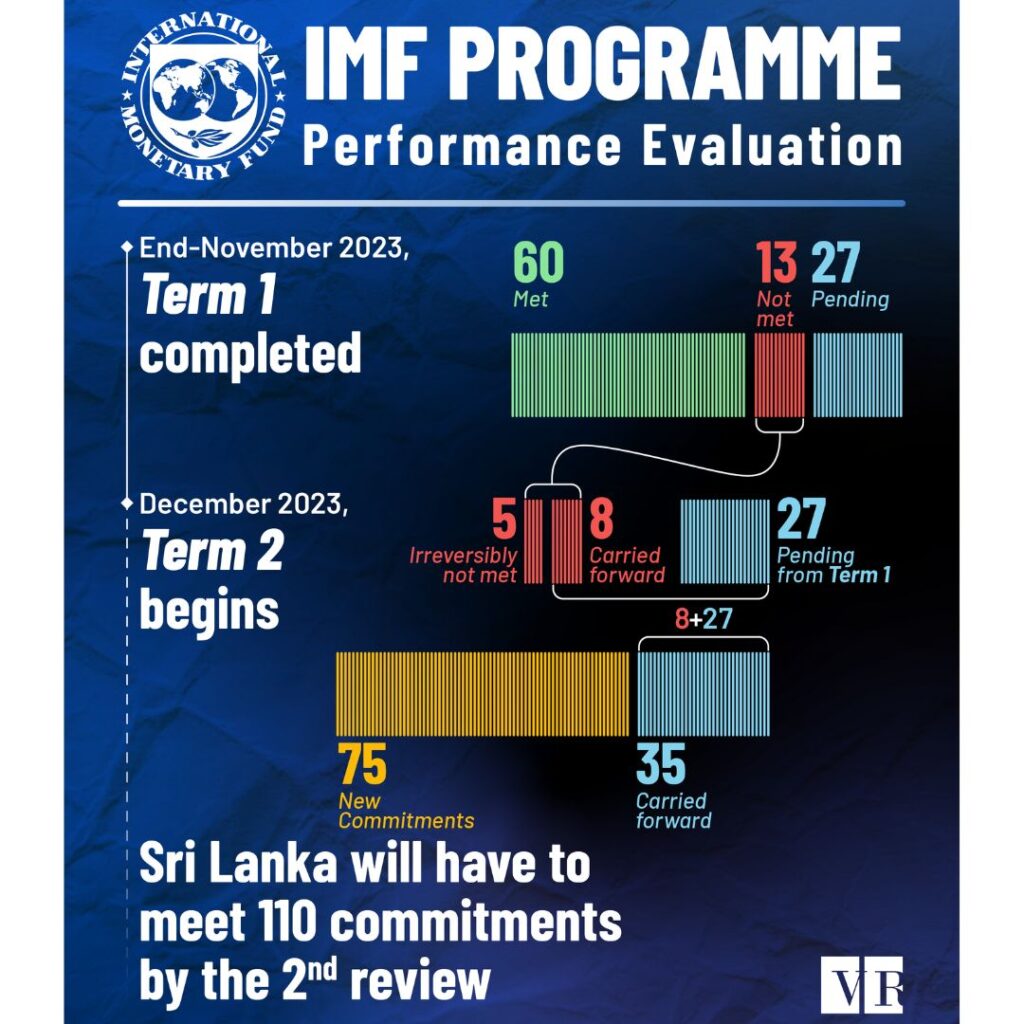
  10. Chairman of the Sectoral Oversight Committee on Alleviating the Impact of the Economic Crisis Gamini Weleboda says a new agreement will be necessary to receive the 2nd tranche from the IMF: also says only 38 of 100 IMF conditions have been fulfilled: adds that 43 conditions have not yet seen any progress, and the remaining conditions have only been partially addressed.

SriLankan Airlines flight delay: Probe underway

0

Colombo (LNW): A special meeting will be taking place today (02) regarding the delay and cancellation of SriLankan Airlines flights.

Ports, Shipping and Aviation Minister Nimal Siripala de Silva, along with Sri Lankan Airlines management, pilots, engineers, staff, and trade union representatives is expected to attend the meeting.

The objective is to gather feedback on how to avoid future flight cancellations and delays, according to reports.

About eight flight cancellations recently taken place are primarily attributed to technical problems, the Minister revealed.

A flight to Kathmandu, Nepal, was also cancelled yesterday (01) due to technical issues.

Sectoral Oversight Committee warns IMF second tranche will be delayed

0

Colombo (LNW): A new agreement is needed to secure the second tranche from the International Monetary Fund (IMF) for Sri Lanka, the Sectoral Overight Committee on Alleviating the Impact of the Economic Crisis said.

Only 38 of the 100 conditions set by the IMF are met so far, disclosed Committee Chief Gamini Waleboda.

43 conditions have not progressed at all, and the rest are only partially addressed, he added, warning that this could lead to potential delays in obtaining the second IMF funding tranche.

Proposed Online Safety Bill more focused on imposing restrictions rather than protecting rights: Ex BASL Chief

0

Colombo (LNW): Saliya Peiris PC, ex Chief of the Bar Association of Sri Lanka (BASL), raised concerns about the potential misuse of the proposed Online Safety Bill by Police and political figures.

The proposed bill seems more focused on imposing restrictions rather than protecting the citizens’ rights, Peiris told “@Hydepark” aired on Ada Derana 24 two days ago (Sep 29).

Commenting on the bill, Nalaka Gunawardena stated that the proposed bill limits public disclosure unjustly, adding that Sri Lanka needs a strong democracy as the island nation strives to amend past errors over the last 75 years.

Fire breaks out at Regional Hospital Thampalagamam, Trinco: Governor issues immediate order!

0

Colombo (LNW): A fire accident happened at Thamplagamam Regional Hospital, Tincomalee yesterday evening (01).

Governor of Eastern Province Senthil Thondaman has directed the Secretary, Provincial Health Ministry and the Provincial Director to conduct immediate inspection about the ground situation and call a report.

The Governor also directed the Police Authorities to carry out further investigations to find out the cause of the fire.

Sri Lanka – Nation Building, Devolution and the 13th Amendment (Part 2)

0

By: Dr. Lionel Bopage

Part 2 (Link to Part 1)

A historical perspective

Devolution in Sri Lanka is a story of missed opportunities. The armed conflict ended in 2009, but the political conflict has not. A settlement to the political conflict can be achieved only by offering a share of state power to all communities within a framework of democratic governance. Many Sri Lankans in the country and overseas are yet to be convinced of this requirement.

Sri Lanka is an overwhelmingly stagnating unitary state. In 2018, one of the former Auditor Generals  stated that Sri Lanka was ranked the topmost country in terms of public sector misappropriation and corruption. The country’s parliamentary system has neglected its primary responsibilities of formulating policies, enacting laws and implementing transparent public financial systems. And the general public, ignorant of facts due to misinformation and deception, has repeatedly elected a set of crooks who have used ‘rule by law’, instead of ‘rule of law’ to maintain their autocratic rule.

All of these led to catastrophic consequences for the people in recent times. In 2022, the ‘ARAGALAYA’ protests ousted the last elected Sri Lankan President. With the severe shortage of essentials and defaulted debt payments, the country has encountered a poly-crisis. Despite the assurances made by the installed President Ranil Wickremasinghe, many people continue to suffer terribly. Those who can leave the country are leaving in droves, looking for greener pastures.

From schools and hospitals to the justice system and utility services, much of the country’s administrative functions have come to a grinding halt. Corruption, mismanagement, wastage, political patronage, and a lack of transparency and accountability that have prevailed for the last four decades contributed to a combined economic and political firestorm. The Rajapaksas, who are responsible for aggravating the crisis to its epic proportions are waiting in the wings to regain power by tacitly supporting the president they installed. They are rebuilding their chauvinist fundamentalist bases, utilizing whatever opportunities and resources they can get their hands on to divide the society and capture power.

District Development Councils – a history

In 1977, the J R Jayawardene regime introduced an open economy and provided commercial interests the opportunity to invigorate the private sector. However, this intensified social contradictions due to the general public not given opportunities to enjoy the positive outcomes offered by the expanding economy. Many, particularly among the Sinhala majority population, felt left behind. The Tamil people in the Northeast also felt frustrated as the economy opened up almost overnight to international competition. The importation of chilies, onions, staple foods, etc from India destroyed their major means of living – agriculture. They have been demanding better opportunities for upward social mobility and a greater share of national productivity growth.

This demand has a history running back to the days of the Legislative Council in 1926, where the possibility of a second tier of government was discussed. The issue was again discussed at the Donoughmore Commission of 1928. It had recognized the need for decentralization of powers so that much of the administrative work carried out at the centre could be performed more directly at the local level, leaving the government to concentrate on the macro affairs of running the country. The Commission also pronounced its proposals for Provincial Councils. Those proposals also suggested that “the special views of the different races predominant in the different parts of the island” might have an effect “in the administration of these parts.” Unfortunately, the recommendations regarding Provincial Councils were not implemented. This was possibly due to the opposition of  politicians and bureaucrats, who were not willing to share their authority with those in the provinces or districts.

A large segment of the Tamil community increasingly felt the only effective solution to address their right to self-determination was to form their own autonomous state – Tamil Eelam. For this they gave an overwhelming mandate to their political leadership, the Tamil United Liberation Front(TULF), at the August 1977 General Elections. Socially, economically and politically the country was facing a chaotic and disintegrating situation. And the Jayawardene regime resorted to more authoritarian ways of enforcing its dictates. In 1981, the Jayawardene regime established District Development Councils (DDCs) for each administrative district as a supposed instrument of devolution.

However, the DDCs were politically toothless. They could not independently attend to matters under their jurisdiction as there was no separate administrative mechanism established to allow them to function. So, the DDCs had to depend on the bureaucracies of the local and central government agencies and resources to do their work.[i] In practice, this system helped the Sinhalese political elite to garner more influence in district administration, creating another state tier to muster and sustain political party patronage.[ii] In addition, the Ministers of the then government overpowered the DDCs, impeding the activities that fell under their jurisdiction. If the JVP (Janatha Vimukthi Peramuna) experience is anything to go by, the DDCs did not have any powers of financial management. Frustrated with its incapability, the Chairman of the Jaffna DDC thew it away in July 1983[iii].

The first remedy that allowed for devolution, since the unilateral abrogation of the Bandaranaike-Chelvanayakam (B-C) pact and the Dudley-Chelvanayakam (D-C) pact, was imposed under the auspices of the Indian Government in 1987. Since then, the Thirteenth Amendment has been in the Constitution for nearly three and a half decades without being fully implemented. Starting with the Jayawardene regime, all regimes have resolutely held absolute control over land and police powers. They even seriously restricted financial powers of Provincial Councils. This is despite many complaints made by the Provincial Councils that they do not have any real administrative control over their regions and do not have enough money even to buy the essential necessities of those councils.

History of constitutional amendments

Currently the executive, the legislature, provincial councils and the local governments of the country have about 10,000 elected and nominated representatives. They are supposed to address the socio-economic, political and multicultural issues of the entire country. However, the governance system has become a complete failure. Moving from crisis to crisis, the authoritarian, centralised, non-accountable  governance system has plunged the country into the current poly-crisis. This system is accompanied by corruption, wastage, mismanagement, and impunity for those who commit terror and violence to protect the ruling elite. This debasement and mortification continue to prevail in every nook and cranny of the country.

Let us examine the last four amendments made to the Constitution of Sri Lanka. The good governance regime elected in 2015 enacted the 19th Amendment but was not fully committed to implementing it with sufficient responsibility and speed. Despite the election pledges made in 2015 to abolish the authoritarian powers acquired by the previous Rajapaksa regime, President Maithripala Sirisena and Prime Minister Ranil Wickremasinghe did not have the political will to bring it to fruition in any meaningful way.

This situation paved the way for the 20th Amendment enacted in 2020. It allegedly crippled the whole audit process that was there to ensure accountability and transparency to public financial transactions. A Parliamentary Council was to be introduced that could make observations regarding appointments to independent commissions. However, the president wielded total discretion in making those appointments. Later, the 21st Amendment was enacted to restore the executive presidency’s powers and perks taken away by the 19th Amendment.

Then the 22nd Amendment was brought intending to reduce certain powers granted to the president under the 20th Amendment by re-establishing a Constitutional Council. It, too, allowed the president to hold defence and any other portfolio he wished to hold. However, it did not significantly impact the powers vested in the President, as was evident from the now-President Ranil Wickremasinghe’s unpresidential behaviour during the last two years. Failure to curtail the excessive power in the executive presidency has proven to be disastrous for the country’s economy and the rule of law.

1 Oct0ber 2023

To be continued


[i] De Alwis, R. K. 2009, History of and Prospects for Public Sector Reforms in Sri Lanka. 209, Unpublished PhD thesis, Victoria University of Wellington, Cited in Jayasundera S 2022, An uneasy hegemony: Politics of State Building and Struggles for Justice in Sri Lanka, 173, Cambridge University Press.

[ii] Ibid, 175

[iii] Sivathasan S 2013, Jaffna Development Council Election 1981, available at: https://www.colombotelegraph.com/index.php/jaffna-development-council-election-1981/

Previous Article:

Mohamed Muizzu wins Maldives presidency

0

Runoff vote was widely seen as a referendum on whether to pursue closer ties with China or India, both vying for influence in the island nation

Agence France-Presse

Pro-China candidate Mohamed Muizzu won Saturday’s presidential election in the Maldives, a result set to once again upend the archipelago’s relationship with traditional partner India.

Muizzu helms a party that presided over an influx of Chinese loans when it last held power in the atoll nation, better known for its luxury beach resorts and celebrity tourists.

He won over 54% of the vote in the run-off contest, prompting incumbent Ibrahim Mohamed Solih to concede defeat shortly before midnight.

“Congratulations to president-elect Muizzu,” Solih wrote on X, formerly Twitter. “I also congratulate the people who have shown a peaceful and democratic process.”

Muizzu made a brief appearance outside his party’s campaign headquarters to urge supporters not to celebrate until Sunday morning, when campaign restrictions officially come to an end.

Solih will serve as caretaker president until his successor is inaugurated on 17 November.

The result upends Solih’s efforts to revert the country’s diplomatic posture back towards New Delhi since taking office five years ago.

Muizzu played a pivotal role in an earlier government’s development program, bankrolled in part by financial largesse from China’s Belt and Road infrastructure initiative.

He told a meeting with Chinese Communist party officials last year that his party’s return to office would “script a further chapter of strong ties between our two countries”.

The Maldives sits in a strategically vital position in the middle of the Indian Ocean, astride one of the world’s busiest east-west shipping lanes.

Muizzu’s mentor, former president Abdulla Yameen, borrowed heavily from China for construction projects and spurned India.

Solih was elected in 2018 on the back of discontent with Yameen’s increasingly autocratic rule, accusing him of pushing the country into a Chinese debt trap.

Yameen’s turn towards Beijing had also alarmed New Delhi, which shares concerns with the United States and its allies about China’s growing assertiveness in the Indian Ocean.

Muizzu has vowed to free Yameen, currently serving an 11-year sentence for corruption on the same prison island where he had jailed many of his political opponents during his tenure.In his brief appearance on Saturday, Muizzu urged the outgoing president to use his executive power and transfer Yameen to house arrest.Turnout in Saturday’s poll was 85%, slightly higher than the first-round vote held earlier this month.

Watchdog group Transparency Maldives said there had been some incidents of “electoral violence”, without specifying further details.Officials said one voter broke open a plastic ballot box, but the ballots were saved and there was no interruption to the count. Police reported arresting 14 people, mostly for taking photographs of their marked ballot papers and sharing them on social media.

Source: The Guardian